Josh Benner

Category: society

  • Research says white Christians have become less motivated to address racial injustice

    Research says white Christians have become less motivated to address racial injustice

    I saw an interesting article from Barna Research a few weeks ago titled “White Christians have become even less motivated to address racial injustice.”

    From the article:
    “One might assume that the events of 2020 have increased awareness of racial injustice in the United States and motivation to address it. But the story isn’t so straightforward, new Barna research (conducted in partnership with Dynata) suggests. Yes, there are signs the past year has clarified how Americans think about racial injustice—but that doesn’t mean they see the issue, or their role within it, with greater urgency. In the Church especially, there is a sense that people are doubling down on divides.”

    The article looks at a couple of data points. They polled different racial groups with the question “do you think our country has a race problem?” Across all respondents, 46% affirmed the statement, slightly higher than 43% of self-professing Christians. When broken down by race, 33% of white professing Christians affirmed that statement (a 7% drop from the same survey a year before).

    In another survey question, Barna asked self-professing Christians “how motivated are you to address racial injustice in our society.” In the survey, the number of white Christians who felt “not at all motivated” to address current issues doubled in the past year from 11% to 22% (compared to 3% of African American responders).

    I distinctly remember earlier in the summer when there were people who refused to call out the rioting and looting. In fact, there were those who justified it. People talked about this as a response to injustice because of all of the hurt and pain. There were people who wanted to compare the protests to the Boston Tea Party. We needed to tear down statues of Abraham Lincoln and Christopher Columbus. We needed to

    But all of this was counterproductive. Violence does not engender public sympathy. It turns people away. That’s why people are less likely to talk about these issues. Because Americans have seen months of looting, fires and destruction in major cities. We’ve seen dramatic increases in crime and murder rates in major cities. We’ve seen story after story of black children being killed in the crossfire of inner city violence without groups like BLM ever protesting those deaths. We’ve seen roughly a billion dollars in property damages this summer.

    Whose lives have all of this violence and destruction helped? Who has this advanced? Who has this empowered?

    We’ve seen a rise in police officers being shot.

    Americans have been lectured all summer from the media, from sports, from Hollywood, from music, from our education systems about how racist we all are.

    So yes, its’ not a shock that some people are less likely to address these issues given the destruction that has come forth from the radical movements who are beating the drums the loudest. And this is a point which many thoughtful people have brought up which is that this summer is creating greater racial divides not helping to heal racial divides.

    I believe the these poll numbers will continue to trend in that direction.

    We’ve seen calls to defund police in democrat controlled cities. Meanwhile, all of these efforts disproportionately harm inner cities and disproportionately harm black communities. All of this works against public support. We see increases in violence and destruction. There have been young black children all over the country who have been killed in the cross-fire of inner city violence, without a word from BLM. And I think a lot of people feel like black communities are being used as political pawns to advance an agenda.

    As far as why many Christians are less likely to discuss these matters, I think there’s also the concern that the movement is ultimately supporting an ideology which is contrary to the world view of Christianity and find it unsavory and difficult to support. Critical race theory, which is the overarching ideology behind much of the current racial discussion in our culture, is popular on the political left. Modern liberalism and socialistic policies are influenced by Marxist thought, while religious people tend to be more conservative (not exclusively, but religious people are more likely to be conservative than liberal). So what we are left with is a discussion that is controlled by the left and where religious peel on the right have several areas of disagreement. All that to say: it’s not at all surprising that white Christians are less likely to talk about racial injustice.

    Is it because we’re all racist or prejudiced? The cultural Marists would say yes. Which feeds into this vicious cycle of diminishing interest in discussing these matters. Interest will continue to wane in the face of radicalism.

    Thanks for reading! Make sure to like, comment, and subscribe!
  • Best selling “Caste” another social justice screed that sells misery

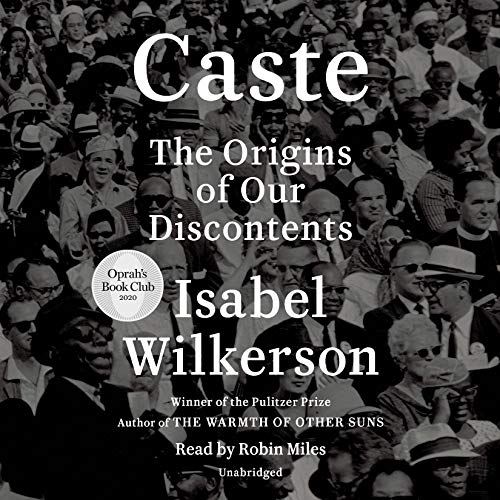
    Isabel Wilkerson’s new book “Caste: the origins of Our Discontents” is currently number two on the New York Times Best Seller list. I have no doubt that this book will join other works like White Fragility in the Social Justice canon.

    The basic premise of the book is that America is (and always has been) a racially discriminatory caste system.

    There are varying opinions on this notion. I would argue that, more than anything, America is a meritocracy where anyone can use their talents and work ethic and achieve goals for bettering their lives and those for their family. But my point with writing isn’t primarily arguing against Wilkerson’s suggestion that America is a caste system.

    My biggest concern from the book is the toxic and hopeless ideology Wilkerson spreads. The book offers very little in the way of suggestions to make a better world. It’s 447 pages of beating the drum of how unfair the American system is. She’s profiting greatly off of selling victimhood.

    But what’s even worse is that she’s giving people limitations. There are two opposing views. One of them is that this is a country where people can use their talent and work ethic and accomplish goals build the life they desire for themselves and their families. People of all races and backgrounds overcome humble beginnings and circumstances everyday.

    Wilkerson’s idea is that a racist system irrevocably locks a person into a caste. The world is setup against you. If you’re from a “lower caste” and succeed, it’s in spite of the caste system (which will be angry that you’ve succeeded because you’ve failed to fall in line with where you’re supposed to be).

    There’s a fatalism and existential despair in going through life thinking that the world is setup against you. There’s nothing that is more disempowering that that.

    In the opening chapters of the book, Wilkerson compares America to a house with cracks in its foundation. While people living today didn’t build the house, we have to live with it and the faulty foundation. We need to address the structural flaws in the home. But then Wilkerson all but ignores steps which have been taken for more than a century and a half such as the Civil War, the Civil Rights Movement, constitutional amendments, and other federal laws.

    And while she begins the book by saying that we didn’t create the problems that we have today, she later focuses on how Americans from the “upper caste” intentionally enforce this caste system. Wilkerson says: “Like the cast on a broken arm, like the cast in a play, a caste system holds everyone in a fixed place. For this reason, many people – including those we might see as good and kind people – could be casteist, meaning invested in keeping the hierarchy as it is or content to do nothing to change it, but not racist in the classical sense, not active and openly hateful of this or that group.”

    In the prologue, the epilogue, and throughout the book, Wilkerson compares the American caste system to Nazi Germany. She mentions Hitler more frequently in the book than she mentions Abraham Lincoln, Martin Luther King, Jr, and Frederick Douglas combined.

    One of the most troubling quotes in the book was found on page 268 where she argues that white people – no matter how bad their lives are – can take solace that they’re not minorities: “Those accustomed to being the measure of all that is human come to depend on the reassurance that, while they may have troubles in their lives, at least they are not at the bottom. As long as the designated bottom dwellers remain in their designated place, their own identities and futures are secure.” Wilkerson quotes sociologist Andrew Hacker saying, “No matter how degraded their lives, white people are still allowed to believe that they posses the blood, the genes, the patrimony of superiority. No matter what happens, they can never become ‘black.”

    Seriously? Who thinks that way?

    She looks at everything in her life, throughout history, and in contemporary American culture through a racial lens. For instance, she has a chapter on Barack Obama and talks of how most white people did not vote for him, and then proceeds to give numerous examples of times when people opposed Obama and chalks them up to racism. There’s never any nuance. There’s no consideration that people might politically disagree with his progressive policies. Throughout the book, she acts like conservatives works to maintain the caste system against liberalism. I’d argue that liberalism is what keeps people in poverty by working against invaluable social structures while major cities are essentially one-party rule and they’re rife with crime and poverty and have criminally bad school systems. No, there’s not a caste, but it’s those policies which keep people poor.

    She gives examples from her own life (such as a bad dining experience at a restaurant) as obvious examples of racism. But that’s what much of the book is. Anecdotes and stories rather than hard data to back up her audacious claims.

    As I have said, it’s a book that has no message of hope and says very little about reconciliation. The closest the book came to hope was Wilkerson looking forward to 2042 when demographers predict that minorities in America will outnumber caucasians (although she then quickly suggest that the caste will be expanded to include some of these groups in order to maintain the caste system).

    Thanks for reading! Don’t forget to comment, like, and subscribe

  • Accountability isn’t judgmental, it’s Biblical: why the church needs standards

    Accountability isn’t judgmental, it’s Biblical: why the church needs standards

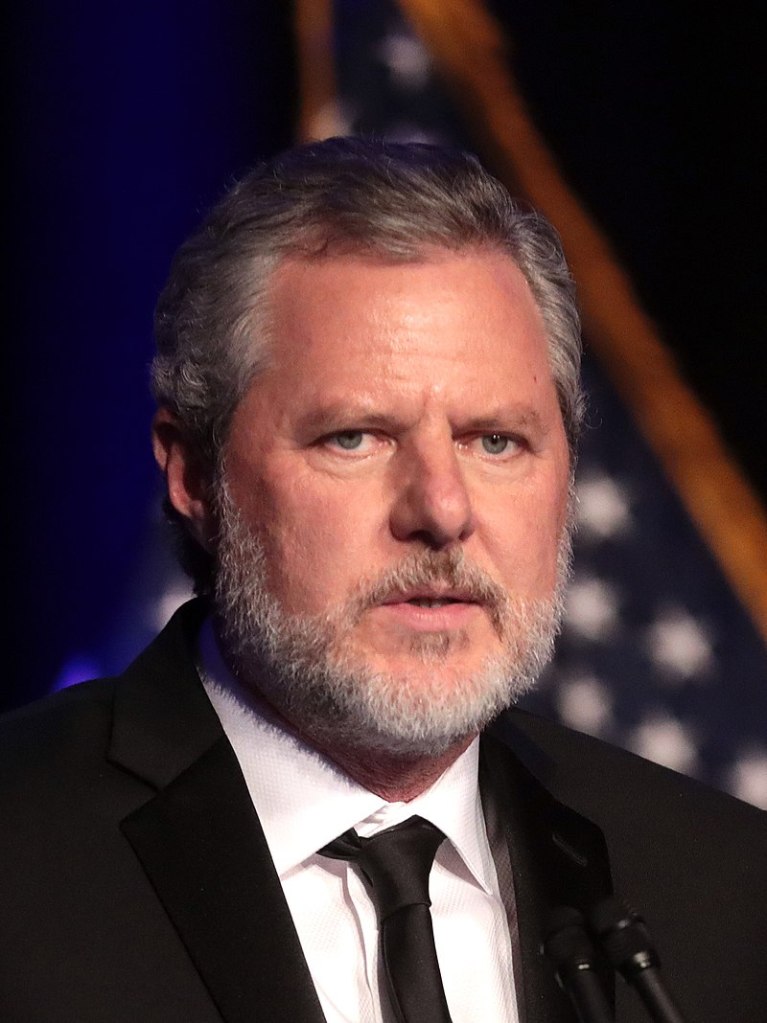
    Over the last few weeks, Jerry Falwell, Jr had a very public suspension from Liberty, during which time he revealed an affair his wife was having. Falwell resigned, then said he didn’t, then resigned again, bashed the university. This was the culmination in a long series of personal and moral failings from Falwell.

    But what’s interesting when a prominent Christian has significant moral failings exposed, is the excuses I see online. I see comments on news articles and blogs where people will ask “and you’re perfect?” “I guess you never sin?”

    Ironically, that is a self-defeating proposition. Judging people for having moral opinions is in fact a moral opinion where you’re being judgmental!

    But what’s more, the idea that it’s somehow especially loving, or pious, or enlightened to show indifference to sin is not a Biblical idea.

    Just for quick reference:  if anyone is caught in any transgression, you who are spiritual should restore him in a spirit of gentleness (Galatians 6:1). As for those who persist in sin, rebuke them in the presence of all, so that the rest may stand in fear (1 Timothy 5:20). My brothers, if anyone among you wanders from the truth and someone brings him back, let him know that whoever brings back a sinner from his wandering will save his soul from death and will cover a multitude of sins (James 5:19-20). Iron sharpens iron, and one man sharpens another (Proverbs 27:17).

    We should be gracious. We should want to see people repent and restored. We should want to see broken people’s lives changed.

    But we should not ignore sin. Because when we do, we allow predators to run roughshod in churches and Christian organizations under the guise that that’s “loving.” It isn’t. It’s not loving to the sinner who needs people who love them and care enough to point them to truth and righteousness. And for powerful people, it’s not loving to others in their ministry or organization who can suffer and be victimized by unscrupulous morals and sin.

    Yes, there needs to be grace and forgiveness, but there also needs to be accountability. And sometimes there need to be consequences for a person’s actions. Leading churches, ministries, Christian organizations is a sacred privilege, not a right.

    What about “not judging?”

    A person might say but what about where Jesus says: “Judge not, that you be not judged” (Matthew 7:1)? And doesn’t he also say “Why do you see the speck that is in your brother’s eye, but do not notice the log that is in your own eye?“(Matthew 7:3)

    But just a couple of verses later, Jesus also says “first take the log out of your own eye, and then you will see clearly to take the speck out of your brother’s eye” (Matthew 7:5).

    Given the numerous Biblical passages which talk about pointing out sin and restoring sin, and encouraging people to personal holiness, the point of that verse isn’t that you should never have a moral opinion (which isn’t possible). The point isn’t about having a constant disposition of judgment, self-righteousness, comparison to others, and looking for faults. It’s not a command against thinking that immoral behavior is bad and that people (especially professing Christians) should live to a higher standard.

    Thanks for reading! I’d love to hear what you think, and don’t forget to subscribe!

  • Liberty to have independent investigation in wake of Falwell resignation

    Photo courtesy of Wikimedia Commons.

    This week, Liberty University announced an “independent inquiry” into the university’s former president.

    I remember will Bill Hybels resigned from Willow Creek, a megachurch in suburban Chicago in the wake of sexual misconduct allegations. I remember earlier this summer when Menlo Park Presbyterian Church in California announced an independent investigation into there former pastor in the wake of massive failures of leadership when he allowed one of his children (who had admitted sexual attraction to minors) to continue working with the youth program.

    Liberty will do an independent investigation. But they had let Falwell run roughshod and embarrass the university time and again. Even before last month’s explosive reports about multiple affairs from Falwell’s wife and allegations that Jerry Falwell was very much aware of the affairs, he had done several things which should have led to the university removing him from leadership.

    For Falwell, the independent investigation will be “a thorough investigation into all facets of Liberty University operations during Jerry Falwell, Jr.’s tenure as President, including but not limited to financial, real estate, and legal matters.”

    Obviously there’s nothing wrong from learning from mistakes. But in the wake of scandals in the evangelical world, the “independent investigation” seems to be the flavor of the month.

    The basics of what goes wrong in these situations aren’t great mysteries. You have highly influential leaders who help to raise or maintain the high profile status of a church (or institution). And because of the charisma and skills (and ability to generate revenue) of the leader, they largely go unchecked.

    Instead of organizations needing to do independent investigations as damage control, what churches and Christian colleges need to do is to do the right things in the beginning. In other words: have systems to keep leaders accountable

    People are sinful. That should never be a surprise. But that’s why Christians need other Christians. Knives sharpening knives. You need leaders who are accountable and where there are honorable people who know them and who know their struggles. You need people who love the leader. But who don’t excuse or look away from, or justify sin. That isn’t love. What you need is people who love the leader enough to where they can speak into difficult situations and point out patterns of sin in the hopes of bringing restoration. And you need it an an environment where those friends can lovingly confront the leader without being punished or harassed for it.

    Without that, many more independent investigations will be needed, because the sinfulness of the human heart isn’t going away.

    I think about many of the popular evangelical leaders who have fallen from grace in recent years. For at least some of them, I do wonder how different things could have been had they been surrounded by people who cared enough to sometimes say the difficult things.

    In 1948, as he was coming to national prominence, Billy Graham and his close ministry associates signed the “Modesto Manifesto” where they had the forethought to hold themselves to a set of standards regarding sexual morality, finances, interactions with local churches, and publicity. Part of what developed from this meeting was the famous “Billy Graham Rule” where Graham would not travel with, eat lone with, or spend time alone with a woman who was not his wife.

    Their agreement worked as non of those men was ever legitimately accused of a moral failing.

    And certainly the greatest set of standards for Christian leaders is found in the Bible.

    Titus 1:6-9 says:
    if anyone is above reproach, the husband of one wife, and his children are believers and not open to the charge of debauchery or insubordination. 7 For an overseer, as God’s steward, must be above reproach. He must not be arrogant or quick-tempered or a drunkard or violent or greedy for gain, 8 but hospitable, a lover of good, self-controlled, upright, holy, and disciplined. 9 He must hold firm to the trustworthy word as taught, so that he may be able to give instruction in sound doctrine and also to rebuke those who contradict it. 

    1 Timothy 3:1-7 says:
    The saying is trustworthy: If anyone aspires to the office of overseer, he desires a noble task. 2 Therefore an overseer must be above reproach, the husband of one wife, sober-minded, self-controlled, respectable, hospitable, able to teach, 3 not a drunkard, not violent but gentle, not quarrelsome, not a lover of money. 4 He must manage his own household well, with all dignity keeping his children submissive, 5 for if someone does not know how to manage his own household, how will he care for God’s church? 6 He must not be a recent convert, or he may become puffed up with conceit and fall into the condemnation of the devil. 7 Moreover, he must be well thought of by outsiders, so that he may not fall into disgrace, into a snare of the devil. 

    While Falwell wasn’t a pastor, nevertheless, those would have been good standards to still demand from the president of America’s largest Christian university.

    Thanks for reading! Don’t forget to subscribe!

  • Gospel Coalition article sees “egregious contrast” between Jacob Blake and Kyle Rittenhouse

    Photo courtesy of Wikimedia Commons

    The Gospel Coalition website ran a piece last week titled “Why I hate August” by Illinois pastor K. Edward Copeland. I strongly disagree with many of the statements in the article.

    At the beginning of the piece, Dr. Copeland talks of good experiences with August. It’s his birthday and wedding anniversary month. He loves the summer. But then the article shifts “I hate August because it reminds me that some view bodies like mine as disposable.”

    The piece quickly turns into propaganda as Copeland irrelevantly brings up the weather. “As Hurricane Laura decimates the South I’m also haunted by the black and brown bodies that were stranded on rooftops during Hurricane Katrina in August 2005.”

    What’s his point? That the weather is also racist?

    Copeland talks about the seven shots from the police which struck Jacob Blake, whom Copeland describes as “unarmed” and points out that the now paralyzed Blake is handcuffed to his hospital bed.

    Couple of points to be made in response to that. While Copeland jumps to assuming that this was racially motivated, there is still dispute as to whether or not Blake had a knife or if he might have been reaching for a knife prior to being shot. But that’s part of the issue. Blake was not compliant, he had been tasered twice, he was a felon with warrants, and he was either reaching into a car or was trying to flee in a car with three kids in the vehicle. Copeland brings up that Blake was handcuffed to his hospital bed. Once again, he’s giving propaganda and appeals to emotion. Blake may be paralyzed but he’s still a criminal and there are protocols. The rules for how prisoners are restrained in the hospital are not up to the whims of the staff or how practical or necessary they think the restraints are.

    When Copeland talks about Rittenhouse, he calls that an “egregious contrast.”

    Copeland talks about how Rittenhouse “killed people in the street” and then was able to calmly approach the police. In my opinion, Copeland does too much to assume the mindset of these men, especially Rittenhouse when he says things like “He assumed there was something about his person that would allow him to approach law enforcement with a visible automatic weapon that had just taken lives.” We can’t know his thoughts.

    Then Copeland compares Rittenhouse to Dylann Roof as another mass shooter. And this is where I must call Copeland out. That is absurd. I get that his point might have been that they were both people who were peacefully taken into custody but to compare the two is insane. Dylann Roof attended a prayer meeting at a predominantly black church and then murdered nine people in an effort to ignite a race war. Kyle Rittenhouse shot at people who were attacking him. More information will need to come out about Rittenhouse and if he had motivations for violence beforehand, but there is also a legitimate argument that his shootings were a matter of self-defense. You can see video of people attempting to assault Rittenhouse (some of whom also had guns).

    I’m not positive, but Copeland seems to be implying that Rittenhouse wasn’t afraid of the police because he’s white.

    Copeland says “The inconsistency between how these two bodies were treated in Kenosha reinforces my childhood suspicions.”

    Copeland is taking these two events and acting like they’re a case study in how white and black people are treated by police. Nevermind that there is a longstanding standard of situations when officers are legally justified to use deadly force and that Blake’s situation pretty clearly fits that criteria. No, let’s just push the narrative that Blake was shot purely because of race, not because he was resisting, had weathered tasers, was reaching into his vehicle, and posed a threat. Rittenhouse was peacefully arrested because he was white, not because he surrendered.

    Copeland says, “Those who claim my same convictions about Christ will be the first and loudest to castigate me for these observations. They’ll be the most proficient at finding some excuse for Rittenhouse, the most cavalier in discounting my trauma, the most eager to somehow find a “Marxist” or “Critical Race Theory” connection in my reflections.”

    When you ignore facts and simply go with a narrative and attempt to make what appears to be a justifiable use of force into another flash point, it’s hard to not feel that you’re perpetuating the agenda of critical race theory.

    There are absolutely egregious injustices which have happened to African Americans. But not all uses of police force are unjustified. And in line with the critical theory agenda, Blake’s actions have no relevance in this Gospel Coalition article. He’s purely the innocent victim. It’s nonsense.

    Thanks for reading!