Josh Benner

Category: Theology

  • The Noahic Covenant. Studying Genesis 8:20-9:17

    The Noahic Covenant. Studying Genesis 8:20-9:17

    God formally establishes a covenant with Noah. 

    In Genesis 6:18 we see the word covenant used for the first time in the Bible. 

    I will establish my covenant with you, and you shall come into the ark, you, your sons, your wife, and your sons’ wives with you. 

    Between Genesis 6 and Genesis 9, a lot has happened. God has flooded the earth, he’s killed all people and inhabitants of the earth, save for Noah, his family, and the animals on the ark. 

    We see more covenant language at the end of Genesis 8. After the flood, Noah builds an altar to the Lord in Genesis 8:20. Sacrifice is an important aspect of Biblical covenants. And it is here where Noah is able to make sacrifices in a newly cleansed creation after the flood. 

    Genesis 8:20: 

    20 Then Noah built an altar to the Lord and took some of every clean animal and some of every clean bird and offered burnt offerings on the altar

    The altar Noah builds is the first time we see an altar mentioned in the Book of Genesis. The altars represent locations where man could make sacrifices to the Lord and it prefigures the later temple which is also an important aspect of covenantal theology. 

    Abraham, Isaac, and Jacob would all build altars at times of great significance in Genesis. With the Mosaic covenant, there would be the tabernacle which was the portable structure which symbolized God’s presence with the Israelites and the place where the sacrifices were made. In 2 Samuel 7, when David is told to construct the temple, the thing to which the tabernacle was pointing, God also makes a promise to him in another covenant where the Lord promised a Son from David’s line who would have a kingdom that would never end. 

    2 Samuel 7:12-13: 

     When your days are fulfilled and you lie down with your fathers, I will raise up your offspring after you, who shall come from your body, and I will establish his kingdom. 13 He shall build a house for my name, and I will establish the throne of his kingdom forever

    And in Christ, we see the true temple, the true presence of God with the people where the true sacrifice is made who establishes a new covenant in his own blood and with his own body. 

    Luke 22:19-20: 

    19 And he took bread, and when he had given thanks, he broke it and gave it to them, saying, “This is my body, which is given for you. Do this in remembrance of me.” 20 And likewise the cup after they had eaten, saying, “This cup that is poured out for you is the new covenant in my blood


    Back in Genesis 8, Noah builds the altar to make the sacrifices. 

    We see the Lord make a promise. He will restate it in chapter 9, but it’s the same thing the Lord will promise in his covenant with Noah. 

    Genesis 8:21-22:

    21 And when the Lord smelled the pleasing aroma, the Lord said in his heart, “I will never again curse the ground because of man, for the intention of man’s heart is evil from his youth. Neither will I ever again strike down every living creature as I have done. 22 While the earth remains, seedtime and harvest, cold and heat, summer and winter, day and night, shall not cease.” 

    Coming into chapter 9, we see all sorts of language both of covenant and creation. God has spared Noah, his family, and the animals on the ark because he is making a new creation through them. As in creation, when the Lord gives the mandate to Adam and Eve to be fruitful and multiply, he will give that same command to Noah and his family. 

    Genesis 9:1: 

    And God blessed Noah and his sons and said to them, “Be fruitful and multiply and fill the earth.

    But while there are creation themes, this world after the creation is not perfect. There is animosity within the creation itself. Genesis 9:2-3:

     2 The fear of you and the dread of you shall be upon every beast of the earth and upon every bird of the heavens, upon everything that creeps on the ground and all the fish of the sea. Into your hand they are delivered.  3 Every moving thing that lives shall be food for you. And as I gave you the green plants, I give you everything.

    While man can eat meat, there are still stipulations on how we can eat it. The lifeblood of the animal is something which is sacred, as is the life of our fellow man. For any who unjustly takes the life of another, the just penalty for that is death. As man is created in the image of God, so man has inherent value and worth. 

    Genesis 9:5-6: 

     for your lifeblood I will require a reckoning: from every beast I will require it and from man. From his fellow man I will require a reckoning for the life of man. 

    6 “Whoever sheds the blood of man, 

    by man shall his blood be shed, 

    for God made man in his own image. 

    In Genesis 9:7, we see the repetition of the command for humanity to be fruitful and multiply. Once again, the language harkens back to creation. 

    While the passage has already been steeped in the language and ideas of covenants, it is verse 8 when the Lord formally ratifies his covenant. 

    It’s striking in itself that God makes a covenant with a humanity that he knows is sinful and that he knows will continue to sin. 

    The Noahic Covenant

    Genesis 9:8-10:

    8 Then God said to Noah and to his sons with him, 9 “Behold, I establish my covenant with you and your offspring after you, 10 and with every living creature that is with you, the birds, the livestock, and every beast of the earth with you, as many as came out of the ark; it is for every beast of the earth.

    God’s covenant doesn’t begin by focusing on the sinfulness of man. This covenant is universal. As Noah, his family, and the animals who come off the boat represent all of the life on earth, the covenant promise is made to all of them and applies to all of mankind and to all of the animal kingdom. 

    It is the only covenant in the Bible that does this. Where it’s universal and applies to everyone and every living creature in the world. 

    Later covenants will have more specific application. Abraham’s covenant is a promise for a people who will come from Abraham. The Mosaic covenant is given to Israel. The New Covenant is given to the faithful in Christ. 

    The Noahic covenant applies to all, regardless if someone knows and honors the Lord, regardless if someone considers themselves to be part of this covenant. 

    So first, we see to whom the covenant applies. Next, we see what the covenant promises. 

    Covenant promises

    Genesis 9:11: 

    11 I establish my covenant with you, that never again shall all flesh be cut off by the waters of the flood, and never again shall there be a flood to destroy the earth

    The Lord will never again destroy the earth. 

    But what’s amazing is that he could. 

    Again, it is purely out of his grace that he makes the promise to a sinful humanity that he won’t do this again. The only thing that God is bound by is his own character and righteousness. We can’t stop him from doing whatever he wants. 

    The covenant is made by God based in the character of God. The text continues to use possessive language. The Lord keeps calling it my covenant. I will establish my covenant with you. 

    It’s not like humanity can negotiate with God. All that we have is from him. 

    The flood will be a unique event in human history. That’s not to say that local floods can’t happen. But God will never repeat the flood that he brought as his great judgment on the world. Again, not that the world doesn’t deserve that but because God is gracious and has promised not to. 

    It can be easy to be frustrated with the state of our world. So much sin. So much darkness. Wars, killings, violents, drugs. 

    The flood reminds us that God once did away with all of creation save for one family and a set of each of the animals. As Thomas Schreiner notes in his biblical theology of covenants, that the flood reminds us that the fundamental nature of humanity hasn’t changed. 

    Noah’s covenant does show God’s grace to humanity but it does not bring salvation in itself. It instead points to the preservation of humanity and the continuation of the world. Based on other covenants and promises, we know that this will continue until Christ returns. And the ultimate hope of the world is to be remade once again as a new heaven, a new earth, and a new creation at the end of the age. 

    Covenant sign

    In addition to his promise, the Lord also makes a covenant sign. 

    Genesis 9:12-13:

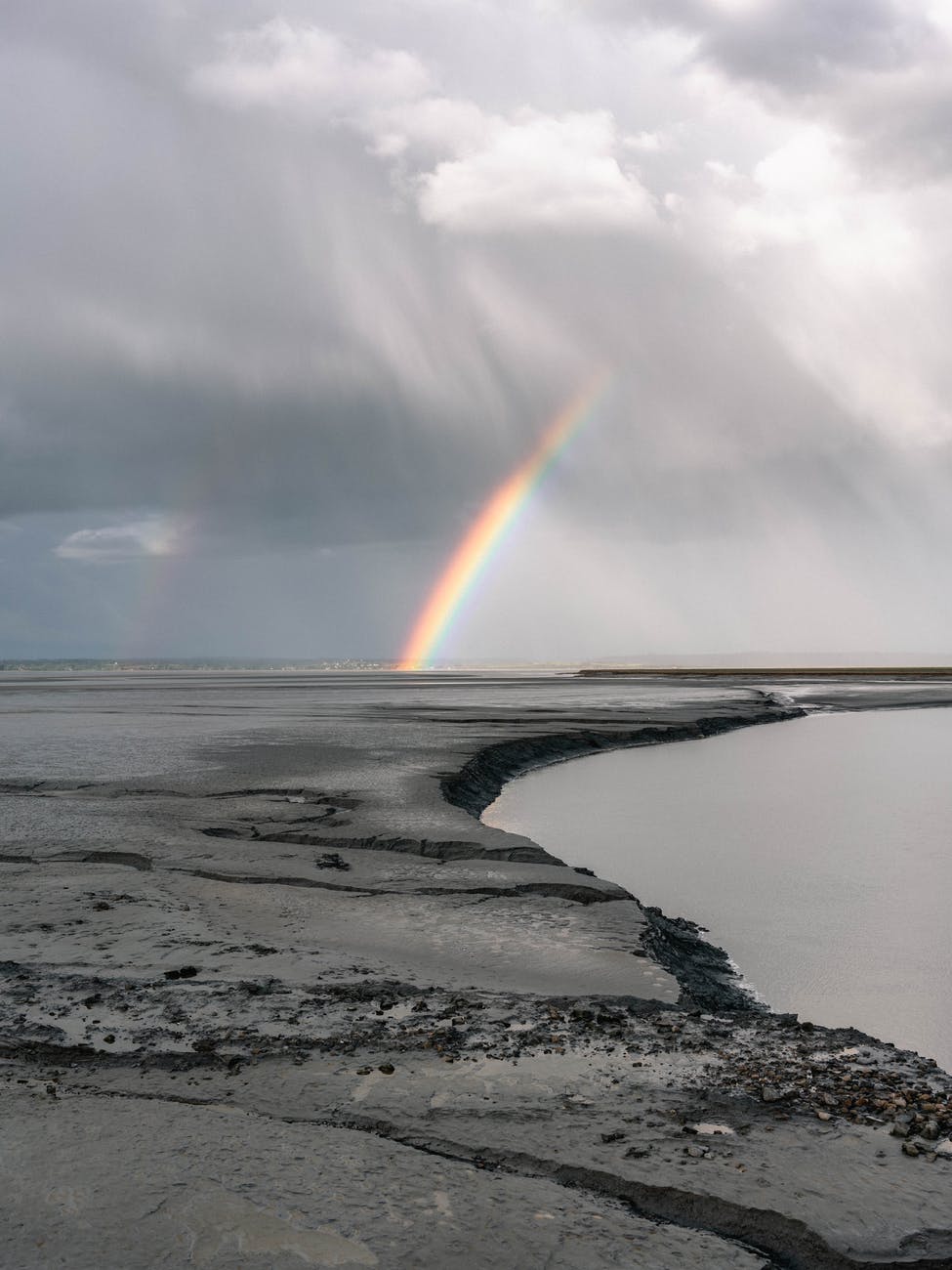
    12 And God said, “This is the sign of the covenant that I make between me and you and every living creature that is with you, for all future generations: 13 I have set my bow in the cloud, and it shall be a sign of the covenant between me and the earth.

    The rainbow is a sign of God’s covenant. Other covenants will have signs of their own. With Abraham, the sign of the covenant is circumcision. With the new covenant, communion would be a sign of that covenant which Christ instituted. 

    From th foreboding clouds of a thunderstorm, we can see a rainbow. 

    In a dark world, we still have a good God who is faithful. 

    Genesis 9:14-15, the Lord restates his promise not to flood the earth. 

    14 When I bring clouds over the earth and the bow is seen in the clouds, 15 I will remember my covenant that is between me and you and every living creature of all flesh. And the waters shall never again become a flood to destroy all flesh.

    Thanks for reading! If you liked this post, please share and subscribe! 
  • Life after the flood. Studying Genesis 8:1-13

    In Genesis 8, after the flood, God causes the waters to subside. It is a passage which points us to the gospel. 

    Genesis 8:1: 

    But God remembered Noah and all the beasts and all the livestock that were with him in the ark. And God made a wind blow over the earth, and the waters subsided. 

    As God remembers Noah, it is covenant language. God hadn’t forgotten Noah but when God “remembers,” in the Old Testament it is a precursor to divine action. As God makes a wind blow over the earth, we see God undoing the flood. 

    Genesis 8:2: 

    2 The fountains of the deep and the windows of the heavens were closed, the rain from the heavens was restrained

    From chaos, God is bringing restoration. 

    The most wonderful time of the year

    Genesis 8:4 says: 

    and in the seventh month, on the seventeenth day of the month, the ark came to rest on the mountains of Ararat.

    Genesis 8 says that the boat came to a rest in the seventh month. In the Jewish calendar, the seventh month is the most important month of the year as numerous feasts would be at this time of year including the Day of Atonement, the Feast of Trumpets, and the Feast of Tabernacles (Leviticus 23:23-36). 

    For the birds

    A raven and a dove play a prominent role in investigating the earth after the flood waters subside. 

    Genesis 8:6-7 says: 

    6 At the end of forty days Noah opened the window of the ark that he had made 7 and sent forth a raven. It went to and fro until the waters were dried up from the earth.

    Rabbinic tradition held that the raven was released first because it was not a bird fit for food (Lev 11:15; Deut 14:14) nor suitable for sacrifice.  

    Regarding the release of the raven, Kenneth Matthews says: “Its departure from the ark signified that the impurities of the past had been removed and the creation of the new world had a fresh start.”

    Unlike the raven, the dove was an animal which would be suitable in the sacrificial system (Lev 1:14; 5:7; 14:22). The first time Noah releases the dove, the waters are still too high and the dove returns. 

    Genesis 8:8-9: 

     8 Then he sent forth a dove from him, to see if the waters had subsided from the face of the ground. 9 But the dove found no place to set her foot, and she returned to him to the ark, for the waters were still on the face of the whole earth. So he put out his hand and took her and brought her into the ark with him.

    In Genesis 8:10-11, Noah releases the dove a second time: 

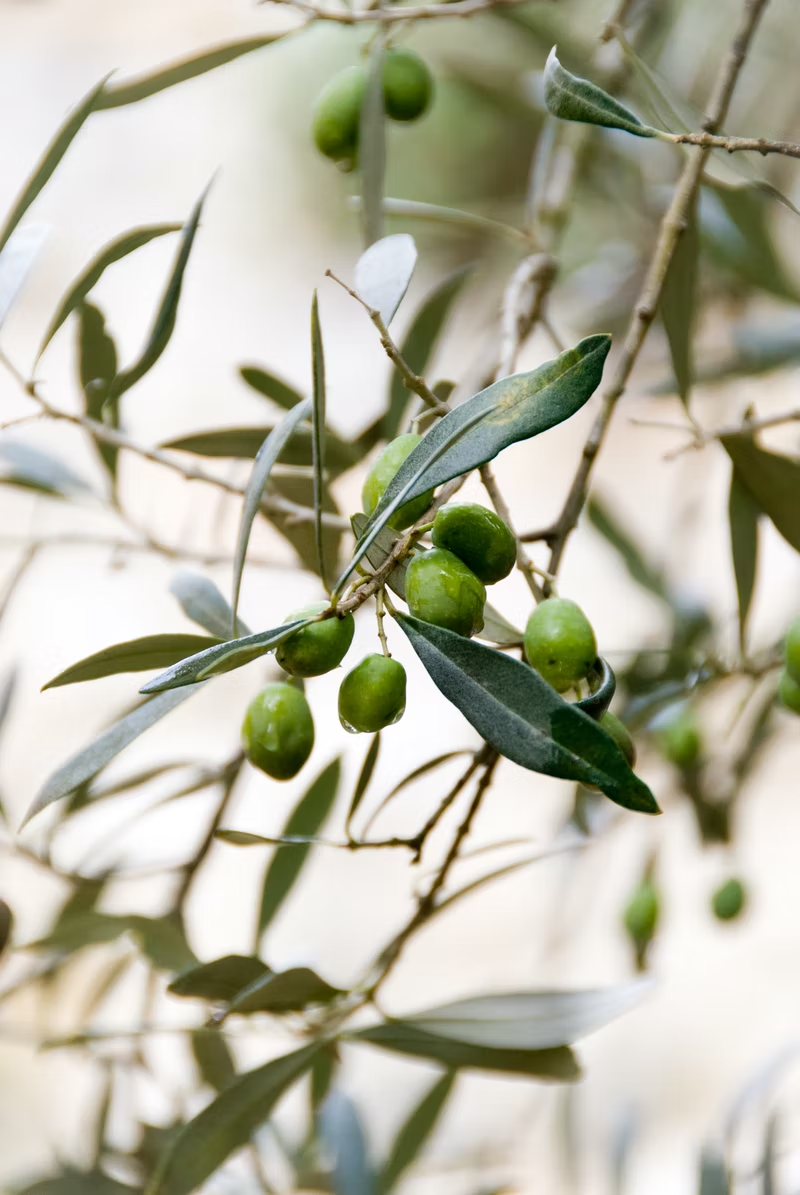
    10 He waited another seven days, and again he sent forth the dove out of the ark. 11 And the dove came back to him in the evening, and behold, in her mouth was a freshly plucked olive leaf. So Noah knew that the waters had subsided from the earth. 

    The dove returning with an olive leaf was a symbol of life. 

    In the Old Testament, when kings, priests, and some of the prophets were anointed, it was with olive oil. 

    The oil was not significant in itself, but it was significant as a symbol of the presence of the Spirit of God. 

    1 Samuel 16:13 says: 

    13 Then Samuel took the horn of oil and anointed him in the midst of his brothers. And the Spirit of the Lord rushed upon David from that day forward. And Samuel rose up and went to Ramah. 

    We also see a connection of a dove and the Holy Sprit at the baptism of Jesus. 

    Mark 1:10 says: 

    when he came up out of the water, immediately he saw the heavens being torn open and the Spirit descending on him like a dove.

    In Christian art, the Holy Spirit is therefore symbolized as a dove. 

    Back in Genesis, Noah sends out a third dove. 

    Genesis 8:12 says: 

    12 Then he waited another seven days and sent forth the dove, and she did not return to him anymore. 

    The dove doesn’t return because the land has dried out. 

    13 In the six hundred and first year, in the first month, the first day of the month, the waters were dried from off the earth. And Noah removed the covering of the ark and looked, and behold, the face of the ground was dry (Genesis 8:13).

  • Israel under siege. Studying 1 Samuel 11:1

    Israel under siege. Studying 1 Samuel 11:1

    A perilous beginning

    No president in American history inherited as perilous a situation as Abraham Lincoln. 

    In response to his election to the presidency, and his opposition to expanding slavery to new territories, six states had secceded from the union prior to Lincoln taking the oath of office. Once he became president in March of1861, it took less than six weeks for the Battle of Fort Sumter and the beginning of the Civil War. 

    When we read about Israel and the Promised Land in the Bible, I think we have a tendency to imagine Israel as one unified state. 

    But Israel was composed of 12 tribes who had their own territories within the Promised Land.

    Kind of like a United States of Israel. 

    The tribes did not always get along with each other. For instance, the territory of Benjamin fought a civil war of their own at the end of the Book of Judges. In that war, the rest of Israel went to war with Benjamin. Thousands of Israelites died. 

    Later in Israel’s history, that same Benjaminite territory would be the birthplace of King Saul. 

    We’ll have more on that later. 

    Similar to America, there were also divisions in Israel among the northern and southern tribes. Saul was the first king, followed by David, followed by Solomon. By the end of Solomon’s reign, Israel was a divided kingdom between the north and south and never reunited. 

    But in First Samuel, the even bigger threat to the flourishing of Israel were the surrounding nations. The most prominent foe of the Israelites were the Philistines. In 1 Samuel 4, the Israelites had lost to them in battle and the Philistines actually confiscated the Ark of the Covenant from the Tabernacle. 

    Eventually the Ark was given back but the Israelites but the Philistines remained hated enemies. One of the reasons why the Israelites had wanted a king was to have someone to lead them to victory over the Philistines. 

    Now at the end of chapter 10, Saul became king of Israel. And it was a fairly underwhelming begin to his reign. We don’t see any royal action or speech. 

    Chapter 10 ends. 

    Going to battle

    And then Chapter 11 abruptly changes to a new scene. 

    Then Nahash the Ammonite went up and besieged Jabesh-gilead, and all the men of Jabesh said to Nahash, “Make a treaty with us, and we will serve you” (1 Samuel 11:1). 

    So instead of the Philistines, the Israelites come under threat from another surrounding nation. The Ammonites. It’s another reminder of how weak Israel was at the beginning of Saul’s reign. They have foes on multiple borders. 

    And so in this passage, we see Saul’s first test as king of Israel. And it’s also the high point of his reign. But it’s not primarily a passage about Saul or a battle. It’s a passage about God’s faithfulness. 

    Israel under threat

    Let’s look at verse 1 again: 

    Then Nahash the Ammonite went up and besieged Jabesh-gilead, and all the men of Jabesh said to Nahash, “Make a treaty with us, and we will serve you.” 

    The name Nahash in Hebrew actually means serpent. It’s the same word that’s used in Genesis for the serpent in Eden. 

    And he’s an Ammonite. 

    The Ammonites were cousins to the Israelites. Their genealogy is traced back to Abraham’s nephew Lot having an incestuous relationship with his daughter. 

    Genesis 19:36-38:

    36 Thus both the daughters of Lot became pregnant by their father. 37 The firstborn bore a son and called his name Moab. He is the father of the Moabites to this day. 38 The younger also bore a son and called his name Ben-ammi. He is the father of the Ammonites to this day. 

    And the Ammonites lay siege on a city called Jabesh-Gilead which was in eastern Israel. 

    And the citizens beg for mercy when they say: “Make a treaty with us, and we will serve you.” 

    In exchange for their lives to be spared, they’d rather make a treaty which would effectively make them vassals to the Ammonites. 

    Now, on the one hand, their response is understandable. If you were facing overwhelming might, wouldn’t you be tempted to do whatever you could do to preserve life and limb? To protect your family? To keep your home? 

    I think most people want to take the path of least resistance and avoid pain for themselves and their families. 

    It’s a very challenging situation. 

    But the problem is that the Israelites are overlooking their covenant with God. They are a chosen people who are set apart. It is the Lord who has given them this Promised Land. They have a covenant with God. And it is the Lord who is meant to be the protector of Israel. 

    Israel doesn’t need to cut a deal. What they need to do is to trust the Lord. 

    To look at a couple of Old Testament passages where this idea is expressed. 

    Exodus 23:22 says: 

    ​​ if you carefully obey his voice and do all that I say, then I will be an enemy to your enemies and an adversary to your adversaries. 

    We also see this in Deuteronomy 20:1-4: 

    When you go out to war against your enemies, and see horses and chariots and an army larger than your own, you shall not be afraid of them, for the Lord your God is with you, who brought you up out of the land of Egypt. 2 And when you draw near to the battle, the priest shall come forward and speak to the people 3 and shall say to them, ‘Hear, O Israel, today you are drawing near for battle against your enemies: let not your heart faint. Do not fear or panic or be in dread of them, 4 for the Lord your God is he who goes with you to fight for you against your enemies, to give you the victory

    Gospel

    Where are the places in our lives where we forget about God’s promises? 

    I’ll start with the most significant. I think for a lot of Christians, we forget that we’re forgiven because of the gospel. 

    Sometimes we mess up. Sometimes we have an area where we’re really struggling and feel like we’re constantly going two steps forward, and one step back. And we sin, and there can be this shame. And if it’s something really bad, we can feel so down about ourselves.

    Sometimes when we sin, we can try to atone for our own sin or resort to works or other actions we’re doing to try to make ourselves feel like we’re right with God. 

    You can’t do it. 

    Yes we should repent and turn from our sins. 

    But we can’t atone for our sins. We can’t do something good to cancel out our sin. 

    But the good news is the gospel. 

    Ephesians 2:8-9 says: 

    8 For by grace you have been saved through faith. And this is not your own doing; it is the gift of God, 9 not a result of works, so that no one may boast.

    We don’t have to wallow in shame and despair. We don’t have to go through life feeling like God doesn’t love us every time we don’t get it right. 

    I think we can forget that sometimes. We are not our own saviors. Jesus is and he did it perfectly. 

    And the promise we so often forget is that God is gracious. Not only is God gracious but the only way to be forgiven by God is through his grace. 

    We aren’t given two options. It’s not that we can try to earn God or we can take the option of grace. The first option is not an option because we can’t earn God because we can’t be good enough if we try. 

    Again, I’m not saying our sin doesn’t matter. We should be working to kill sin in our lives. But it’s not so that God can love you. But so you can live a life to God’s glory, so you can serve him and love him more fully, so you can experience joy without being encumbered by sin, and so that you can live a more fulfilled life in living in accordance with the wisdom of God. 

    The people in Jabesh-Gilead either forgot or didn’t fully trust God’s faithfulness to them as his people. And I think we can also be guilty of that sometimes. 

    Thanks for reading! If you liked this post, please share and subscribe! 

  • The sustenance Jesus gives to a hungy world. Studying John 4:30-34

    The sustenance Jesus gives to a hungy world. Studying John 4:30-34

    In John 4, Jesus has met a Samaritan woman at a well and told her of the living water that he provides. It’s also a passage where we see this woman respond to Jesus by telling others about him. She’s the first evangelist to Christ in north Israel. 

    The woman asked the people “can this be the Christ?” She certainly doesn’t know everything about Jesus. But she’s gone to her people and told them about this man. She draws intrigue from her people. 

    John 4:30 says: They went out of the town and were coming to him. 

    A heavenly nourishment

    The Samaritan woman has left, and the story takes us back to Jesus and his disciples. 

    31 Meanwhile the disciples were urging him, saying, “Rabbi, eat.” 32 But he said to them, “I have food to eat that you do not know about.” 33 So the disciples said to one another, “Has anyone brought him something to eat?”

    Natural metaphors

    Jesus refers to food that he has and the disciples do not understand his reference. 

    Throughout John’s Gospel, there are many other instances where Jesus metaphorically talks of something from the natural world in a spiritual way and the audience misses the point. 

    When Jesus was at the temple and he said that they could destroy the temple and he would raise it up in three days. He was referring to his death and resurrection and his body as the true temple of God. The people just thought he was talking about a building. 

    When Jesus was talking to Nicodemus about being born again. Jesus was referring to Spiritual rebirth but Nicodemus thought Jesus was talking about physical birth. 

    When Jesus spoke with the Samaritan woman and talked of living water he provided and she initially thought he was simply referring to water. 

    And here again, Jesus refers to food and the disciples are like “did someone bring him a sandwich? Do they deliver pizza over here at the well?” 

    Verse 34

    “My food is to do the will of him who sent me and to accomplish his work.

    Deuteronomy connection 

    Jesus is making a reference to the Book of Deuteronomy, chapter 8. 

    The Israelites have been in the desert for 40 years and it has been the Lord who has sustained the people. 

     And he humbled you and let you hunger and fed you with manna, which you did not know, nor did your fathers know, 

    that he might make you know that man does not live by bread alone, but man lives by every word that comes from the mouth of the Lord. (Deuteronomy 8:3)

    Jesus finds his sustenance in his earthly ministry in fulfilling the will of God. 

    That is his food. That is his nourishment. Man does not live on bread alone but man lives by every word that comes from the mouth of the Lord. Jesus lived in accordance with the divine plan to fulfill the divine mission in the world. 

    What are we living for? 

    The mission of God is everything. 

    Living on purpose 

    I say all the time that the purpose of life is not happiness, it’s knowing and serving God. And we serve him through being part of God’s mission in the world. 

    But my point of that is not that we are called to drudgery and begrudging submission. 

    Rather, the point is that true life is found from the Lord and from serving him. 

    Jesus said “My food is to do the will of him who sent me and to accomplish his work.

    And that should be the food for which we all long. 

    Borrowing an idea from Charles Spuregon, we so often like to think that if we could do exactly what we wanted, if we could orchestrate our lives exactly as we wished, then we would be happy. 

    What this verse is saying is the opposite. 

    Happiness is not about what we want, what we desire, having our way. Happiness, meaning, purpose is found in going away from ourselves and what we want and following the Lord and his will. 

    We are sustained by living for God and his will to accomplish his work. There is no greater sustenance than that. There is no greater nourishment than that. 

    Illustration – hoarding food 

    Jesus says: “My food is to do the will of him who sent me and to accomplish his work.

    So often, our focus is on our physical needs. And not just the bare minimum of our needs. We have fridges and pantries. Most of us in this country have days worth of food. 

    I think of coronavirus. When the crisis began, there was widespread reporting of people going to grocery stores. Some were hoarding and buying massive quantities. Locally, stores were running out of food. There’s still a shortage of toilet paper and hand sanitizer. I’m not judging that. I’d be hypocritical. I want to the store too. 

    But I think it’s illustrative of the inherent concern we have for our physical needs. It’s a typical human behavior in a crisis to want to stock up on food. 

    Food is important.

    But I ask: “how different would the world be if the people of God took our Spiritual needs with the same seriousness and urgency as we treated our physical needs?” 

    An urgency to go to God. An urgency to live out our faith. An urgency to rejoice in the goodness of God. To pray to God. To overcome sin. To study God’s Word. 

    Man does not live by bread alone.  

    Thanks for reading! If you liked this post, please share and subscribe! 

  • A bad king and the idea of a good king. Studying 1 Samuel 10

    A bad king and the idea of a good king. Studying 1 Samuel 10

    Saul failed to honor God, but Jesus never fails. In the Bible, we see the stories of the various failures of humanity. Man was given the law but we see that we were unable to follow the law. Because of sin. 

    God gives Israel the king that they wanted and we’ll see that he will lead them imperfectly. Because no human king can adequately serve in the role that God serves in. 

    We cannot earn God, we cannot be our own saviors, and Saul couldn’t be the true king because that wasn’t something that a sinful man could accomplish. 

    Yes, we saw that he was chosen and anointed but it didn’t matter who God had picked. A human king was going to bring problems. 

    The Spirit is willing but the flesh is weak. 

    The good news is that there would be a future king who would usher in God’s kingdom on earth as it is in heaven. There would be a future king who would talk of a kingdom that was not of this world. There would be a future king who would lay down his life for his subjects. There would be a king who would rule and reign and who would show his authority, not only over life and death but over sicknesses and diseases, over nature and storms. 

    In his commentary, Richard Phillips points out that Jesus rode into Jerusalem for the final time on Palm Sunday

    Five days later, he would be crucified in that same city. 

    But on Palm Sunday, Jesus rode into Jerusalem as crowds threw their cloaks on the ground. They waved palm branches and shouted “Hoanna,” the Aramaic word for “save us.” They welcomed Jesus into Jerusalem as a conquering king. They gave Jesus the royal treatment that he deserved. He rode into Jerusalem on a donkey. Saul’s story begins with a man who couldn’t find his donkeys! 

    And that is a powerful metaphor for how Jesus was everything that Saul was not. 

    Israel wanted a king to replace God and so God gave them Saul. But as fallen men inevitably fall, God also gave them Jesus. 

    The idea of a good king

    It’s interesting that we live in a nation that fought a war to escape the tyranny of a king. King George III of England. 

    And yet we have the idea of a good king. 

    We have the idea of a king who is just and loves his nation, and rules for the good of the people. A king who is wise and virtuous. He brings safety and security to the empire. 

    Even though many of the actual human kings throughout time have been incompetent, despotic, and led poorly. 

    Many kings today are actually just figureheads who have little to no real power. 

    But the Lord is the absolute monarch over creation who does rule with perfect wisdom, justice, and goodness. 

    Jesus talked about the kingdom of heaven during his ministry. 

    And for the people of God, Philippians 3:20 says that our citizenship is in heaven. 

    Jesus invites us to live as part of that kingdom. 

    There are so many other kingdoms we want to try to live in. There’s the kingdom of self, the kingdom of politics, the kingdom of money, the kingdom of work. 

    But in Christ, we’re meant to have a heavenly citizenship and to live the rest of our lives on earth as it is in heaven. 

    We want to be the kings and queens over our own lives and say my kingdom come my will be done. But here’s the problem. We’re not good at that. 

    But we have a king who leads well. We have a king who points us to righteousness and holiness. We have a king who laid down his life so that we could be part of his kingdom. 

    And so we live as his kingdom people by knowing God, by communing with him, by serving him, by loving him, and by loving others. 

    Even though the world is fallen, we have the opportunity to live as citizens of God’s kingdom.  

    In the Great Divorce, C.S. Lewis said: “the Blessed will say “We have never lived anywhere except in Heaven, : and the Lost, “We were always in Hell.” And both will speak truly.”

    Who is your king? And where is your kingdom? 

    Thanks for reading! If you liked this post, please share and subscribe!