Jesus brings a new creation into the world and into the lives of those who believe in his gospel.
I want to highlight a few words and phrases in this opening prologue to John:
In the beginning. Word. Life. Light. Darkness.
Just to name a few.
These are all found both in John 1, but also in Genesis 1. So let’s touch on some of these ideas. My goal is really to show this creation theme in John.
Opening phrase of the Gospel of John: In the beginning was the Word.
It’s interesting in comparing the beginning of John’s gospel to the beginnings of the other three. Mark’s gospel begins with the ministry of John the Baptist as the one who points to Christ. Luke’s gospel goes back further with the birth of John the Baptist and the birth of Jesus. Matthew’s gospel goes back further still to the family line of Jesus and takes us back to Abraham, back to the beginning of God’s covenant with his people. John’s gospel goes back even further, back to the very beginning, back to eternity.
It’s the same way in which the Bible opens up, the first words in Genesis are: in the beginning, God created the heavens and the earth. (Genesis 1:1)
John starts with: in the beginning was the Word.
Now, it’s interesting that John says “the word.” He doesn’t say “in the beginning was Jesus” or “in the beginning was the Christ” or “in the beginning was the Lord” but “in the beginning was the Word.”
But, in the beginning was the Word. Why use the word Word? Borrowing an idea from D.A. Carson in his commentary on John. From the beginning of the Bible, we see references to God’s word. God is a talking God. He speaks in Genesis. “Let there be light,” and the text says “and it was so.” God calls things into being by the power of his word, and what he calls into existence exists.
In the Old Testament, God’s word is tied to creation, salvation, healing, and deliverance. With the incarnation of Jesus, we see God’s greatest and most spectacular form of expression to the world. The Word is an appropriate title for Jesus because it is through this Word that we have ultimate truth, eternal life, future hope, assurance of God’s promises, and God’s greatest revelation of himself to the world.
This Word is not some abstract idea or force. This Word exists. “And the Word was with God, and the Word was God.”
But just to sum up what verse 1 is saying is that Jesus is eternal, he has always existed in fellowship with God, and that he himself IS God. That’s really the major theme of John’s Gospel. Jesus is the Lord.
Verse 3, we see Jesus’ involvement in creation. All things were made through him, and without him was not any thing made that was made.
Again it takes us again to creation. When you read Genesis 1, John 1 plugs right into those events. He wasn’t just hanging out while God the Father did all of the creating, rather nothing exists without Jesus.
Verse 4. In him was life, and the life was the light of men.
Two more ideas that are found in creation. Life and light. Both of these ideas will also be significant themes in John’s gospel. Let’s start with life. Nearly half of the New Testament usages of the word life come from John’s writings. In Genesis, life is created. The animals that walk the earth, the birds of the air, the fish of the sea, culminating in God’s creation of man in his own image. All life is created in Genesis. And here, in referring to Jesus, it says that life itself is found in him.
John 10:10, Jesus says that he has come so that his people can have life and have it abundantly. And it’s the life that can only come through Jesus. John 14:6, he says: “I am the way, the truth, and the life, no one comes to the father except through me.”
And he has authority to say these things.
Because. In the beginning was the Word. And in him was life. And he made everything. And he’s God.
So John begins his gospel by talking of the God of creation entering into creation to make his new creation.
Next theme of creation that’s found in John. Light.
Quoting again from our passage: In him was life and that life was the light of men.
In Genesis, the first thing that God calls into being is light.
Genesis 1:3-4: And God said, “Let there be light,” and there was light. And God saw that the light was good
Light is a symbol for life, salvation, and the presence of God.
Yet John takes it to a fuller meaning. In John 8:12, Jesus will say: I am the light of the world. Whoever follows me will not walk in darkness, but will have the light of life
Light is contrasted by darkness. Darkness in John refers to evil and sin. Darkness is the opposite of light both metaphorically and literally.
In Genesis 1:4, we’re told that God separated the light from darkness. John chapter 1 says that “the light shines in the darkness and the darkness has not overcome it.”
Jesus will talk at greater length of light in darkness in John 3, when he says: the light has come into the world, and people loved the darkness rather than the light because their works were evil.20 For everyone who does wicked things hates the light and does not come to the light, lest his works should be exposed.21 But whoever does what is true comes to the light, so that it may be clearly seen that his works have been carried out in God.”
In that, we see why Jesus came. Because the world is sinful. People love their sin. People oppose the light, but Jesus came to bring light and life. Again, John keeps pointing back to creation to show us a new creation that Jesus is bringing into the world.
Perhaps the climax of this entire introductory prologue of John’s gospel is found in verse 14: And the Word became flesh and dwelt among us, and we have seen his glory, glory as of the only Son from the Father, full of grace and truth.
The language returns to using the word Word. And it says that this Word, Jesus, became flesh and dwelt among us. The God who created the world entered his creation. What a profound reality that is. The Word became flesh and dwelt among us.
In creation, before the fall, there was fellowship with God. It was paradise. And yet Adam and Eve sinned. Cast out of the garden. But here in John, we see that the Word became flesh and dwelt among us. Jesus came into our fallen world. Because he loved us. Because he’s gracious. Because he’s good.
He is the eternal God of creation. And he came to bring a new creation. In the opening of John, we see the groundwork being laid for that which was lost in the fall to be regained through the gospel.
Paradise was lost due to sin, but in the beginning of John, we see that the word became flesh and dwelt among us. Darkness came into the world because of sin, but we see that Jesus is the true light. Death came into the world because of sin, but in Jesus, there was life. Not just anyone is capable of doing that. But Jesus isn’t just anyone. He was in the beginning. Jesus is the eternal God of creation who brings a new creation. He’s here to give you a new life. He overcame the darkness by living a sinless life. He brought life through his own death. He restored the relationship by being forsaken.
All of it was his work. He invites you into a new life, a new covenant. He gives you a new heart.
The Apostle Paul said that anyone who is in Christ is a new creation. (2 Cor. 5:17)
In John 3, a man named Nicodemus. He’s intrigued by this teacher and ministry and he wants to learn more. Jesus says that we must be born again. On the night before he was crucified, he told his disciples to love one another, and he called it a new commandment. In the closing sections of the Book of Revelation, John talks of seeing a new heaven and a new earth. He records Jesus saying that he’s making all things new. (Rev. 21:5). When we trust in Jesus and are born again, Jesus does bring a new creation. He does make something new. He makes a new person. Jesus is the Lord of creation and new creation.
Have you trusted in Jesus? Is he your Lord and savior?
There is no other way to God, there is no other way to life, there is no other way to forgiveness, there is no other way to heaven than through Jesus.
Thanks for reading! If you liked, please comment and share :)
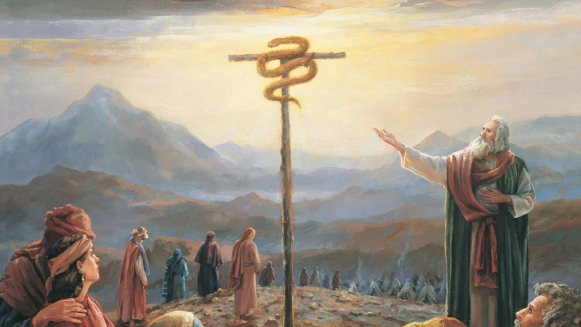
In Numbers 21, the Israelites experience victory over the Canaanites but soon fall back into grumbling and complaining. God brings a plague of snakes upon the people. It’s a divine judgment. Their grumbling against God was to their downfall. But the people beg for mercy.
And the Lord said to Moses, “Make a fiery serpent and set it on a pole, and everyone who is bitten, when he sees it, shall live.” 9 So Moses made a bronze serpent and set it on a pole. And if a serpent bit anyone, he would look at the bronze serpent and live. -Numbers 21:8-9
Moses prays. God tells Moses to make a fiery serpent and set it on a pole. So God doesn’t simply take the snakes away. He also doesn’t prevent people from continuing to get bitten by the snakes. But once bitten, a person could respond by faith in the Lord by looking to the serpent on the pole.It’s an odd story. A number of questions might come to mind. Isn’t that idolatry? Making this bronze serpent?
In the Golden Calf episode of Exodus 32, Moses is on the mountain receiving instruction from the Lord. He’s there for 40 days and the Israelites get restless. They take their gold and melt it into the image of a cow. Why is it ok with the bronze serpent? It’s a totally different situation. Most importantly, because God told them to do it this time. Secondly, this wasn’t idol worship because they weren’t worshiping the serpent. The serpent didn’t represent God to the people.
There are many wonderful gospel themes in this scene. The Israelites sin against the Lord. And so God brings a plague of snakes upon the people as divine judgment. And yet, once the people repent and the bronze snake is made, it is in looking to that by which people are healed.
A symbol of death becomes a symbol of life
Snakes were bringing death, but looking to this particular snake brought the promise of healing. A symbol of judgment the Lord then uses as a symbol of victory. The cross was the greatest symbol of judgment and condemnation in the Roman world. A brutal punishment. And yet, it is to the cross that we see Christ’s victory over sin. Perhaps you look at the story and think “but why a snake? Aren’t snakes bad in the Bible?” Yeah, so are people, but it is through a man that we are saved. The Lord Jesus, both God and man.
The gospel
In a person being healed because of looking to the snake, it took what they were doing out of their hands. It was entirely the work of God. So too we see this in the gospel. It is not based on us, or how good we are. We are totally helpless to heal ourselves from the disease of sin. It is looking to the cross, to looking at what Jesus has done, to trusting Jesus by faith that we can have salvation.
It’s foolishness
The serpent doesn’t make sense. The world is confounded by the gospel and the message of grace, the idea that we can be freely forgiven based on what someone else has done. The world is offended by the message of salvation by grace. Paul says in 1 Corinthians that the cross is folly to those who are perishing, but to those who are being saved, it is the power of God (1 Corinthians 1:18).
We want to save ourselves. We want to see how we measure up and to feel good about how good we are. The gospel is that you cannot earn it. You look to what Jesus has done.
Salvation for the undeserving
The Israelites were grumbling and complaining and blaspheming against God, and yet God saves them. Jesus came into a world where people condemned him, polluted against him, betrayed him, and killed him. While we were yet sinners, Christ died for us (Romans 5:8). In both looking to the serpent and the death and resurrection of Jesus, what people needed was faith.
In the Gospel of John, Jesus will make specific reference to this event in Numbers. John chapter 3, Jesus is talking to Nicodemus, the Pharisee.Jesus says “as Moses lifted up the serpent in the wilderness, so must the Son of Man be lifted up.” (John 3:14) Moses literally lifted up the bronze serpent on a pole. And Jesus was literally lifted up on the cross. There, Jesus compares himself being lifted up to the bronze serpent. For the Israelites who were afflicted by the serpent’s bite, life was found by looking to the bronze serpent. For us today, eternal life is found by looking to Jesus.
The main idea of our passage this evening is that: Opposing God brings death but true life is fond by faith. Are you trusting in Jesus? We’re infected with the venom of sin. And it’s a killer. There is nothing we can do on our own to take out that poison. The only antidote is found in looking to Jesus.Look to him. Love him. Live for him.
Originally published August 1, 2018.
Thanks for reading! If you liked, please comment and share :)
53 They went each to his own house, 1 but Jesus went to the Mount of Olives. 2 Early in the morning he came again to the temple. All the people came to him, and he sat down and taught them. 3 The scribes and the Pharisees brought a woman who had been caught in adultery, and placing her in the midst 4 they said to him, “Teacher, this woman has been caught in the act of adultery. 5 Now in the Law, Moses commanded us to stone such women. So what do you say?” 6 This they said to test him, that they might have some charge to bring against him. Jesus bent down and wrote with his finger on the ground. 7 And as they continued to ask him, he stood up and said to them, “Let him who is without sin among you be the first to throw a stone at her.” 8 And once more he bent down and wrote on the ground. 9 But when they heard it, they went away one by one, beginning with the older ones, and Jesus was left alone with the woman standing before him. 10 Jesus stood up and said to her, “Woman, where are they? Has no one condemned you?” 11 She said, “No one, Lord.” And Jesus said, “Neither do I condemn you; go, and from now on sin no more.”
Prayer
Our heavenly Father,
We continue to pray for our nation in these tumultuous times.
Lord, may we look to you as our rock and salvation.
Lord, may we not be burdened by this election cycle, but may we be focused on you.
Lord, regardless of what happens, may we continue to pray for revival around the world, in our nation, and in our community.
May we reach people with the love of Christ and with your gospel.
May that be a burden on our hearts.
May we be dawn to you and greater holiness. May we be sanctified by you and have greater love for you and for your people.
Lord, I also pray for our community as we’ve seen increases in Covid cases recent weeks.
Lord, by your grace, we have never had significant issues with Covid in this church. We praise you for that. Lord, we continue to ask for your protection. Lord, may we exercise wisdom in our decisions.
For people who are infected with this virus, we pray for them and their recovery.
Lord, we also pray for our medical care providers who have spent months on the front lines battling Covid. We pray for them and for their safety.
Lord, we ask that you bless our time in your word this morning. May our hearts and minds be focused on you, your Word, and on worshipping you, our great God.
In Jesus’ name, amen.
Introduction
Your Bible probably has brackets around this section with a note that says something to the effect that this passage was not part of the earliest manuscripts.
There’s a lot that could be said about this subject but I wanted to begin this morning by giving a few notes on how we got our Bibles and why we can trust our Bibles.
The printing press was invented in the year 1440.
So you have a gap of more than 1,400 years between the time of Christ and the invention of the printing press where there is one – and only one – way to copy a text. You had to write it out by hand.
Now in the couple of generations after Jesus died, you had the books of the New Testament written.
And they were copied. And the copies were copied.
Thousands of fragments and copies of the New Testament from ancient times. The earliest pieces we have are verses from books, not entire books.
Now for the scribes who did the copying, we owe them a tremendous debt of gratitude. They had an incredibly tedious job.
But the scribes were just men and they were not perfect. And so sometimes mistakes were made.
The encouraging fact is that the vast majority of scribal variations – or variants – is that they’re over minor issues. Maybe there’s a switch where they say Jesus Christ when it should have been Christ Jesus. Greek uses the word “the” a lot, maybe they accidentally added or omitted a usage of that. Maybe they forgot a word. Maybe they spelled a word differently.
None of those changes make significant differences in the meaning of a text.
And the good news is that there are no major doctrines of the Christian faith which are seriously called into question due to manuscript variations.
That should be an encouragement to the trustworthiness of the Bibles that we read.
We have this long scribal tradition of people who took the work very seriously.
They put tremendous care into the copying of the texts.
In the 19th century, scholars began comparing all of the known Biblical manuscripts.
They considered the age of the manuscripts, and the weight of manuscript evidence in favor of any given verse, among other criteria.
And from that, they produced a New Testament that was a product of all of the existent sources.
The work has been updated over the last century plus, but it is that work and Greek New Testament which is the basis for all major modern translations of the New Testament, with the exception of the King James and New King James Versions.
With that, we come to our passage in John 8.
There are several reasons why most translations are so specific in blocking off this section and making a note about the text.
Let’s consider them briefly.
This passage is absent from all manuscripts of John prior to the fifth century.
When the early church theologians comment on this overarching section of John 7 and 8, this passage is never mentioned.
From the Eastern Orthodox Church Fathers, none of them ever mention this passage prior to the tenth century.
When the story does start to appear, it’s located in several different places in the gospels.
The story doesn’t fit into this section.
-By that I mean that John 7 is at the Feast of Booths. When we left off, Jesus is speaking and it’s the last day of the feast. This story totally interrupts that story and changes the day. But when we get back to verse 12, Jesus is again at the Feast of Booths.
Greek scholars point out that some of the language in this passage is not consistent with the rest of John.
And the conclusion of many of the finest Biblical scholars in the world is that there is overwhelming evidence that this story is not original to John.
All of that being said, many scholars do believe that it’s an event that really did happen during the ministry of Jesus.
But is it original? And if it’s not original, is it scripture?
(pause)
I think it should also be said that there are people on both sides of this issues: was it original, was it not, there are people on both sides who love God, who love the Bible, and who are sincerely trying to be accurate in their approach to God’s Word.
But it leaves us with a question. How do we approach a text like this?
Some pastors won’t even preach this passage.
I like the approach John Piper has taken. Let’s look at the passage and the points that it makes but then support those points from other places in the scripture. Because this passage is teaching truth.
So with that, we’ll jump into this well known event in the ministry of Jesus.
7:53 into chapter 8:
They went each to his own house, 1 but Jesus went to the Mount of Olives. 2 Early in the morning he came again to the temple. All the people came to him, and he sat down and taught them.
The beginning of the passage is setting this scene, but as Jesus is teaching, he’s interrupted.
3 The scribes and the Pharisees brought a woman who had been caught in adultery
And this is the first point we want to focus on this morning. The woman caught in adultery.
The first thing that’s noteworthy is that in the story, they bring a woman who was caught in adultery.
Something’s missing. They didn’t bring the woman whom they had heard committed adultery.
They brought the woman who was caught in adultery…
So she was in caught in the act, but there’s an issue…
Where’s the man?
In Jewish Law, capital adultery charges were not based on rumor or hearsay. You had to be caught in the act.
But the fact that the it’s just the woman and not the man leads to one of two possibilities.
To borrow from D.A. Carson, who I think was half-joking: either the man was a faster runner than the woman.
Or the more common view is that this woman was setup by some of the ruling authorities who had hatched a plot to catch her.
And they do this, not because of a desire for justice or because they’re primarily concerned with holiness, or because they’re really even concerned with this woman.
But it’s because they hate Jesus and want to try to use this situation to make a mockery of Christ.
What do I mean?
Let’s continue reading.
Verses 4-5: they said to him, “Teacher, this woman has been caught in the act of adultery. 5 Now in the Law, Moses commanded us to stone such women. So what do you say?”
Adultery is certainly a very serious sin against God and against one’s spouse.
And it is serious in this passage.
It’s a sin which completely undermines the sacred bond of marriage. It’s destroyed marriages and families. It’s a sin of lust, of weakness, and of selfishness.
I said this a moment ago, but in the Old Testament, adultery was a capital offense.
Or again in Deuteronomy 22:22: “If a man is found lying with the wife of another man, both of them shall die, the man who lay with the woman, and the woman. So you shall purge the evil from Israel.
And so the people who had caught this woman point to the Law and that the appropriate punishment for this woman is death.
And they come to Jesus asking for his input in the situation.
It’s a trap.
They’re seeking here to undermine Jesus.
They’ve created a theological dilemma for Jesus.
He could pass the buck and have them take the woman before the Jewish court.
If he says he should be forgiven, they’ll accuse him of being soft on the Law. If he says she should be stoned, they’ll say he’s contradicted his own message of grace and forgiveness.
Our passage establishes that in verse 6: This they said to test him, that they might have some charge to bring against him.
Jesus responds first without words, but with an action.
Second part of verse 6: Jesus bent down and wrote with his finger on the ground.
What he was writing has been the subject of much speculation.
Some think he was writing the Ten Commandments, others think he was writing sins of the accusers, others think he was writing other Old Testament legal commands.
Ultimately, we don’t know.
I mentioned in the beginning that many scholars don’t believe the story is original to John. But I’ll say again, that many believe it happened. I believe it happened. And this writing in the dirt is part of why I believe it happened.
Tim Keller brings up this point.
But why is that included in the story?
Jesus is writing in the ground, we never find out what. It contributes nothing to the story.
If you were to make up a story, why would you have a detail of the story be absolutely meaningless to the story?
Instead, I believe that it really happened and the writing in the dirt is mentioned because the person who wrote this story saw it happen.
Verse 7: And as they continued to ask him, he stood up and said to them, “Let him who is without sin among you be the first to throw a stone at her.” 8 And once more he bent down and wrote on the ground. 9 But when they heard it, they went away one by one, beginning with the older ones, and Jesus was left alone with the woman standing before him.
So it appears to be a combination of what Jesus was writing and his words that have totally flipped the script.
Couple of things to consider about this story.
When Jesus says “let him who is without sin among you be the first to throw a stone” is he saying that to judge her sin, you have to be morally perfect?
Again, that’s often the way people interpret the story.
Everyone knows this verse.
Everyone knows the Bible says “let he who is without sin cast the first stone.”
And the verse everyone knows, almost everyone gets wrong.
And not just this verse. Our society knows lots of Bible verses that mention judgment.
Matthew 7:1: “Judge not, that you be not judged.
Same passage. Matthew 7:4: how can you say to your brother, ‘Let me take the speck out of your eye,’ when there is the log in your own eye?
We like verses that speak against judgment. Because our society has decided that the absence of judgment is love.
And to judge someone is seen as unloving.
Is it a sin to judge someone?
Consider those passages in Matthew:
how can you say to your brother, ‘Let me take the speck out of your eye,’ when there is the log in your own eye?
But then the following verse also says: You hypocrite, first take the log out of your own eye, and then you will see clearly to take the speck out of your brother’s eye.
What these verses are saying is that everyone of us is a work in progress and that we need to also work on ourselves and our own holiness as we help challenge and exhort others to holiness.
It is not saying that we can never make a moral judgment at any time.
In the previous chapter, Jesus had said:
24 Do not judge by appearances, but judge with right judgment.”
The Bible clearly teaches, in multiple ways, that we are to have moral discernment and views on the world, influenced by the Word of God.
There are Bible verses that talk about avoiding sin which imply an awareness of what is and is not sinful so that we can avoid sin.
2 Thessalonians 3:6: Now we command you, brothers, in the name of our Lord Jesus Christ, that you keep away from any brother who is walking in idleness and not in accord with the tradition that you received from us.
There are Bible passages that serve as warnings of false teachers in the church. To recognize a false teacher, you have to have opinions on the Biblical validity of someone’s message.
Matthew 7:15-17: Beware of false prophets, who come to you in sheep’s clothing but inwardly are ravenous wolves. 16 You will recognize them by their fruits. Are grapes gathered from thornbushes, or figs from thistles? 17 So, every healthy tree bears good fruit, but the diseased tree bears bad fruit.
To be able to do that requires us to have a moral understanding which is grounded in the truth of God.
We have Bible verses about exhorting people to live up to Biblical standards.
Hebrews 10:24-25: And let us consider how to stir up one another to love and good works,
1 Thessalonians 5:11: Therefore encourage one another and build one another up, just as you are doing.
This requires us to have a sense of what is and is not sin.
Now, there are some guiding principles.
Because, we should never judge someone for its own sake. It should always be in the hope of seeing a person repent. Love should undergird everything we do.
And it can be done in a loving way.
The Biblical worldview is that sin is not arbitrary but sin is sin because it is an affront to God and it is an action against God’s righteousness, holiness, and truth. The best way to live life is in accordance with God’s truth.
When we sin, we are living against his truth and that is therefore not a path that leads us to flourishing.
But we should want that both for ourselves and for others.
Again, it’s a challenge. Grace and law.
Because I think most of us have a tendency to lean more on one side or the other with that.
Some of us are rule followers. Rule enforcers. More on the side of the law. And for that person, the temptation is to be puffed up and self-righteous. We can forget our own sinfulness and need for grace when we do that.
But if we go exclusively on the side of grace, we can forget about God’s call for holiness in our lives and have a worldview that is generally apathetic to sin.
Both extremes are problematic.
Back in our passage. Jesus has been writing. He says “Let him who is without sin among you be the first to throw a stone at her.
We always think that this is a story about grace.
But is that what’s really happening here?
John and Paul Feinberg have a fascinating analysis of this passage in their book “Ethics for a Brave New World” where they look at this passage in light of Old Testament laws.
This trial is illegal.
For starters, Old Testament standards for capital offenses were very stringent. It wasn’t a matter of guilty beyond a reasonable doubt. You had to have total certainty.
Capital punishment for adultery was probably actually very rare in Israel. Because clearly an accusation can be made. But you needed to have multiple witnesses.
Deuteronomy 17:6: On the evidence of two witnesses or of three witnesses the one who is to die shall be put to death; a person shall not be put to death on the evidence of one witness
And the witnesses would be cross-examined and their stories had to corroborate with each other.
Also it should be noted that in the Old Testament: perjury about a capital offense was itself a capital offense.
We see both of these ideas. Cross-examination and punishment for perjury in Deuteronomy 19:
16 If a malicious witness arises to accuse a person of wrongdoing, 17 then both parties to the dispute shall appear before the Lord, before the priests and the judges who are in office in those days. 18 The judges shall inquire diligently, and if the witness is a false witness and has accused his brother falsely, 19 then you shall do to him as he had meant to do to his brother. So you shall purge the evil from your midst
And as a reminder, the Law required that in cases of adultery, both of the guilty parties needed to be executed.
Leviticus 20:10: “If a man commits adultery with the wife of his neighbor, both the adulterer and the adulteress shall surely be put to death.
The law required a public trial, here it’s a mob bringing the woman to Jesus.
The law also required right motives in a trial. And this was a matter of the heart, but you weren’t supposed to accuse someone out of malice.
Exodus 23:1: You shall not spread a false report. You shall not join hands with a wicked man to be a malicious witness.
Also entrapment would have been sinful. The Israelites were supposed to help keep the people in their community from sin, not lie and wait so you can catch someone.
(pause)
So let’s summarize all of this. We like to look at this story as the supreme example of grace in the Bible.
It’s a story about court procedural violations!
The religious leaders want to come to Jesus with a legal case and we see that Jesus follows the law even more radically than the conspirators.
Jesus didn’t come to abolish the Law but to fulfill the Law. He says that himself in the Sermon on the Mount.
Jesus never says the woman doesn’t deserve death.
But when he says: “Let him who is without sin among you be the first to throw a stone at her:
Jesus has exposed the sins or sinful motivations of these accusers and they leave.
Did she commit adultery?
Probably. There’s never an indication that that was untrue.
But Jesus has intervened in this mistrial.
He will later be a victim himself of an improper trial. We’ll talk about it more when we get there, but there was illegalities with the trial of Jesus.
But unlike this woman, Jesus would be illegally convicted and he would not have an advocate.
But it’s because Jesus died as an innocent man that the guilty could be forgiven.
That’s the gospel.
Back in our passage. Those who oppose Jesus have thought they had such a brilliant trap for him. And it fails. They leave. They don’t care about the woman.
So they leave and Jesus and the woman remain.
10 Jesus stood up and said to her, “Woman, where are they? Has no one condemned you?” 11 She said, “No one, Lord.” And Jesus said, “Neither do I condemn you; go, and from now on sin no more.”
Now, we do see grace from Jesus.
Jesus’ purpose for coming into the world was salvation.
John 3:17 says:
For God did not send his Son into the world to condemn the world, but in order that the world might be saved through him.
Jesus doesn’t bring the hammer down.
Throughout the gospels, we see people coming to Jesus in their sins, or Jesus showing awareness of their sins.
The main point of the passage is the law and Jesus’ adherence to the Law and his honor for the law.
But that doesn’t mean that grace is absent from the story.
Because Jesus is gracious to sinners.
And we too should be.
It can be so easy to be cynical about the world, about sin, about people. It can be so easy to judge others, to judge their hearts and their motivations, when we don’t know people’s hearts and motivations, and experiences.
We need to ask ourselves when we’re tempted to feel judgmental about someone.
Is it out of pride? Is it to feel better about ourselves and our own sinfulness?
Or is it out a righteous desire to see God honored? Is it out of a righteous love for what is just and right? Is it out of a righteous love for sinful people and desire to see their salvation, repentance, and sanctification?
We should ask ourselves those questions.
Because it can be easy to just be snarky and critical.
Is judgment sinful?
It is when we feel like we’re better than someone or look down on them.
It is when it blinds us to our own sinfulness.
It’s not when we see a person’s life isn’t honoring Christ and bringing them to God.
At the end of the passage, Jesus says to the woman: “Neither do I condemn you; go, and from now on sin no more.”
He doesn’t condemn her, but he calls her to holiness.
From now on, sin no more.
Jesus is gracious. But he never, ever affirms sin.
He never celebrates sin, he never says sin is good or doesn’t matter.
His death shows that it matters. He didn’t die for us because our sins weren’t that big a deal.
He is gracious when we sin, and we should rejoice in that. But Jesus also calls us to holiness, and for that, we should also rejoice. Because a righteous life, a life dedicated to God is the best way to live.
There is forgiveness when we sin because we have a savior.
Our world likes to think the absence of judgment is love.
Jesus shows love. He gives his life to redeem sinners.
Jesus shows us love, because he points us to real life, and in pointing to the life to which he has called us, Jesus desires our holiness.
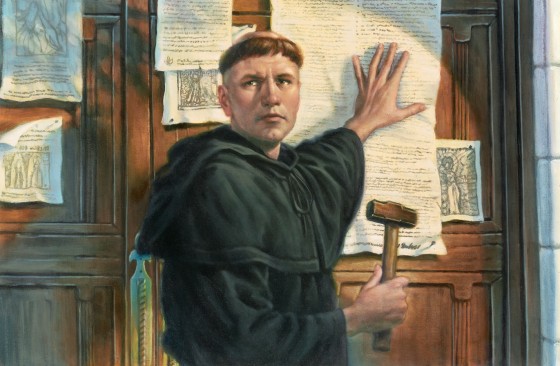
503 years ago today, the history of the Church, of Europe, and of the western world were forever changed in the town of Wittenberg Germany. Martin Luther wrote his 95 theses, a list of grievances against corrupt and unbiblical practices within the Catholic Church. The impact of this event continues to ripple throughout the Christian world.
Luther was not the first person to call for reform in the church.
Other movements perhaps had followings but didn’t have political support. Luther had that. Which afforded him a certain level of personal safety, though his martyrdom seemed inevitable at times. Another key difference between Luther and influential reformers who preceded him was the invention of the printing press. This allowed a mass volume of pamphlets to be produced. Luther was also likely helped by the fact that other reformation movements spread elsewhere in Europe during this time. Amid church abuses, Europe was at a tipping point. And while Luther was not the first to call for reform, it was his ministry that most significantly tipped the Reformation movement over the edge.
Less than 20 years later in England, Henry VIII broke away from the Catholic Church and started he Church of England in 1534. Reforms were also happening in Switzerland, most notably, the city of Geneva, eventually under the leadership of John Calvin. The Anabaptist movement sprung up who favorited believer’s baptism over infant baptism. These groups were not always in agreement, and some of them had severe conflicts with each other, but they were all in agreement that all was not well within the Church, and that there were changes which were necessary.
Against Church traditions that had become entrenched in Europe, the reformers did not think that they were doing something new, but rather were taking the Church back to its Biblical foundations.
By the sale of indulgences, it was believed that people could pay a price to have sins removed from themselves or for people for whom they had purchased the indulgences. But the issue with this was that the Catholic Church was overstepping its bounds on what saved a person. The Church was not the arbiter of what brings salvation, it is God’s grace alone received through faith alone in Christ alone. The gospel is not man’s gospel (Galatians 1:11).
The Catholic Church believes and believed that the seven sacraments impart grace by nature of being sacraments. While the Mass was in Latin and could not be understood by all people, the justification for this was that the sacraments still inherently imparted grace to a person, regardless of if they could understand. But this undermined faith. That’s not to say that Catholics (then and now) never value faith. But it can be easy to focus on sacraments and works apart from faith.
Interestingly the sacrament of confession was one which caused great angst for Martin Luther. Beginning as a devout Catholic and constantly aware of his own sinfulness, Luther lived in an ever-present awareness the this life did not live up to God’s standards of holiness. He had no assurance of salvation and lived in an exhausting cycle of constant confession. Luther would confess multiple times a day, sometimes for hours at a time, as he tried to remember every sin he committed, every hint of pridefulness, everything he should have done but hadn’t.
One verse that Luther had despised in the scriptures was “the righteous shall live by faith” which is found multiple times in the Bible (Romans 1:17; Galatians 3:11; Habakuk 2:4).
But Luther knew he wasn’t righteous.
In his confession story, Luther said: “For I hated that word “righteousness of God,” which, according to the use and custom of all the teachers…though I lived as a monk without reproach, I feel that I was a sinner before God with an extremely disturbed conscience. I could not believe that he was placated by my satisfaction. I did not love, yes, I hated the righteous God who punishes sinners, and secretly, if not blasphemously, certainly murmuring greatly, I was angry with God.”
But Luther would eventually be struck by the verse which had brought him such distress. The gospel was not about living up to the righteousness of God. It was about living for God in faith. And for Luther, that changed everything.
“At last, by the mercy of God, meditating day and night, I gave heed to the context of the words, namely, “In it the righteousness of God is revealed, as it is written, ‘He who through faith is righteous shall live.’” There I began to understand that the righteousness of God is that by which the righteous lives by a gift of God, namely by faith. And this is the meaning: the righteousness of God is revealed by the gospel, namely, the passive righteousness with which merciful God justifies us by faith, as it is written, “He who through faith isrighteous shall live.” Here I felt that I was altogether born again and hadentered paradise itself through open gates.”
Faith is a gift from God and that people are declared righteous by God as a result of faith in the gospel.
We are justified by faith. This became a hallmark of Luther’s theology. And it became invaluable to Protestantism. We are justified by faith, not by faith and works. Not through faith and Church. Not by faith and any of the sacraments (though baptism and the Lord’s Supper are things which all Christians ought to do and are commanded to do).
A critique of this view and an unfortunate consequence is that many take the “faith alone” view to mean that disingenuous faith is enough, just giving some vague assent to a gospel a person doesn’t really believe in. That wasn’t what Luther believed.
At the beginning of his 95 Theses, the first theses talks about how all of life is repentance. Faith is an all-encompassing reality and driving force of life. Living by faith in the Gospel of Jesus Christ. That we cannot earn salvation of our own merit but that it is entirely by grace alone through faith alone in Christ alone.
Happy Reformation Day!
This post was originally published October 31, 2017 as “500 years of reformation.”
Thanks for reading! If you liked it, please share!
10 “Blessed are those who are persecuted for righteousness’ sake, for theirs is the kingdom of heaven.11 “Blessed are you when others revile you and persecute you and utter all kinds of evil against you falsely on my account.12 Rejoice and be glad, for your reward is great in heaven, for so they persecuted the prophets who were before you. -Matthew 5:10-12
Almost 2,000 years ago when Jesus preached these words, they also would have been radical to his audience. Persecution is never looked at as a blessing.But in Matthew 5, Jesus says that it is.Part of what Jesus is saying in these verses is that there is blessedness for the person who’s life is so clearly devoted to God, who is so clearly living out their Christian faith, that they face opposition because of it.
If a Christian goes through life and never faces opposition, you might be living too comfortably in the world.If you never face any heat because of your faith, you might not be associating with anyone who disagrees with what you believe.
In 2 Timothy 3, the Apostle Paul talks about persecution.“Indeed, all who desire to live a godly life in Christ Jesus will be persecuted.”ALL who live for Christ will be persecuted.Persecution is part of the Christian life. The Bible does not shy away from this fact.Shortly before the time of his crucifixion, Jesus said to his disciples in John 5:18-19: “If the world hates you, know that it has hated me before it hated you. If you were of the world, the world would love you as its own; but because you are not of the world, but I chose you out of the world, therefore the world hates you.
Something doesn’t have to be a matter of life and death to be persecution. In American society, we don’t generally hear stories of a person being killed just because they are a Christian. It’s not absolutely unheard of, but it’s rare.The persecution American Christians face is often times more social or legal. That can still put us in situations where it’s tempting to sin, where it’s tempting to respond a certain way that we shouldn’t. That still puts us in situations where it’s easier to just go along with what the world is doing than taking a stand for what you believe.
I know a mechanic who’s a Christian. He was committed to being honest in his dealings with customers. He was so honest that his boss didn’t like him and eventually fired him.
My wife told me a story about how when she was in high school, she was interviewing to be part of a local youth leadership program in her community. While she was at her interview, one of the people making the decision saw that she was a student at a Christian high school. He started berating her with questions about her faith, questioning how she could believe in Jesus. Asking nothing about this youth organization. Essentially just harassing her about her faith.
Again, the gospel is a message that some find offensive. “To one a fragrance from death to death, to the other a fragrance from life to life (2 Corinthians 2:16).
”There have been examples of groups trying to silence coaches of public school teams from praying with players before games, even when it’s voluntary. I read a story today about the Freedom from Religion Foundation suing a public school in Ohio. A local pastor was leading a Bible study with students at lunch. It was optional. But FFRF still needed to swoop in and sue. There have been legal pressures on Christian universities to cover abortions for staff.Those are just a few examples.
But in living for Jesus, in a fallen world, it is inevitable that there will be times when a person’s faith comes under fire.
Responding When a person is being persecuted and has a choice of if they’re going to respond in a Christlike way or if they’re going to respond in a hostile way. You can be light to a dark world or you can just spread the darkness.The Apostle James talked about the various trials that Christians face:“Count it all joy, my brothers, when you meet trials of various kinds, for you know that the testing of your faith produces steadfastness. And let steadfastness have its full effect, that you may be perfect and complete, lacking in nothing (James 1:2-4).
”As evil as the persecution that Christians face can be, it’s an opportunity to respond with love. Jesus told us to pray for our enemies (Matthew 5:44).God can use those situations as a way to strengthen us in our own faith. To focus us on what we truly value.Another part of the reason why persecution is seen as a blessing is that the harsher the persecution, the more that is taken away from a person, the more someone is able to live in total dependence on God and reliance in his ability to preserve them. That’s not to say that the persecution is good in itself. It’s obviously not. That’s not to say that sin is good. It’s not. But through the evils that people commit, God can still use that for good.
Again, if you’re not ever facing any pressure because of your faith, you might not be living in a way that is distinct from the world. I’m not saying we should go out of our way to be combative. The verse does not say that all persecution is good. It’s when a person is following Jesus and is persecuted for righteousness’ sake that blessed a person. It’s a radical idea. But let us remember that we have a savior who faced the ultimate persecution for righteousness’ sake.
Originally published February 27, 2017
Thanks for reading! Make sure to like, comment, and subscribe.