Josh Benner

Blog

  • Sermon: From Commoner to Queen – Esther 1:1-2:18

    Text

    Now in the days of Ahasuerus, the Ahasuerus who reigned from India to Ethiopia over 127 provinces, 2 in those days when King Ahasuerus sat on his royal throne in Susa, the citadel, 3 in the third year of his reign he gave a feast for all his officials and servants. The army of Persia and Media and the nobles and governors of the provinces were before him, 4 while he showed the riches of his royal glory and the splendor and pomp of his greatness for many days, 180 days. 5 And when these days were completed, the king gave for all the people present in Susa the citadel, both great and small, a feast lasting for seven days in the court of the garden of the king’s palace. 6 There were white cotton curtains and violet hangings fastened with cords of fine linen and purple to silver rods and marble pillars, and also couches of gold and silver on a mosaic pavement of porphyry, marble, mother-of-pearl, and precious stones. 7 Drinks were served in golden vessels, vessels of different kinds, and the royal wine was lavished according to the bounty of the king. 8 And drinking was according to this edict: “There is no compulsion.” For the king had given orders to all the staff of his palace to do as each man desired. 9 Queen Vashti also gave a feast for the women in the palace that belonged to King Ahasuerus. 

    10 On the seventh day, when the heart of the king was merry with wine, he commanded Mehuman, Biztha, Harbona, Bigtha and Abagtha, Zethar and Carkas, the seven eunuchs who served in the presence of King Ahasuerus, 11 to bring Queen Vashti before the king with her royal crown, in order to show the peoples and the princes her beauty, for she was lovely to look at. 12 But Queen Vashti refused to come at the king’s command delivered by the eunuchs. At this the king became enraged, and his anger burned within him. 

    13 Then the king said to the wise men who knew the times (for this was the king’s procedure toward all who were versed in law and judgment, 14 the men next to him being Carshena, Shethar, Admatha, Tarshish, Meres, Marsena, and Memucan, the seven princes of Persia and Media, who saw the king’s face, and sat first in the kingdom): 15 “According to the law, what is to be done to Queen Vashti, because she has not performed the command of King Ahasuerus delivered by the eunuchs?” 16 Then Memucan said in the presence of the king and the officials, “Not only against the king has Queen Vashti done wrong, but also against all the officials and all the peoples who are in all the provinces of King Ahasuerus. 17 For the queen’s behavior will be made known to all women, causing them to look at their husbands with contempt, since they will say, ‘King Ahasuerus commanded Queen Vashti to be brought before him, and she did not come.’ 18 This very day the noble women of Persia and Media who have heard of the queen’s behavior will say the same to all the king’s officials, and there will be contempt and wrath in plenty. 19 If it please the king, let a royal order go out from him, and let it be written among the laws of the Persians and the Medes so that it may not be repealed, that Vashti is never again to come before King Ahasuerus. And let the king give her royal position to another who is better than she. 20 So when the decree made by the king is proclaimed throughout all his kingdom, for it is vast, all women will give honor to their husbands, high and low alike.” 21 This advice pleased the king and the princes, and the king did as Memucan proposed. 22 He sent letters to all the royal provinces, to every province in its own script and to every people in its own language, that every man be master in his own household and speak according to the language of his people. 

    2 After these things, when the anger of King Ahasuerus had abated, he remembered Vashti and what she had done and what had been decreed against her. 2 Then the king’s young men who attended him said, “Let beautiful young virgins be sought out for the king. 3 And let the king appoint officers in all the provinces of his kingdom to gather all the beautiful young virgins to the harem in Susa the citadel, under custody of Hegai, the king’s eunuch, who is in charge of the women. Let their cosmetics be given them. 4 And let the young woman who pleases the king be queen instead of Vashti.” This pleased the king, and he did so. 

    5 Now there was a Jew in Susa the citadel whose name was Mordecai, the son of Jair, son of Shimei, son of Kish, a Benjaminite, 6 who had been carried away from Jerusalem among the captives carried away with Jeconiah king of Judah, whom Nebuchadnezzar king of Babylon had carried away. 7 He was bringing up Hadassah, that is Esther, the daughter of his uncle, for she had neither father nor mother. The young woman had a beautiful figure and was lovely to look at, and when her father and her mother died, Mordecai took her as his own daughter. 8 So when the king’s order and his edict were proclaimed, and when many young women were gathered in Susa the citadel in custody of Hegai, Esther also was taken into the king’s palace and put in custody of Hegai, who had charge of the women. 9 And the young woman pleased him and won his favor. And he quickly provided her with her cosmetics and her portion of food, and with seven chosen young women from the king’s palace, and advanced her and her young women to the best place in the harem. 10 Esther had not made known her people or kindred, for Mordecai had commanded her not to make it known. 11 And every day Mordecai walked in front of the court of the harem to learn how Esther was and what was happening to her. 

    12 Now when the turn came for each young woman to go in to King Ahasuerus, after being twelve months under the regulations for the women, since this was the regular period of their beautifying, six months with oil of myrrh and six months with spices and ointments for women— 13 when the young woman went in to the king in this way, she was given whatever she desired to take with her from the harem to the king’s palace. 14 In the evening she would go in, and in the morning she would return to the second harem in custody of Shaashgaz, the king’s eunuch, who was in charge of the concubines. She would not go in to the king again, unless the king delighted in her and she was summoned by name. 

    15 When the turn came for Esther the daughter of Abihail the uncle of Mordecai, who had taken her as his own daughter, to go in to the king, she asked for nothing except what Hegai the king’s eunuch, who had charge of the women, advised. Now Esther was winning favor in the eyes of all who saw her. 16 And when Esther was taken to King Ahasuerus, into his royal palace, in the tenth month, which is the month of Tebeth, in the seventh year of his reign, 17 the king loved Esther more than all the women, and she won grace and favor in his sight more than all the virgins, so that he set the royal crown on her head and made her queen instead of Vashti. 18 Then the king gave a great feast for all his officials and servants; it was Esther’s feast. He also granted a remission of taxes to the provinces and gave gifts with royal generosity. 

    Prayer 

    Our heavenly Father, 

    1 Lord, you have been our dwelling place in all generations. 2 Before the mountains were brought forth, or ever you had formed the earth and the world, from everlasting to everlasting you are God. 

    Lord, we continue to pray for our community that has been hit so hard by Covid these last couple weeks. We pray for people’s health and for recoveries. We continue to praise you for your protection for our church. 

    Lord, we praise you for the great report for little Mila.We continue to ask for your blessings on her. 

    Lord, we pray for our time in the Book of Esther. We pray that you would bless our study of this book, that it would point us to you, to your goodness and sovereignty, and to the hope that you call us to have in you. 

    In Jesus’ name, amen. 

    Series introduction 

    We’re beginning a Christmas series today as we study the Book of Esther. 

    And where we’ll begin this morning is by giving an introduction to this book. 

    A few noteworthy facts about Esther. 

    -Esther is the only book in the Bible that never mentions God. 

    It never mentions prayer. There’s nothing supernatural in this book. There are no prophecy. There are no direct descendants to Jesus who are in this book. 

    But just because God is not mentioned in the Book of Esther does not mean that God is not present in the Book of Esther. Because God’s work is seen all throughout this story of a Jewish woman becoming the Queen of Persia and through that, saved Israel. 

    Esther might not be the most obvious book to preach at Christmastime, but as we look at this story, I think we’ll see a number of themes in Esther which are present in the Christmas story and which are just as pertinent for our lives today. 

    Esther is a book where we see God’s providence and sovereignty over the nations and over his own people. In the Book of Esther, we see hope and an unlikely hero. We see wickedness and plots of destruction. We see God’s faithfulness. 

    Couple of other brief notes to make. 

    We’ve talked many times about how the northern and southern kingdoms of Israel fell. The north was conquered in 722 B.C. The southern kingdom was conquered in 586 B.C. 

    The Book of Esther is written just about a century after the southern kingdom was conquered. In that time, the Persians had actually allowed the Israelites to return to Jerusalem to build the temple. 

    We see that in books like Ezra and Haggai. But they’re still under Persian rule at this point in history. 

    Last comment to make before we get into the passage. For me, it’s helpful to think of the scenes in Esther like acts in a play. And this week, we look at the first act where the major characters are all introduced. 

    And we’ll primarily focus on three introductions today. 

    First: the King’s Feast

    The story begins by introducing us to King Ahasuerus and a great feast he throws. 

    Now in the days of Ahasuerus, the Ahasuerus who reigned from India to Ethiopia over 127 provinces, 2 in those days when King Ahasuerus sat on his royal throne in Susa, the citadel, 3 in the third year of his reign he gave a feast for all his officials and servants. The army of Persia and Media and the nobles and governors of the provinces were before him,

    First thing to note. The king’s name. 

    I’m preaching from the ESV which names the king as Ahaseurus. 

    Some translations say Xerxes. I looked at this verse in all of the major translations and it looks like a fairly even split between the two. Neither way is wrong. Because both names refer to the same person. Ahaseurus is the name that is in the Hebrew Bible. Xersxes is the Persian name for this king, and it’s closer to the name that he’s given in the Greek translation of the Hebrew Bible. 

    But it’s the same person. Ahasuerus – or Xerxes – is a historical figure who ruled as emperor of Persia for over 20 years. 

    The opening verse mentions the kingdom from India to Ethiopia. At its height, the Perisan Empire was massive. 

    Verse 3 ties the opening of the story to the third year of the king’s reign, and mentions that he gave a great feast. 

    This feast corresponds historically to a war council that the Persians had in 483 B.C. in preparations for their invasion of Greece. 

    Next the author of Esther showcases the opulence of this feast and the king’s great wealth. 

    We see the description of the feast. 

    6 There were white cotton curtains and violet hangings fastened with cords of fine linen and purple to silver rods and marble pillars, and also couches of gold and silver on a mosaic pavement of porphyry, marble, mother-of-pearl, and precious stones. 7 Drinks were served in golden vessels, vessels of different kinds, and the royal wine was lavished according to the bounty of the king. 8 And drinking was according to this edict: “There is no compulsion.” For the king had given orders to all the staff of his palace to do as each man desired. 

    So you have people drinking out of golden vessels. The best wine. Excessive food and drink. 

    The author mentions violet hangings over the curtains and purple cords. 

    Purple dye in the ancient world was unbelievably expensive. 

    So it’s all highlighting the grandness of the king’s wealth. 

    Our second scene: the Queen’s opposition. 

    The Queen’s opposition  

    10 On the seventh day, when the heart of the king was merry with wine, he commanded Mehuman, Biztha, Harbona, Bigtha and Abagtha, Zethar and Carkas, the seven eunuchs who served in the presence of King Ahasuerus, 11 to bring Queen Vashti before the king with her royal crown, in order to show the peoples and the princes her beauty, for she was lovely to look at. 12 But Queen Vashti refused to come at the king’s command delivered by the eunuchs. At this the king became enraged, and his anger burned within him. 

    It’s now the last day of the feast. We were told that Vashti had thrown her own feast for the women at the palace. But now the king wants to bring her before the nobles.

    Every scholar I could find, and it’s also the historical view from Jewish interpreters that this was somehow going to shame or defile Vashti. She was going to be sexualized and put on display, and that is why she refuses. 

    So it’s not that the king wanted Vashti to come out and say hi and she refused. 

    She didn’t want to endure the humiliation. 

    And that’s why she refuses. 

    But that act of defiance would come with consequences. 

    It’s not certain if she knew what those consequences would be, or if she cared about the risk she was taking.

    We have two pagan Persian monarchs and the queen makes a decision that will set a chain of events in motion which led to the eventual salvation of the Jewish people. 

    We’ll get to that in time. 

    The king is greatly angered by Vashti’s refusal. 

    The king assembles his advisors and seeks their council. 

    One of the king’s men speaks up. 

    Verses 16-17: Then Memucan said in the presence of the king and the officials, “Not only against the king has Queen Vashti done wrong, but also against all the officials and all the peoples who are in all the provinces of King Ahasuerus. 17 For the queen’s behavior will be made known to all women, causing them to look at their husbands with contempt, since they will say, ‘King Ahasuerus commanded Queen Vashti to be brought before him, and she did not come.’ 

    Some scholars question if Memucan had an ulterior motive and perhaps had a daughter who he wanted to become queen. But we don’t know for sure.

    But he’s clearly not on the side of reconciliation. He argues not only that Vashti has gone against the king but that when other Persian women hear about this, it’ll empower them to defy their own husbands. 

    We see that in his language where he talks of the impact of this skirmish on all marriages in all places throughout the empire. 

    So the queen is deposed. We’re not sure if she’s executed, if she’s banished, or what happens to her. 

    The advisors suggest the king find another queen who is, in their words, better than Vashti. 

    The king makes a decree throughout the massive Persian empire: 

    So when the decree made by the king is proclaimed throughout all his kingdom, for it is vast, all women will give honor to their husbands, high and low alike.” 21 This advice pleased the king and the princes, and the king did as Memucan proposed. 22 He sent letters to all the royal provinces, to every province in its own script and to every people in its own language, that every man be master in his own household and speak according to the language of his people. 

    This scene is almost comical. 

    The king was humiliated by his wife. And he responds by sending a decree throughout the empire ordering women to honor their husbands. 

    Even though the king was not honored! And because of that,  he had to make this grand decree. 

    Perhaps the details weren’t known throughout the empire, but for the king to command the honor for himself and the men in the empire, he’s forced to publicize the event where he was dishonored. 

    Before Vashti exits the story, I think there’s one last comment about her that’s worth mentioning. 

    The king is pagan, she’s pagan. These are not Israelites and they do not have a Biblical worldview. 

    He gives a command for women to honor their husband just because the husband is the man. But we’ve seen throughout the story that he’s weak. He may be the king and so he has authority but there’s nothing respetable about him. There’s nothing impressive about his leadership. His wife stood up to him. His advisors led him in what to do. 

    He wasn’t a particularly successful king. His rule was at the height of Persian rule, but under his leadership, the empire began to decline. I mentioned at the beginning that his great feast was a war council. They were preparing to go to war with Greece. They lost! 

    He’s weak. 

    People honored him because they had to, not because he was honorable. 

    But he commands honor for all the husbands in Persia. 

    The Bible teaches that the husband is to lead in a marriage and the wife is to submit to the leadership of the husband. 

    But it’s not just about submission.  

    The husband and wife will not properly complement each other if the man is not living up to his end of the bargain. 

    And the Bible has a very high standard for men. 

    There will be husbands who are as unimpressive as this king whose wives will submit to them. 

    But those aren’t happy and healthy marriages. 

    A wife might submit because she thinks it’s Biblical, but just because you listen to what someone says, it doesn’t mean that you have respect for that person. True respect is never about someone’s position. It comes from being respectable and having character. 

    And that’s true in marriage. 

    Men are called to lead in marriage, but that leadership is also meant to flow from an entire life of devotion and holiness. 

    The best treatment of this in the Bible is found in Ephesians 5. 

    Husbands are called to make sacrifices for their wives and love their wives unconditionally. 

    Ephesians 5:25: Husbands, love your wives, as Christ loved the church and gave himself up for her,

    That’s a high standard. 

    We’re to love sacrificially. 

    We’re to put our wives ahead of ourselves. 

    Husbands are called to pursue the sanctification and holiness of their wives. 

    that he might sanctify her, having cleansed her by the washing of water with the word

    Men are called to love their wives as they love themselves, not to just lord over them. 

    husbands should love their wives as their own bodies. He who loves his wife loves himself. 

    I think we can all see that the king was in the wrong in this instance. 

    But men so often fail to live up – or even try to live up to what God calls us to be in the role of being husbands. 

    We’re called to take up our cross, to die to ourselves, to love sacrificially. That’s all hard. 

    What’s easy is for men to fall into passivity and complacency. 

    The selection of Esther

     We come to our final scene of this opening act of the story and we see the introduction of Esther and Mordachi. 

    It’s probably at least three years after chapter 1 because it seems to be after the Greco-Persian War. 

    Time has passed and the king’s advisors suggest he find a new wife. 

    Then the king’s young men who attended him said, “Let beautiful young virgins be sought out for the king. 3 And let the king appoint officers in all the provinces of his kingdom to gather all the beautiful young virgins to the harem in Susa the citadel

    The text goes on to say: 

    Let their cosmetics be given them. 4 And let the young woman who pleases the king be queen instead of Vashti.

    So the king is going to send officials throughout the empire and find the most beautiful women and bring them to him where they would live in the palace and work on beautifying themselves for the king to pick a new wife. 

    Brief note on the Bible. 

    The Bible reports lots of things that are descriptive but not prescriptive. 

    What I mean is that the Bible records events and says what happened, but it’s not endorsing what happened. 

    Because this is barbaric. 

    For the women who were not picked, they’d live in the palace as concubines: mistresses of the king. They would never get married. They had a comfortable life in the palace, but they weren’t free. If a child was conceived between the king and a concubine, the child may have been given standing within the kingdom but did not have a claim to the throne. 

    This was bad for the women, and it was also bad for men. 

    Because groups men were also taken with this cohort to guard and serve the women. But these eunuchs, as they’re called were castrated to prevent fraternizing with the women. Karen Jobes points this out in her commentary: we see that both men and women are disposable to the king and subject to his whims. 

    The scene is interrupted and Mordecai is introduced: 

    5 Now there was a Jew in Susa the citadel whose name was Mordecai, the son of Jair, son of Shimei, son of Kish, a Benjaminite, 6 who had been carried away from Jerusalem among the captives carried away with Jeconiah king of Judah, whom Nebuchadnezzar king of Babylon had carried away.

    The text says that Mordecai had been carried away when the Babylonians conquered Jerusalem. 

    Given that that was about a century before these events, the common view is that it was actually Mordecai’s ancestors who had been taken and that Mordecai was born under foreign rule and occupation. 

    Verse 7. Esther is introduced:

    He was bringing up Hadassah, that is Esther, the daughter of his uncle, for she had neither father nor mother. The young woman had a beautiful figure and was lovely to look at, and when her father and her mother died, Mordecai took her as his own daughter.

    Esther is her Persian name. Hadassah is her Hebrew name. She is an orphan who’s Mordecai’s cousin, and Mordecai has looked after her. 

    The story mentions that Esther had a beautiful figure and was lovely to look at. 

    Physical descriptions are rare in the Bible. We don’t know what Jesus even looked like. 

    So when the Bible does mention a physical characteristic of someone, it’s because it’s relevant to the story. 

    It’s relevant that Esther is beautiful. The king has his pick of the most beautiful women throughout the Perisan Empire, but Esther’s beauty is noteworthy. It will influence the king’s selection of her. 

    The story tells us that Esther quickly wins favor in the king’s harem. 

    While she’s being served, and having access to all of the accoutrements needed to win the king’s heart, the story tells us that Esther has a secret. 

    Esther had not made known her people or kindred, for Mordecai had commanded her not to make it known.

    In other words, Esther has kept it secret that she was Jewish. And that will be very significant. 

    Because unbeknownst to her, a plot to destroy the Jews looms on the horizon. 

    The story gets back to describing the preparations women made to see the king. After months of preparation, a woman would spend one night with the king. 

    12 Now when the turn came for each young woman to go in to King Ahasuerus, after being twelve months under the regulations for the women, since this was the regular period of their beautifying, six months with oil of myrrh and six months with spices and ointments for women— 13 when the young woman went in to the king in this way, she was given whatever she desired to take with her from the harem to the king’s palace. 14 In the evening she would go in, and in the morning she would return to the second harem in custody of Shaashgaz, the king’s eunuch, who was in charge of the concubines. She would not go in to the king again, unless the king delighted in her and she was summoned by name. 

    But then Esther meets the king. 

    The glass slipper fits. She gets the final rose. The king picks Esther and the Isaelite becomes queen of Persia. 

    the king loved Esther more than all the women, and she won grace and favor in his sight more than all the virgins, so that he set the royal crown on her head and made her queen instead of Vashti.

    And just like that, she’s on the throne. An Israelite is the Queen of Persia. 

    Meditation – God is present 

    In the beginning of the Gospel of Matthew, the apostle gives a genealogy which leads from Abraham to Christ. One of the great reminders of that genealogy is God’s sovereignty throughout history. God was sovereign in a family which lead to Christ coming into the world, but more than that, God was sovereign over the world that surrounded this family.

    In that genealogy, we see not just God’s sovereignty over his people but the nations. Four women are listed in Jesus’ genealogy, three of them are not Israelites. Rahab was a Canaanite. Ruth was a Moabite. Bathsheeba was most likely a Hittite. 

    Yet God used these women in the family tree which led to Jesus. 

    Here, we have Esther, a woman who is an Israeltie who became queen over the non-Israelite Persians. 

    God isn’t mentioned in Esther, but he’s present. Orchestrating the events, through the kingdoms of the world. From Vashti’s refusal and banishments to Esther’s ascension. It is the hand of God at work. 

    God isn’t mentioned in Esther but he’s present. When Eshter lived, it was not a great time for the Israelites. God had brought a righteous judgment which brought expulsion from the Holy Land. The temple had been destroyed and was in the process of being rebuilt. The monarchy was over. 

    When Jesus came into the world, it was not a great time for the Israelites. They were under Roman authority which could be oppressive at times. The time of the prophets had ended centuries before. And in that time, God could have seemed distant too. He was no longer speaking through prophets, but he was still present. 

    And I look at the world today. Even before the pandemic, we have military conflicts, human trafficking, modern day slavery, oppressive regimes, increeasing persecution in much of the world. It can be tempting to look at the darkness of the world and question where God is. But it is the same God who ruled in Eshter’s day and who put Esther on the throne. It’s the same God who ruled in Jesus’ day who sent his angels to speak to Mary, who sent the Spirit through which the baby Jesus was conceived. 

    It’s the same God who rules and reigns today. 

    Just because we aren’t always dazzled does not mean that God is any less active in his creation. Just because we don’t always feel God’s presence doesn’t mean he’s not there. 

    The Lord almighty reigns. He’s the Lord of history and he’s the Lord of today. 

  • Genesis 1 and John 1: the new creation Jesus brings

    Genesis 1 and John 1: the new creation Jesus brings

    Jesus brings a new creation into the world and into the lives of those who believe in his gospel.  

    I want to highlight a few words and phrases in this opening prologue to John:

    In the beginning. Word. Life. Light. Darkness. 

    Just to name a few.  

    These are all found both in John 1, but also in Genesis 1. So let’s touch on some of these ideas. My goal is really to show this creation theme in John.  

    Opening phrase of the Gospel of John: In the beginning was the Word.  

    It’s interesting in comparing the beginning of John’s gospel to the beginnings of the other three. Mark’s gospel begins with the ministry of John the Baptist as the one who points to Christ. Luke’s gospel goes back further with the birth of John the Baptist and the birth of Jesus. Matthew’s gospel goes back further still to the family line of Jesus and takes us back to Abraham, back to the beginning of God’s covenant with his people. John’s gospel goes back even further, back to the very beginning, back to eternity.  

    It’s the same way in which the Bible opens up, the first words in Genesis are: in the beginning, God created the heavens and the earth.  (Genesis 1:1)

    John starts with: in the beginning was the Word.  

    Now, it’s interesting that John says “the word.” He doesn’t say “in the beginning was Jesus” or “in the beginning was the Christ” or “in the beginning was the Lord” but “in the beginning was the Word.”  

    But, in the beginning was the Word. Why use the word Word? Borrowing an idea from D.A. Carson in his commentary on John. From the beginning of the Bible, we see references to God’s word. God is a talking God. He speaks in Genesis. “Let there be light,” and the text says “and it was so.” God calls things into being by the power of his word, and what he calls into existence exists.  

    In the Old Testament, God’s word is tied to creation, salvation, healing, and deliverance. With the incarnation of Jesus, we see God’s greatest and most spectacular form of expression to the world. The Word is an appropriate title for Jesus because it is through this Word that we have ultimate truth, eternal life, future hope, assurance of God’s promises, and God’s greatest revelation of himself to the world.  

    This Word is not some abstract idea or force. This Word exists. “And the Word was with God, and the Word was God.” 

    But just to sum up what verse 1 is saying is that Jesus is eternal, he has always existed in fellowship with God, and that he himself IS God. That’s really the major theme of John’s Gospel. Jesus is the Lord.  

    Verse 3, we see Jesus’ involvement in creation. All things were made through him, and without him was not any thing made that was made. 

    Again it takes us again to creation. When you read Genesis 1, John 1 plugs right into those events. He wasn’t just hanging out while God the Father did all of the creating, rather nothing exists without Jesus.  

    Verse 4. In him was life, and the life was the light of men.

    Two more ideas that are found in creation. Life and light. Both of these ideas will also be significant themes in John’s gospel. Let’s start with life. Nearly half of the New Testament usages of the word life come from John’s writings. In Genesis, life is created. The animals that walk the earth, the birds of the air, the fish of the sea, culminating in God’s creation of man in his own image. All life is created in Genesis. And here, in referring to Jesus, it says that life itself is found in him.  

    John 10:10, Jesus says that he has come so that his people can have life and have it abundantly. And it’s the life that can only come through Jesus. John 14:6, he says: “I am the way, the truth, and the life, no one comes to the father except through me.”  

    And he has authority to say these things.  

    Because. In the beginning was the Word. And in him was life. And he made everything. And he’s God.  

    So John begins his gospel by talking of the God of creation entering into creation to make his new creation.  

    Next theme of creation that’s found in John. Light.  

    Quoting again from our passage: In him was life and that life was the light of men.

    In Genesis, the first thing that God calls into being is light. 

    Genesis 1:3-4: And God said, “Let there be light,” and there was light. And God saw that the light was good 

    Light is a symbol for life, salvation, and the presence of God.  

    Yet John takes it to a fuller meaning.  In John 8:12, Jesus will say: I am the light of the world. Whoever follows me will not walk in darkness, but will have the light of life

    Light is contrasted by darkness. Darkness in John refers to evil and sin. Darkness is the opposite of light both metaphorically and literally.  

    In Genesis 1:4, we’re told that God separated the light from darkness. John chapter 1 says that “the light shines in the darkness and the darkness has not overcome it.”  

    Jesus will talk at greater length of light in darkness in John 3, when he says: the light has come into the world, and people loved the darkness rather than the light because their works were evil. 20 For everyone who does wicked things hates the light and does not come to the light, lest his works should be exposed. 21 But whoever does what is true comes to the light, so that it may be clearly seen that his works have been carried out in God.” 

    In that, we see why Jesus came. Because the world is sinful. People love their sin. People oppose the light, but Jesus came to bring light and life.  Again, John keeps pointing back to creation to show us a new creation that Jesus is bringing into the world.  

    Perhaps the climax of this entire introductory prologue of John’s gospel is found in verse 14:  And the Word became flesh and dwelt among us, and we have seen his glory, glory as of the only Son from the Father, full of grace and truth.

    The language returns to using the word Word. And it says that this Word, Jesus, became flesh and dwelt among us. The God who created the world entered his creation. What a profound reality that is. The Word became flesh and dwelt among us.  

    In creation, before the fall, there was fellowship with God. It was paradise. And yet Adam and Eve sinned. Cast out of the garden. But here in John, we see that the Word became flesh and dwelt among us. Jesus came into our fallen world. Because he loved us. Because he’s gracious. Because he’s good.  

    He is the eternal God of creation. And he came to bring a new creation. In the opening of John, we see the groundwork being laid for that which was lost in the fall to be regained through the gospel.

    Paradise was lost due to sin, but in the beginning of John, we see that the word became flesh and dwelt among us. Darkness came into the world because of sin, but we see that Jesus is the true light. Death came into the world because of sin, but in Jesus, there was life. Not just anyone is capable of doing that. But Jesus isn’t just anyone. He was in the beginning. Jesus is the eternal God of creation who brings a new creation. He’s here to give you a new life. He overcame the darkness by living a sinless life. He brought life through his own death. He restored the relationship by being forsaken.  

    All of it was his work. He invites you into a new life, a new covenant. He gives you a new heart.  

    The Apostle Paul said that anyone who is in Christ is a new creation.  (2 Cor. 5:17) 

    In John 3, a man named Nicodemus. He’s intrigued by this teacher and ministry and he wants to learn more. Jesus says that we must be born again. On the night before he was crucified, he told his disciples to love one another, and he called it a new commandment. In the closing sections of the Book of Revelation, John talks of seeing a new heaven and a new earth. He records Jesus saying that he’s making all things new. (Rev. 21:5). When we trust in Jesus and are born again, Jesus does bring a new creation. He does make something new. He makes a new person. Jesus is the Lord of creation and new creation.

    Have you trusted in Jesus? Is he your Lord and savior?  

    There is no other way to God, there is no other way to life, there is no other way to forgiveness, there is no other way to heaven than through Jesus. 

    Thanks for reading! If you liked, please comment and share :)

    Based on a sermon I preached called “The Word.”

    Let’s connect
    Facebook
    Parler
    Twitter
    Instagram

  • Meaning of the bronze serpent in the Bible

    maxresdefault-11.jpg

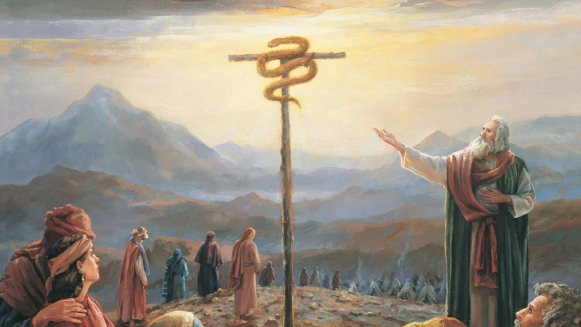
    In Numbers 21, the Israelites experience victory over the Canaanites but soon fall back into grumbling and complaining. God brings a plague of snakes upon the people. It’s a divine judgment. Their grumbling against God was to their downfall. But the people beg for mercy.

    And the Lord said to Moses, “Make a fiery serpent and set it on a pole, and everyone who is bitten, when he sees it, shall live.” 9 So Moses made a bronze serpent and set it on a pole. And if a serpent bit anyone, he would look at the bronze serpent and live. 
    -Numbers 21:8-9

    Moses prays. God tells Moses to make a fiery serpent and set it on a pole. So God doesn’t simply take the snakes away. He also doesn’t prevent people from continuing to get bitten by the snakes. But once bitten, a person could respond by faith in the Lord by looking to the serpent on the pole.It’s an odd story. A number of questions might come to mind. Isn’t that idolatry? Making this bronze serpent?

    In the Golden Calf episode of Exodus 32, Moses is on the mountain receiving instruction from the Lord. He’s there for 40 days and the Israelites get restless. They take their gold and melt it into the image of a cow. Why is it ok with the bronze serpent? It’s a totally different situation. Most importantly, because God told them to do it this time. Secondly, this wasn’t idol worship because they weren’t worshiping the serpent. The serpent didn’t represent God to the people.

    There are many wonderful gospel themes in this scene. The Israelites sin against the Lord. And so God brings a plague of snakes upon the people as divine judgment. And yet, once the people repent and the bronze snake is made, it is in looking to that by which people are healed.

    A symbol of death becomes a symbol of life 

    Snakes were bringing death, but looking to this particular snake brought the promise of healing. A symbol of judgment the Lord then uses as a symbol of victory. The cross was the greatest symbol of judgment and condemnation in the Roman world. A brutal punishment. And yet, it is to the cross that we see Christ’s victory over sin. Perhaps you look at the story and think “but why a snake? Aren’t snakes bad in the Bible?” Yeah, so are people, but it is through a man that we are saved. The Lord Jesus, both God and man.

    The gospel 

    In a person being healed because of looking to the snake, it took what they were doing out of their hands. It was entirely the work of God. So too we see this in the gospel. It is not based on us, or how good we are. We are totally helpless to heal ourselves from the disease of sin. It is looking to the cross, to looking at what Jesus has done, to trusting Jesus by faith that we can have salvation.

    It’s foolishness 

    The serpent doesn’t make sense. The world is confounded by the gospel and the message of grace, the idea that we can be freely forgiven based on what someone else has done. The world is offended by the message of salvation by grace. Paul says in 1 Corinthians that the cross is folly to those who are perishing, but to those who are being saved, it is the power of God (1 Corinthians 1:18).

    We want to save ourselves. We want to see how we measure up and to feel good about how good we are. The gospel is that you cannot earn it. You look to what Jesus has done.

    Salvation for the undeserving 

    The Israelites were grumbling and complaining and blaspheming against God, and yet God saves them. Jesus came into a world where people condemned him, polluted against him, betrayed him, and killed him. While we were yet sinners, Christ died for us (Romans 5:8). In both looking to the serpent and the death and resurrection of Jesus, what people needed was faith.

    In the Gospel of John, Jesus will make specific reference to this event in Numbers. John chapter 3, Jesus is talking to Nicodemus, the Pharisee.Jesus says “as Moses lifted up the serpent in the wilderness, so must the Son of Man be lifted up.” (John 3:14) Moses literally lifted up the bronze serpent on a pole. And Jesus was literally lifted up on the cross. There, Jesus compares himself being lifted up to the bronze serpent. For the Israelites who were afflicted by the serpent’s bite, life was found by looking to the bronze serpent. For us today, eternal life is found by looking to Jesus.

    The main idea of our passage this evening is that: Opposing God brings death but true life is fond by faith. Are you trusting in Jesus? We’re infected with the venom of sin. And it’s a killer. There is nothing we can do on our own to take out that poison. The only antidote is found in looking to Jesus.Look to him. Love him. Live for him.

    Originally published August 1, 2018.

    Thanks for reading! If you liked, please comment and share :)

    Let’s connect
    Facebook
    Parler
    Twitter
    Instagram

  • CNN host calls Parler an echo chamber. Fails to realize CNN is its own echo chamber

    I was struck by recent comments from Brian Stelter on CNN. In a conversation with Pamela Brown, they criticized the new Twitter-alternative, Parler.

    Stelter said: “People are going more and more into their own echo chambers. More and more into their own bubbles, especially Trump voters. There’s this new social media app called Parler getting a lot of attention. Because Conservatives are leaving – saying their leaving Twitter and Facebook, and going off to Parler because they believe Parler is a safer space for them. What we’re seeing is even more of a bunker mentality from right wing media, and ultimately that is not good for the country.

    Brown goes on to call that a “threat to democracy.”

    I think that’s all very rich. You have a progressive news network criticizing Conservatives for going into echo chambers. They need to look in a mirror. I love that they want to say this is “not good for the country,” when people are making an exodus for apps like Parler because of progressive liberalism, its influence on tech, and its crackdowns on free speech. So then what is good for the country? A nation where the only discourse which is acceptable is what progressives deem worthy? That’s great for a free society and for democracy.

    I’ve heard progressives justify the censorship of big tech as that simply being the free market at work. Well so are apps like Parler and Rumble. That’s the market correcting itself.

    Our society has become an echo chamber for progressive thought. They control the mainstream media. They overwhelmingly control higher education and public schools. Liberals control Hollywood (how many outspoken Conservative actors can you name). The sports industry has gone woke. And so has tech. Social media platforms who were created as platforms which once promoted free speech now have political agendas.

    Don’t get me wrong. Echo chambers are a bad thing. That’s why I regularly get my news from a diverse array of news sources such as the New York Times, Washington Post, the Wall Street Journal, NPR, BBC, the Federalist, and Daily Wire. And while they’re not a good thing, all people, regardless of political belief can be susceptible of falling into echo chambers. That’s why I value having friends who have a diverse array of opinions.

    People love to attack the “right wing conspiracies,” but why does no one question the conspiracy theories of the left? We went four years hearing how Trump colluded with the Russians and how Trump stole the 2016 election. People mock the right for questioning this election, but the left was questioning the integrity of the process before the election happened. My point? Both sides can be capable of echo chambers and conspiracies.

    But creating an account on Parler does not mean you’re doomed to fall down that rabbit hole.

    Stelter and Brown can call apps who do promote free speech to be threats to democracy but what they really are is threats to the power of progressivism in controlling what people see and think.

    No, people are not going to Parler just to spread conspiracies. But not all stories which are censored on Twitter and Facebook are objectively false, and people don’t want platforms to dictate what they can post. Secondly, as these sites increased their crackdown of opposing views this election cycle, I think many people have signed up for alternative platforms as a hedge against being kicked off of Facebook and Twitter (I’m not saying I think it will come to that).

    You can follow me on Parler @Joshbenner or on Twitter @JoshBennerBlog

    Thanks for reading! If you liked, please share :)

  • Sermon: the light of the world – John 8:12

    John 8:12

    Again Jesus spoke to them, saying, “I am the light of the world. Whoever follows me will not walk in darkness, but will have the light of life.”

    Prayer

    Our heavenly Father, 

    We thank you for this day. 

    Lord with all of the cases of Covid going around town right now, we continue to praise you for the health of this church. And Lord, we continue to pray for that. 

    We pray for people in our community who have been afflicted by this virus. We pray for their recovery. 

    Lord, we continue to pray for the development of a vaccine. 

    But in that, may we be pointed to the gospel. That there is one true plague on our world: human sin and there is only one remedy for that. The blood of the Lord Jesus. 

    Lord, we pray for Mila. 

    Lord, we pray for our time in your Word this morning. May you lead our hearts and minds to the praise of your glorious grace. In Jesus’ name, amen. 

    Introduction 

    In the Bible, there is this contrast between light and darkness. 

    Light is good. You can see in the light. 

    Darkness is sinister. Darkness is where bad things happen. 

    I read an article that said 11% of adults have a fear of the dark. Another article mentioned that fear of the dark is common in children. 

    I thought the article should have begun “fear of the dark is common in children…and in adults who tell the truth.” 

    Because fear of the dark is not so much about a fear of the dark. It’s a fear of the unknown. 

    No one walks down in an alley at night and is thinking “This is great. I love this.” 

    Nighttime is when most crimes happen. 

    It’s when virtually all murders in horror movies occur. 

    No one goes camping and hears some animal and doesn’t automatically assume it’s a bear that’s about to eat you. 

    The unknown, the unfamiliar, the things unseen. All of it makes a fear of the dark rational. 

    And so where I want to begin this morning is with a brief survey of light and darkness in the Bible. 

    And I do this because we’ve all heard the verse “I am the light of the world.” 

    But when we look at it against the backdrop of the Old Testament, I’m trying to bring some of the force that it would have had to its original audience. 

    First place to start. We see light in creation. 

    Opening verses of Genesis: 

    In the beginning, God created the heavens and the earth. 2 The earth was without form and void, and darkness was over the face of the deep. And the Spirit of God was hovering over the face of the waters. 

    3 And God said, “Let there be light,” and there was light. 4 And God saw that the light was good. And God separated the light from the darkness. 5 God called the light Day, and the darkness he called Night. And there was evening and there was morning, the first day. (Genesis 1:1-5)

    Throughout history, many of the world’s religions have worshipped the sources of light. Pgan religions have had sun gods, moon gods. But the Bible begins with Lord God showing his dominion over light itself. 

    The first words of the Lord in the Bible are “let there be light.” 

    It’s what God begins his creation with. 

    During the Israelite wanderings, God uses a pillar of light to guide the Israelites in the desert. 

    Exodus 13:20-21: the Lord went before them by day in a pillar of cloud to lead them along the way, and by night in a pillar of fire to give them light, that they might travel by day and by night. 22 The pillar of cloud by day and the pillar of fire by night did not depart from before the people. 

    So there we see the fire and light associated with God’s presence with his people. 

    And that’s especially significant when Jesus says that he is the light of the world. 

    Because in our passage in chapter 8, Jesus is still speaking at the Feast of Tabernacles. And as we’ve said numerous times, part of the purpose of this feast was to commemorate the Israelite wanderings as they journeyed to the Promised Land. 

    The pillar of light and fire was a powerful symbol. 

    Light at the feast of tabernacles 

    And at the feast of Tabernacles itself, light was a symbolized in a meaningful way. 

    Towards the end of the first day of the Feast of Tabernacles, massive torches were lit. 

    They did it on the Temple Mount, which was the highest point in Jerusalem. 

    They had four lamp stands and each had four bowls that they would fill with oil. 

    I think of it like the Olympic torch. 

    It was said that this light lit up all of Jersuaelm. That may be an overstatement. But nevertheless, there was tremendous brightness created from this fire. 

    It’s not known if those lamps were still burning or if the fire had gone out when Jesus spoke these words, but the imagery was still fresh in people’s minds when Jesus stood up and said

    I am the light of the world. 

    It’s a well known verse to Chrisitans. But as we continue, I want to focus on a few images of light in the Old Testament that I think help give meaning to Jesus’ words. 

    Light has a great symbolic richness in the Old Testament. 

    And I think it will be very helpful to take a few moments and go over this. 

    For starters, in the Old Testament, light is associated with God himself. 

    Psalm 27:1:1 The Lord is my light and my salvation; whom shall I fear? The Lord is the stronghold of my life; of whom shall I be afraid? 

    Light is given as a symbol of the Word of God, the scriptures. 

    119:105:

    105 Your word is a lamp to my feet 

    and a light to my path. 

    Then again in Psalm 119:130:

    130 The unfolding of your words gives light; 

    it imparts understanding to the simple. 

    Light is a symbol of goodness and righteousness. This goes back to creation. God saw that the light was good. 

    Light is also seen as a sign of goodness in contrast to darkness. In the Bible, light is good, darkness is bad. 


    Proverbs 4:19: 

    19 The way of the wicked is like deep darkness; 

    they do not know over what they stumble. 

    Darkness is seen as apocalyptic judgment and God withdrawing his presence. 


    Isaiah 13:9-10: 

    9 Behold, the day of the Lord comes, 

    cruel, with wrath and fierce anger, 

    to make the land a desolation 

    and to destroy its sinners from it. 

    10 For the stars of the heavens and their constellations 

    will not give their light; 

    the sun will be dark at its rising, 

    and the moon will not shed its light. 

    In the Old Testament, there is a significant link between light and the temple. 

    As we’ve said umpteen times in our study of John, the temple represents the presence of God with his people. 

    And the temple was a place of light. 

    That even goes to the design of the temple. 

    It was built facing the east. Towards the sunrise. 

    Lamps were prominent in the temple. 

    Exodus 25:37: 

    You shall make seven lamps for it. And the lamps shall be set up so as to give light on the space in front of it.

    At our church, when no one is here, we shut the lights off. 

    But in the temple, the lights were meant to continually burn. 

    Leviticus 24:1-2: The Lord spoke to Moses, saying, 2 “Command the people of Israel to bring you pure oil from beaten olives for the lamp, that a light may be kept burning regularly. 

    Most translations say “a light may be kept burning continually.” 

    They kept the light burning in the temple. A symbol of God’s light. 

    Light can be a symbol of glory. 

    Isaiah 60:19 talks of the light which the Lord brings. It’s a picture of final triumph. 

    19 The sun shall be no more 

    your light by day, 

    nor for brightness shall the moon 

    give you light; 

    but the Lord will be your everlasting light, 

    and your God will be your glory. 

    This same idea is picked up in Revelation 22, the Bible’s final chapter which again talks of no need for sun or moon in the New Heavens and the New earth. God’s glory itself is the light of heaven. 


    Revelation 22:5: And night will be no more. They will need no light of lamp or sun, for the Lord God will be their light

    Let’s tie this all together. 

    You have light associated with God, with his word, with his righteousness, with the temple, and with the divine glory.  And we see all of these in the opening chapter of John’s gospel. 

    Jesus is all of those things. Light is associated with God. Jesus himself is God. 

    John 1:1-2: In the beginning was the Word, and the Word was with God, and the Word was God. 

    And Jesus is also himself the Word of God. 

    Same text. 

    Jesus is the word who was in the beginning, who was God and is God. 

    John 1:14 says that the Word became flesh. 

    Jesus is the true word o fGod. 

    I talked about light and righteousness. 

    We see the connection of Jesus and his righteousness in John 1:4-5: In him was life, and the life was the light of men. 5 The light shines in the darkness, and the darkness has not overcome it. 

    Jesus is the light that shines in the darkness of a sinful world.

    And Jesus is also the temple. 

    Same verse in the opening of John. John 1:14: 

    And the Word became flesh and dwelt among us

    And as we’ve discussed before, but just as a reminder, the word for “dwelt” in 1:14 in Greek literally means “tabernacled” or “pitched a tent” among us. 

    And so it has a much deeper meaning than that Jesus simply came into the world. But that Jesus is God who took on flesh in order to be the literal tabernacle, the literal temple among us, the literal presence of God among us.  

    Lastly, Jesus himself is the divine glory. Same verse. John 1:14: 

    And the Word became flesh and dwelt among us, and we have seen his glory, glory as of the only Son from the Father, full of grace and truth.

    Man is not glorious, but Jesus is. Jesus displays his glory during his ministry and makes known the glory of God. Jesus enables us to come before God and to be reconciled to God. 

    Jesus is God, he is the word of God, who displays the righteousness of God. And he is the temple of God who displays the glory of God. 

    We also see light in the Old Testament associated with the Messiah and his presence in the world. 


    Isaiah 9:2: 

    2  The people who walked in darkness 

    have seen a great light; 

    those who dwelt in a land of deep darkness, 

    on them has light shone. 

    Jesus will apply that verse to himself at the beginning of his ministry in the Gospel of Matthew. 

    He is the great light that has come into a dark world. 

    And it is because Jesus is all of this and more that he could stand up at the temple in Jerusalem and proclaim: I am the light of the world. Whoever follows me will not walk in darkness, but will have the light of life.

    Jesus’ I am statement doesn’t introduce the idea of Jesus as the light, and it’s not the final passage in John’s Gospel – or in John’s other Biblical writings – where he’ll touch on the idea of the light that is in God and in Christ. 

    But this passage is the high point of that theme. 

    Jesus is the light of the world. 

    So let’s take a look at that statement word for word.  

    I am 

    That in itself is a claim of divinity. 

    In John’s Gospel, Jesus makes seven statements which are known as the “I am statements.” 

    We covered the first of these back in July when Jesus said “I am the bread of life.” This week’s statement is the second. 

    In these statements, Jesus is making revelations about himself, his ministry, and his mission in the world. 

    When Jesus says “I am,” he’s referring back to Exodus 3, when God reveals himself to Moses at the burning bush. 

    13 Then Moses said to God, “If I come to the people of Israel and say to them, ‘The God of your fathers has sent me to you,’ and they ask me, ‘What is his name?’ what shall I say to them?” 14 God said to Moses, “I am who I am.” And he said, “Say this to the people of Israel: ‘I am has sent me to you.’ ”

    Jesus says: I am the light of the world. 

    He’s not A light of the world. 

    He’s THE light of the world. 

    There is no other light. There is no other goodness. There is nothing else which exposes the darkness of sin, of fallen humanity, and of our own hearts. 

    It’s yet another reason why you cannot compartmentalize Jesus the savior from Jesus the man from Jesus the teacher from Jesus the Lord. 

    It’s only because he is God that he can be the light.

    A great teacher cannot be the light of the world. 

    Plato said a lot of great things. He didn’t claim to be the light of the world. 

    Buddha had an interesting philosophy. It wasn’t that he was the light of the world. 

    Gandhi was one of the most influential leaders in modern history. He never said he was the light. 

    Jesus did. It’s because of who he is he can say it. 

    For anyone else to say they’re the light of the world, they’d be mad. 

    They’d be self-aggrandizing. 

    But it’s because Jesus is God, the word of God, the righteousness of God, the temple of God, and the glory of God that he can say to a dark world that he is the light. 

    Also notice that he says that he is the light of the world. He is not just the light of the Israelites, he’s not the light of Jerusalem. He is the light of the world. The gospel is for the whole world. The salvation that he brings is for the whole world. The mission he came for was for the whole world. 

    Jesus brings a message of life to a dead world because he is the light in a dark world. 

    He is the light. 

    There is no other source. 

    Back in our verse. Jesus says: Whoever follows me will not walk in darkness, but will have the light of life.”

    In 1954, a navy pilot named Jim Lovell – who would later become famous as the commander of the failed Apollo 13 mission – was on a training flight near Japan. In the air, some of his instruments failed during the flight. 

    He was in darkness. 

    The lights shorted on his instrument panel. 

    More darkness and he didn’t know the direction he needed to fly in order to get back to his aircraft carrier. 

    Lovell was led back to shore by the glow of phosphorescent algae which glowed. In the wake of the ship, the algae were stirred up. In the darkness, it was that light which led him back to safety. 

    When you’re in the darkness, you need light. 

    And the Bible teaches us that the whole world is sinful and in darkness. 

    But the issue is that even though there is darkness in the world, the world doesn’t want light. 

    Jesus makes this pronouncement in chapter 3. This is the judgment: the light has come into the world, and people loved the darkness rather than the light because their works were evil.

    While it’s true that the way to find our way in the darkness is to look to the light, what this verse tells us is that the world often doesn’t want the light. 

    As we’ve talked about the dangers of darkness and the benefits of the light, the world hates the light because light exposes. 

    Darkness allows us to hide. 

    Darkness allows us to do what we would not want to do in the light. 

    That’s what Jesus says in 3:20: everyone who does wicked things hates the light and does not come to the light, lest his works should be exposed.

    But Jesus calls us to follow him. 

    He says: Whoever follows me will not walk in darkness, but will have the light of life.”

    What Jesus is saying at the end of this verse is that our lives indicate whether or not we are truly following him. 

    Because a follower of Jesus does not walk in darkness, because a follower of Jesus has the light of life. 

    Something very similar is said in 1 John 1:6: If we say we have fellowship with him while we walk in darkness, we lie and do not practice the truth.

    Is that saying you’ll never sin again? Clearly not. Is it saying you’ll never struggle? No. 

    Last week, I talked about the balance between grace and law. 

    Grace is a wonderful thing. It is by grace that we are saved. 

    But what grace should not become is a crutch that we use to justify sin. 

    God is gracious. He is merciful. 

    We are called to be gracious and merciful to others as God is towards us. 

    But what today’s verse should do is keep us from ignoring God’s call upon our lives to live in holiness, to live for Christ, and to follow his light. 

    The issue isn’t whether or not God is forgiving. 

    He is. 

    But if you’re living a life that is contrary to the will of God, it can be convicting that we’re not walking in his light to begin with. 

    There are two ways. Light and darkness. 

    One is to sin, one is to righteousness. 

    One is to God, one is to the world. 

    Let us be people who walk to the light, and as we live and pursue God, and as the darkness in our own lives and hearts is more and more exposed, let us walk further and further into the light of Christ. 

    To the glory of God.