Josh Benner

Tag: apologetics

  • Newly published Reagan letter shows deep faith as he shares gospel with dying father-in-law

    1024px-President_Reagan_speaking_in_Minneapolis_1982.jpg
    The Washington Post ran a 1982 letter written by former president Ronald Reagan to his dying father-in-law. His father-in-law, Dr. Loyal Davis had not been a religious man, and on the brink of eternity, Reagan felt compelled to stress the importance of faith.

    The most powerful man in the world pointing someone to the most powerful being in the universe.

    The newly published letter was discovered by Washington Post writer Karen Tumulty who was going through a box of Nancy Reagan’s personal effects in researching for a book on the former first lady.

    Reagan’s letter is a work of apologetics where he looks at Jesus as having come in fulfillment of prophesies. Using a similar line of reasoning to C.S. Lewis, Reagan talks of how Jesus either was who he claimed to be or a great con man (which would beg the question of why he would follow a “lie” to the point of dying for it). Reagan talks of the impact that this one man (who had such a short ministry) has had on the rest of the history of the world:

    The miracle is that a young man of 30 yrs. without credentials as a scholar or priest began preaching on street corners. He owned nothing but the clothes on his back & he didn’t travel beyond a circle less than one hundred miles across. He did this for only 3 years and then was executed as a common criminal.

    But for two thousand years he has … had more impact on the world than all the teachers, scientists, emperors, generals and admirals who ever lived, all put together.

    Reagan talks of the importance of faith in Jesus and ends the letter by appealing to his father to put himself in God’s hands.

    I appreciate this letter. Presidents are complicated individuals and Reagan’s faith is a subject of debate. But in this letter, his sincere desire is for his father-in-law to place faith in Jesus. He thought sharing the gospel with a beloved family member was worth doing.

    Thanks for reading! I’d love to hear what you think, and don’t forget to subscribe! 

    Josh Benner is the associate pastor at Cornerstone Evangelical Free Church in Fergus Falls, Minnesota and has a Master of Divinity from Trinity Evangelical Divinity School. He enjoys writing about faith and culture. He lives with his wife Kari in Minnesota.

    Let’s connect!
    Facebook
    Twitter
    Instagram

  • When we’re tempted to second guess God…

    photo-1495954484750-af469f2f9be5
    I was going through Lee Strobel’s latest book The Case for Miracles last week. The final chapter in the book was a poignant discussion entitled: “When miracles don’t happen.”

    In that chapter, Strobel interviews Douglas Groothuis who’s a professor at Denver Seminary. In the interview, they talk about the health of Groothuis’s wife Becky, a Mensa member and author who developed a rare form of dementia which impacts the brain’s ability to recall words.

    In the interview, they talk of day to day challenges of seeing his wife taken from him. The interview talked about faith, spirituality, lament, and hope.

    I was particularly struck by one of the answers Groothuis gave. Strobel asked “Do you feel like if you were God, you would definitely heal Becky?”

    “God is perfect and he acts accordingly. If I were God, I’d be perfect – and therefore I’d act in the very same way he does. We might not understand why he does what he does, but it’s folly to think we’d do things better.”

    I found that to be brilliant and insightful. It’s easy for us to look to things in God’s rule of creation and to think it could be done better or should be done differently. But God is righteous and eternal. At times, it can be very hard to see the good in the struggles of our lives. At times, it’s hard to see the goodness of God in the wrongs others afflict on us.

    Groothuis saw a brilliant woman lose her mental faculties and pass away at just 59 years of age. But the faith to trust that God is still good in that. To trust that God is so good that his plan cannot be improved upon in spite of all of the bad, all of the evil, all of the suffering in our world. God still works that for good. God still weaves that into his plans and uses it for his own glory.

    Josh Benner is the associate pastor at Cornerstone Evangelical Free Church in Fergus Falls, Minnesota and has a Master of Divinity from Trinity Evangelical Divinity School. He enjoys writing about faith and culture. He lives with his wife Kari in Minnesota.

    Connect with me!
    Facebook
    Twitter
    Instagram

  • The Problem of Pain: C.S. Lewis and human suffering

    painOriginally published November 14, 2012 as “The Problem of Pain and C.S. Lewis”
    Early in the book “The Problem of Pain,” in an analogy which is the epitome of the brilliance and humor of C.S. Lewis, he compares the relationship of God and man to that of a dog owner and his dog. It is for the dog owner’s joy that he owns the dog. It is not inherently for the dog’s joy. It is also so that the owner has another being that it can love. The master values the dog loving him too, but to mature the dog, there are things which must be done that might not always be pleasant for the canine. Being washed, trained not to steal, and the dreaded process of house training are all part of the process. But in the end, those unpleasant activities are for the good of the dog.

    With his rapier wit, Lewis writes, “To the puppy the whole proceeding would seem, if it were a theologian, to cast grave doubts on the ‘goodness’ of man: but the full-grown and full-trained dog, larger, healthier, and longer-loved than the wild dog…would have no such doubts.” (more…)

  • 4th century theology of Athanasius still fresh today.

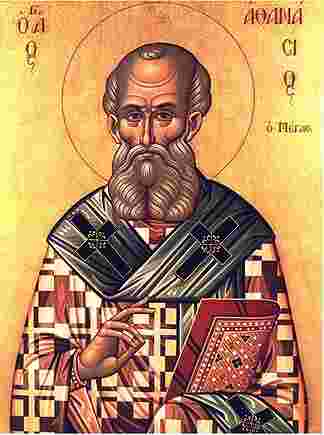
    athanasius

    Originally published March 18, 2016

    Why did Jesus have to die? For years, this puzzled me. I could get on board with the idea that I fell short of God’s perfect standard. But why did Jesus need to die? Couldn’t God have just forgiven me? Like some sort of Spiritual write off?

    One of the best explanations I have ever read for this comes from a fourth century bishop named Athanasius in a work he produced entitled “On the Incarnation.”

    From the beginning, Athanasius provides a treatise on Jesus’ presence in creation, his incarnation as a man, and his necessary death for the reconciliation of humanity.

    Athanasius establishes that Jesus, who created all things, is the same being who renewed the world. In arguing against the Epicureans, the Gnostics, and Plato, Athanasius uses some of his counterarguments in an attempt to further solidify his Christology. For instance, Plato’s idea of God fashioning things from pre-existent matter is used by Athanasius to argue that such a view demotes God from Creator to mere craftsman and that the matter itself was necessarily created by God. From that creation, man was created in a sinless state but had the volition to sin. When mankind fell, it forever tarnished the relationship between man and God. And the sin of man spread throughout all of creation. People began to turn their attention to other things which God had created instead of on the Creator Himself.

    In the second chapter, Athanasius gets into a salvific dilemma about how God can reconcile His glory with man’s sin. “It was impossible; therefore, that God should leave man to be carried off by corruption, because it would be unfitting and unworthy of Himself.” It is not because of any intrinsic value of man, but God’s own nature called for a means of restoration. It will later be argued that to not provide this means would have led to a superfluity of the creation of man in the first place. For man to be created solely for damnation with no hope of salvation would mean that God was ultimately not creating man for Himself. But God could not simply forgive man arbitrarily because this would again have contradicted his perfection as the Lord had already established a prelapsarian injunction which humanity had willingly disobeyed.

    Possible options are speculated as to what God might have done. Mere repentance could not go quite far enough because it wasn’t about merely avoiding a particular sin. It was about being sinful in itself. In doing away with death and corruption, Jesus became a man to conquer those enemies. It couldn’t have been a man who did this because even the most pious men were ultimately sinful. As a result, Jesus was the only means of redemption. The God who had already been intimately involved with creation and the sustenance of the world was also the only means of salvation. While creation itself provided evidence for God’s existence, Athanasius argues that if teleological observations could have had a perfecting quality, that man would not have fallen in the first place. Instead of men recognizing the glory of God through creation itself, in sin, man instead made idols of other elements of creation.

    It could not have been merely Christ coming to earth. He needed to die. To give people reason to believe in Christ’s dominion over creation, and in order to give a reason for a faith that would end the death which was caused by sin, Jesus needed to personally rise from the dead. It couldn’t have been natural. Jesus needed to be witnessed dying, so that his risen state could bring men to faith in God.

    Among his conclusions, Athanasius argues that the transformation which Jesus has had on so many lives is a testimony to the truth of his resurrection. “Does a dead man prick the consciences of men, so that they throw all the traditions of their fathers to the wind?”

    The concluding chapters focus on more in depth refutations of common worldviews. To Judaism, he argues that the Old Testament called for a Messiah, and it called for that Messiah to be martyred. Athanasius next turns his attention to making various apologetic arguments for non-Jewish readers, opposed to believing the gospel.

    At times his Christological claims sound as if written by Paul. At other instances, his matter of fact, street smart logic and gripping analogies seem more modern, perhaps as if they could have been written by C.S. Lewis. I felt like the modern elements seemed most vivid in the apologetic arguments about the transformations in the lives’ of the people who knew Jesus and their willingness to risk everything in proclaiming the truth of his resurrection. At certain points, I found this volume to be laborious. But once the flow of his argument was established, I thought this book seemed much more approachable. Even though the writing presents a long argument, I also felt that Athanasius did a good job, at points, of summarizing the main points that he had made.

    For the time in which it was written, I appreciate the systematized approach to some extremely complicated (but also important) issues. While Athanasius will not convince everyone to his line of thought, I felt that this was a great book in terms of answering the “why” Jesus needed to come. Therein lays the significance of this book. I feel that the “why” question  is so easily taken for granted.

    It’s easy to acknowledge people sin and to say that Jesus needed to die for our sins. But as if in an infantile mentality, I feel it’s so easy to keep reducing the question with “but why?” Why did things have to be as they were? Why couldn’t God simply forgive man? It’s one thing to explain why the incarnation Jesus was an option. With Athanasius, the undertaking was a more structured argument as to why it needed to happen and why it was the only way for reconciliation. In trudging through the difficulties of making the incarnation of Jesus tangible, Athanasius gave the world a true work of brilliance.

    Josh Benner is the associate pastor at Cornerstone Evangelical Free Church in Fergus Falls, Minnesota and has a Master of Divinity from Trinity Evangelical Divinity School. He enjoys writing about faith and culture. He lives with his wife Kari in Minnesota.

  • Couldn’t God just forgive us? Why was the cross necessary?

    photo-1414018895695-96fe3f0d0765.jpeg

    A person might look at the crucifixion, look at what the Lord did on the cross, and wonder “Why was that the only way? Why was that necessary? Couldn’t God simply forgive us?”
    No.
    This is an idea I’ve heard from Tim Keller before, and it’s an important idea on having a theology of forgiveness.
    In any meaningful way a person has ever wronged you and you’ve forgiven them, when you forgive, you then bear a burden. You bear a burden for the way they originally sinned against you, and whatever you lost in the process: opportunity, time, happiness, money. Whatever it was. You were wronged and lost something. And when you forgive, you bear a cost a second time because you are relinquishing an opportunity to get even, to inflict vengeance upon them.
    And the worse the wrong is, the harder it is to forgive. The more costly the forgiveness, because it’s a greater debt that you’re forgiving. Not to say that people shouldn’t have consequences when they’ve committed crimes or acted violently. But even in those situations, we are called to be forgiving.
    But forgiveness is not as simple as just ignoring a wrong done.
    If someone destroys something you own, you can make them pay for it. That’s often what happens. Or perhaps you and the person can both pay for part of what was destroyed. Or you can personally pay for it. You can bear that cost yourself.
    My point is that in either event, someone has to pay. Forgiveness is not a write-off that where the wrong disappears and is forgotten about. Someone has to pay the price for what was broken.
    So with our sin against God, how does God approach forgiveness? All of the wrongs and injustices in the world. All of the wrongs and sins in our own lives, in our hearts, our actions.
    We could have never paid that price. We could never have done enough to earn our forgiveness. There was no hope.
    But on the cross, we see that Jesus himself bore the cost for us.
    That was the cost of forgiveness. The horrible death he died, the injustice that he faced. All of that shows us the cost of our sin.
    At the cross, we see the love of God.
    God shows his love for us in that while we were still sinners, Christ died for us. Since, therefore, we have now been justified by his blood, much more shall we be saved by him from the wrath of God. For if while we were enemies we were reconciled to God by the death of his Son, much more, now that we are reconciled, shall we be saved by his life.
    -Romans 5:8-10
    Because Jesus bore infinite wrath for sin. There is infinite grace when we turn to him. There is no sin he is unable to forgive. It’s not that he died and can forgive every sin, but he can’t forgive that one, or this one, or what you did, or what you’re struggling with.
    Infinite wrath because of our sin. But infinite mercy on the cross because of his grace.
    If you’re not a Christian, you need to know that Jesus paid for sins on the cross. Jesus showed that he is the way to God. Jesus died so that we could have a relationships with him. He promises eternal life for everyone who comes to him.
    All you have to do is believe in that. The Bible says that faith is credited to you as righteousness.
    “Everyone who calls on the name of the Lord will be saved.” (Romans 10:13)
    The Bible teaches that “there is salvation in no one else, for there is no other name under heaven given among men by which we must be saved.” (Acts 4:12).
    And the proof of that is on the cross. Many other places where people look for salvation, where people look for life.  None of those things will give you life. On the cross, Jesus died so that you could have life.
    You can’t earn God. The cross shows us that. If we could earn it, we wouldn’t have needed Jesus to die.
    2 Timothy 2:5-6 says:
    There is one God, and there is one mediator between God and men, the man Christ Jesus,6 who gave himself as a ransom for all, which is the testimony given at the proper time
    Jesus said “I am the way and the truth, and the life, no one comes to the father except through me (John 14:6).
    The validation for these things, what testifies to the salvation and ope that is found in Jesus…is the cross.
    Because he died on the first Good Friday. But he rose on Sunday. God has authority over life and death. God has authority over how to be made right with him.
    And while we didn’t deserve it, the good news of the gospel is that he made a way.
    Josh Benner is the associate pastor at Cornerstone Evangelical Free Church in Fergus Falls, Minnesota and has a Master of Divinity from Trinity Evangelical Divinity School. He enjoys writing about faith and culture. He lives with his wife Kari in Minnesota.