Josh Benner

Tag: Bible

  • The importance of the Old Testament to the New Testament

    Bible
    Photo courtesy of Flickr Creative Commons @freaktography

    Originally published April 19, 2016

    I recently had a friend ask me a question about a verse in Paul’s letter to the Ephesians. Paul will have passages where every verse seems to have different possible interpretations and where they can seem impossibly difficult. As I was researching this complicated passage, I couldn’t help but think “The Old Testament is so much simpler!” (more…)

  • Beth Moore letter addresses misogyny in evangelicalism

    Over the last generation, Beth Moore has been one of the most prominent female leaders and speakers in American Evangelical circles. Her Bible studies are hugely popular among women. She’s the founder of Living Proof Ministries, a ministry for women based out of Houston.

    She’s not a pastor. She’s an author and speaker.

    Although she’s popular in Evangelical circles, she’s not universally supported. Some of the criticisms of her theology include that it’s a prosperity gospel or that it’s intellectually light theology.

    My purpose in writing today is not to argue for or against the merits of her theology. Agree or disagree with her, she’s hugely influential. And today, Moore posted an open letter on the blog for Living Proof Ministries “A letter to my brothers” where she discusses some of her experiences as a prominent speaker in circles that are generally dominated by men.

    The subject of women in ministry is one that is debated within Christian circles. Can a woman be a pastor? Can a women ever preach a sermon? Can a woman teach men in the church? People have different opinions on these issues. Some would say yes to all three, some would say no to all three. Others are in the middle.

    It’s complicated.

    In writing, Moore talks about some of the misogynistic treatment she’s received over the years. Considering the divergent opinions within Christian circles on women in leadership, Moore’s letter talks about how she had chalked up some of her treatment as being a byproduct of deeply rooted Biblical convictions among sincere Christians with whom she simply disagreed.

    From the letter:

    I accepted the peculiarities accompanying female leadership in a conservative Christian world because I chose to believe that, whether or not some of the actions and attitudes seemed godly to me, they were rooted in deep convictions based on passages from 1 Timothy 2 and 1 Corinthians 14.

    As Moore continues to elaborate, she talks of coming to a realization that it wasn’t simply about differences in opinion.

    I came face to face with one of the most demoralizing realizations of my adult life: Scripture was not the reason for the colossal disregard and disrespect of women among many of these men. It was only the excuse. Sin was the reason. Ungodliness.

    Our culture largely disrespects women. The #metoo movement showed the rampant sexual harassment and assault in Hollywood. As the movement spread, more and more areas of life came to light that were stained by the mistreatment of women. The #churchtoo movement showed further examples of assault and harassment from within the church. Obviously we knew that there were issues but these movements have created a national dialogue.

    While Moore’s post dealt more with misogyny than sexual assault, both are a reflection of a culture which far too often devalues women.

    The church is meant to be a light in a dark world. But we also live in society and the world is sinful. For too many Christians, misogyny and sexism are overlooked blindspots.

    I hold to a complementarian theology where I believe that preaching and teaching is reserved for men. Theologically, it’s how I see God having designed his created order. I think that’s the best way to interpret the applicable Biblical passages. I think that complementarianism can (and should) be honoring to women. Women are created in the image of God and are precious. But with a theological belief that there are certain things that men can do within the church and that women can’t do; with beliefs on submissiveness (without also understanding the self-sacrifice to which men are called), it can be easy for an Evangelical Christian male to develop a misogynistic view of women. Please don’t misunderstand. I’m not saying that the Bible is misogynistic. I’m saying that sinful men can distort the Bible and become sexist within our culture that often accepts sexism and misogyny. The default is just to do what the rest of the world is doing unless proactively living out a different set of values.

    Again, we can agree or disagree with what Beth Moore believes and teaches. But we shouldn’t dismiss her points. The church needs to be a leader in our society in showing honor and respect to all women.

    At the end of her letter, Moore makes a simple request:

    I’m asking that you would simply have no tolerance for misogyny and dismissiveness toward women in your spheres of influence. I’m asking for your deliberate and clearly conveyed influence toward the imitation of Christ in His attitude and actions toward women.

    Josh Benner is the associate pastor at Cornerstone Evangelical Free Church in Fergus Falls, Minnesota and has a Master of Divinity from Trinity Evangelical Divinity School. He enjoys writing about faith and culture. He lives with his wife Kari in Minnesota.

  • You’re (probably) misquoting Philippians 4:13 – and why it matters

    photo-1478829797160-c6f45d1447f6.jpeg

    I can do all things through him who strengthens me.
    -Philippians 4:13
    According to Bible Gateway, Philippians 4:13 is the second most popular verse in the New Testament, only behind John 3:16.
    It’s a verse memorized and beloved by many.
    But for as popular as this verse is, it’s also often misunderstood and taken out of context.
    The context of the passage must always influence how we interpret it.
    And what’s the context?
    Paul has just said, in verse 12 that he knows the secret of how to be content in both good and bad circumstances. And it is in the light of that that he says these glorious words. The secret to being content: “I can do all things through him who strengthens me.”
    I did some searches online of people quoting this verse.
    Instagram, popular photo sharing sight, people have quoted this verse over 56,000 times. The most common references I saw were people quoting it in regards to some sort of exercise or fitness goal. I saw others quote Philippians 4:13 after winning beauty pageants or graduating from college.
    Some people, to my surprise, used it in reference to their diet: “Pre workout meal coming up. Healthy creamy chicken with mushroom and sundries tomatoes + brown rice” Philippians 4:13.
    I think this verse almost always gets quoted in conversation with some sort of goal.
    “This is what I want to do. And it’s me and Jesus.” I’m going to win that pageant, I’m going to run that marathon, I’m going to get that promotion because I can do all things through Him who strengthens me.”
    And certainly, Jesus is the God of everything in our lives. It’s GOOD to look at everything we do through the lens of walking with Christ.
    But Philippians 4:13 has nothing to do with accomplishing your personal goals.
    Philippians 4:13 is a verse that’s not about us. It’s about Jesus.
    The verse is not about the power of positive thinking, that you can accomplish your goals with Jesus. It’s not saying that you can overcome hurdles because of Jesus. It’s not telling you that you can do anything you set your mind to because of Jesus.
    Those things might all be true also.
    But that’s not what this verse is saying.
    The verse isn’t saying you can accomplish your dreams, it’s saying that you can survive your nightmares.
    And again, I know that goes against the popular keychain, coffee mug, t-shirt, poster interpretation of this verse.
    My point isn’t to ruin a verse for you that you might love. It’s to point you to the glorious Lord Jesus.
    Because our life is more than personal goals. It’s that when we have been run over, conquered, defeated, everything is going against us, that we can be content and walking in joy because of knowing Jesus.
    And that’s something else I notice when I look at people quoting Philippians 4:13. It’s always when something really good is happening in someone’s life.
    I don’t see people saying “I can do all things through him who strengthens me” when they’ve just lost a job. When they can’t afford to pay utilities.
    Philippians 4:13 is just as true in the bad times as it is in the good times.
    Because our contentment and joy and satisfaction need to always be found in Christ.
    This verse isn’t just calling us to be cheerleaders for God when we’ve finally gotten to the top of the mountain. But to always be praising the glorious God who invites us into life when we are at the bottom of the valley.
    But how do we do at embracing the reality of it?
    The secret of contentment in good times and in bad is knowing that you can do all things through Christ who strengthens you.
    When things really do get tough, when there is total upheaval and uncertainty, are you still able to walk confidently in faith knowing “I can do all things through Him who strengthens me?”
    In America, things are so comfortable for us, you have people living their lives thinking that they don’t need God. That they’re fine on their own. But what about when you’ve lost everything? What about you’re at your lowest?
    What about when you’re going through the worst experience of your life? In those moments, do you turn your back on God. Do you get mad at God? “Why would he do this to me?” Or do you walk with God? Do you rely on God more fully? Do you trust in Him more deeply?
    I can do all things through Him who strengthens me.
    Are you still able to say that when the going gets tough?

    Josh Benner is the associate pastor at Cornerstone Evangelical Free Church in Fergus Falls, Minnesota and has a Master of Divinity from Trinity Evangelical Divinity School. He enjoys writing about faith and culture. He lives with his wife Kari in Minnesota.

  • You can’t love God if you don’t love people

    W.H. Margetson

    Originally published December 13, 2016

    James says If you really fulfill the royal law according to the Scripture, “you shall love your neighbor as yourself,” you are doing well” (James 2:8).  points

    Royal Law is an interesting phrase. That’s the only time it’s used in the entire Bible. James follows up mentioning this royal law by saying “you shall love your neighbor as yourself” which seems to be what he’s referring to as the Royal Law.  (more…)

  • Jesus and the Last Supper – more than just a meal

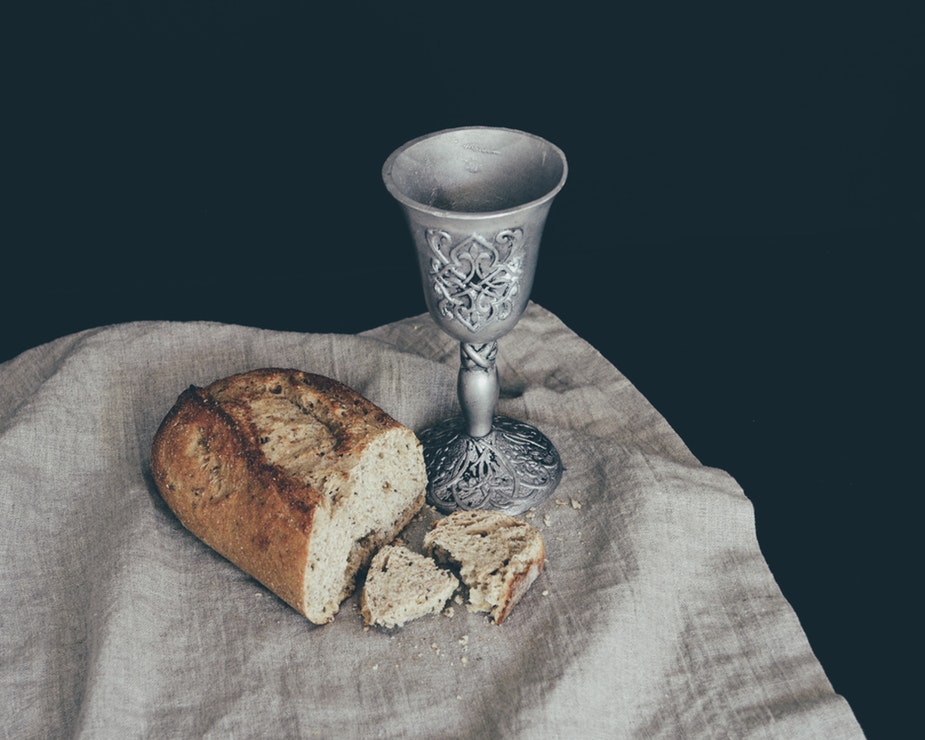
    photo-1520629716099-d147346eb224.jpeg

    Originally published April 13, 2017

    As part of Holy Week, Maundy Thursday is recognized this evening. It was the night in which Jesus ate the Last Supper with his disciples. The time in which Jesus died corresponded with the Jewish holiday of Passover. And the Last Supper was the first night of Passover. An annual dinner for Passover is held, called a Seder, which is the Hebrew word for “order.” In 3,500 years, rabbinical tradition and teaching helped to form the ceremony of the Seder.

    Some of these pieces were traced back to the original Passover. Others came in Jewish history from rabbinical traditions.

    Also, once the Israelites were in the land, and after the temple was built, this impacted Passover traditions. When you had the temple, the lambs were sacrificed at the temple. But what didn’t change was that people could only sacrifice lambs that were perfect.

    I think it’s worth spending so much time in talking about Passover because I think it can help give us a greater context and understanding for the events surrounding the death of Jesus.

    In the gospels, the time of the death of Christ revolves around the Passover. That’s not a coincidence! Jesus would be sacrificed at the time that was associated with sacrifice. Jesus had gone to Jerusalem for Passover. In Jerusalem, the city within the Roman Empire that was the epicenter of Jewish culture, thousands of lambs would have been slaughtered annually. Jewish people would have been coming in from all over the empire.

    We see many traditions of the Seder at the last Supper.

    Some of them are small things. In the gospel accounts, it talks about Jesus reclining at the table (Luke 22:14).

    Jesus wasn’t sitting in a la-z-boy. He was on a couch that he was lying on, that was a Seder tradition. They had been enslaved in Egypt but being able to lie down showed the freedom and security.

    Or when Jesus is alluding to his betrayer, he says in John 13:26, “It is he to whom I will give this morsel of bread when I have dipped it.” So when he had dipped the morsel, he gave it to Judas, the son of Simon Iscariot.

    Again, I know the mental image that most of you probably have when you read this. It’s hard to know precisely where in the Seder this is, but it seems that it’s probably referring to when you take Haroset which is made from apple, nuts, cinnamon. They weren’t eating the Last Supper at an Italian restaurant. They didn’t have a bowl of olive oil in the middle of the table. But all of the elements we see at the Last Supper are part of what you’d see in a traditional Seder.

    As part of the Seder, you’d take the unleavened bread…looks like a cracker. And you’d break the bread.

    Luke 22:19, “And he took bread, and when he had given thanks, he broke it and gave it to them, saying, “This is my body, which is given for you. Do this in remembrance of me.”

    For over a thousand years of Seder dinners, bread had been broken. Unleavened bread, just like the Israelite forefathers had eaten before fleeing from Egypt.

    The body of Jesus, given for you, given for your sins. Given for your forgiveness. And he says “do this in remembrance of me.”

    What more fitting words could you say at a Seder? A meal revolving around remembrance, about retelling the story of God saving his people by the blood of the lamb.

    Remembering what God has done. Remembering what Jesus has done. Remembering the sins that he’s redeemed you from. Remembering his body that he gave for you. Remembering his death that he died for you. Remembering the grace that he offers to you. Remembering his gospel.

    Luke 22:20 says, “And likewise the cup after they had eaten, saying, “This cup that is poured out for you is the new covenant in my blood.”

    The Seder dinner involves four glasses of wine. This seems to have been the second or third glass of wine in the meal, although there’s scholarly debate.

    But how profound it is. Wine drank in remembrance of the Passover. Jesus takes the wine, he blesses it, he says it is the new covenant in his blood, at the Seder dinner.

    It clearly points backwards to the blood of the Passover lamb, the blood that was put on the door posts. And it also points forward to the blood of Christ, shed for the forgiveness of sins. The blood of the true lamb.

    At the beginning of the gospel of John, when John the Baptist sees Jesus he says “Behold, the lamb of God who takes away the sin of the world.” Jesus is the true lamb of God. The lamb who took the penalty for sins. The one who was scarified for the salvation of God’s people.

    And by trusting in him and having faith in him, that puts the blood on the doorpost of your heart. On the first Passover, there would not have been a pardon for a person who didn’t put blood on the doorpost. It wasn’t that the blood saved them, God saved them. But to not put the blood on the door was to show that a person didn’t have faith in the Lord, didn’t trust in the Lord.

    When we take the Lord’s Supper, it’s not arbitrary. It’s not just using the random items that were around. It’s all symbolic. It takes symbols important to the first Passover, the first time God had delivered Israel, and it reminds of the new Passover, from the perfect sacrifice for sins.

    The Passover passage in Exodus 12:5 says that the lamb that was used had to be without blemish. Jesus is the ultimate lamb without blemish, a life lived in perfection.

    1 Corinthians 5:7 says “Cleanse out the old leaven that you may be a new lump, as you really are unleavened. For Christ, our Passover Lamb.”

    Josh Benner is the associate pastor at Cornerstone Evangelical Free Church in Fergus Falls, Minnesota and has a Master of Divinity from Trinity Evangelical Divinity School. He enjoys writing about faith and culture. He lives with his wife Kari in Minnesota.