Josh Benner

Tag: eucharist

  • Jesus and the Last Supper – more than just a meal

    Jesus and the Last Supper – more than just a meal

    As part of Holy Week, Maundy Thursday is recognized this evening. It was the night in which Jesus ate the Last Supper with his disciples. The time in which Jesus died corresponded with the Jewish holiday of Passover. And the Last Supper was the first night of Passover. An annual dinner for Passover is held, called a Seder, which is the Hebrew word for “order.” In 3,500 years, rabbinical tradition and teaching helped to form the ceremony of the Seder.

    Some of these pieces were traced back to the original Passover. Others came in Jewish history from rabbinical traditions.

    Also, once the Israelites were in the land, and after the temple was built, this impacted Passover traditions. When you had the temple, the lambs were sacrificed at the temple. But what didn’t change was that people could only sacrifice lambs that were perfect.

    I think it’s worth spending so much time in talking about Passover because I think it can help give us a greater context and understanding for the events surrounding the death of Jesus.

    In the gospels, the time of the death of Christ revolves around the Passover. That’s not a coincidence! Jesus would be sacrificed at the time that was associated with sacrifice. Jesus had gone to Jerusalem for Passover. In Jerusalem, the city within the Roman Empire that was the epicenter of Jewish culture, thousands of lambs would have been slaughtered annually. Jewish people would have been coming in from all over the empire.

    We see many traditions of the Seder at the last Supper.

    Some of them are small things. In the gospel accounts, it talks about Jesus reclining at the table (Luke 22:14).

    Jesus wasn’t sitting in a la-z-boy. He was on a couch that he was lying on, that was a Seder tradition. They had been enslaved in Egypt but being able to lie down showed the freedom and security.

    Or when Jesus is alluding to his betrayer, he says in John 13:26, “It is he to whom I will give this morsel of bread when I have dipped it.” So when he had dipped the morsel, he gave it to Judas, the son of Simon Iscariot.

    Again, I know the mental image that most of you probably have when you read this. It’s hard to know precisely where in the Seder this is, but it seems that it’s probably referring to when you take Haroset which is made from apple, nuts, cinnamon. They weren’t eating the Last Supper at an Italian restaurant. They didn’t have a bowl of olive oil in the middle of the table. But all of the elements we see at the Last Supper are part of what you’d see in a traditional Seder.

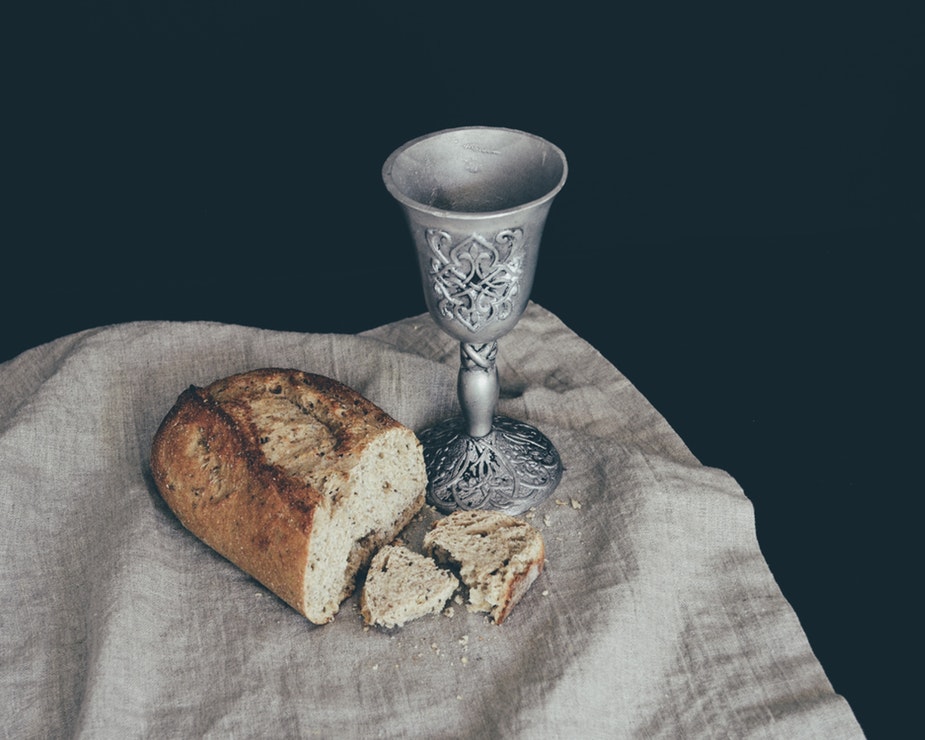
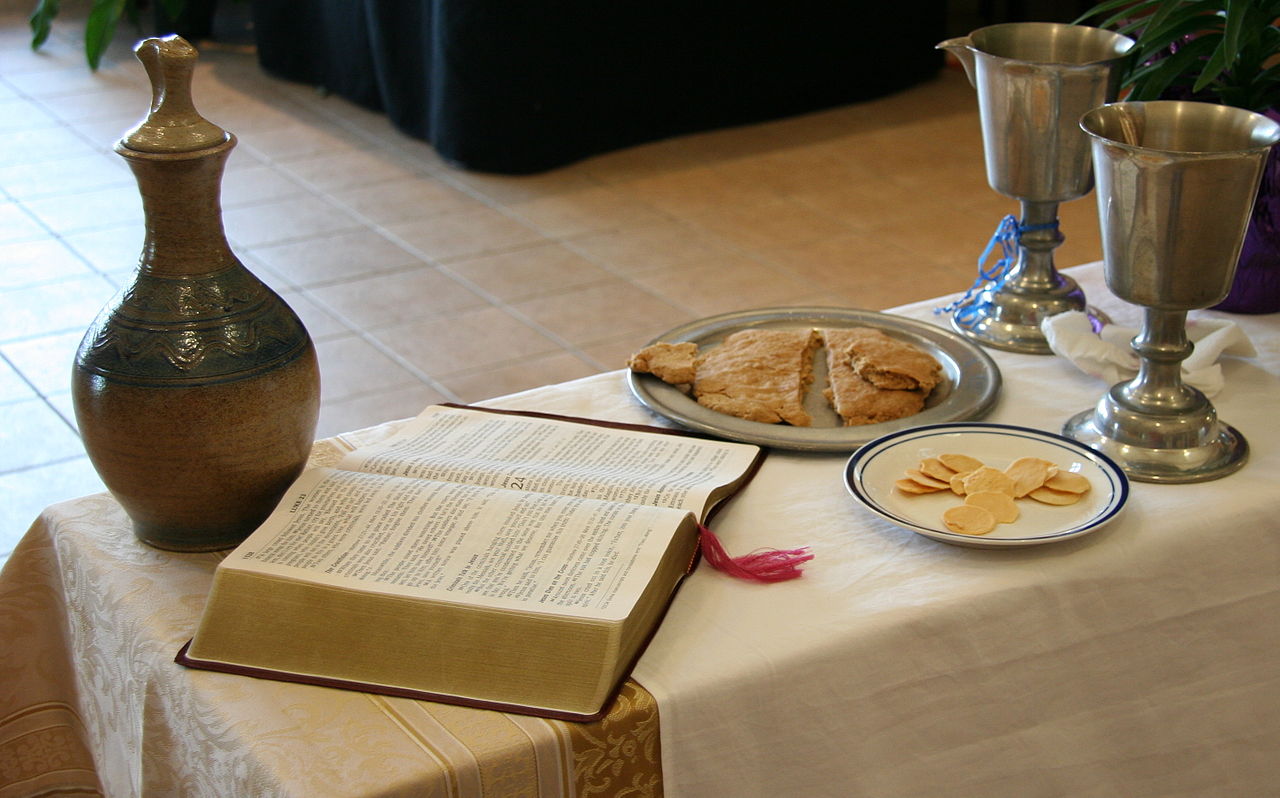
    As part of the Seder, you’d take the unleavened bread…looks like a cracker. And you’d break the bread.

    Luke 22:19, “And he took bread, and when he had given thanks, he broke it and gave it to them, saying, “This is my body, which is given for you. Do this in remembrance of me.”

    For over a thousand years of Seder dinners, bread had been broken. Unleavened bread, just like the Israelite forefathers had eaten before fleeing from Egypt.

    The body of Jesus, given for you, given for your sins. Given for your forgiveness. And he says “do this in remembrance of me.”

    What more fitting words could you say at a Seder? A meal revolving around remembrance, about retelling the story of God saving his people by the blood of the lamb.

    Remembering what God has done. Remembering what Jesus has done. Remembering the sins that he’s redeemed you from. Remembering his body that he gave for you. Remembering his death that he died for you. Remembering the grace that he offers to you. Remembering his gospel.

    Luke 22:20 says, “And likewise the cup after they had eaten, saying, “This cup that is poured out for you is the new covenant in my blood.”

    The Seder dinner involves four glasses of wine. This seems to have been the second or third glass of wine in the meal, although there’s scholarly debate.

    But how profound it is. Wine drank in remembrance of the Passover. Jesus takes the wine, he blesses it, he says it is the new covenant in his blood, at the Seder dinner.

    It clearly points backwards to the blood of the Passover lamb, the blood that was put on the door posts. And it also points forward to the blood of Christ, shed for the forgiveness of sins. The blood of the true lamb.

    At the beginning of the gospel of John, when John the Baptist sees Jesus he says “Behold, the lamb of God who takes away the sin of the world.” Jesus is the true lamb of God. The lamb who took the penalty for sins. The one who was scarified for the salvation of God’s people.

    And by trusting in him and having faith in him, that puts the blood on the doorpost of your heart. On the first Passover, there would not have been a pardon for a person who didn’t put blood on the doorpost. It wasn’t that the blood saved them, God saved them. But to not put the blood on the door was to show that a person didn’t have faith in the Lord, didn’t trust in the Lord.

    When we take the Lord’s Supper, it’s not arbitrary. It’s not just using the random items that were around. It’s all symbolic. It takes symbols important to the first Passover, the first time God had delivered Israel, and it reminds of the new Passover, from the perfect sacrifice for sins.

    The Passover passage in Exodus 12:5 says that the lamb that was used had to be without blemish. Jesus is the ultimate lamb without blemish, a life lived in perfection.

    1 Corinthians 5:7 says “Cleanse out the old leaven that you may be a new lump, as you really are unleavened. For Christ, our Passover Lamb.”

    Thanks for reading! I’d love to hear what you think, and don’t forget to subscribe! 

    Originally published April 13, 2017

    Photo credit information

  • Apple juice for communion? Why we can’t do communion our own way

    Apple juice for communion? Why we can’t do communion our own way

    27 Whoever, therefore, eats the bread or drinks the cup of the Lord in an unworthy manner will be guilty concerning the body and blood of the Lord. 28 Let a person examine himself, then, and so eat of the bread and drink of the cup. 29 For anyone who eats and drinks without discerning the body eats and drinks judgment on himself. 
    1 Corinthians 11:27-29

    I saw quite a few responses on Twitter this evening when the rapper Lecrae mentioned taking communion at home with wheat bread and apple juice and saying “I hope this still counts.”

    It doesn’t.

    Communion is a sacred remembrance of the gospel which was instituted by Christ himself with the commandment “do this in remembrance of me” (Luke 22:19).

    There are lots of different views of communion within Christendom. Even though I pastor an independent Bible church, my view of communion aligns pretty well with Presbyterianism where I believe that communion is to be administered to a congregation by the pastor, overseen by elders, and served by deacons. It stands to reason that those people would oversee and serve communion since they’re charged with overseeing and serving the church. Last year, when churches were shut down during Covid, I saw some people partaking of communion at home. While everyone won’t agree with me, that’s not communion. Communion is mean to be COMMUNal. Virtual communion is not communion.

    Again, there are varying opinions about communion in different branches of Christendom. (Even what it should be called, such as communion, eucharist, Lord’s Supper). The Catholic view is not the same as the Presbyterian view which is not the same as the Lutheran view which is not the same as the Orthodox view.

    But they all would agree that just taking it upon yourself to have wheat bread and apple juice and to call that communion is not communion. There ought to be fidelity to Jesus and how he instituted communion, not just doing whatever you feel like.

    Thinking you can just make communion whatever you want it to be comes from a shallow theology. Any church with history would consider ad hoc communion to be sacrilegious. It comes form the modern age that makes Christianity existential, where everyone does what is right in their own eyes, and where we do whatever we want and justify it as long as it’s sincere or “from the heart.”

    Jeremiah 17:9 says: the heart is deceitful above all things, and desperately sick; who can understand it?

    There are some things where there are prescribed ways to do them and communion is one of those things.

    My point isn’t just to criticize Lecrae. Too often we try to take the sacred and just make it whatever we want it to be.

    Communion is communal. Communion is given by Christ as a sign of the new covenant. As a covenantal sign, and as such, it is meant for the church during worship. It can’t just be you taking something you’re eating and calling it communion. Even if you’re with your family, that doesn’t make it communion. There’s a Congregational aspect to it. There’s a sacred and set apart aspect to it.

    What about home churches? I can appreciate home churches. I would also hope that home churches would still handle communion in an appropriate Biblical manner and not just arbitrarily create elements.

    You can have a fellowship meal. You can thank God while you’re eating a meal. But that doesn’t make those things communion anymore than dunking yourself in a swimming pool or bath tub doesn’t mean you just baptized yourself.

    Thanks for reading!

  • Jesus and the Last Supper. More than just a meal.

    photo-1520629716099-d147346eb224.jpeg

    Originally published April 13, 2017

    As part of Holy Week, Maundy Thursday is recognized this evening. It was the night in which Jesus ate the Last Supper with his disciples. The time in which Jesus died corresponded with the Jewish holiday of Passover. And the Last Supper was the first night of Passover. An annual dinner for Passover is held, called a Seder, which is the Hebrew word for “order.” In 3,500 years, rabbinical tradition and teaching helped to form the ceremony of the Seder.

    Some of these pieces were traced back to the original Passover. Others came in Jewish history from rabbinical traditions.

    Also, once the Israelites were in the land, and after the temple was built, this impacted Passover traditions. When you had the temple, the lambs were sacrificed at the temple. But what didn’t change was that people could only sacrifice lambs that were perfect.

    I think it’s worth spending so much time in talking about Passover because I think it can help give us a greater context and understanding for the events surrounding the death of Jesus.

    In the gospels, the time of the death of Christ revolves around the Passover. That’s not a coincidence! Jesus would be sacrificed at the time that was associated with sacrifice. Jesus had gone to Jerusalem for Passover. In Jerusalem, the city within the Roman Empire that was the epicenter of Jewish culture, thousands of lambs would have been slaughtered annually. Jewish people would have been coming in from all over the empire.

    We see many traditions of the Seder at the last Supper.

    Some of them are small things. In the gospel accounts, it talks about Jesus reclining at the table (Luke 22:14).

    Jesus wasn’t sitting in a la-z-boy. He was on a couch that he was lying on, that was a Seder tradition. They had been enslaved in Egypt but being able to lie down showed the freedom and security.

    Or when Jesus is alluding to his betrayer, he says in John 13:26, “It is he to whom I will give this morsel of bread when I have dipped it.” So when he had dipped the morsel, he gave it to Judas, the son of Simon Iscariot.

    Again, I know the mental image that most of you probably have when you read this. It’s hard to know precisely where in the Seder this is, but it seems that it’s probably referring to when you take Haroset which is made from apple, nuts, cinnamon. They weren’t eating the Last Supper at an Italian restaurant. They didn’t have a bowl of olive oil in the middle of the table. But all of the elements we see at the Last Supper are part of what you’d see in a traditional Seder.

    As part of the Seder, you’d take the unleavened bread…looks like a cracker. And you’d break the bread.

    Luke 22:19, “And he took bread, and when he had given thanks, he broke it and gave it to them, saying, “This is my body, which is given for you. Do this in remembrance of me.”

    For over a thousand years of Seder dinners, bread had been broken. Unleavened bread, just like the Israelite forefathers had eaten before fleeing from Egypt.

    The body of Jesus, given for you, given for your sins. Given for your forgiveness. And he says “do this in remembrance of me.”

    What more fitting words could you say at a Seder? A meal revolving around remembrance, about retelling the story of God saving his people by the blood of the lamb.

    Remembering what God has done. Remembering what Jesus has done. Remembering the sins that he’s redeemed you from. Remembering his body that he gave for you. Remembering his death that he died for you. Remembering the grace that he offers to you. Remembering his gospel.

    Luke 22:20 says, “And likewise the cup after they had eaten, saying, “This cup that is poured out for you is the new covenant in my blood.”

    The Seder dinner involves four glasses of wine. This seems to have been the second or third glass of wine in the meal, although there’s scholarly debate.

    But how profound it is. Wine drank in remembrance of the Passover. Jesus takes the wine, he blesses it, he says it is the new covenant in his blood, at the Seder dinner.

    It clearly points backwards to the blood of the Passover lamb, the blood that was put on the door posts. And it also points forward to the blood of Christ, shed for the forgiveness of sins. The blood of the true lamb.

    At the beginning of the gospel of John, when John the Baptist sees Jesus he says “Behold, the lamb of God who takes away the sin of the world.” Jesus is the true lamb of God. The lamb who took the penalty for sins. The one who was scarified for the salvation of God’s people.

    And by trusting in him and having faith in him, that puts the blood on the doorpost of your heart. On the first Passover, there would not have been a pardon for a person who didn’t put blood on the doorpost. It wasn’t that the blood saved them, God saved them. But to not put the blood on the door was to show that a person didn’t have faith in the Lord, didn’t trust in the Lord.

    When we take the Lord’s Supper, it’s not arbitrary. It’s not just using the random items that were around. It’s all symbolic. It takes symbols important to the first Passover, the first time God had delivered Israel, and it reminds of the new Passover, from the perfect sacrifice for sins.

    The Passover passage in Exodus 12:5 says that the lamb that was used had to be without blemish. Jesus is the ultimate lamb without blemish, a life lived in perfection.

    1 Corinthians 5:7 says “Cleanse out the old leaven that you may be a new lump, as you really are unleavened. For Christ, our Passover Lamb.”

    Thanks for reading! I’d love to hear what you think, and don’t forget to subscribe! 

    Josh Benner  has a Master of Divinity from Trinity Evangelical Divinity School. He has served churches in Minnesota and Illinois. He enjoys writing about faith and culture. He lives with his wife Kari in St. Louis.

  • Jesus and the Last Supper – more than just a meal

    photo-1520629716099-d147346eb224.jpeg

    Originally published April 13, 2017

    As part of Holy Week, Maundy Thursday is recognized this evening. It was the night in which Jesus ate the Last Supper with his disciples. The time in which Jesus died corresponded with the Jewish holiday of Passover. And the Last Supper was the first night of Passover. An annual dinner for Passover is held, called a Seder, which is the Hebrew word for “order.” In 3,500 years, rabbinical tradition and teaching helped to form the ceremony of the Seder.

    Some of these pieces were traced back to the original Passover. Others came in Jewish history from rabbinical traditions.

    Also, once the Israelites were in the land, and after the temple was built, this impacted Passover traditions. When you had the temple, the lambs were sacrificed at the temple. But what didn’t change was that people could only sacrifice lambs that were perfect.

    I think it’s worth spending so much time in talking about Passover because I think it can help give us a greater context and understanding for the events surrounding the death of Jesus.

    In the gospels, the time of the death of Christ revolves around the Passover. That’s not a coincidence! Jesus would be sacrificed at the time that was associated with sacrifice. Jesus had gone to Jerusalem for Passover. In Jerusalem, the city within the Roman Empire that was the epicenter of Jewish culture, thousands of lambs would have been slaughtered annually. Jewish people would have been coming in from all over the empire.

    We see many traditions of the Seder at the last Supper.

    Some of them are small things. In the gospel accounts, it talks about Jesus reclining at the table (Luke 22:14).

    Jesus wasn’t sitting in a la-z-boy. He was on a couch that he was lying on, that was a Seder tradition. They had been enslaved in Egypt but being able to lie down showed the freedom and security.

    Or when Jesus is alluding to his betrayer, he says in John 13:26, “It is he to whom I will give this morsel of bread when I have dipped it.” So when he had dipped the morsel, he gave it to Judas, the son of Simon Iscariot.

    Again, I know the mental image that most of you probably have when you read this. It’s hard to know precisely where in the Seder this is, but it seems that it’s probably referring to when you take Haroset which is made from apple, nuts, cinnamon. They weren’t eating the Last Supper at an Italian restaurant. They didn’t have a bowl of olive oil in the middle of the table. But all of the elements we see at the Last Supper are part of what you’d see in a traditional Seder.

    As part of the Seder, you’d take the unleavened bread…looks like a cracker. And you’d break the bread.

    Luke 22:19, “And he took bread, and when he had given thanks, he broke it and gave it to them, saying, “This is my body, which is given for you. Do this in remembrance of me.”

    For over a thousand years of Seder dinners, bread had been broken. Unleavened bread, just like the Israelite forefathers had eaten before fleeing from Egypt.

    The body of Jesus, given for you, given for your sins. Given for your forgiveness. And he says “do this in remembrance of me.”

    What more fitting words could you say at a Seder? A meal revolving around remembrance, about retelling the story of God saving his people by the blood of the lamb.

    Remembering what God has done. Remembering what Jesus has done. Remembering the sins that he’s redeemed you from. Remembering his body that he gave for you. Remembering his death that he died for you. Remembering the grace that he offers to you. Remembering his gospel.

    Luke 22:20 says, “And likewise the cup after they had eaten, saying, “This cup that is poured out for you is the new covenant in my blood.”

    The Seder dinner involves four glasses of wine. This seems to have been the second or third glass of wine in the meal, although there’s scholarly debate.

    But how profound it is. Wine drank in remembrance of the Passover. Jesus takes the wine, he blesses it, he says it is the new covenant in his blood, at the Seder dinner.

    It clearly points backwards to the blood of the Passover lamb, the blood that was put on the door posts. And it also points forward to the blood of Christ, shed for the forgiveness of sins. The blood of the true lamb.

    At the beginning of the gospel of John, when John the Baptist sees Jesus he says “Behold, the lamb of God who takes away the sin of the world.” Jesus is the true lamb of God. The lamb who took the penalty for sins. The one who was scarified for the salvation of God’s people.

    And by trusting in him and having faith in him, that puts the blood on the doorpost of your heart. On the first Passover, there would not have been a pardon for a person who didn’t put blood on the doorpost. It wasn’t that the blood saved them, God saved them. But to not put the blood on the door was to show that a person didn’t have faith in the Lord, didn’t trust in the Lord.

    When we take the Lord’s Supper, it’s not arbitrary. It’s not just using the random items that were around. It’s all symbolic. It takes symbols important to the first Passover, the first time God had delivered Israel, and it reminds of the new Passover, from the perfect sacrifice for sins.

    The Passover passage in Exodus 12:5 says that the lamb that was used had to be without blemish. Jesus is the ultimate lamb without blemish, a life lived in perfection.

    1 Corinthians 5:7 says “Cleanse out the old leaven that you may be a new lump, as you really are unleavened. For Christ, our Passover Lamb.”

    Josh Benner is the associate pastor at Cornerstone Evangelical Free Church in Fergus Falls, Minnesota and has a Master of Divinity from Trinity Evangelical Divinity School. He enjoys writing about faith and culture. He lives with his wife Kari in Minnesota.

  • Jesus and the Last Supper: more than just a meal

    1280px-EucharistELCA.JPG

    As part of Holy Week, Maundy Thursday is recognized this evening. It was the night in which Jesus ate the Last Supper with his disciples. The time in which Jesus died corresponded with the Jewish holiday of Passover. And the Last Supper was the first night of Passover. An annual dinner for Passover is held, called a Seder, which is the Hebrew word for “order.” In 3,500 years, rabbinical tradition and teaching helped to form the ceremony of the Seder.

    Some of these pieces were traced back to the original Passover. Others came in Jewish history from rabbinical traditions. (more…)