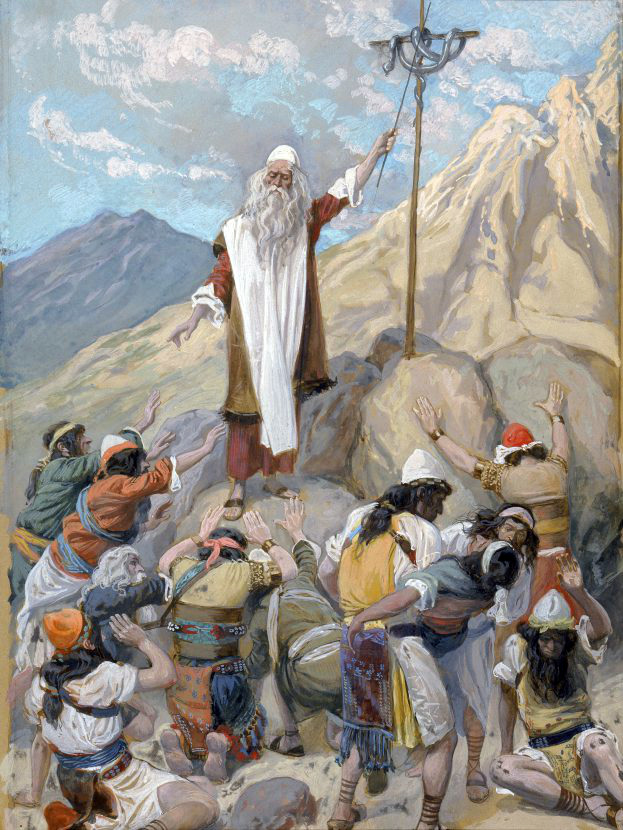
In John 3, Jesus is approached by a pharisee named Nicodemus who is intrigued about his ministry. Jesus controls the conversation and talks to Nicodemus of being born again and born of water and the Spirit. Nicodemus is perplexed by this.
Verses 9-10, Nicodemus is still dumbfounded by what Jesus has said.
9 Nicodemus said to him, “How can these things be?” 10 Jesus answered him, “Are you the teacher of Israel and yet you do not understand these things?
Nicodemus is the expert. He should understand what Jesus has said. He should pick up on the Old Testament references to water and the Spirit. It is a grace to the people of God that the Lord gives believers the Spirit.
Jesus continues speaking in verse 11.
11 Truly, truly, I say to you, we speak of what we know, and bear witness to what we have seen, but you do not receive our testimony.
Jesus has come to give a heavenly testimony. He has come to the world to reveal God.
12 If I have told you earthly things and you do not believe, how can you believe if I tell you heavenly things?
Jesus is the eternal God of creation who has been in heaven. He can therefore speak with authority on what is necessary for admittance into the Kingdom of Heaven. He has revealed to Nicodemus that he must be born again, born of the Spirit. Nicodemus doesn’t even understand that. So how will he understand the heavenly things of God?
Sovereign Citizens
There’s a small movement in America, perhaps some of you have heard of it: called Sovereign Citizens. Sovereign Citizens are a group of people who question the legitimacy of our government, don’t believe in paying taxes, and don’t believe that they’re accountable to our legal system.
I was once watching an episode of Live PD and someone had gotten pulled over. From what I remember, she didn’t have any truly serious violations but had broken a couple of traffic laws and also did not have a valid driver’s license.
She kept declaring that she was a sovereign citizen.
Kept being difficult.
Keeps talking about how she’s a sovereign citizen.
Ends up getting arrested.
My point with that illustration is that just because a person might say the law doesn’t apply to them doesn’t make it so. Because you still have to suffer the consequences for your actions and choices.
When it comes to the faith, people want to invent their own gospel. People want to believe that they’re good enough, that they can get to God on their own. People want to live Godless lives apart from Christ and assume that they will have merit or an inherent worthiness of heavenly blessings.
Just because we say “I’m a sovereign citizen” doesn’t make us sovereign.
The Lord is sovereign.
And Jesus speaks with heavenly authority in this passage.
No one has ascended into heaven except he who descended from heaven, the Son of Man.
In John 3, we see the divine command to be born again, the divine authority by which Jesus can give that command. And in the last two verses of this section, we end with a picture of the gospel. So far, this passage hasn’t really talked about the role of Jesus.
It is by the Spirit that we are born again but it is through the work of Christ that we are able to be born again. It is Jesus who has died so we can be redeemed.
Remember that Jesus is talking to an expert of the Law and the Old Testament. Jesus is going to make a statement about himself based in an Old Testament event.
14 And as Moses lifted up the serpent in the wilderness, so must the Son of Man be lifted up, 15 that whoever believes in him may have eternal life.
Jesus is making a reference to the Book of Numbers, 21st chapter.
In that chapter, the Israelites have been in their desert wanderings for 40 years. Most of the first generation has died off. Throughout their time in the wilderness, Israel has fallen into sin and grumbling.
God has brought them to the edge of the land and they continue to complain. God has sustained them for a generation and they ask why they’ve been brought into the wilderness to die. They’ve been given food but call it loathsome. They’re saying that they hate what God has given them.
And as a righteous and divine judgment, God brings a plague of poisonous snakes upon the people. Not just for that, but for a whole history of their rebellion and grumbling.
The people turn to Moses and ask Moses to intercede on their behalf.
Numbers 21:7:
And the people came to Moses and said, “We have sinned, for we have spoken against the Lord and against you. Pray to the Lord, that he take away the serpents from us.” So Moses prayed for the people.
God will give Moses instructions on what he must do.
8 And the Lord said to Moses, “Make a fiery serpent and set it on a pole, and everyone who is bitten, when he sees it, shall live.” 9 So Moses made a bronze serpent and set it on a pole. And if a serpent bit anyone, he would look at the bronze serpent and live.
Jesus looks to this event in the Old Testament and he shows it as pointing to himself.
As the bronze serpent was lifted upon the the pole, Jesus also will be lifted up.
Five times in the Gospel of John, Jesus refers to being lifted up. It always refers to the crucifixion, where Jesus is literally lifted up on the cross.
Again. Keep in mind that so far in this passage, Jesus talked of a need to be born again AND of the role of the Spirit in being born again.
But he points to the source of eternal life being Jesus himself who is lifted up.
Perhaps it seems like an odd connection that the Lord is making in comparing himself to the serpent of Numbers 21.
Several reasons why that story is a good picture of the gospel:
The bronze serpent and the gospel
In a person being healed because of looking at the snake, it took what they were doing out of their hands.
It was entirely the work of God.
So too we see this in the gospel. It is not based on us, or how good we are. We are totally helpless to heal ourselves from the disease of sin. It is looking to the cross, to looking at what Jesus has done, to trusting Jesus by faith that we can have salvation.
Second. The serpent doesn’t make sense. Why a golden snake? The world is confounded by the gospel and the message of grace, the idea that we can be freely forgiven based on what someone else has done.
1 Corinthians 1:18:
the word of the cross is folly to those who are perishing, but to us who are being saved it is the power of God.
The world is offended by the message of salvation by grace.
We want to save ourselves. We want to see how we measure up and to feel good about how good we are.
The gospel is that you cannot earn it. You look to what Jesus has done.
Third. The Israelites were grumbling and complaining and blaspheming against God, and yet God saves them.
Jesus came into a world where people condemned him, plotted against him, betrayed him, and killed him.
While we were yet sinners, Christ died for us (Romans 5:8).
Fourth. Moses literally lifted up the bronze serpent on a pole.
And Jesus was literally lifted up on the cross.
Fifth. For the Israelites who were afflicted by the serpent’s bite, life was found by looking to the bronze serpent. For us today, eternal life is found by looking to Jesus.
We’re infected with the venom of sin. And it’s a killer. There is nothing we can do on our own to take out that poison. The only antidote is found in looking to Jesus.
It is he who went to the cross for salvation.
In referring to the Numbers passage, Jesus is telling Nicodemus the gospel. It is Christ who will be lifted up for sinners.
And to have a heavenly hope, we must believe in what the Lord has done. We believe in Jesus and we are given the Holy Spirit to transform our lives from the inside out.
Thanks for reading! If you liked this post, please share and subscribe.
Brooks talks of the divide within evangelicalism. Early in the article, Brooks suggests: “There have been three big issues that have profoundly divided them: the white evangelical embrace of Donald Trump, sex abuse scandals in evangelical churches and parachurch organizations, and attitudes about race relations, especially after the killing of George Floyd.”
I’ve read this same basic piece several times in the last couple years in trying to diagnose the problems with evangelicalism in America.
Brooks interviews a familiar cast of characters. Russell Moore and Beth Moore (no relation to each other) who were recently popular figures in evangelical circles but have become critics of the movement. He interviews Kristin Kobes Du Mez, the author of “Jesus and John Wayne,” which is a one-sided rant against evangelicalism which only looks at the bad and overlooks any redeeming qualities in the movement. He mentions Tim Dalrymple, the president of Christianity Today who said Trump should have been removed from office.
There’s a lot fo discourse on the problems of evangelicalism but I feel like I never see similar critiques of liberal and progressive Christianity. These articles get preoccupied with evangelical support of Trump, and that always gets framed as if it’s some obvious scourge on the gospel.
My question is: what in the world is so good about liberalism? What are they doing right now to benefit our country? These articles want to criticize churches for being too conservative. As if there are not thousands of churches in America that are liberal, that support values that are not Biblical values such as the LGBT movement and abortion. Liberal churches who undermine the Bible. Those churches get a pass.
It’s the churches who support Trump and who are not woke social justice warriors who are the problem. Basically the problem with evangelicals is that they’re not liberals. And if they embrace liberal ideologies, then they’ll be doing the Lord’s work.
Conservative evangelicalism is an easy target because our culture institutions are increasingly liberal. The mainstream media, Hollywood, big business, big tech, pro sports, the federal government, higher education, public education, healthcare, and on and on. It’s ok to be liberal. It’s not ok to be conservative.
And the focus needs to be that evangelicals don’t have a big enough tent. Brooks has the audacity to frame it as if evangelicals are not welcoming enough to other points of view. Is a conservative welcome in a progressive church? Is a belief in traditional marriage, traditional gender roles, the inherency of the Bible welcome in a progressive church?
There are problems with evangelicalism. There are far too many powerful people in influential ministries who are corrupt and who have no accountability. That’s an issue. Brooks mentions the scandal involving Ravi Zacharias and a scandal involving Willow Creek Church. I’ve written about both. They were terrible. I’ve written about Jerry Falwell, Jr, and James MacDonald, and the Southern Baptist Convention sexual assualt scandal.
I think too many evangelical churches have done a poor job about teaching the Bible and focus on easy to listen to messages and appealing to cultural trends and having watered down youth ministries that are not teaching kids the Bible. Again, there are problems in evangelicalism.
There are churches and pastors who might call themselves “evangelical” with whom I would greatly disagree. But evangelicalism is a broad movement. I think we should call out people when they’re in the wrong. But I don’t think that American evangelicalism has the inherent problems that progressivism poses to the church. Progressive churches fall right in line with that ideology. I see that as the bigger threat on our culture and on the gospel.
Thanks for reading. If you liked this post, please share and subscribe.
22 “Therefore say to the house of Israel, Thus says the Lord God: It is not for your sake, O house of Israel, that I am about to act, but for the sake of my holy name, which you have profaned among the nations to which you came. 23 And I will vindicate the holiness of my great name, which has been profaned among the nations, and which you have profaned among them. And the nations will know that I am the Lord, declares the Lord God, when through you I vindicate my holiness before their eyes. 24 I will take you from the nations and gather you from all the countries and bring you into your own land. 25 I will sprinkle clean water on you, and you shall be clean from all your uncleannesses, and from all your idols I will cleanse you. 26 And I will give you a new heart, and a new spirit I will put within you. And I will remove the heart of stone from your flesh and give you a heart of flesh. 27 And I will put my Spirit within you, and cause you to walk in my statutes and be careful to obey my rules.
Prayer
Almighty and eternal God,
You are the beginning and the end. You take our sins away as far as the east is from the west. A thousand years to you is like a day.
We once again come to you in a time of worship. And may we rejoice in the freedom that we have to praise you and to celebrate the good news of the gospel is that though we were dead in sin, you show your love in the gift of everlasting life through your Son who has taken on the weight of our sin.
Lord, it’s grieving this week to learn of the suffering and persecution which people are facing in many parts of the world: Christians suffering in Nigeria. Churches being cracked down on in China.
Lord, may we remember those people in our prayers. May they be light in spite of the terrible darkness which surrounds them. May your gospel go forward and overcome the best efforts of men to quell your truth.
Lord, we pray for our community and nation as well. There is one hope and that is the gospel. It’s not economics, or politics, or laws, or courts, where our ultimate hope lies but in Christ crucified. The Son of God, the Word made flesh, the firstborn of all creation who came into our world.
Lord, we pray for our virtual Vacation Bible School this week. We pray both for kids who do the activities and watch the videos, but we also pray for parents or babysitters or grandparents who might watch along and we pray that gospel and Biblical truths can impact them as well. Lord, we pray that you would use this.
Lord, we continue to pray for this church. We thank you for the people that we have. We thank you that in spite of this virus, you have preserved us. And we continue to ask for your protection. We also pray for your wisdom and guidance – not just with this situation – but with everything that we do as a church, O Lord.
We pray for our time in your world. May we be enlightened, encouraged, and edified. To the glory of God. In Jesus’ name, amen.
We’re continuing this morning in our summer series The Forensics of Faith.
Last week, we talked about justification. And just as a reminder, justification is right legal standing before God.
Today, we talk about the Doctrine of Regeneration. Regeneration refers to new spiritual life which God gives a person. The new regenerative life is what brings a person from spiritual death to spiritual life.
While justification is a matter of faith in what Christ has done.
Regeneration is a work of the Spirit.
And if you recall from earlier in our time in John’s Gospel, another term for regeneration is found in John 3. Born again.
In much of Christendom, it’s easy to overlook the Holy Spirit.
J.I. Packer, who was one of the great theologians of the last 50 years. Packer passed into glory at the age of 93 last week and so I’ve been going through his classic book Knowing God. One of the things that he says in that book that’s sadly all too true in much of modern Christianity is that we overlook the Holy Spirit.
We consider God and we focus on the relationship with Jesus. But as Packer says, the Holy Spirit is the Cinderella of Christian doctrines. Just off in the corner, forgotten about.
But the Holy Spirit is immensely important in the work of the salvation of souls and in the work of God’s church. In Ezekiel 36, the prophet points to a future time of washing and renewal.
So in our passage from Ezekiel, we’re going to look at three stages of Spiritual regeneration which the Lord brings.
First, the Spirit brings renewal
Ezekiel 36:25: I will sprinkle clean water on you, and you shall be clean from all your uncleannesses, and from all your idols I will cleanse you.
Ezekiel is in the Old Testament and he’s looking forward to a future time of cleansing that God would bring by means of the Holy Spirit.
We live in that time now. When we are regenerated, it is a Spiritual cleansing which the Lord brings.
With the water, it’s easy to draw parallels to baptism. And in fact, the filling of the Holy Spirit is referred to as a baptism.
John 1:33. John the Baptist is speaking about Jesus and says: He on whom you see the Spirit descend and remain, this is he who baptizes with the Holy Spirit.
It is a privilege which all Christians share, as we see in 1 Corinthians 12:13: For in one Spirit we were all baptized into one body
All believers in the gospel of Christ are filled with the Spirit. There’s no such thing as a Christian who does not have the Spirit.
Romans 8:9-10 is a great passage which communicates this idea: 9 You, however, are not in the flesh but in the Spirit, if in fact the Spirit of God dwells in you. Anyone who does not have the Spirit of Christ does not belong to him. 10 But if Christ is in you, although the body is dead because of sin, the Spirit is life because of righteousness.
So we are baptized into the Holy Spirit.
Water baptism then is a symbol of the regeneration and cleansing which comes through the Holy Spirit.
Baptism does not bring salvation in itself. It’s an important and powerful outward symbol of an inward work which the Lord has done.
I will sprinkle clean water on you, and you shall be clean from all your uncleannesses, and from all your idols I will cleanse you.
What a powerful picture of God’s grace and renewal.
In Shakespear’s great play, MacBeth, there’s a scene where Lady MacBeth is overcome with grief and guilt for her murderous greed and ambition and she desperately tries to wash a blood stain off of her hands.
There’s no actual blood stain. It’s in her mind.
But that’s the brilliance of the scene.
Because we all have a stain of sin upon our hearts and lives that we cannot wash away on our own. It is God who brings the cleansing and renewal.
In Psalm 51, David too is ravaged by guilt and grief over a terrible sin he’s committed. His affair with Bathsheeba and him sending her husband Uriah to the frontlines in battle where he was killed.
David pleads with God: Have mercy on me, O God, according to your steadfast love; according to your abundant mercy blot out my transgressions. 2 Wash me thoroughly from my iniquity, and cleanse me from my sin!
And I return to John 3. A passage we preached from last fall.
After Jesus has said in John 3:3: Truly, truly, I say to you, unless one is born again he cannot see the kingdom of God
He will then talk of the cleansing which accompanies regeneration.
John 3:5-6: 5 Jesus answered, “Truly, truly, I say to you, unless one is born of water and the Spirit, he cannot enter the kingdom of God. 6 That which is born of the flesh is flesh, and that which is born of the Spirit is spirit.
Water and Spirit.
To have faith is to have the Spirit and to have the Spirit is to be cleansed.
You have all sorts of rituals in the Old Testament. Washing is a powerful symbol of purity throughout various cultures and religions.
The washing that God gives through the Spirit is a cleansing of the human soul.
We see the language of this renewal again in Titus 3:
Titus 3:4-5: when the goodness and loving kindness of God our Savior appeared, 5 he saved us, not because of works done by us in righteousness, but according to his own mercy, by the washing of regeneration and renewal of the Holy Spirit
It is because of the mercy of God that we are made morally clean through the work of the Holy Spirit.
So through regeneration, God cleanses us.
Through being born again, God cleanses us.
When Jesus says, “you must be born again,” that’s another fantastic metaphor for regeneration.
Because it is a new birth. You’re a new person in Christ.
Also, the metaphors matters because we are regenerated as a one time event.
Jesus said that we must be born again. He did not say that we must be born again…and again and again.
It’s not that we are saved today, then we lose that, then we do better and we’re saved tomorrow. Many Christians believe that. It’s not a Biblical idea.
And this is why systematic theology is important in considering the connection between various Bible teachings and how they work together.
I’ll again call to mind justification which was our topic last week. Justification, simply put, is right legal standing before God. You cannot be justified without being regenerated. And to be regenerated is to be justified.
So when we’re regenerated and given the Holy Spirit, and we’re justified in Christ and forgiven our sins, it’s something that only needs to happen once. You can only be born again once and the good news is that true salvation cannot be lost.
We’re sealed with the Holy Spirit as a guarantor of our salvation.
Ephesians 1:13-14: In him you also, when you heard the word of truth, the gospel of your salvation, and believed in him, were sealed with the promised Holy Spirit, 14 who is the guarantee of our inheritance until we acquire possession of it, to the praise of his glory.
Second, the Spirit gives us a new heart
Returning to our passage in Ezekiel: I will give you a new heart, and a new spirit I will put within you. And I will remove the heart of stone from your flesh and give you a heart of flesh.
Once again, what an incredible metaphor that the Bible uses. I assume it’s because of the Bible that the heart has become such a powerful symbol in our culture. Think about it for just a moment.
Someone who’s very kind if referred to as tender-hearted.
Someone who’s unkind and unfeeling is called cold-hearted. When we’re really sincere, we say something is from the bottom of our heart. When we see an impressive athletic display, we say they played their heart out. Really difficult situations are seen as heartbreaking.
And there are lots more little phrases like that. It’s a powerful symbol in our culture that we see as being the seat of our emotions. Because of regeneration, God gives us a new heart. Thousands of Americans wait on donor lists in need of heart transplants.
Heart disease is annually the leading cause of death in America with more than 1 in 5 deaths coming from heart disease.
Our hearts don’t last forever. And certainly, the heart is important in the Bible. Love the Lord your God with all your…What comes first? Heart.
Quoting again from David in Psalm 51:10, he asks God: Create in me a clean heart, O God, and renew a right spirit within me
Jeremiah 17:9-10 says: 9 The heart is deceitful above all things, and desperately sick; who can understand it? 10 “I the Lord search the heart and test the mind,
We cannot make our hearts pure. But the good news is that through regeneration, God does a heart transplant in us.
He gives us a new heart and a new Spirit. So the Spirit brings renewal through cleansing, it is through the Spirit that we are given a new heart.
Third, the Spirit enables us to follow God’s law
The gospel changes lives.
When we’re born again, that doesn’t mean that we never struggle, it doesn’t mean we’ll never sin. But we are forgiven.
We aren’t perfect but we’re declared righteous because of the righteousness of Christ. But true recognition of sin, true faith in Christ, that changes a person. And it’s often especially noticed when an adult comes to faith.
If you have a child who’s grown up in the church and always had faith as part of their life, that’s an incredible blessing. And there certainly is a moment when faith becomes more real to a person, where their trust truly is in the gospel.
But when you have someone who’s an adult and gone years of living their own way, pursuing their own interests and desires, and Jesus comes into their life, there should be fruit of that.
Not all at once. It’s not saying a person suddenly never has any areas where they struggle. It’s a process. We’ll talk more about that next week. But when the light of the gospel truly takes root in a person’s heart, it causes a change.
It’s like you suddenly see the world through a different set of eyes. It’s like in the Wizard of Oz where the story goes from sepia to color. And the reason why there are changes and sudden changes is again due to the Holy Spirit and the process of conversion.
The Spirit enables us to follow God.
We certainly see that idea in our primary passage today. Consider Ezekiel 36:27: And I will put my Spirit within you, and cause you to walk in my statutes and be careful to obey my rules
It is theSpirit of God working in us which enables us to follow the will of God.
When God works in a person’s life, and transforms a person to love him and love him and enables a person to follow his commands, that is miraculous.
In the beginning, God created the heavens and the earth. 2 The earth was without form and void, and darkness was over the face of the deep. And the Spirit of God was hovering over the face of the waters. (Genesis 1:1-2)
That same Spirit who was in the beginning, part of creation, and who hovered over the waters dwells every single person who is a Christian and who believes in the Good News of Jesus Christ.
How amazing is that!
And it’s not because of us. It’s because our God is a good God.
Consider Ezekiel 36:22: Thus says the Lord God: It is not for your sake, O house of Israel, that I am about to act, but for the sake of my holy name, which you have profaned among the nations to which you came.
God’s works of grace are not because we were deserving. God ultimately makes grace available because of his character, because of his goodness, because of his faithfulness to the promises he had made, and for the sake of displaying his own divine glory and greatness.
Yes, God loves us.
But it’s not because we’re lovable but because God is loving.
And so through the gospel, through the work of Christ on the cross, we are forgiven and justified.
But what separates real faith, what separates the believers from the pretenders is regeneration.
In his systematic theology, Louis Berkhoff says:
Regeneration consists in the implanting of the principle of the new spiritual life in man, in a radical change of the governing disposition of the soul, which, under the influence of the Holy Spirit, gives birth to a life that moves in a Godward direction.
Numerous passages in the New Testament talk about the work that God does in the life of a believer.
1 Corinthians 2:14-16: The natural person does not accept the things of the Spirit of God, for they are folly to him, and he is not able to understand them because they are spiritually discerned. 15 The spiritual person judges all things, but is himself to be judged by no one. 16 “For who has understood the mind of the Lord so as to instruct him?” But we have the mind of Christ.
Consider Ezekiel again: I will put my Spirit within you, and cause you to walk in my statutes and be careful to obey my rules
God works through us. We don’t regenerate ourselves. We don’t cause our own Spiritual growth. We participate in the work which God is doing in us but we don’t cause it. I hope that makes sense.
I realize that’s a somewhat complicated idea.
Think of the metaphor of the fruit of the Spirit in Galatians 5. I know some of us are farmers, some of us garden.
You’re working to help provide the conditions for the crops or for the fruit to grow. You have a role in that. But you’re not the one who’s actually causing the growth.
Yes, it’s important to walk with God, to pursue God, to pray to God, to spend time in his word, to serve his people, to serve his church.
And God can and does use that for our Spiritual growth and enrichment and sanctification. But it is God who produces the fruit through the mediation of the Holy Spirit.
We don’t produce our own fruit.
We don’t make ourselves joyful. God does through the Spirit. We don’t make ourselves peaceful and at peace, we can’t just will that in our own lives. God does that through the Spirit.
But the Spirit transforms.
The Spirit causes Spiritual growth and because of that true faith results in a life that is changed by the gospel.
In Philippians 2:13, Paul puts says: it is God who works in you, both to will and to work for his good pleasure.
God works in us. New birth, being born again changes a person.
While it is through Christ that we are forgiven, justified, and given eternal life; we see that the Spirit is involved in bringing new life – specifically through cleansing us, through indwelling us, through causing a change in our heart, and by enabling us to live for God.
We have a good God who has made a way for sinful people to be forgiven. We must believe in his Son, Jesus Christ as Lord and savior.
Danny Holmes, Jr. committee a murder in 2016. A few days later, he was arrested for his crime. Last week, Holmes went on trial and plead guilty to his crime.
In a 20 minute speech before a Tennessee court, Holmes talked of finding faith while behind bars and the conviction that he needed to confess to his crime.
He’ll now serve the rest of his life in prison, a consequence that Holmes says he deserves for his crime. (more…)
And you were dead in the trespasses and sins 2 in which you once walked, following the course of this world, following the prince of the power of the air, the spirit that is now at work in the sons of disobedience— 3 among whom we all once lived in the passions of our flesh, carrying out the desires of the body and the mind, and were by nature children of wrath, like the rest of mankind. 4 But God, being rich in mercy, because of the great love with which he loved us, 5 even when we were dead in our trespasses, made us alive together with Christ—by grace you have been saved— 6 and raised us up with him and seated us with him in the heavenly places in Christ Jesus, 7 so that in the coming ages he might show the immeasurable riches of his grace in kindness toward us in Christ Jesus. 8 For by grace you have been saved through faith. And this is not your own doing; it is the gift of God, 9 not a result of works, so that no one may boast. 10 For we are his workmanship, created in Christ Jesus for good works, which God prepared beforehand, that we should walk in them.
-Ephesians 2:1-10
Every other year, LifeWay research and Ligonier Ministries conduct a “State of Theology” survey. In last year’s survey, they asked 3,000 professing Christians various questions regarding faith, theology, and values.
Results of the survey were not very encouraging.
Just to give a couple of examples.
52% of respondents agreed with the statement “everyone sins a little but most people are good by nature.” 51% agreed with the statement: “God accepts the worship of all religions, including Christianity, Judaism, and Islam.”