Josh Benner

Tag: flood

  • Noah, his sons, and shame. Studying Genesis 9:18-29

    Noah, his sons, and shame. Studying Genesis 9:18-29

    After the covenant which the Lord makes with Noah, we see a scandal involving Noah and his three sons at the end of Genesis 9. 

    The story is introduced by reminding the reader of the Sons of Noah. They will come up again in the genealogies of Genesis 10.

    Genesis 9:18: 

    18 The sons of Noah who went forth from the ark were Shem, Ham, and Japheth. (Ham was the father of Canaan.) 

    The verse mentions the Canaanites, the tribe who will be an adversary of the Israelites for many generations. They’re introduced here but will be talked about at the end of this section and into chapter 10. This is also the first mention of the Caanaites in the Bible. 

    Genesis 9:19: 

     19 These three were the sons of Noah, and from these the people of the whole earth were dispersed. 

    As Adam was the progenitor of the human race, from Noah and his sons, we will see a newly constituted humanity after the flood. This is continuing with the themes of creation and new creation in Noah’s story 

    Genesis 9:20-21: 

    20 Noah began to be a man of the soil, and he planted a vineyard. 21 He drank of the wine and became drunk and lay uncovered in his tent.

    Noah is the only person in the Bible referred to as “a man of the soil.” 

    As Adam was given charge to work and keep the garden in creation, we see Noah keeping with the family business of working the vineyard. As an interesting side note, there are ancient mythologies which attribute the creation of wine to the gods, such as the Egyptian myth of Osiris or the Greek myth of Dionysus. The Bible points to wine as being cultivated by humanity. 

    The text says that Noah became drunk. It’s interesting to wonder if he knew the effects of the wine since cultivation of grapes was new. Noah might have survived being in the ark through the great flood, but a little bit the wine is too much for him. 

    The text mentions that he lay uncovered in his tent. 

    Genesis 9:22: 

    22 And Ham, the father of Canaan, saw the nakedness of his father and told his two brothers outside.

    For the second time in the passage, Canaan is referred to. 

    Verses 22 and 23 are a bit cryptic as to what exactly is happening. Throughout the generations, there have been various interpretations as to the extent of Ham’s sin against Noah. Some have thought that there was some sort of sexual sin involved agaisnt Noah or his wife. The text does talk about how Ham “saw” Noah and this language is sometimes referred to in the Bible as referring to sexual activity but it also just as likely refers to simply seeing something and that word alone cannot lead to the conclusion that Ham physically did something against Noah. 

    Another theory is that Ham castrated Noah. That may seem like a big leap in interpretations, and it is not the view that I hold. Part of the reasoning for this interpretation is that Noah has only three sons but cursed Ham’s fourth son (Canaan) and that Noah curses Ham’s fourth son because he was prevented from having a fourth son. 

    It’s impossible to know exactly the sin issue from what’s provided in the text, but I hold to the view that Ham dishonored Noah in a vulnerable time and then told his brothers about this and the heart behind that is why his actions were so grievous. 

    Genesis 9:23: 

    23 Then Shem and Japheth took a garment, laid it on both their shoulders, and walked backward and covered the nakedness of their father. Their faces were turned backward, and they did not see their father’s nakedness.

    As Ham dishonored Noah, we see the other two sons covering up his nakedness. They walk in backwards to prevent seeing the nakedness of their father and bringing further shame. 

    In the following verses, Noah awakens and realizes what has happened. 

    Genesis 9:24-25: 

    24 When Noah awoke from his wine and knew what his youngest son had done to him, 25 he said, 

    “Cursed be Canaan; 

    a servant of servants shall he be to his brothers.” 

    Canaan is mentioned for the third time in the passage. Noah does not bring a curse upon Ham but upon his son. It is unclear as to why this happened. Canaan does in fact become a major rival of Israel in the Old Testament so the curse does prove to be true. 

    Is Canaan being unfairly punished? It’s another complication textual matter. The point of the curse is that it’s pointing to the offspring of Ham which is why it’s a curse given to Canaan. 

    There’s blessing and also curses as Noah calls for blessings on his other two sons. 

    Genesis 9:26-27: 

    26 He also said, 

    “Blessed be the Lord, the God of Shem; 

    and let Canaan be his servant. 

    27 May God enlarge Japheth, 

    and let him dwell in the tents of Shem, 

    and let Canaan be his servant.” 

    The chapter ends, and the life of Noah ends in verses 28-29: 28 After the flood Noah lived 350 years. 29 All the days of Noah were 950 years, and he died. 

    Parallels to Adam

    As has already been mentioned, Adam planted a garden and Noah planted a vineyard. 

    As there is a curse on humanity after the fall into sin, there is a curse (Gen. 9:25) as a result of dishonoring Noah. Both stories involve the shame of nakedness. Both stories lead to familial strife. 

    With the first sin, they eat the fruit of the tree in the midst of the garden. With the sin against Noah, Noah is witnessed within his tent. Eve sees the fruit looks good for food. Ham sees the nakedness of his father (Shem and Japheth do not). 

    In this story, we see the continuation of human sin after the flood. 

    Thanks for reading! If you liked this post, please share and subscribe! 

  • Creation and uncreation – The flood and Genesis 7

    Creation and uncreation – The flood and Genesis 7

    Perhaps the best known story in the Bible of God’s judgment is the story of Noah’s Ark. 

    At the beginning of the story, Genesis talks of a world that has fallen further and further into sin and that the Lord saves one man (Noah) and his family from the destruction that was to come.

    Another significant theme in the story is that it is an undoing of creation. 

    Undoing creation

    In the Noah story, when the flood itself is brought forth by the Lord, Genesis 7:11-12 records: 

    11 In the six hundredth year of Noah’s life, in the second month, on the seventeenth day of the month, on that day all the fountains of the great deep burst forth, and the windows of the heavens were opened. 12 And rain fell upon the earth forty days and forty nights. 

    In Genesis 1, we see the second and third day of creation. 

    Day 2

    Genesis 1:6-8

    6 And God said, “Let there be an expanse in the midst of the waters, and let it separate the waters from the waters.” 7 And God made the expanse and separated the waters that were under the expanse from the waters that were above the expanse. And it was so. 8 And God called the expanse Heaven. And there was evening and there was morning, the second day. 

    Day 3

    Genesis 1:9-10: 

    9 And God said, “Let the waters under the heavens be gathered together into one place, and let the dry land appear.” And it was so. 10 God called the dry land Earth, and the waters that were gathered together he called Seas. And God saw that it was good. 

    In those days, we see God separate the waters and create the expanse between earth and sky. In the flood, the heavens are opened up and the rains come down and flood the earth. The Lord takes away the dry ground as he floods the earth. 

    The parallels don’t end there. 

    Noah and his family are saved along with sets of every animal. 

    Genesis 7:13-15: 

     13 On the very same day Noah and his sons, Shem and Ham and Japheth, and Noah’s wife and the three wives of his sons with them entered the ark, 14 they and every beast, according to its kind, and all the livestock according to their kinds, and every creeping thing that creeps on the earth, according to its kind, and every bird, according to its kind, every winged creature. 15 They went into the ark with Noah, two and two of all flesh in which there was the breath of life. 

    You have man and beast entering the ark. You also have married people going into the ark. It’s noteworthy that in ancient times when polgyammy was commonplace, that we see people in monogamous marriages entering the ark, especially when considering that marriage itself is part of God’s creation. 

    Amid the darkness and chaos of the flood, we do see a glimmer of hope as the Lord personally takes care of this family. Genesis 7:16 says: And those that entered, male and female of all flesh, went in as God had commanded him. And the Lord shut him in. 

    Noah is a symbol for Adam. He and his family and the animals are symbols of creation, preserved to be part of a new creation after the flood. 

    Genesis 7:17-19:

    17 The flood continued forty days on the earth. The waters increased and bore up the ark, and it rose high above the earth. 18 The waters prevailed and increased greatly on the earth, and the ark floated on the face of the waters. 19 And the waters prevailed so mightily on the earth that all the high mountains under the whole heaven were covered.

    Once again, tis is language which continues to point back to the first days of Genesis and God’s subduing of the waters. At the beginning of Genesis, The earth was without form and void, and darkness was over the face of the deep. And the Spirit of God was hovering over the face of the waters (Genesis 1:2),  but in the flood, the Lord allows the waters to come and overtake the whole earth. 

    Days 5 and 6

    In creation days 5 and 6, we see God bringing forth life. First animal life and then culminating in the creation of man. 

    Aside from those who are on the ark, they die in the flood. 

    Genesis 7:21-23:

     21 And all flesh died that moved on the earth, birds, livestock, beasts, all swarming creatures that swarm on the earth, and all mankind. 22 Everything on the dry land in whose nostrils was the breath of life died. 23 He blotted out every living thing that was on the face of the ground, man and animals and creeping things and birds of the heavens. They were blotted out from the earth. Only Noah was left, and those who were with him in the ark. 

    Thanks for reading! If you liked this post, please share and subscribe! 
  • Society shows why we need the gospel as it vilifies Osteen

    8655133933_ff07d9471b_o-2

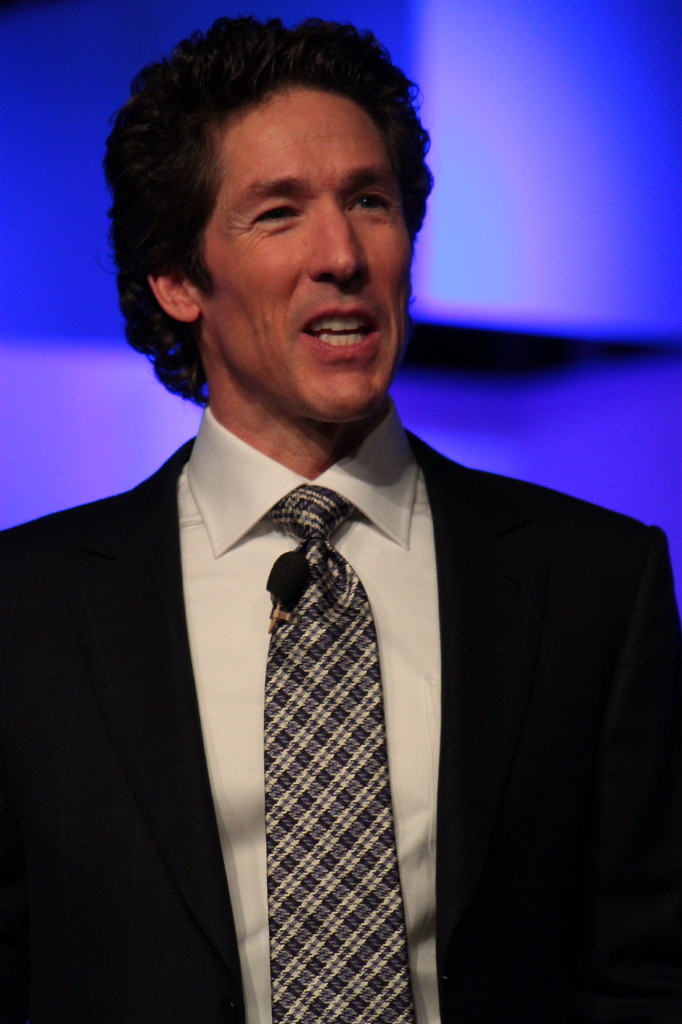
    Blood is in the water and the sharks feast. This week’s meal is Joel Osteen. The pastor of America’s largest church is being vilified because he didn’t open up his church to flood victims of Hurricane Harvey.

    In the court of social media, you make a mistake, and there is no forgiveness. It’s a shame culture, and no matter what a person does to make things right, it’s too little, too late. It’s just them doing good because “they got caught,” it’s just them doing good because there was a backlash, it’s just them doing good to try to put up the facade that they’re good (but they’re not good). And even if they do the right thing, it’s not because they learned from a mistake. When we’ve seen someone fail, especially someone we already dislike, their good deeds count for nothing. Their goodness is viewed with cynicism. (more…)