Josh Benner

Tag: gospel

  • The Church: being part of something bigger than yourself

    photo-1519491050282-cf00c82424b4.jpeg
    An astounding 16 million soldiers, sailors and Marines served America in the Second World War.
    And while most of our focus on World War II is on the military and combat, within the United States, there was an effort to support the war unlike anything our nation had seen or has seen since.
    With millions going overseas, Americans at home took up new jobs.
    Coming out of the Great Depression, unemployment dried up, reaching an all time low in 1944.
    The war effort affected virtually every facet of American life. Companies shifted their manufacturing efforts to supporting the war and supplying the military. Maytag went from making washing machines to making parts for airplanes. Firestone Tires made artillery shells and aluminum containers for food transport.
    Products like sugar, butter, bacon, and cheese were rationed. As were penicillin and other medicines, along with rubber and certain types of metals. Materials for clothing such as silk and nylon were needed for uniforms. Everything went to supporting a cause that was so much bigger than any one person.
    And everyone’s contributions mattered.
    To help pay for the war, the government sold war bonds. Over 85 million Americans purchased war bonds to help fund the effort. To put that in perspective, that was more than half of the entire United States population at the time.
    An incredible effort.
    The church has a mission 
    As Christians, we too are called to be part of a cause that is far bigger than any of us, but where everyone has a role, where everyone has a job to do, where everyone has a way to serve.
    The mission of God on earth.
    And that mission is to spread the gospel. To make disciples. To build up the church. To love one another.
    It’s not a passive request in scripture, nor is it a good suggestion, but something which God commands from all of his people.
    If you’re a person who has placed faith in Jesus, this applies to you.
    As the Apostle Paul said in Galatians 2:20:
    I have been crucified with Christ. It is no longer I who live, but Christ who lives in me. And the life I now live in the flesh I live by faith in the Son of God, who loved me and gave himself for me.
    You belong to Jesus when you place your faith in him.
    And part of the purpose of the Christian life is one that is lived in service of God for the mission of God in the world.
    You were made to have an impact 
    Do you ever feel like you were made for something great?
    Do you ever feel like you were meant to have an impact?
     You are made for more, you are made to do great things, you are born to have an impact in the world.
    An impact for Jesus.
    We can try to build our own kingdoms, we can try to collect our own toys, we can try to control and manipulate the circumstances in our lives to make us feel secure.
    We can do those things.
    But we were made to serve the mission of Christ in the world.
    And that includes sharing the gospel, making disciples, making Jesus known, growing together as His Church, and serving God.
    As a church, every person in the church is called to use the ways God has gifted and equipped them for the purpose of serving God and building up the church.
    That’s why we’re here.
    Writing to the Church in Corinth, the Apostle Paul said:
    Now there are varieties of gifts, but the same Spirit; and there are varieties of service, but the same Lord; and there are varieties of activities, but it is the same God who empowers them all in everyone. To each is given the manifestation of the Spirit for the common good.
    Maybe you’ve never really thought about that.
    But all Christians are given Spiritual gifts.
    Doesn’t matter how well you know the Bible.
    It doesn’t matter how long you’ve been a Christian. There’s no probationary period before you can God.
    It doesn’t matter how smart you are, or how outgoing you are, or how many people you know.
    It doesn’t matter how talented you think you are.
    If you’re a Christian, God has given you gifts to serve him and build up his church.
    Don’t fall into the trap of thinking you have nothing to offer.
    I think that’s the reason why some people don’t serve.
    It’s nonsense.
    Because everyone here has much to offer. Much to contribute.
    It can be easy to see a really talented pastor, a really gifted musician, someone who’s really outgoing, and to feel insecure about what you have to offer.
    But the unsung heroes are the backbone of congregations, people faithfully and humbly serving. Books get written about generals, but the real work is done by soldiers.
    Josh Benner is the associate pastor at Cornerstone Evangelical Free Church in Fergus Falls, Minnesota and has a Master of Divinity from Trinity Evangelical Divinity School. He enjoys writing about faith and culture. He lives with his wife Kari in Minnesota.

  • Law and grace in Les Miserables

    LesMisLogoOriginally published October 8, 2015

    I am a huge fan of the musical Les Miserables. I saw it on Broadway when I was 11, and I thought it was just about the most amazing thing ever.  (more…)

  • Billy Graham’s last will reminds us of how short life is

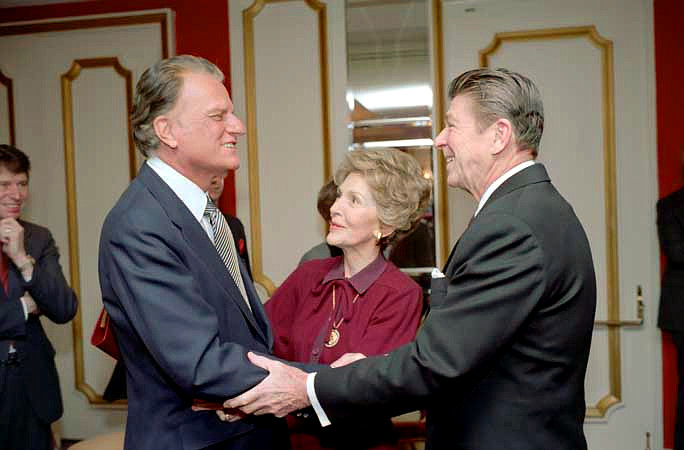
    Reagans_with_Billy_Graham.jpg

    Billy Graham’s last will and testament was released to the public today. The great evangelist died in February.

    In the frist section, he encourages people to take up Godly devotion in their daily lives and to defend the gospel.

    I commit myself wholly into the hands of my Savior, the Lord Jesus Christ, knowing by God’s Word that through His shed blood my sins have been atoned for and taken away and that through His merits I shall be presented faultless in the presence of His glory.

    When you read this I will be safely with Jesus in Paradise. I will be awaiting the reunion of our family in Heaven. Time on earth is so short. It seems only yesterday that I was a little boy playing on the family farm near Charlotte. It seems only yesterday that I took your mother on our first date on the second Sunday of December, 1940. It seems only yesterday that we were married on the full moonlit night in August, 1943. It seems only yesterday that I opened a letter from your mother to say that we were expecting our first child in the fall of 1945.

    That idea is what struck me in his note.

    Billy Graham lived 99 years. And yet even long lives are still so short.

    I’m in my thirties. Billy Graham was older than some of my great grandparents. But it is amazing how quickly time goes by. Memories of my youth, events that happened over a quarter century ago “seem only yesterday.”

    Life is short. And while we’re so tempted to all assume that we will have long lives, no one knows when the last day will be. It’s easy to take time for granted. But it’s finite and fleeting.

    As I think about Billy Graham, he was a man who had his first priority right: living a life that revolved around the gospel.

    There’s no time to wait. We need to live for God today. If you don’t know Jesus, or if you do but you have never really taken that relationship seriously, don’t wait. Don’t put it off. Today is the day.

    Childhood seems only yesterday. And even for those who live Billy Graham lifespans, the last day will seem like only tomorrow. Live for Jesus today!

    Humble yourselves, therefore, under the mighty hand of God so that at the proper time he may exalt you, casting all your anxieties on him, because he cares for you.
    -1 Peter 5:6-7

    Josh Benner is the associate pastor at Cornerstone Evangelical Free Church in Fergus Falls, Minnesota and has a Master of Divinity from Trinity Evangelical Divinity School. He enjoys writing about faith and culture. He lives with his wife Kari in Minnesota.

  • What’s the greatest danger to the church?

    photo-1476455479340-25ee0cee09bf.jpeg
    There are 300,000 churches in America.
    There are many wonderful churches that boldly proclaim the gospel and faithfully teach the Bible every week. There is no perfect church in the world, because every church is full of members who are imperfect people.
    I think that the biggest issue the American church faces today is related to truth and love.
    Love that undermines truth and truth that doesn’t practice love. I’ll briefly explain what that means.
    Love that undermines truth 
    Love is important. The greatest command in scripture is to love God and to love people. God is love.
    But some churches can emphasize love to the point where it undermines truth.
    For instance, there is a temptation in some Christian circles to consider the love of God and reason that: “since God is love, his love extends to all people, whether or not they believe in God and whether or not they want or accept his love.”
    God is love. But that is just taking a slice of the character of God and acting as if that’s the whole pie. God is love. But he is also just, and righteous, and holy. He judges, he has wrath towards sin. God has all of those qualities at all times.
    God is love. But the idea of love is not only exclusive to what our culture defines love as.
    We tend to value acceptance and tolerance as what it is to love. And it’s true that God meets us where we are, but Jesus doesn’t save us to keep us the same. God is a perfecting God. We sin. We sin so much that we needed a savior, and the gospel is not a message that teaches us that we’re ok and we should just keep doing what we’re doing. We need to live for God and pursue him.
    Making love purely about acceptance and tolerance is not the full Biblical scope of what love is. And so it undermines the truth of scripture. And it runs the danger of undermining the inerrancy of scripture (taking the Bible as practical wisdom rather than the infallible word of God). And this view runs the risk of undermining the gospel itself.
    Assuming that love and  demand for justice are mutually exclusive.

    I observe this being the great risk in more liberal denominations.

    Truth that doesn’t practice love

    I think this is more of a danger in conservative and evangelical circles. We place a high value on the scripture and theology. And well we should because both of those are hugely important.

    But we can get so preoccupied with having the right answer that we lose sight of actually living out what we know. This is very similar to the failure of the Pharisees in the gospels. They were very well studied and trained in theology, but they missed the heart of the message.

    It can be easy to know the right answer but it’s difficult to live it out in practice.

    Truth and love. It comes down to belief and practice. We need both.

    Josh Benner is the associate pastor at Cornerstone Evangelical Free Church in Fergus Falls, Minnesota and has a Master of Divinity from Trinity Evangelical Divinity School. He enjoys writing about faith and culture. He lives with his wife Kari in Minnesota.

  • 4th century theology of Athanasius still fresh today.

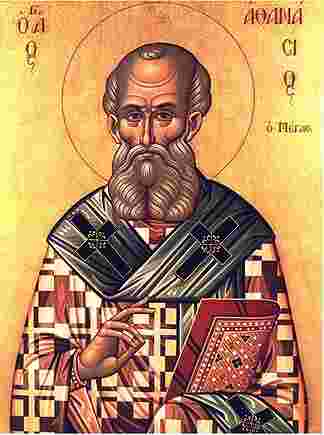
    athanasius

    Originally published March 18, 2016

    Why did Jesus have to die? For years, this puzzled me. I could get on board with the idea that I fell short of God’s perfect standard. But why did Jesus need to die? Couldn’t God have just forgiven me? Like some sort of Spiritual write off?

    One of the best explanations I have ever read for this comes from a fourth century bishop named Athanasius in a work he produced entitled “On the Incarnation.”

    From the beginning, Athanasius provides a treatise on Jesus’ presence in creation, his incarnation as a man, and his necessary death for the reconciliation of humanity.

    Athanasius establishes that Jesus, who created all things, is the same being who renewed the world. In arguing against the Epicureans, the Gnostics, and Plato, Athanasius uses some of his counterarguments in an attempt to further solidify his Christology. For instance, Plato’s idea of God fashioning things from pre-existent matter is used by Athanasius to argue that such a view demotes God from Creator to mere craftsman and that the matter itself was necessarily created by God. From that creation, man was created in a sinless state but had the volition to sin. When mankind fell, it forever tarnished the relationship between man and God. And the sin of man spread throughout all of creation. People began to turn their attention to other things which God had created instead of on the Creator Himself.

    In the second chapter, Athanasius gets into a salvific dilemma about how God can reconcile His glory with man’s sin. “It was impossible; therefore, that God should leave man to be carried off by corruption, because it would be unfitting and unworthy of Himself.” It is not because of any intrinsic value of man, but God’s own nature called for a means of restoration. It will later be argued that to not provide this means would have led to a superfluity of the creation of man in the first place. For man to be created solely for damnation with no hope of salvation would mean that God was ultimately not creating man for Himself. But God could not simply forgive man arbitrarily because this would again have contradicted his perfection as the Lord had already established a prelapsarian injunction which humanity had willingly disobeyed.

    Possible options are speculated as to what God might have done. Mere repentance could not go quite far enough because it wasn’t about merely avoiding a particular sin. It was about being sinful in itself. In doing away with death and corruption, Jesus became a man to conquer those enemies. It couldn’t have been a man who did this because even the most pious men were ultimately sinful. As a result, Jesus was the only means of redemption. The God who had already been intimately involved with creation and the sustenance of the world was also the only means of salvation. While creation itself provided evidence for God’s existence, Athanasius argues that if teleological observations could have had a perfecting quality, that man would not have fallen in the first place. Instead of men recognizing the glory of God through creation itself, in sin, man instead made idols of other elements of creation.

    It could not have been merely Christ coming to earth. He needed to die. To give people reason to believe in Christ’s dominion over creation, and in order to give a reason for a faith that would end the death which was caused by sin, Jesus needed to personally rise from the dead. It couldn’t have been natural. Jesus needed to be witnessed dying, so that his risen state could bring men to faith in God.

    Among his conclusions, Athanasius argues that the transformation which Jesus has had on so many lives is a testimony to the truth of his resurrection. “Does a dead man prick the consciences of men, so that they throw all the traditions of their fathers to the wind?”

    The concluding chapters focus on more in depth refutations of common worldviews. To Judaism, he argues that the Old Testament called for a Messiah, and it called for that Messiah to be martyred. Athanasius next turns his attention to making various apologetic arguments for non-Jewish readers, opposed to believing the gospel.

    At times his Christological claims sound as if written by Paul. At other instances, his matter of fact, street smart logic and gripping analogies seem more modern, perhaps as if they could have been written by C.S. Lewis. I felt like the modern elements seemed most vivid in the apologetic arguments about the transformations in the lives’ of the people who knew Jesus and their willingness to risk everything in proclaiming the truth of his resurrection. At certain points, I found this volume to be laborious. But once the flow of his argument was established, I thought this book seemed much more approachable. Even though the writing presents a long argument, I also felt that Athanasius did a good job, at points, of summarizing the main points that he had made.

    For the time in which it was written, I appreciate the systematized approach to some extremely complicated (but also important) issues. While Athanasius will not convince everyone to his line of thought, I felt that this was a great book in terms of answering the “why” Jesus needed to come. Therein lays the significance of this book. I feel that the “why” question  is so easily taken for granted.

    It’s easy to acknowledge people sin and to say that Jesus needed to die for our sins. But as if in an infantile mentality, I feel it’s so easy to keep reducing the question with “but why?” Why did things have to be as they were? Why couldn’t God simply forgive man? It’s one thing to explain why the incarnation Jesus was an option. With Athanasius, the undertaking was a more structured argument as to why it needed to happen and why it was the only way for reconciliation. In trudging through the difficulties of making the incarnation of Jesus tangible, Athanasius gave the world a true work of brilliance.

    Josh Benner is the associate pastor at Cornerstone Evangelical Free Church in Fergus Falls, Minnesota and has a Master of Divinity from Trinity Evangelical Divinity School. He enjoys writing about faith and culture. He lives with his wife Kari in Minnesota.