John Crist was the satirical comedic voice of the Christian millennial, making fun of the popular megachurch culture, contemporary Christian music, and consumerism within the church.
On Facebook, he has over 2 milloin followers. Over a million on Instagram. 500,000 on YouTube. Christianity is not known for producing great comedians, but Crist struck a cord. He was set to have a Netflix comedy special debuting on Thanksgiving.
He had the fashion since of a youth pastor. The homeschooled son of a pastor.
This week, Charisma News broke a story of multiple allegations of sexual misconduct engaged in by Crist.
Charisma News is certainly not known for being a source of investigative journalism, and while I’m not saying that all of the allegations are necessarily true, where there’s smoke, there’s fire. Crist has cancelled his upcoming tour and has issued an apology. It’s not that he’s saying everything reported is true, he did say:
While I am not guilty of everything I’ve been accused of, I confess to being guilty of this—I have treated relationships with women far too casually, in some cases even recklessly. My behavior has been destructive and sinful.
Crist’s statement also talked of receiving treatment for “sexual sin and addiction struggles.”
I’ve seen a number of Christians defending this man. That is completely disheartening and unacceptable. Reading through comments on his Facebook and Instagram, some people talk of being disappointed in his actions (rightfully), and those are met with comments such as “I guess you must be perfect,” “I guess you’ve never sinned,” “God is gracious.”
This type of response completely ignores the victims and mitigates the severity of what Crist did. Yes, God is gracious. And the good news of the gospel is that a person can be forgiven of their sins no matter what they’ve done. But that does not mean that there are never earthly consequences for our sins. This type of attitude enables continued sin because it accepts “he said he’s sorry” without also looking to see if there’s real repentance and change. Real discipleship and contrition.
It’s good to apologize for the wrongs you’ve done. It’s also easy. It’s easy to say you’re sorry when you’re caught.
But a changed life is what produces the fruit of a true belief.
This story further troubles me because in seeing people defend Crist, it’s a window into how sexual abuse can happen within churches. In a lot of ways, Crist is like the megachurch pastor or popular televangelist who has a fall from grace due to sin. He’s popular, has a following, portrays himself as living up to Christian ideals.
People are sticking up for John Crist because they like him. And so they’ll overlook his actions. Instead of seeing the wrong he’s done, they look to the “wrong” of anyone who would make a moral judgment on him.
Thanks for reading! I’d love to hear what you think, and don’t forget to subscribe!
Josh Benner is the pastor of Christian Bible Church in Cissna Park, Illinois. He has a Master of Divinity from Trinity Evangelical Divinity School. He enjoys writing about faith and culture. He has an awesome wife named Kari.
Last week, Southern Baptists from around the country met in Birmingham, Alabama for their annual meeting. A major focus for Southern Baptist Convention (SBC) president J.D. Greear is sexual abuse within the SBC, America’s largest Protestant denomination.
In February, the Houston Chronicle ran a piece outlining hundreds of examples of sexual abuse allegations within the Southern Baptist Convention since 1998. (more…)
Monday, the New York Times ran an article titled “Her evangelical megachurch was her world. Then her daughter said she was molested by a minister.”
The story talks about the Village Church, a megachurch in Dallas, Texas and the home church of Matt Chandler, one of the most popular and dynamic pastors in the contemporary Evangelical movement.
The story chronicles a former church member named Christi Bragg whose daughter was sexually assaulted at a church sponsored retreat in 2012. The New York Times piece gives accounts of how the Village Church responded to the allegations.
The article gives the impression that the church did very little to help the family and glossed over a crime while only carrying about protecting their own interests as a church. (more…)
The Houston Chronicle released the first of a three part series on sexual abuse within the Southern Baptist Convention. It’s a heartbreaking read to consider the damage that has been done to the lives of so many. It’s heartbreaking to consider the many other victims who never came forward or who were ignored.
I highly recommend the article, which I think should be a contender for the Pulitzer Prize. (more…)
As 2018 comes to a close, I wanted to take a look back at some of the top stories impacting Christianity in 2018.
1. The death of Billy Graham
Arguably the leading figure in American Christianity of the 20th century, evangelist Billy Graham died on February 21 at the age of 99.
In an era when so many churches are rocked by sin and scandal, Billy Graham was respected by both Christians and non-christians for his integrity.
In an era where sexual harassment is rampant in seemingly every sphere of life, Billy Graham vowed to never spend time alone with a woman who was not his wife, mother, or daughter.
In an era where many of our most famous pastors live in mansions, Billy Graham vowed to not live lavishly.
In an era where there is so much hype, Billy Graham didn’t exaggerate attendance figures at his crusades.
In a Gallup poll of the most respected men in the world, Billy Graham made the top 10 a remarkable 50 times (read more).
2. LGBT issues and the church
The third anniversary of the SCOTUS decision on same-sex marriage in America came in June. One story that helps illustrate the conflict of the church an the culture is the story of Jack Phillips, the Colorado baker who famously refused to bake a cake for a gay wedding. In June, the Supreme Court ruled in favor of Phillips.
In August, Phillips was again defending himself after a lawyer sought legal action against Phillips for refusing to bake a cake in honor of the lawyer (who’s transgendered) transition anniversary.
3. Sex abuse scandal in the American Catholic Church
It’s been a rough few months for the Catholic Church in America, largely because of self-inflicted wounds. In July, the New York Times ran a cover story alleging sexual abuse of a Catholic seminarian perpetrated by Theodore McCarrick, a Catholic Cardinal, who had retired as the archbishop of Washington D.C. in 2006. Shortly after the Times story was released, McCarrick resigned as a cardinal. He’s the highest ranking American Catholic to have been accused of abuse. But there were also Catholic leaders who say that they had heard of these allegations and reported them up the chain, prior to the July story.
In August, Carlo Vigano, who had served as the archbishop nuncio to the United States (basically the Vatican ambassador to America) wrote that he had previously reported on McCarrick, as had Vigano’s predecessor. The abuses were swept under the rug.
There were several stories about Vigano this summer. Vigano is a pretty credible person to be making those claims. Vatican gave smoke and mirrors. Pope Francis asked people to pray for the Catholic Church in these “attacks from the devil.”
Chicago archbishop Blasé Cupich brushed off Vigano saying: “The pope knows we have a bigger agenda. We have to speak about the environment, about the poor, we have to reach out to people who are marginalized in society. We cannot be distracted at this moment,”
The hits kept coming.
In August, a Grand Jury Report came out in Pennsylvania, investigating eight of Pennsylvania’ diocese. They found evidence spanning decades of hundreds of priests allegedly sexually assaulting over a thousand children.
When that report was released, Pennsylvania Attorney General Josh Shapiro talked about a “sophisticated cover up,” and claimed they even had evidence that the Vatican was aware of the cover up.
Pennsylvania had been the former stomping grounds of Cardinal Donal Wuerl, who had succeeded McCarrick as the archbishop of Washington D.C. Wuerl had previously been archbishop of Pittsburgh and was one of the names named by Vigano. Wuerl resigned in October.
In November, authorities in Houston raided the offices of Cardinal Daniel DiNardo, who’s the archbishop of the Houston-Galveston Catholic Dioceses. Being the archbishop of the fourth largest city in America is pretty significant, but DiNardo is also the President of the United State Conference of Catholic Bishops.
The raid was related to the Houston diocese handling of sexual assault allegations against a local priest named Manuel La Rosa-Lopez.
Next February, the Vatican is hosting a summit on these clerical abuses. This week, Blase Cupich (Mr. Environment) was tapped as one of the organizers for the summit. I was immediately skeptical of this selection. In addition to talking about how the Pope had to focus on the environment (something he doesn’t’ control) rather than being troubled with an imploding sexual abuse scandal within the Catholic Church (something he does control), said they weren’t “going to go down a rabbit hole” on Vigano’s credible allegations.
It all seems reactionary and slow to come. And my concern is that it still won’t fix the problems. People can try to dismiss these issues as being things that happened a long time ago, but when many of the higher ups within the church are being shown to have had knowledge (or in McCarrick’s case, to be the perpetrator), it remains a major crisis (read more).
4. American pastor freed by Turkish government
Facebook
October 12
The Turkish government released American pastor Andrew Brunson after more than two years in custody.
Brunson was arrested in the aftermath of a failed coup on the Turkish government and Turkish president Recep Tayyip Erdoğan.
Brunson had nothing to do with the coup. At the time, he had been in the country for over 20 years serving as a pastor and was taken as a political prisoner.
There had been several times over the past year where Brunson’s release seemed possible, but the Turkish government and courts were resistant. In July, Brunson was allowed to go on house arrest (read more).
5. American missionary murdered on remote island
November 17
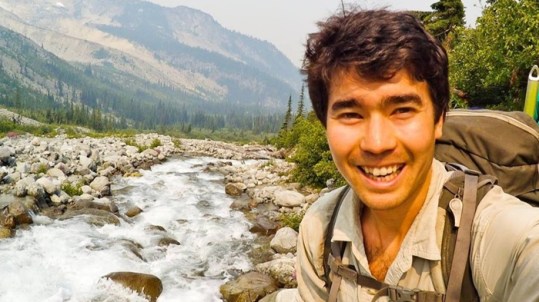
An American missionary, John Allen Chau lost his life on a remote island off the coast of India last week.
His goal was to share the gospel with the Sentinelese tribe. Their island is a protected area, which is isolated from the outside world. The tribe has also been violent towards visitors in the past.
Chau attempted going to the island and the Sentinelese shot arrows at him, forcing Chau to flee. But he returned again, tragically losing his life (read more).
6. Willow Creek sexual misconduct and fallout
A long investigative story from the Chicago Tribune reports on several allegations of moral filings from Bill Hybels, the founding pastor of Willow Creek, a suburban Chicago church which is one of the largest churches in America (read more).
The article says:
The alleged behavior included suggestive comments, extended hugs, an unwanted kiss, and invitations to hotel rooms. It also included an allegation of a prolonged consensual affair with a married woman who later said her claim about the affair was not true, the Tribune found.
More fallout continued into the summer. A New York Times story in August included further allegations. Willow Creek teaching pastor Steve Carter resigned.
The leadership of Willow had been informed about these allegations four years ago and did very little to take them seriously. They did an internal investigation, but internal investigations can be hard when their is an internally vested interest in clearing someone of wrongdoing.
Two days later, on August 9, Willow Creek’s other lead pastor and elder board resigned.
Willow Creek was not the only church to have sexual assault issues come to light. In the continuing fallout of the #metoo movement, a separate move started within the church called #churchtoo.
7. Megachurch pastor takes his own life
Andrew Stoecklein was pastor of Inland Hills Church in Chino, California. Stoecklein had struggled with depression and had taken leave from the church this summer (read more).
8. Survey reveals pervasive heretical beliefs in the American Church
Working with Lifeway Research, Ligonier Ministries recently released the third installment of their “State of Theology” survey.
Part of the goal is to find out what American Chrstians “believe about God, salvation, ethics, and the Bible.” Lifeway polled 3,000 Americans in the survey.
The results were troubling.
Many people in the poll have unbiblical views on moral issues. For instance, 46% of people ages 18-34 believe that gender is a matter of personal choice. 38% disagreed that abortion is a sin.
But what is even more concerning than views on moral issues is views which are heretical. For the question, “Jesus is the first and greatest being created by God.” 78% agreed with that statement.
Other key doctrines where people disagreed with Biblical teachings included undermining that humans have a sinful nature. 53% of respondents agreed with the statement “Everyone sins a little, but most people are good by nature.”
51% of respondents believed that a person can be saved who follows a religion besides Christianity. 58% believed that “worshipping alone or with one’s family is a valid replacement for regularly attending church” (read more).
9. Beth Moore calls out misogyny within Evangelical Christianity
Over the last generation, Beth Moore has been one of the most prominent female leaders and speakers in American Evangelical circles. Her Bible studies are hugely popular among women. She’s the founder of Living Proof Ministries, a ministry for women based out of Houston.
She’s not a pastor. She’s an author and speaker.
Although she’s popular in Evangelical circles, she’s not universally supported. Some of the criticisms of her theology include that it’s a prosperity gospel or that it’s intellectually light theology.
In writing, Moore talks about some of the misogynistic treatment she’s received over the years. Considering the divergent opinions within Christian circles on women in leadership, Moore’s letter talks about how she had chalked up some of her treatment as being a byproduct of deeply rooted Biblical convictions among sincere Christians with whom she simply disagreed.
From the letter:
I accepted the peculiarities accompanying female leadership in a conservative Christian world because I chose to believe that, whether or not some of the actions and attitudes seemed godly to me, they were rooted in deep convictions based on passages from 1 Timothy 2 and 1 Corinthians 14.
As Moore continues to elaborate, she talks of coming to a realization that it wasn’t simply about differences in opinion.
I came face to face with one of the most demoralizing realizations of my adult life: Scripture was not the reason for the colossal disregard and disrespect of women among many of these men. It was only the excuse. Sin was the reason. Ungodliness.
Our culture largely disrespects women. The #metoo movement showed the rampant sexual harassment and assault in Hollywood. As the movement spread, more and more areas of life came to light that were stained by the mistreatment of women. The #churchtoo movement showed further examples of assault and harassment from within the church. Obviously we knew that there were issues but these movements have created a national dialogue.
While Moore’s post dealt more with misogyny than sexual assault, both are a reflection of a culture which far too often devalues women.
10. Death of Eugene Peterson
October 22
Eugene Peterson, pastor, professor, and writer passed away today at the age of 85 after battling dementia and heart failure.
Peterson authored 35 books in his lifetime. The most popular among them was The Message, which has sold over 20 million copies. The Message is a paraphrase translation which attempts to capture the idea of a Biblical verse and not necessarily the exact wording (read more).
Thanks for reading! I’d love to hear what you think, and don’t forget to subscribe!
Josh Benner is the associate pastor at Cornerstone Evangelical Free Church in Fergus Falls, Minnesota and has a Master of Divinity from Trinity Evangelical Divinity School. He enjoys writing about faith and culture. He lives with his wife Kari in Minnesota.