Josh Benner

Tag: SCOTUS

  • Roe overturned

    Roe overturned

    I still remember the moment when my wife got an update on her phone about a leaked Supreme Court document that SCOTUS was going to overturn the historic Roe v Wade decision from 1973.

    Before that, I never thought I’d see the day. Today, it became official as the court overturns a constitutional right to abortion.

    The aftermath of this decision will lead to intense debate. From the most ardent supporters of abortion, there will be sackcloth and ashes. Over the past several weeks, we’ve heard the various talking points about how necessary abortion is, and about how women will just do them illegally.

    Overturning Roe doesn’t make abortion illegal. But it does give states broader authority to limit abortion. Numerous states already had laws to limit abortion already in place in case Roe was overturned.

    Sadly, all abortions will not yet be stopped and there is still more work to do. But lives will be saved.

    Before Roe v. Wade was decided by the Supreme Court in 1973, 30 states had made abortion illegal and it was only allowed under certain circumstances in 16 more. We hear a lot about democracy and “threats to democracy.” Roe was a threat to our humanity. Roe went against the will of the people and in the process, led to horrendous casualties. 

    We’ve made termination the easy way out over choosing life. We’ve undermined the value of life of those conceived in cases of rape and incest and made them political pawns as if their lives are expendable. We’ve talked about people being raised in less stable families as if they’d be better not being able to live at all. Millions of people who have lived through similarly challenging upbringings would beg to differ. 

    In the 50 years since Roe, I think of the sixty millions of babies who have been aborted and I don’t understand how all people aren’t heartbroken by that number. Tens of millions of lives have been created and terminated. Tens of millions of lives have been created yet never got to be lived. We’ve devalued life. We’ve taken something precious and made it a problem to be dealt with. We’ve taken something as tragic as abortion and turned it into a big business, both for abortion providers and those who work to lobby on its behalf. 

    Fifty years of this barbarity. I think of the millions of lives lost but also the kids and grandkids those people would have had. At the end of the movie Schindler’s List, they give Liam Neeson (who plays Oskar Schindler) a ring with an inscription from the Talmud which says “whoever saves one life, saves the world entire.” 

    Thanks for reading!

  • ACB’s sorority shows inclusion by apologizing for congratulating her

    ACB’s sorority shows inclusion by apologizing for congratulating her

    Only women who support killing babies are capable of accomplishing things which should be acknowledged in society.

    This week, Amy Coney Barrett was confirmed as an associate justice of the Supreme Court.

    In the lead-up to Barrett’s confirmation, Kappa Delta – ACB’s college sorority – congratulated their famous alumna on her nomination with a Tweet which said: “KD alumna Amy Coney Barrett was nominated to serve on the Supreme Court. While we do not take a stand on political appointments, we recognize Judge Coney Barrett’s significant accomplishment. We acknowledge our members have a variety of views and a right to their own beliefs.

    Reasonable. Trying to tiptoe around the politics. They faced a backlash from pro-choice members who could not believe the sorority would acknowledge a monumental accomplishment of a famous member. As many organizations do when facing pushback, KD folded.

    Where’s the apology for their sisters who approved of the post? The post says that they “began an intentional journey for the betterment of our organization, with a focus on diversity, equity, and inclusion.”

    How is it inclusive to post about a historical moment and then apologize for that acknowledgement when some people get offended? Inclusion only goes one way. It’s inclusive when it includes a progressive viewpoint. But other views are not welcomed at the table of inclusivity. The KD statement went on to say that they’ve been working on “recognizing we always need to have a more diverse group.” And the solution is to ignore a position shared by a large swath of their members in the name of bowing to the outrage mob?

    Again, Kappa Delta was not endorsing ACB. But even acknowledging her ascendancy onto the nation’s highest court is forbidden.

    This isn’t the only such example .

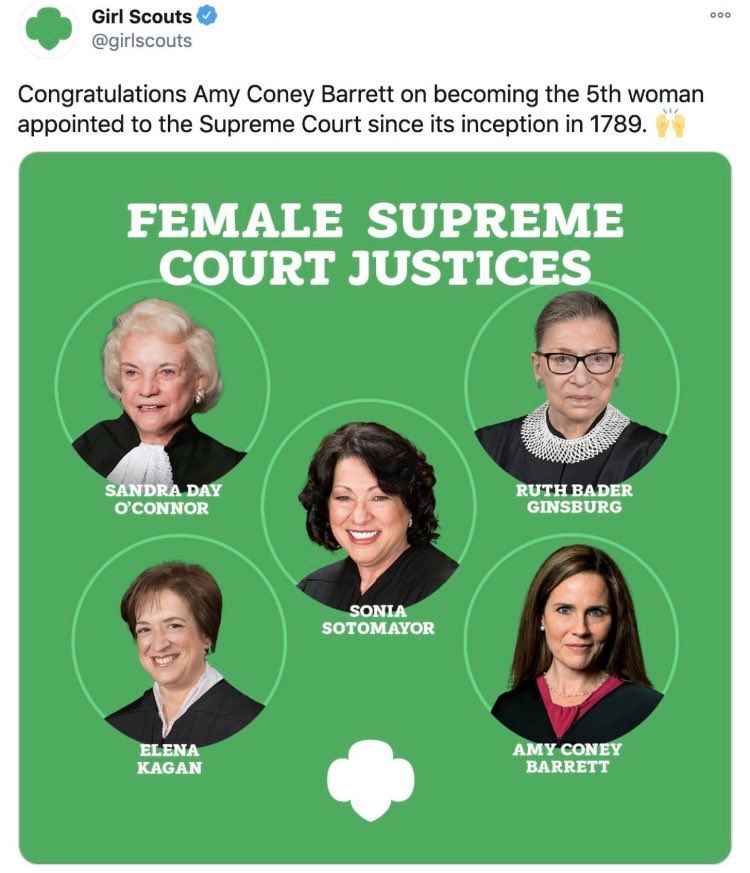
    The Girl Scouts also had the audacity to acknowledge the fifth woman in U.S. history being confirmed to the Supreme Court. Once again, the outrage mob responded.

    The Girl Scouts quickly backtracked and Tweeted: “Earlier today, we shared a post highlighting the five women who have been appointed to the Supreme Court. It was quickly viewed as a political and partisan statement which was not our intent and we have removed the post.”

    Insanity.

    Thanks for reading! If you liked it, share it!

  • Amy Coney Barrett and the anti-religion of the left

    Amy Coney Barrett and the anti-religion of the left

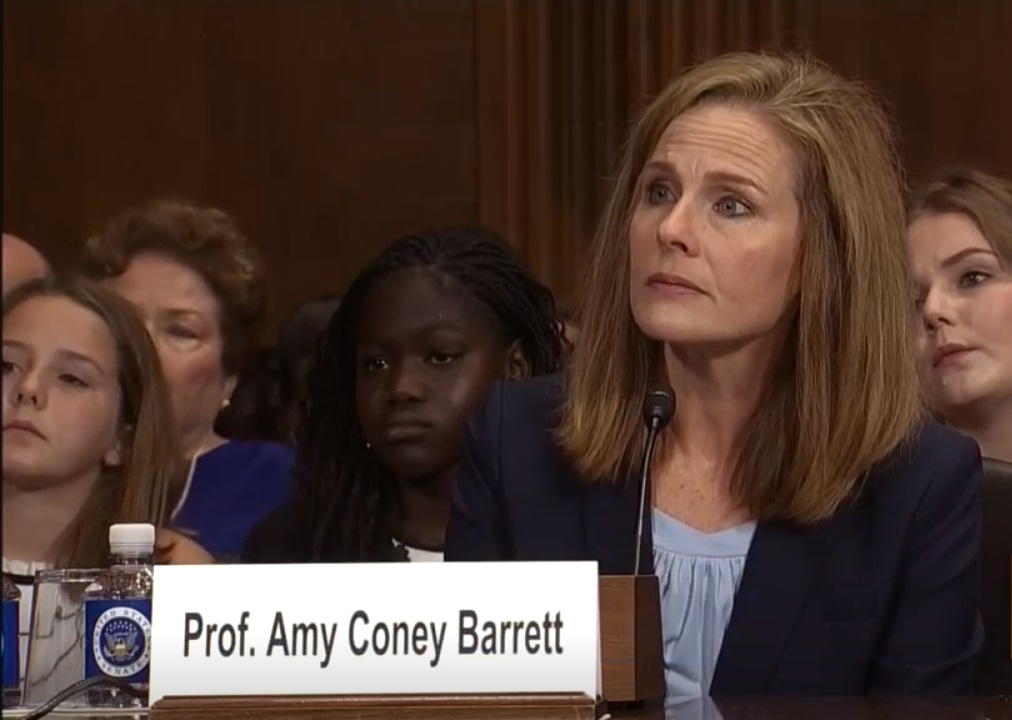
    This weekend, President Trump nominated Amy Coney Barrett to replace the late Ruth Bader Ginsburg on the Supreme Court. Coney Barrett is a judge on the 7th circuit court of appeals in Chicago, a law professor at Notre Dame, and a former clerk for former justice Antonin Scalia. She’s also a mother of seven and a devout Catholic and her faith has come into question in regards to her potential SCOTUS rulings.

    This isn’t new for Coney Barrett. During her senate hearings to be on the 7th circuit court in 2017, several democrat senators questioned her faith. Dick Durbin (D-IL) asked Coney Barrett if she considered herself an “Orthodox Catholic.” Diana Feinstein (D-CA) stated “Whatever a religion is, it has its own dogma. The law is totally different. And I think in your case, professor, when you read your speeches, the conclusion one draws is that the dogma lives loudly within you, and that’s of concern.”

    Her Catholic faith is already coming into question again as her October confirmation hearings rapidly approach. Numerous articles have been written about Coney Barrett’s affiliation with an ecumenical, Charismatic Movement called People of Praise which drew comparisons to the Handmaid’s Tale. On MSNBC, they made it a point to reference the group in a graphic during her nomination. ABC incorrectly claimed that People of Praise inspired the Handmaid’s Tale novel (now TV series). The Guardian wrote about the “authoritarian structure” of People of Praise. And there have been other attacks. And there will be more.

    But it’s interesting.

    Joe Biden is a “practicing Catholic,” as we’re told. He’s spoken many times about his faith. So is House Speaker, Nancy Pelosi (D-CA). Once upon a time, Nancy Pelosi who once talked about her faith and said “My favorite word is the word, is the word. And that is everything. It says it all for us. And you know the biblical reference, you know the Gospel reference of the word. We have to give voice to what that means in terms of public policy that would be in keeping with the values of the word.”

    Major political players who talk about their faith. And the vast majority of democrats in American politics claim a religious affiliation. But it’s Amy Coney Barrett who’s faith must seriously come into question. And the reason for that is because, unlike many of the democrats in congress, she lives it out. Someone who actually has sincere religious convictions terrifies the liberal elites. Because Christian ethics and teachings go against so much of the platform of the DNC.

    My point is not to judge the faith of Biden or Pelosi or anyone else in politics. But I will question the actions of leaders who support things which are totally contrary to the teachings of their faith.

    Thanks for reading! Make sure to like, comment, and subscribe!

  • Supreme Court Justice Ruth Bader Ginsburg dies at 87

    Supreme Court Justice Ruth Bader Ginsburg dies at 87

    Supreme Court Justice Ruth Bader Ginsburg passed away Friday night at the age of 87. A few thoughts have come to mind as I’ve reflected on her passing and the responses in media and social media.

    -There’s a major push to wait until next year to nominate a new justice, given the response of the GOP controlled senate in 2016 when Antonin Scalia passed away. At the time, part of the talking point was that the American people should have a say in the next justice (and that a lame duck president should not nominate a new justice in an election year). Even in 2016, I thought that was the wrong angle for the GOP to pursue. I thought the better argument was “it’s not the senate’s job to confirm whoever the president nominates; it’s the president’s job to nominate someone the senate is willing to confirm.

    -The hypocrisy cuts both ways though. It’s about the one billionth example of political parties talking out both sides of their mouths because democrats (including current nominee Joe Biden) wanted a nominee in 2016 to be confirmed. Now they want to wait. Both parties are hypocritical on this issue.

    -None of this changes the fact that regardless of what happened in 2016, Donald Trump is the president and it’s his prerogative to nominate someone for the court. (Obama nominated Merrick Garland).

    -With concerns over a constitutional crisis, there are reasonable arguments that the court needs another justice before the election so that we have an odd number of justices. Given that the current justices are not perfectly objective bastions of truth and justice, I have the sneaking suspicion that wild card justices like Roberts and Gorsuch would not allow a tie on something of such monumental importance (but that’s just my theory).

    -I think it’s unfortunate when anyone passes away, and I think that it’s unfortunate that RBG has died. I also think all of this could have been avoided had an aging Bader Ginsburg done the sensible thing and retired when Obama was president. Instead, the media wanted to give us propaganda about how intensely RBG was working out.

    -Yes, the Supreme Court is a lifetime appointment, but most justices do not serve the rest of their lives. Of 51 former justices since the beginning of the 20th century, 37 retired or resigned. Of the 14 former justices confirmed since 1960, 11 retired from the court.

    -As I’ve seen some frenzy of despair and hopelessness in the wake of RBG’s passing, I think it should be a reminder for us all that politics, presidents, and judges are not our hope. So many of us get so invested that we think society itself hinges on one person and that all is lost if a person dies. People are not our hope. We too often make idols of finite people.

    -I’ve joked that Trump should nominate Merrick Garland for the Supreme Court, just to watch the democrats vote against the person Obama nominated 4 years ago.

    Thanks for reading!

  • Supreme Court strikes down abortion restrictions

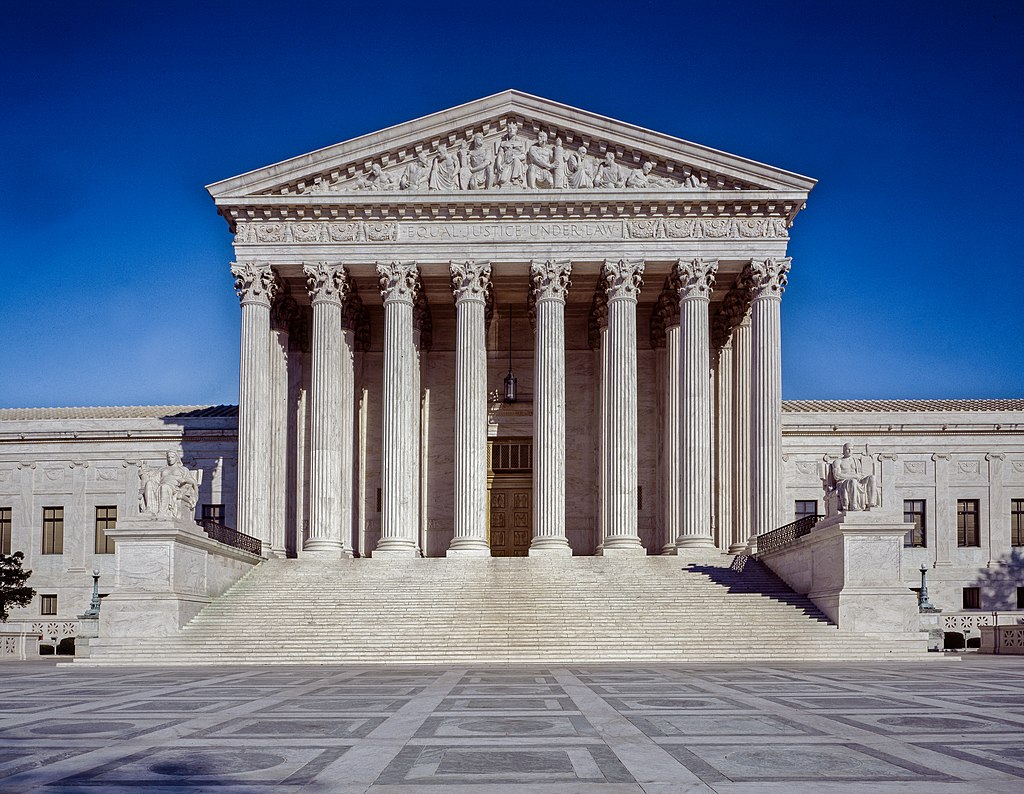
    United States Supreme Court Building

    In a 5-4 decision, the Supreme Court has struck down June Medical Services v Russo, a Louisiana law which required doctors who provide abortions to have admitting privileges at a nearby hospital. Chief Justice John Roberts sided with the court’s four liberal justices. Roberts said he disagreed with the ruling but voted with the majority because of a legal doctrine of stare decisis which calls for following establish precedents.

    Opponents of the law argue that admitting privileges are unnecessary and that it adds an extra layer of difficulty for abortion providers and reduces wren’s ability to pursue abortions.

    In 2016, the Supreme Court overturned a nearly identical Texas law. For that decision, Roberts had ruled against the majority but overturned his prior ruling to go along with precedent. While the laws of the two states were similar, it has been argued that the situation of the states was different as Louisiana hospitals do not have the same admittance standards as Texas.

    Roberts wrote:
    “The legal doctrine of stare decisis requires us, absent special circumstances, to treat like cases alike. The Louisiana law imposes a burden on access to abortion just as severe as that imposed by the Texas law, for the same reasons. Therefore Louisiana’s law cannot stand under our precedents.”

    I’m not a lawyer or a jurist. I understand that precedents matter. But it’s a bad precedent. States don’t have a right to decide minimum healthcare standards for doctors who perform abortions?

    Daniel Horowitz of Conservative Review points out: states regulate the standards for licensed professionals all the time – everything from lemonade stands to mowing grass – even when “an objective assessment might suggest that those same tasks could be performed by others.” But when it comes to the sacred ideals of abortion, the state is somehow powerless to regulate.

    He says that a precedent can’t be changed without special circumstances.

    We can’t overturn a bad decision from four years ago for a ruling which favors life, and safety, and state’s rights? Precedent matters but it’s not the end all be all.

    Thanks for reading! Don’t forget to share and subscribe.