American Revolution – 25,000
War of 1812 – 15,000
Civil War – 364,511
World War I – 116,516
World War II – 405,399
Korean War – 36,516
Vietnam – 58,209
Afghanistan and Iraq – 6,713
To the hundreds of thousands of men and women who gave their lives in the service and defense of America, thank you. (more…)
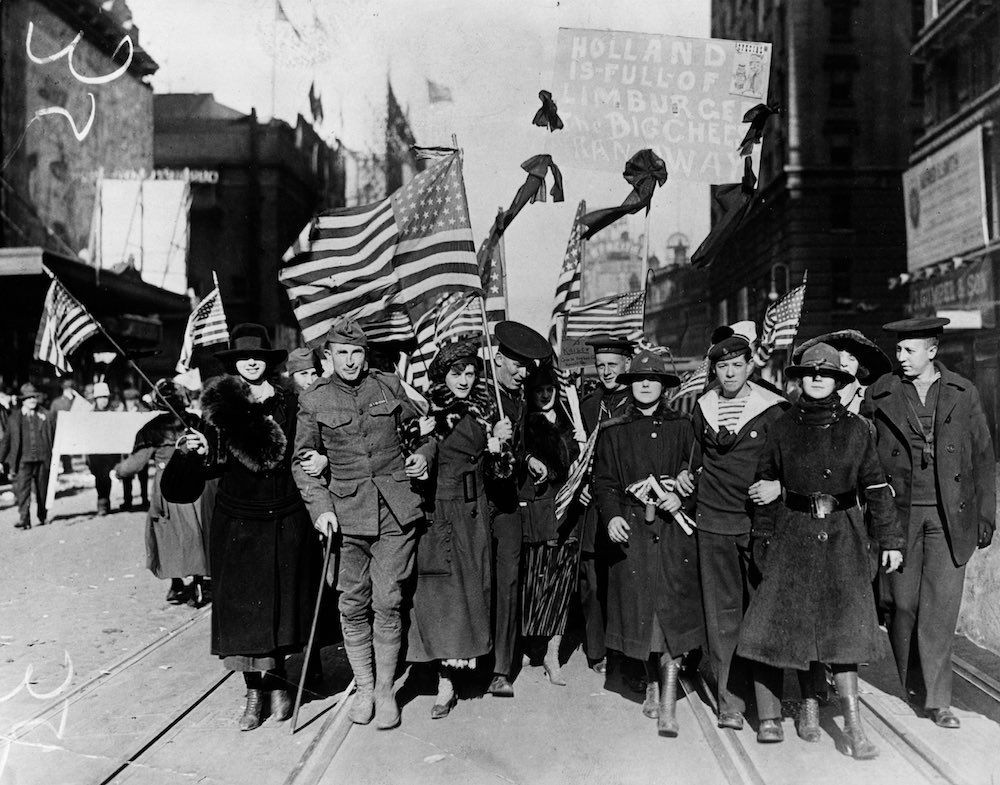
Crowds in New York celebrate the signing of the armistice which ended World War I
At this hour, a century ago, the First World War ended. They called it “The War to End All Wars.” But sadly, a generation later, the world would be embroiled in an even bigger, even more deadly, even more catastrophic war.
But at the time of World War I, it was something the likes of which the world had never seen.
The loss of life was catastrophic, with an estimated 37 million military and civilians dying in World War I. One of the striking features of World War I to me has always been the enormous losses of life in such short periods of time. In the First Battle of the Somme, there were over a half million casualties in a battle which lasted just 16 days. The First Battle of the Marne was an early battle in 1914. In less than a week, there were a half million casualties and over 150,000 troops killed.
World War I is fascinating to me.
I think for most Americans who are history buffs, our interests tend to go to one of three periods: the American Revolution, the Civil War, and World War II.
With World War I, America was certainly a major contributor in helping the Allies win the war but we also got involved relatively late (April 6, 1917), after the war had been raging for over 2 and a half years.
But our year and a half long contribution to the conclusion of World War I was hard fought, with over 116,000 soldiers dying (more than we lost in Vietnam and Korea combined).
Much of the past century has been shaped by the First World War. Three dynasties came to an end in World War I: The Romanovs in Russia were overthrown by the Bolsheviks in 1917. The Habsburgs were overthrown in Austria-Hungary. And WWI would lead to the downfall of the Ottoman Empire, which had held influence since the 13th century.
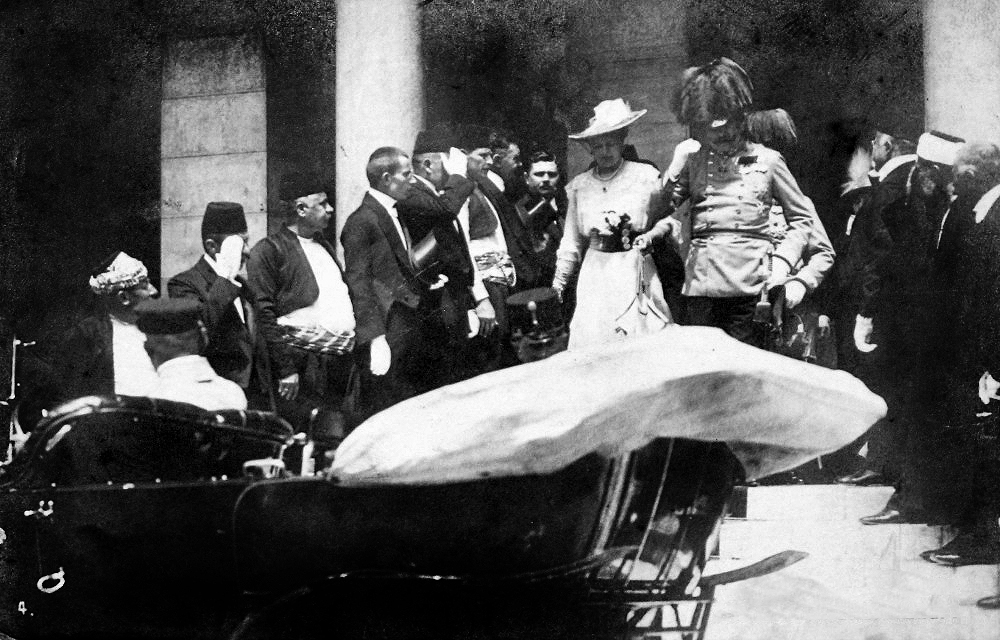
It led to an even bigger and deadlier war a generation later. One of the especially interesting things to me about World War I are the origins of the war. How the assassination of an unpopular prince in Serbia escalated to an international crisis. The alliance system pulled in several nations on both sides. The alliance system was a major factor that led to World War I, that perhaps the war was always inevitable and just waiting for a spark. World War II seems much more inevitable and unavoidable because of World War I.
The national boundaries in much of the Middle East came in the aftermath of World War I, and were established by the victorious Allied nations.
World War I was a modern war fought with modern weapons, but the scale of the war and the advancement of technology were beyond what the military philosophy of the day had developed. Most people thought it would be a quick war, but as countries who had large populations and who were relatively evenly equipped, it led to massive stalemates between armies. For much of human history, the populations would not have supported this style of warfare. Tragically, in World War I, armies could keep sending men into the trenches.
The world changed. At the beginning of the war, the French were still wearing blue coats, similar to what they wore in the Napoleonic Wars. This made them stand out. Officers were still wearing white gloves and caps with horsehair plumes. Entering a modern war with relics of the past. One of the earliest battles in World War I was the battle of the Frontiers. In just over a month of fighting, France alone suffered more than 300,000 casualties. But while the war began with elements of bygone eras, by the end of World War I, armies were using planes (still a pretty new invention at the time) in warfare and shooting guns from them.
Thanks for reading! I’d love to hear what you think, and don’t forget to subscribe!
Josh Benner is the associate pastor at Cornerstone Evangelical Free Church in Fergus Falls, Minnesota and has a Master of Divinity from Trinity Evangelical Divinity School. He enjoys writing about faith and culture. His hobbies include working out, watching sports, and photography. Josh and his wife Kari live in Minnesota.
It’s interesting to look at photos from the beginning of World War I. They look like they could be from the Napoleonic Era. Yet by the end of the war, armies were fighting with airplanes and tanks. The world changed. World War I set the stage for World War II. With the tensions of the war and an impoverished Russia helped lead to the collapse of the Romanov Dynasty. The result was communism in the newly formed Soviet Union. The Ottoman Empire, which had lasted since the Middle Ages, collapsed. To the victor goes the spoils, and as oil was starting to become more important, imperial European nations took advantage of the Middle East. But a casualty of the fall of the Ottoman Empire was the relative stability of the region. As a result of the war, the League of Nations was created as a precursor to today’s United Nations.
In the generation before the war, most of the fighting in which European armies had engaged was in imperial skirmishes against opponents with inferior equipment. The conventional methods used in World War I had not caught up with technology. A war that started in the summer, and which most of Europe thought would be finished by Christmas trudged on for four years. Causalities were on a scale never before seen in human history. (more…)