 Originally published October 8, 2015
I am a huge fan of the musical Les Miserables. I saw it on Broadway when I was 11, and I thought it was just about the most amazing thing ever. (more…)
Originally published October 8, 2015
I am a huge fan of the musical Les Miserables. I saw it on Broadway when I was 11, and I thought it was just about the most amazing thing ever. (more…)
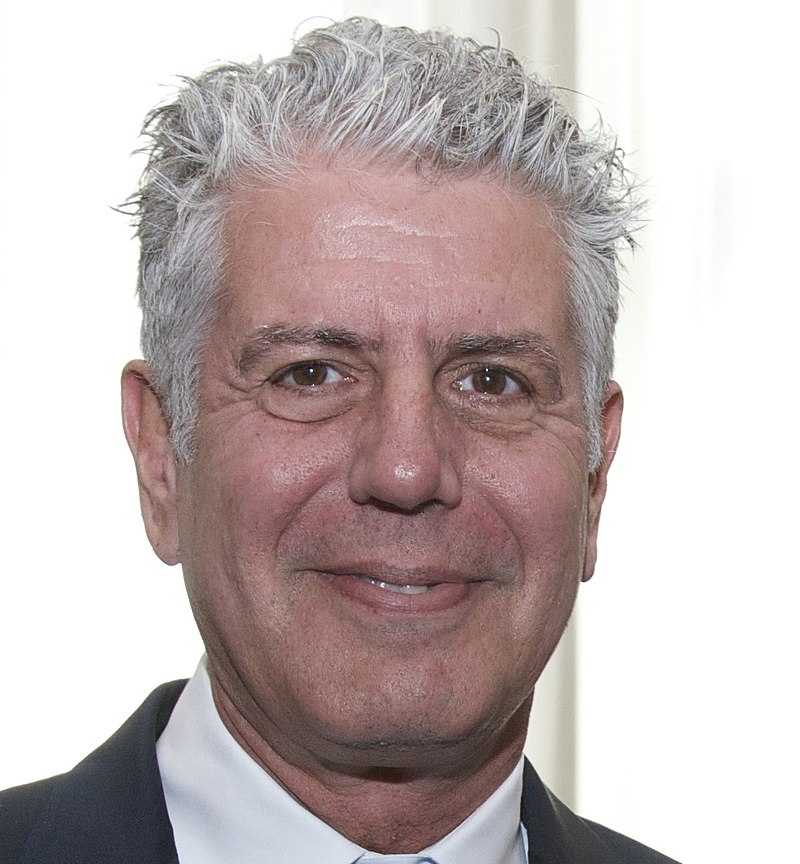
This week, two celebrities committed suicide. Designer Kate Speed took her life on Tuesday. This morning, we learned that celebrity chef Anthony Bourdain took his life in France.
It’s a tragic thing when a person is in despair to the point where that is seen as the only resort. If you happen to be reading this and you’re currently dealing with suicidal thoughts, call the National Suicide Prevention Lifeline at 1800-273-8255 or visit their website at suicidepreventionlifeline.org.
Suicide has many complicated factors. Mental illness and depression often times play a role. There has been a lot of discussion about mental illness in this country in recent years. As well there should be.
Suicide is a sensitive issue. There were over 44,000 suicides in America in 2016. Tens of thousands more each year, impacting hundreds of thousands of families, spouses, children, and friends.
Whenever there’s a high profile suicide, I read articles. And I see the comments that people make. People will talk about mental illness and depression (again, both very real and significant issues). But I feel that some people can be overly fatalistic about suicide. Like there was no other way that things could have turned out. Like there was nothing that could have been done. Like a person was so imprisoned to mental illness that they were beyond helping.
I reject that idea.
There is always hope. There are always people who care. There is always a reason to live.
It’s a mental illness and it can impact judgment. But the complex factors of suicide are deeper than only mental illness and depression. It’s also cultural. Suicide rates are not equal from one society to another. Rates fluctuate over time.
There’s often a copycat element to these tragedies. Where one person commits suicide and another also makes that choice. Suicide doesn’t equally impact every group within society (another reason why I reject that it’s only about mental illness and a person has no mental faculties in getting help). In America, caucasians commit suicide at more than twice the rate of African Americans (despite having lower rates of depression).
It’s a complicated issue.
When people look at it purely as a result of mental illness, I think that undermines the morality of the issue. It is a moral issue because it impacts families and society. It’s immoral. And I feel like many in our society are afraid to acknowledge that.
Rates have unfortunately increased in the United States. Rates are also going up in many other industrialized countries. It is a concern that as societies get more secular, they lose objective meaning in life. Some existentialists look at meaning as something someone can decide for themselves. But other philosophers took this to the opposite end of the spectrum and looked at life as futile.
The only true source of meaning in life is found in God. He has created the world and made humanity and he’s made us with the purpose of knowing him and worshipping him.
No matter what you’re going through, what you’re struggling with, God has a purpose for you and wants you to trust in him and to know him. Your life has meaning and Jesus showed that at the cross when he died to save sinful people. He died so that we could live.
Viktor Frankl, who survived the Holocaust wrote: “Those who have a ‘why’ to live, can bear with almost any ‘how’.”


In the Book of Exodus, God had worked in mighty ways for the Israelites. He had brought a series of plagues against the Egyptians. He dramatically parted the waters of the Red Sea. Once the Israelites were in the desert, God continued to lead. But through a series of uncertain events, the Israelites continued to respond by grumbling.
They ran low on water. Israel grumbled. God provided water. They didn’t have food. Israel grumbled. God provided food. After all that the Lord had done, the people should have trusted that God would provide.
But their struggle is one that we too can have. In spite of all of the ways how God has provided for us, blessed us, sustained us, in a time of adversity, it can be easy to fall into grumbling and doubt.
But this isn’t God’s desire for us. He wants us to live in faith.
In his hand is the life of every living thingand the breath of all mankind.
Josh Benner is the associate pastor at Cornerstone Evangelical Free Church in Fergus Falls, Minnesota and has a Master of Divinity from Trinity Evangelical Divinity School. He enjoys writing about faith and culture. He lives with his wife Kari in Minnesota.
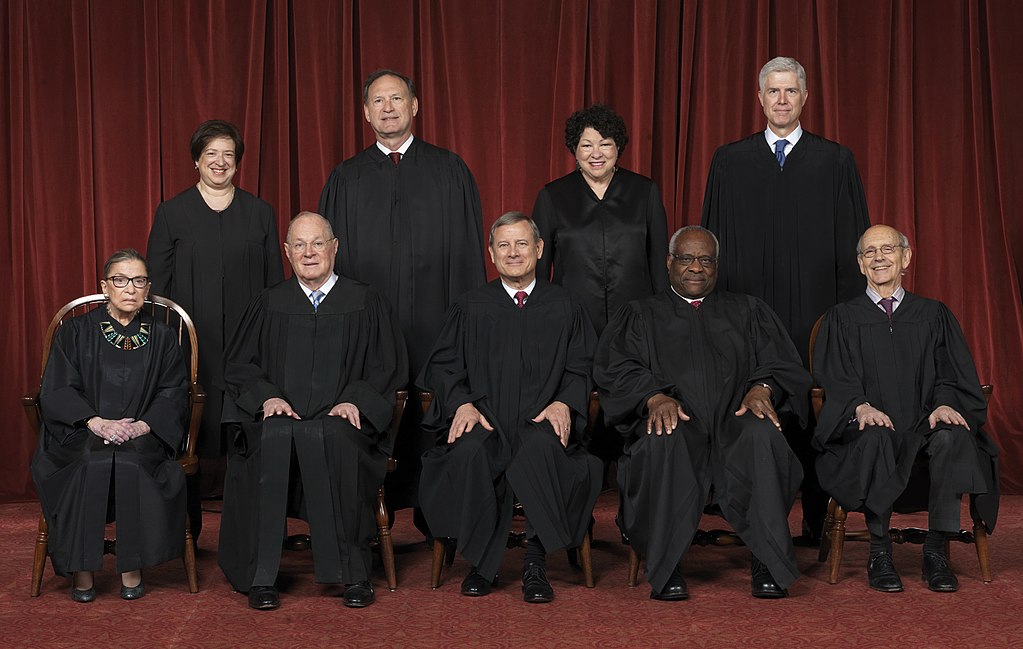
Today the Supreme Court ruled in favor of Jack Phillips, a Colorado baker who refused to bake a cake for a same-sex couple who was getting married.
This decision only scratches the surface of the issue. It does not give every Christian who works in a creative field (baking, photography, etc) permission to refuse services for a same-sex wedding.
I’m not a lawyer or a constitutional scholar but it appears to be on an inevitable crash course for another Supreme court decision. Is it a matter of individual liberty? Whereby a person reserves the right to refuse service? Or is it discrimination and the violation of law?
People on both sides of this issue are very polarized. If private business owners do have the legal right to refuse service, some draw analogies to people refusing services to African Americans before passage of Civil Rights legislation in the 1960s.
Persecution takes a variety of forms. There are absolutely people who seek to persecute Christians for their beliefs under the tyranny of law. With Jack Phillips, a couple attempted to force this man to comply. There have been numerous legal victories for the gay rights movement over the last few years. But some seek to crush any dissenters. There have been other businesses who have faced threats, backlash, and thousands of dollars in legal fees for standing by convictions.
Today’s decision does not further enshrine religious liberty. It has more to do with the Colorado Civil Rights Commission and their hostility towards Phillips than if Christians have a general liberty to refuse services in situations which conflict with their faith.
Josh Benner is the associate pastor at Cornerstone Evangelical Free Church in Fergus Falls, Minnesota and has a Master of Divinity from Trinity Evangelical Divinity School. He enjoys writing about faith and culture. He lives with his wife Kari in Minnesota.

