
Josh Benner

Author: the Josh Benner Blog

  • The greater worship to which Jesus points. Studying John 4:22-26

    The greater worship to which Jesus points. Studying John 4:22-26

    In John 4, Jesus is speaking with a woman at a well. Already in this passage, Jesus has pointed to the new life he gives and to the greater access to God that he provides. At the end of the passage. Jesus points to the greater worship of God that he points to. 

    In John 4:22-23, Jesus is speaking to the woman at the well: 

     22 You worship what you do not know; we worship what we know, for salvation is from the Jews. 23 But the hour is coming, and is now here, when the true worshipers will worship the Father in spirit and truth, for the Father is seeking such people to worship him. 

    He says that she worships what she does not know. And he’s referring not just to her but to the Samaritan people. 

    When Jesus says “we worship what we know, for salvation is from the Jews” he’s saying that the promise of God, the covenants God had made, the promised land, the scriptures of the Old Testament, the royal line which brought forth Jesus was also from the Jewish people. 

    The Samaritans had an incorrect understanding. But what Jesus is also saying as we move into verse 23 is that a paradigm shift is coming.

    But the hour is coming, and is now here, when the true worshipers will worship the Father in spirit and truth

    Jesus again refers to the hour. Not only is that hour coming, Jesus says that this hour is now here. The hour is coming and will be actualized at his death and resurrection. And that hour is already present in the world at that time as Jesus ministers to the world. 

    The time has come when true worshippers, when people who really are worshipping the Father will worship him in spirit and truth. 

    Spirit and truth

    What that means is that it’s worship from people who have the Spirit, in other words, people who have been born again, been regenerated, have the living water that Jesus provides.

    And the truth is referring to THE truth. Jesus. Jesus came into the world and he did not merely believe true things, or make true statements but Jesus himself is THE truth. 

    Grace and truth come through him (John 1:17). 

    He is the way, the truth, and the life (John 14:6). 

    And worship of the Father is meant to be in Spirit and truth. Not Spirit or truth, but Spirit and truth. 

    Jesus brings the greater worship. Jesus brings a Spiritual revolution. And it is through Jesus and Jesus alone that God is truly worshiped. 

    In verse 24, Jesus says:

    God is spirit, and those who worship him must worship in spirit and truth.”

    God is Spirit. Not God is a spirit, but God is spirit. God and existence is not merely about the material world, because God is spirit. 

    But God cannot merely be known intellectually or cognitively. He is Spirit. 

    When Jesus told Nicodemus that we must be born again, the reason why we must be born again is because we’re dead in our sin. That we need new Spiritual life. The wages of sin are death (Romans 6:23). 

    A dead person can’t worship the living God. We cannot worship God in Spirit and truth if we have not been born again. Because if we have not been born again, we do not have the Spirit. 

    It must be worship based around the gospel from people who believe in the gospel. God must be worshiped this way. It’s the only worship that God will accept. Spirit and truth. 

    Jesus came to bring the greater revelation, the greater access to God, and the greater worship. 

    Meditation – Worship without Jesus is not worship 

    You cannot truly worship God without Christ. That’s what this verse is saying. 

    A person who is not a Christian is incapable of true worship of God. Because if you don’t have the gospel, then you cannot worship in Spirit and truth. There are no participation trophies. 

    Matthew 7:21-23

    21 “Not everyone who says to me, ‘Lord, Lord,’ will enter the kingdom of heaven, but the one who does the will of my Father who is in heaven. 22 On that day many will say to me, ‘Lord, Lord, did we not prophesy in your name, and cast out demons in your name, and do many mighty works in your name?’ 23 And then will I declare to them, ‘I never knew you; depart from me, you workers of lawlessness.’ 

    Just being here is not what causes you to be born again and enabled to worship in Spirit and truth. It’s faith. Faith in the gospel. Faith in Jesus. 

    Hebrews 11:6 says that it is impossible to please God without faith. 

    Participation alone is not good enough for the Lord. Singing songs by itself does not constitute worship in Spirit and truth. I could sing “O Canada,” and that doesn’t suddenly make me a citizen of Canada. Just as much as singing Amazing Grace does not inherently make you a citizen of heaven. 

    It doesn’t if you don’t have faith. 

    Someone who is unregenerate is incapable of worshiping the Lord as the Lord has ordained to be worshiped.  

    The exclusivity of the gospel  

    This flies in the face of any argument that many roads lead to God. One road leads to God. One road leads to salvation. One road leads to true worship. 

    We don’t decide the worship which is acceptable to the Lord. 

    He does. Jesus is the one who gives us grace and forgiveness. Not the Old Covenant, not another religion, and not our own goodness.

    Jesus is the place where we go to meet with God. And he is the way we worship God. 

    For the Samaritan woman, she has been told the most amazing news that has ever existed in the world. It’s overwhelming. It’s difficult to understand and comprehend. 

    She still does not fully understand. 

    25 The woman said to him, “I know that Messiah is coming (he who is called Christ). When he comes, he will tell us all things.”

    She points forward to a coming Messiah who will explain all of the things about which Jesus is speaking. 

    Once again, we see the irony. Because she is talking to the Messiah, to the Christ. 

     26 Jesus said to her, “I who speak to you am he.” 

    Fun fact. This is the only place in the gospels where Jesus acknowledges his messiahship before the time of his trial. Jesus is the Lord’s Messiah, he is the savior of the world. And it’s because of who he is that he can speak with authority. 

    Time and again, this gospel makes absolute claims about Jesus and Jesus makes absolute claims about Jesus. There’s no gray area. It forces you to pick a side. 

    Jesus is the Christ or he is not. He is the one who leads us in true worship or he is not. He is the one who brings us into the presence of God, or he’s not. What do you believe about Jesus? 

    Don’t believe that? Then we have work to do. 

    If you do believe it? 

    Then the response is to come and worship the savior of the world who has brought us into the presence of the Lord, forgiven us of our sins, and allows us to worship today and forevermore in Spirit and in truth. 

    Thanks for reading! If you liked this post, please share and subscribe! 

  • The greater access Jesus gives. Studying John 4:20-21

    The greater access Jesus gives. Studying John 4:20-21

    In John 4, so far, we’ve seen how Jesus brings the greater water, he brings the greater revelation from God. He points forward to a New Covenant which he makes available.

    In the next part of the passage, we see that Jesus also brings greater access to God. 

    Verse 20. The Samaritan woman is speaking to Jesus:

    Our fathers worshiped on this mountain, but you say that in Jerusalem is the place where people ought to worship.” 

    Jerusalem vs Mt Gerizim

    This woman was a Samaritan. The Samaritans were an ethnic group who were half-Jewish. What’s more, they believed only in the first five books of our Old Testament. 

    When she says “our fathers worshiped on this mountain,” she’s referring to Mount Gerizim. To the Samaritan Jews, Mount Gerizim was a sacred place. 

    And there was a lot of hatred between the Jews and the Samaritans. The Samaritans did not believe that Jerusalem was the epicenter of religious life or the rightful site of the temple. 

    Instead they believed then and now that Mount Gerizim was the central locale of meeting with God. Of the roughly 800 Samaritans who are still living today, about half of them live in the area of Mount Gerizim. 

    Mount Gerizim overlooked the city where Abraham first built an altar to God in Genesis 12. There were also Old Testament commands for various celebrations on this mountain once the Israelites began to possess the land. 

    So for the Samaritans, that was the place where you worshiped. 

    It was – and is – the place where Samaritan Jews celebrate the annual festivals such as Passover, the day of atonement, the feast of tabernacles, etc. 

    So I return to the woman and Jesus. 

    She points to the difference between the Jews and the Samaritans as to the proper place of worship. 

    Jerusalem vs Gerizim. 

    Verse 21: 

    21 Jesus said to her, “Woman, believe me, the hour is coming when neither on this mountain nor in Jerusalem will you worship the Father.

    Jesus says “Believe me.”

    The Samaritan woman has the Lord of creation telling her to believe him. 

    It’s not simply me telling a friend to believe me when I share an opinion on football. It’s not you telling your spouse to believe you when you’re suggesting a home improvement. It’s not telling your grandkid to believe you. 

    It’s God telling her to believe him. 

    “The hour is coming.” We’ve noted this before, but when Jesus talks about the hour, he’s referring to the time of his death.

    And what Jesus is saying is that after his death and resurrection, neither of those sites will be the epicenter of approaching God. 

    Jesus provides the greater access. 

    It’s not ultimately going to be about either of those places where we go to meet God, because it is through Jesus that we go to God. He is the true temple. Approaching God is not about a mountain, or a city, or a building, but through a person. 

    We approach a personal God through a personal savior. The irony of the story is that she’s talking about Mount Gerizim vs Jerusalem and which is the greater place to be with God. 

    But she’s never been closer to God than at the moment when she is talking to the Lord Jesus himself. And that is true for all of humanity. Jesus is the meeting place with God. 

    Not only is he the meeting place for how we approach God, he is the greater meeting place. He is the greater temple, because he is not confined to a location. 

    Thanks for reading! If you liked this post, please share and subscribe! 

  • Darth Vader and the first king of Israel

    Darth Vader and the first king of Israel

    In Star Wars, you have Anakin Skywalker who becomes Darth Vader. 

    Anakin starts off from very humble beginnings. He’s a slave, but unbeknownst to him, he is set aside for a historic task. 

    A Jedi meets young Anakin and senses that Anakin has a strong presence of the force and that he is the chosen one who will be the Jedi who will restore power to the force. 

    And at first, Anakin does a lot of good things. He’s a heroic figure. He’s serving honorably as a Jedi. He saves an entire planet. 

    He has this priestly figure in Obi Wan Kenobi who trains him in the ways of the Jedi. 

    But then. 

    He joins the dark side. 

    He becomes Darth Vader. He’s evil. He is vengeful. He destroys entire planets. He nearly wipes out the Jedi. He kills his teacher, Obi Wan Kenobi. 

    I give those details because the life of Saul follows the same trajectory of that of Darth Vader. 

    In our passage today, we’re first introduced to Saul, who is a man of humble beginnings. Without knowing it, he finds out that he will be the king of Israel. Saul starts out well and has everything he needs to succeed before turning to sin in later chapters. 

    And he goes on a downward spiral of destruction and murder. 

    Darth Vader kills off most of the Jedi. Saul kills off all of the priests but Abiathar. 

    Both are replaced by greater men. Darth Vader’s son Luke Skywalker restores order to the force. Saul is replaced by David, the greatest of the Israelite kings. 

    Darth Vader fights his son, Luke Skywalker. Saul has a son – Jonathan who opposes Saul and abdicates any opportunity to sit on the throne. 

    Both Vader and Saul have daughters who oppose the evils of their fathers. Princess Leia is a Jedi. Saul’s daughter marries King David. 

    Saul and David are both anointed by Samuel. Darth Vader and Luke Skywalker are both trained by Obi Wan Kenobi. 

    Darth Vader dies on a moon called Endor. Saul dies in battle at a place near Endor! 

    1  Samuel 28:7

    7 Then Saul said to his servants, “Seek out for me a woman who is a medium, that I may go to her and inquire of her.” And his servants said to him, “Behold, there is a medium at En-dor.” 

    He dies in chapter 31 at Gilboa. 

    I think the Star Wars writers might have had a Bible handy when they were writing their script! 

    Humble origins, early successes, a turn to evil and a downward spiral of muder that ends in violent death. I think the comparison is helpful as we consider the long story arc of King Saul in the Book of First Samuel. 

    Thanks for reading! If you liked this post, please share and subscribe! 
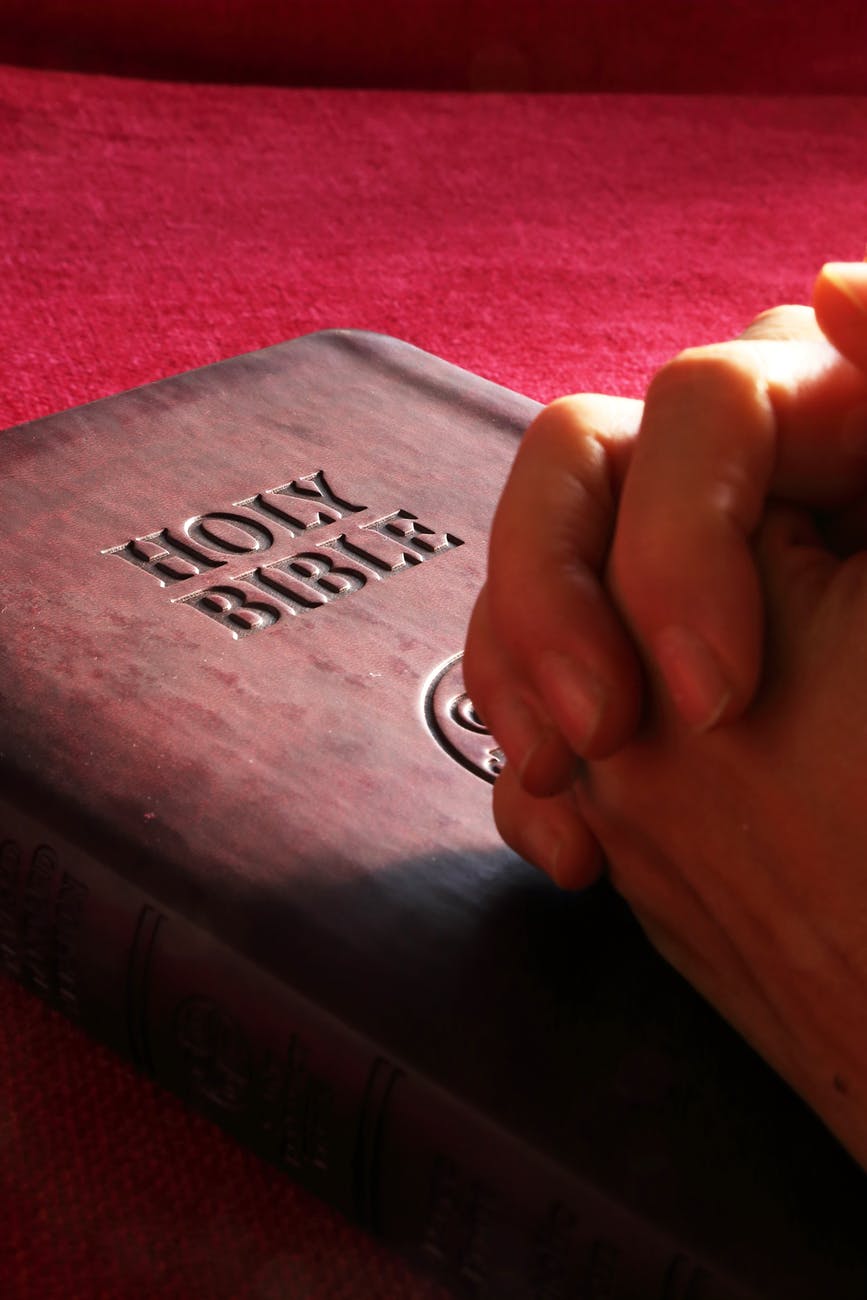
  • The first gospel. Studying Genesis 3:14-19

    The first gospel. Studying Genesis 3:14-19

    In Genesis 3, we see the fail of Adam and Eve. Instead of turning to God as a result of their sin, their initial response was to hide and try to cover up their sins.

    In Genesis 3:14-15, we see God’s initial response to Adam and Eve’s sin 

    14 The Lord God said to the serpent, 

    “Because you have done this, 

    cursed are you above all livestock 

    and above all beasts of the field; 

    on your belly you shall go, 

    and dust you shall eat 

    all the days of your life. 

    15 I will put enmity between you and the woman, 

    and between your offspring and her offspring; 

    he shall bruise your head, 

    and you shall bruise his heel.” 

    Judgment on the serpent

    God’s first response is pronouncing judgment upon the serpent for his rebellion. 

    There is no questioning of the serpent. God didn’t have to question Adam and Eve either. God is all-knowing and was aware of the guilt. God’s questions draw Adam and Eve to confession. Eve has also implicated the serpent as being part of the sin but that is not the source of God’s knowledge of the event. 

    There are three judgments upon the serpent. 

    First, he will be forced to crawl on his belly. Second, he have to eat the dust of the ground. And third, he will face ultimate defeat. And it is for that defeat of the serpent, that we see the Bible’s first glimpse of the gospel in the immediate aftermath of the fall. 

    The first gospel

    15 I will put enmity between you and the woman, 

    and between your offspring and her offspring; 

    he shall bruise your head, 

    and you shall bruise his heel.” 

    This verse is often referred to as the first gospel. 

    As God is pronouncing judgment upon the serpent, we see a picture of the ultimate victory for humanity. 

    he shall bruise your head, 

    and you shall bruise his heel.” 

    John Sailhammer argues that this verse doesn’t answer a question but it raises a question. By itself, Genesis 3:15 is ambiguous and somewhat cryptic. 

    How to read the Bible

    I sometimes hear people talk about the themes that develop out of Genesis and act as though we can’t bring them up when studying Genesis. I think we should take the entire Bible into account when reading Genesis and bask in the glow of what is illuminated throughout the rest of the Bible. 

    The serpent is another example of that. If all you have is Genesis, it’s hard to make the connection between the serpent and the devil. But the New Testament clarifies that (Revelation 12:9; 20:2). 

    In the same way, Genesis 3:15 is cryptic in isolation. But when we see the fullness of the Bible, the meaning becomes clear. We have the benefit of having a fuller picture than what the Ancient Israelites had. 

    The offspring of the woman

    The rest of Genesis becomes the story of the family that comes from Adam and Eve. Her offspring. And that trajectory of this family and their provision as a people of God develops throughout the entire Old Testament. 

    The Gospel of Matthew begins with a genealogy that leads back to Abraham, through whom God made a further promises of offspring and blessings in Genesis chapters 12 and 15. The Gospel of Luke’s opening chapters contain a genealogy that goes all the way back to Adam. It is establishing Jesus as the seed of the woman. He is the offspring who defeats the serpent.

    1 John 3:8: 

    Whoever makes a practice of sinning is of the devil, for the devil has been sinning from the beginning. The reason the Son of God appeared was to destroy the works of the devil. 

    Hebrews 2:14: 

    14 Since therefore the children share in flesh and blood, he himself likewise partook of the same things, that through death he might destroy the one who has the power of death, that is, the devil

    1 Corinthians 15:25: 

    For he must reign until he has put all his enemies under his feet.

    Jesus is the ultimate and great offspring of the woman (Gal. 4:4), a descendant of Adam and Eve who would one day crush the serpent. 

    The curse on Eve

    So we have the good news of eventual victory, but the world is now a world with sin, and that sin must be dealt with. 

    God will pronounce curses upon Adam and Eve. There are consequences for their rebellion. 

    Genesis 3:16: 

    16 To the woman he said, 

    “I will surely multiply your pain in childbearing; 

    in pain you shall bring forth children. 

    Having children is a blessing, but the moment of greatest blessing is also the moment of greatest pain. 

    We tend to think that the first part of this verse is only talking about labor itself. But I know that some scholars think it’s actually referring to the entire process of having children. 

    John Walton argues that in the Hebrew, it’s referring to anxiety and anguish. Emotional pain in conception and the process to giving birth. In the ancient world, if a woman could not produce an offspring, it was grounds for divorce. Security in a family had to do with the ability to produce children. And so it was stressful. Even today, 10-20 percent of pregnancies result in miscarraige. Fertility issues are still a common problem. 12-15 percent of couples struggle for at least a year to conceive a child. This is in a time when we have more knowledge and interventions and yet, it’s still a struggle. 

    So the first problem results in child bearing. 

    The second part of the curse upon women is interpersonal within marriage. 

    Your desire shall be contrary to your husband, 

    but he shall rule over you.” 

    There is a power struggle between men and women. The New Testament talks about wives submitting to husbands and that is a controversial issue. 

    It’s so often a struggle for both men and women to find the appropriate balance that is honoring to God’s Word. 

    There are relationships when men basically relinquish all responsibility and the woman leads. That is not Biblical. There are also relationships where men lead but don’t lead in a Godly way and can become authoritarian. These struggles are not new. They were not invented by millennials or with the advent of modern feminism. These types of struggles go back to the fall. 

    Adam failed to lead before the fall. 

    The closest, most personal, most intimate relationship that humanity has is that between spouses. There is perfect unity in the Godhead, but as people who are image bearers, we struggle to find the unity in our marriages that the Bible calls us to. It shouldn’t be a surprise. In a fallen world, the most fundamental relationship is the one that often gets the most twisted and distorted among fallen people. 

    The curse on Adam

    There is also judgment upon Adam. 

    In Genesis, the curse given to Adam says in 3:17-19:

    “Because you have listened to the voice of your wife 

    and have eaten of the tree 

    of which I commanded you, 

    ‘You shall not eat of it,’ 

    cursed is the ground because of you; 

    in pain you shall eat of it all the days of your life; 

    18 thorns and thistles it shall bring forth for you; 

    and you shall eat the plants of the field. 

    19 By the sweat of your face 

    you shall eat bread, 

    till you return to the ground, 

    for out of it you were taken; 

    for you are dust, 

    and to dust you shall return.”

    Adam is treated with greater severity to Eve. 

    Adam is told that the ground is now cursed. This is an undoing of creation where the land was made good. 

    It also shows the far ranging impacts of the fall. 

    Romans 8:22: 

    22 For we know that the whole creation has been groaning together in the pains of childbirth until now.

    Where the text says: in pain you shall eat of it all the days of your life; 

    I take that to refer to the toil of working from the ground being a similar pain and toil to the woman carrying children, but it will never end. It is also a punishment that fits the crime. Because Adam ate of the forbidden fruit, his continuing sustenance will be a struggle for him. 

    Verse 18 continues the theme of the curse of the earth. 

    18 thorns and thistles it shall bring forth for you; and you shall eat the plants of the field. 

    As Kenneth Mathews says in his commentary of Genesis: the ground will now be his enemy rather than his servant. 

    19 By the sweat of your face 

    you shall eat bread, 

    till you return to the ground, 

    This verse once again emphasizes the difficulties of working the ground and also introduces the idea of death. 

    When I read this, I think of the incredible difficulty that substance has been for so much of human history (and that it is still for so many around the world). There have been great technological advances in the last century which have made the science of agriculture and farming much more efficient than ever. 

    But these are relatively new advances. You read about the Dust Bowl of the 1930s when there were severe droughts. Parts of the world still experience famines. In modern America, we certainly are in a time of abundance, but as we’ve dealt with Covid for the last couple years, we’ve seen how delicate our supplies can still be. We’re in a time of increasing food costs. And it stinks! 

    But for so much of human history,this has been the rule, not the exception. That so much of your labor, time, and energy was simply to acquire enough food. 

    It has been a time of abundance, and I think we can take for granted that this will always be the case. For me, what the last couple years have shown me is that we never really know what’s around the corner. 

    A second takeaway is that man’s labor itself is toilsome. Even in times of abundance, work can so often be so difficult. There can be dangers of work, work can disrupt home-life balance, it can be unfulfilling. Work can be stressful. Financially enriching jobs can come with increased work or more competition and uncertainty. Our work brings challenges. 

    Work existed before the fall. Work is not inherently bad. It’s a good thing. But because of sin, work will often times have a laborious aspect to it which was not part of creation. 

    In Genesis, Adam is being told that tending to the earth will be a struggle and then he will die and return to the earth. 

    for out of it you were taken; 

    for you are dust, 

    and to dust you shall return.”

    This is really the ultimate undoing of creation. 

    God made man from the dust of the earth and we will return back to it. 

    Adam does not receive the physical curse that Eve does, but there will be toil. 

    And in the rest of the Bible, Adam is associated with sin and the fall.

    Romans 5:12-17 says: 

    Therefore, just as sin came into the world through one man, and death through sin, and so death spread to all men because all sinned— 13 for sin indeed was in the world before the law was given, but sin is not counted where there is no law. 14 Yet death reigned from Adam to Moses, even over those whose sinning was not like the transgression of Adam, who was a type of the one who was to come. 

    15 But the free gift is not like the trespass. For if many died through one man’s trespass, much more have the grace of God and the free gift by the grace of that one man Jesus Christ abounded for many. 16 And the free gift is not like the result of that one man’s sin. For the judgment following one trespass brought condemnation, but the free gift following many trespasses brought justification. 17 For if, because of one man’s trespass, death reigned through that one man, much more will those who receive the abundance of grace and the free gift of righteousness reign in life through the one man Jesus Christ. 

    Adam is the one man, sin entered the world. And through the one man (Jesus), there can be forgiveness of sins.  

    One final note of hope

    After the curses, Genesis 3 tells us of the names for Adam and Eve. 

    20 The man called his wife’s name Eve, because she was the mother of all living (Genesis 3:20). 

    The name Adam in Hebrew (Adamah) is the Hebrew word for man and is used 562 in the Old Testament. Adam had already named his counterpart “woman” (Genesis 2:23), but here he calls his wife Eve. As the text tells us, this name refers to her as being the mother of the living. 

    Even in the aftermath of sin and in the face of a world where there is now death, Eve has pointed to as the one who bears the living. And from woman would one day come the eternally living one, the second Adam, Christ the Lord. 

  • “You’re not pro-life, you’re pro birth:” And other ridiculous arguments

    “You’re not pro-life, you’re pro birth:” And other ridiculous arguments

    A common argument I hear in the abortion debate is that pro life people aren’t really pro-life, we’re pro birth. That if we were really pro-life, we’d support all sorts of government programs. Federally backed universal pre-K, expanded maternity leave, etc, etc, etc. Furthermore, we also must personally be adopting and fostering babies and donating to help support mothers who don’t want to have babies. 

    To be fair, many pro-life people do those things. Christians, for instance, adopt babies at a rate that is twice the national average. Pro-life people open up pregnancy centers to care for mothers. There are also innumerable government programs which help provide food, healthcare, and other necessities. During this formula shortage (and as the father of an eight month old, I’m in the thick of it), I learned that like half the babies in America qualify for WIC . 

    Could these programs be expanded even more? Sure. I’d be on board with that. But here’s part of the issue. There’s always one more government program people can think of.

    I also think that it should be easier for people to adopt. If it wasn’t prohibitively expensive, many more people would adopt. But just because I haven’t adopted a baby, that doesn’t mean that I’m just pro-birth. 

    That’s like saying that if a person didn’t personally host a Jewish person in their home during the reign of the Third Reich, that they didn’t really oppose the Holocaust. Yes, I realize that’s not a perfect analogy (as far more babies have been aborted than people died in the Holocaust). I know people will say it’s not the same. But it’s a sad thing that we can’t at least agree that tens of millions of aborted babies is a tragedy. 

    It’s such a bizarre exercise where pro-choice people try to dictate what pro-life people must do in order to actually be pro-life. And if we don’t, then people should be allowed to kill their babies. So basically, it’s a hostage situation. 

    Now for the person who’s pro-choice, if pro-lifers did all of these things, would the pro-choice person then be pro-life too? Of course not! (At least, not anyone I’ve ever talked to who’s pro-choice). Because it’s not simply about a lack of resources, but it’s about a fundamental belief that it’s morally acceptable (and even laudatory) for a person to kill their not yet born baby. 

    For that reason, the argument has always seemed to be to be disingenuous. 

    So pro-life people aren’t really pro-life if we’re not progressive liberals. That has always seemed pretty convenient. But here’s the thing. 

    If you’re pro-choice, then that means you are just as supportive of a woman choosing to abort OR to have the baby. But if you’re truly supportive of a woman having the baby, then what are YOU doing for that child? You also need to adopt him or her. 

    I mentioned earlier in this piece that tens of millions of babies have been aborted in this country. In the wake of the Roe reversal, I’ve wondered if the radicalism of the abortion movement was part of what led to the pro-life movement having the political will to see numerous states pass laws which are pro life.

    We had been told it could never happen. Abortion went from being something “safe, legal, and rare,” something that was an unfortunate reality to something that became glorified. Not among everyone who’s had an abortion, but you’d see the “shout your abortion” movement and those talking about having had multiple abortions and treating abortion as birth control. It became grotesque. Blue states pushed for late term abortion laws where a fully developed fetus could be killed.

    I’ve heard people talk about how much of a step back this is for America. The Mississippi law that led to the legal challenges that led to the overturning of Roe challenged a Mississippi abortion ban (unless there was an emergency situation) after 15 weeks. That’s later than most of Europe allows abortions. 

    But it wasn’t good enough. The radical abortion movement in America fought any limitations on abortion. Even with a fully developed fetus, even with a fetus that had a developed nervous system and that could feel pain. And we were told that such actions were good things. 

    The taking of innocent life was never good.

    Thanks for reading. If you liked this post, please share and subscribe.