Josh Benner

Author: the Josh Benner Blog

  • Jesus: Cross examined

    5661613189_65be533432_z

    Photo credit information 

    We see symbols everyday. Symbols of peace, strength, royalty, and victory.

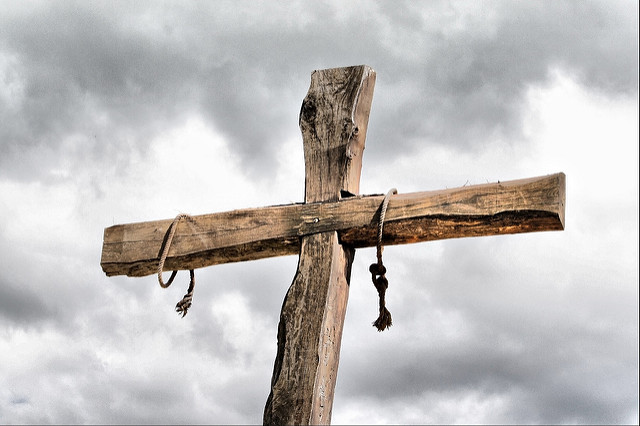
    Within Christianity, there is no greater symbol than the cross, something so obvious that we take it for granted. Something so pervasive, so associated with Christianity that we might not even question it.

    But why is the cross the symbol?

    Doubtless there could have been other symbols used.

    Jesus was born in a manger, miraculously. We call him the good shepherd. He’s called the lamb of God. He said that he was the door, whoever entered through him would be saved. Jesus talks of being the bread of life.

    As John Stott summarizes in his book the Cross of Christ, the early Christians “wished to commemorate as central to their understanding of Jesus neither his birth nor his youth, neither his teaching nor his service, neither his resurrection nor his reign, nor his gift of the Spirit, but his death and crucifixion.”

    And ultimately the cross became the symbol. I’ve heard people dismiss the idea of the cross as a symbol. It’s where Jesus died. That would be like wearing an electric chair around your neck.

    But really, I believe that the cross is even more radical. In the Roman world, crucifixion wasn’t even legal for Roman citizens. It was meant for non-citizens and slaves. Those looked down upon by society. Those who had committed murder and led rebellion. It was a means of execution specifically designed to maximize the torture and agony. A person being crucified could take days to die.

    Obviously the cross doesn’t save us. It’s what Jesus did on the cross that matters. It’s what Jesus accomplished at the cross that matters.

    It’s interesting that Jesus predicts his death.

    In Jesus’ day, many people expected the messiah to be a great military or political leader. And what do great military and political leaders do? They win! They conquer. They take territory. They overthrow governments. They win!

    They don’t die.

    When Jesus makes his first prediction of his death, Peter actually rebukes Jesus. He criticizes the Lord who died for our sins for saying he was going to die for our sins! When he predicted his death, some might not have even believed him or thought he was exaggerating.

    But he wasn’t. Everything in the gospels points to his death. Jesus is constantly making reference to his death throughout his life.

    Aside from the multiple explicit references from Jesus about his death and resurrection, it’s constantly alluded to in the gospels. His entire life was in the shadow of the cross.

    In Luke 2, as a baby, his parents take him to the temple for a dedication ceremony. A man named Simeon  who’s a prophet who’s been waiting for the Messiah beholds the baby Jesus, and says: “Behold, this child is appointed for the fall and rising of many in Israel, and for a sign that is opposed (and a sword will pierce through your own soul also), so that thoughts from many hearts may be revealed” (Luke 2:34-35).

    He tells Mary “a sword will pierce through your own soul.”

    He’s referring to what Mary will experience when she stands at the foot of that cross, and watches her son die.

    Throughout the gospel of John, Jesus talks about his “hour,” referring to the time of his death.

    In the gospels, about 40 percent of the books are dedicated to the final week of the life of Christ.

    John Hay and John Nicolay wrote a biography of Abraham Lincoln that is over 5,000 pages in length. In those 5,000 pages, the assassination of our 16th president is talked about in just 20 pages.

    Why is it that 40 percent of the gospels revolves around his final week, his death, and his resurrection?

    Because it is the only way to God!

    The great leaders of other faiths: Gautama Budha, Muhammad, they died. And are still dead today.

    It is on the cross that Jesus bears the sins of humanity. It is on the cross that Jesus endures the wrath of God for sin. It is on the cross where we see him supremely betrayed and forsaken. It is on the cross where we see our sins nailed down, and where we see the magnitude of our sins, the weight of our sins, holding God to the cross. He shows the love he has on the cross. He shows the justice of God on the cross.

    Because Jesus died and rose again, there is hope. This life is not all that there is.

    That the hope of eternity with Jesus is not some pie in the sky hope, it’s not some fairytale, or some bedtime story that we tell to children.

    Jesus rose from the dead and that means everything. There is no stronger validator to who Jesus is.

    It means that there is life after death, which is our hope. It validates who Jesus said he was, which is our God and savior. It proves what should be most precious to us, which is the love of God. It shows us where we came from, the God of the Judeo-Christian tradition. It affirms that Christ’s teachings had authority. It shows that the life and ministry of Jesus are infinitely important.

    Thanks for reading! If you liked this post, please share and subscribe!

    Originally published September 21, 2016

  • The scriptures point to Jesus. Studying John 1:45

    The scriptures point to Jesus. Studying John 1:45

    I’m doing a study in John 1. In John 1:35-51, we see a series of affirmations about Jesus made by his first disciples. So far, we’ve looked at Jesus as the Lamb of God and Jesus as the Christ. In this post, I’ll look at Jesus as the one to whom the scriptures point. 

    Jesus is the one to whom the scriptures point 

    45 Philip found Nathanael and said to him, “We have found him of whom Moses in the Law and also the prophets wrote, Jesus of Nazareth, the son of Joseph.”

    -John 1:45

    We don’t know why Philip sensed this in Jesus. Just like we really don’t know why Andrew thought Jesus was the messiah. 

    But that’s really not what matters to the story. 

    What matters for us is what is being affirmed about Jesus. 

    Where Philip talks of Jesus as being the one about whom Moses wrote in the Law and the prophets, that’s referring to the scriptures of our Old Testament. 

    Jesus came to fulfill the Old Testament. Everything Jesus does or says in his ministry has resonance in the Old Testament. He fulfilled hundreds of prophecies. He fulfilled the Law. He fulfills the promises of God. 

    All throughout the Bible, God is working his plan and his will. None of it is random or by chance. 

    The Old Testament is not just a bunch of stories or myths. It’s the real story of God’s work in his people which culminates in Jesus fulfilling the Old Testament to bring redemption to the world. 

    In John 5, Jesus is talking to a group of the religious leaders and they miss Jesus for who he is. John 5:36-38 says:

    the works that the Father has given me to accomplish, the very works that I am doing, bear witness about me that the Father has sent me. 37 And the Father who sent me has himself borne witness about me. His voice you have never heard, his form you have never seen, 38 and you do not have his word abiding in you, for you do not believe the one whom he has sent.

    The scripture points to Jesus and Jesus’ life and ministry point back to the scriptures which he came to fulfill. This is something else which matters about these affirmations which are being made about Jesus. 

    Lots of people throughout history have claimed to be significant religious figures. Some have even claimed to be divine. 

    It’s true today and it was true in Jesus’ day. What ultimately validates Jesus is not what John the Baptist said, or what Andrew said, or what Philip said. What matters is what Jesus did. 

    Fulfilling prophecies and displaying his divinity and glory. His life matters because he points us to life. His death matters because in that all who believe in him are dead to sin. And his resurrection matters because that is the only hope for eternal life. 

    Jesus literally died and rose so that all who believe in him when they die, can literally have eternal life with Jesus. 

    Everything in the Bible is about Jesus and points to Jesus. 

    Thanks for reading! If you liked this post, please subscribe and share.

  • NYT suggests evangelicalism needs to be more liberal to save itself

    NYT suggests evangelicalism needs to be more liberal to save itself

    David Brooks had a piece in the New York Times under the headline: “The Dissenters Trying to Save Evangelicalism From Itself.”

    Brooks talks of the divide within evangelicalism. Early in the article, Brooks suggests: “There have been three big issues that have profoundly divided them: the white evangelical embrace of Donald Trump, sex abuse scandals in evangelical churches and parachurch organizations, and attitudes about race relations, especially after the killing of George Floyd.”

    I’ve read this same basic piece several times in the last couple years in trying to diagnose the problems with evangelicalism in America. 

    Brooks interviews a familiar cast of characters. Russell Moore and Beth Moore (no relation to each other) who were recently popular figures in evangelical circles but have become critics of the movement. He interviews Kristin Kobes Du Mez, the author of “Jesus and John Wayne,” which is a one-sided rant against evangelicalism which only looks at the bad and overlooks any redeeming qualities in the movement. He mentions Tim Dalrymple, the president of Christianity Today who said Trump should have been removed from office.

    There’s a lot fo discourse on the problems of evangelicalism but I feel like I never see similar critiques of liberal and progressive Christianity. These articles get preoccupied with evangelical support of Trump, and that always gets framed as if it’s some obvious scourge on the gospel. 

    My question is: what in the world is so good about liberalism? What are they doing right now to benefit our country? These articles want to criticize churches for being too conservative. As if there are not thousands of churches in America that are liberal, that support values that are not Biblical values such as the LGBT movement and abortion. Liberal churches who undermine the Bible. Those churches get a pass. 

    It’s the churches who support Trump and who are not woke social justice warriors who are the problem. Basically the problem with evangelicals is that they’re not liberals. And if they embrace liberal ideologies, then they’ll be doing the Lord’s work.

    Conservative evangelicalism is an easy target because our culture institutions are increasingly liberal. The mainstream media, Hollywood, big business, big tech, pro sports, the federal government, higher education, public education, healthcare, and on and on. It’s ok to be liberal. It’s not ok to be conservative. 

    And the focus needs to be that evangelicals don’t have a big enough tent. Brooks has the audacity to frame it as if evangelicals are not welcoming enough to other points of view. Is a conservative welcome in a progressive church? Is a belief in traditional marriage, traditional gender roles, the inherency of the Bible welcome in a progressive church? 

    There are problems with evangelicalism. There are far too many powerful people in influential ministries who are corrupt and who have no accountability. That’s an issue. Brooks mentions the scandal involving Ravi Zacharias and a scandal involving Willow Creek Church. I’ve written about both. They were terrible. I’ve written about Jerry Falwell, Jr, and James MacDonald, and the Southern Baptist Convention sexual assualt scandal.

    I think too many evangelical churches have done a poor job about teaching the Bible and focus on easy to listen to messages and appealing to cultural trends and having watered down youth ministries that are not teaching kids the Bible. Again, there are problems in evangelicalism.

    There are churches and pastors who might call themselves “evangelical” with whom I would greatly disagree. But evangelicalism is a broad movement. I think we should call out people when they’re in the wrong. But I don’t think that American evangelicalism has the inherent problems that progressivism poses to the church. Progressive churches fall right in line with that ideology. I see that as the bigger threat on our culture and on the gospel.

    Thanks for reading. If you liked this post, please share and subscribe.

  • We have found the Christ. Studying John 1:41-45

    We have found the Christ. Studying John 1:41-45

    1. Jesus is the Christ 

    I’m doing a study in John 1. In John 1:35-51, we see a series of affirmations about Jesus made by his first disciples.

    In this section, Andrew has been pointed to Jesus by John the Baptist and has spent time with Jesus and he tells his brother “we have found the Christ” (John 1:41). 

    The words Messiah and Christ mean the same thing. Messiah is Hebrew, Christ comes from Greek but they both mean anointed. This anointing referred to Old Testament offices such as the king, the high priest, and some of the prophets. They were anointed with oil at the beginning of their ministries.  And the promised one who God would send was also said to be anointed, and so Andrew goes to his brother and says that they have found the anointed one. 

    That’s not saying that Andrew knew everything that the ministry of Jesus would entail or that he yet understood the sacrificial death which Jesus would die. He just sensed a special anointing in Jesus. 

    Kings, the high priests, and prophets. People did not understand in the first century that Jesus would come and fulfill all three of those offices. But through his ministry, that’s what we see. 

    Jesus is a king

    Jesus is the king in the line of David.

    The kingdom of God that Jesus ushers in is a theme in the gospels.

    In the Gospel of Luke, when the angel appears to Mary and tells her that she is going to give birth to Jesus, the angel talks of Jesus in Luke 1:33 and says: he will reign over the house of Jacob forever, and of his kingdom there will be no end.

    Revelation 21:15 speaks of Jesus and says: 

    The kingdom of the world has become the kingdom of our Lord and of his Christ, and he shall reign forever and ever.

    A king is one who rules, and Jesus is the king of kings who rules and reigns with eternal sovereignty. 

    Jesus is a priest

    Jesus is also the high priest. The priest in the Old Testament was the mediator between God and man who offered sacrifices. Jesus is the ultimate and great high priest. He is the one who is worthy to bring us to God and who is able to offer the true sacrifice. Himself. 

    Jesus is a prophet

    And Jesus is a prophet. A prophet is one who speaks the Word of God, one who foretells the future, and one who speaks with authority. Jesus does all three of those things in his ministry. 

    He speaks with authority. His ministry shows that he has authority over nature and over life and death. 

    There’s a passage in Deuteronomy 18 which foretells of the greater prophet.

    Deuteronomy 18:15: “The Lord your God will raise up for you a prophet like me from among you, from your brothers—it is to him you shall listen— 

    Jesus fulfills that text and he comes in fulfillment of all three of those offices. 

    One thing that’s important to understand about these anonited offices in the Old Testament is that hey were fulfilled in separate people. 

    The king was not a priest or a prophet. The priest was not a king or prophet. The prophet was not a king or a priest. The first king of Israel, a man named Saul, did irreversible damage to his reign by trying to take on a priestly function. 

    But all three of these offices converge on Jesus. 

    The anointed one, the messiah, the Christ. 

    Jesus meets Peter. Verse 42. He brought him to Jesus. Jesus looked at him and said, “You are Simon the son of John. You shall be called Cephas” (which means Peter). 

    Another disciple. The words “cephas” and “Peter” both mean rock. This is a foretelling of the leadership that Peter will have. Right from the outset of of his ministry, Jesus is stating this of Peter, although there’s no further elaboration here. 

    John 1:43 says: The next day Jesus decided to go to Galilee. He found Philip and said to him, “Follow me.” Now Philip was from Bethsaida, the city of Andrew and Peter. 

    That’s the only person in this passage to whom Jesus says “follow me.” We also find out that Philip is from the same town as Andrew and Peter. Just as Andrew was quick to tell Peter about Jesus, Philip will tell someone else about Jesus. 

    Philip found Nathanael and said to him, “We have found him of whom Moses in the Law and also the prophets wrote, Jesus of Nazareth, the son of Joseph” (John 1:45).

    Thanks for reading! If you liked this post, please share and subscribe. 

  • Sermon: Glory – John 17:1-5

    Sermon: Glory – John 17:1-5

    On the eve of going to the cross, Jesus makes the longest prayer we see recorded anywhere in the Bible. What does he pray for? Among other things, he begins his prayer by praying for his glory and that the Father would be glorified by what Jesus was about to do. This passage points us to the glory in prayer, the glory of the gospel, and the glory of God.

    Sermon transcript