Josh Benner

Category: Commentary

  • To live is Christ

    To live is Christ

    A beloved verse from Paul’s letters to the Philippians comes from the 21st verse of chapter 1: “To live is Christ, and to die is gain.

    It’s truly profound.

    Living life on this side of heaven with everything revolving around Christ. Living for him, worshipping him, walking with him, been filled by His Spirit. Every single day.

    And in living a life totally focused and dependent upon God, to die is gain.

    For Paul, in spite of adversity and struggle, death wasn’t something to be feared because it meant that he was in the presence of the Lord. Knowing Jesus Christ as savior. Again, that’s a radical idea in our world. I think as Christians, we struggle to not be just as fearful of death as everyone else.

    But we have a God who has justified us of our sins. We have the Spirit internally witnessing to God. We have a savior who came and died for us. But perhaps because we get so caught up on what’s “practical,” that we lose sight of what is eternal.

    To live is Christ and to die is gain.

    If our entire life is devoted to Christ, to knowing him and serving him; Then an even greater thing it is to actually be with him, to be in his presence. To be with him in a place where we don’t have the worries and stresses of everyday life. Where we don’t have illness or disease. Where there isn’t sin or hurt. But where it is enjoying fellowship with the Lord.

    How do you approach a verse like that?

    Do you think “amen to that.” Or do you struggle with that idea? I know I do sometimes. But I shouldn’t.

    I love what Paul says in the following verse.

    “If I am to live in the flesh, that means fruitful labor for me. Yet which I shall choose I cannot tell. I am hard pressed between the two. My desire is to depart and be with Christ, for that is far better” (Philippians 1:22-23).

    I think it’s a reality that is difficult to embrace.

    Let us live lives that are so committed to Christ. That are so assured and reliant upon the gospel. That you are in such focused and daily pursuit of the Lord on earth that you know it’s an appetizer to an even greater feast.

    The point certainly isn’t to undermine life. Everyday we have is an opportunity to know and serve God.

    Philippians 1:24-25 says”But to remain in the flesh is more necessary on your account. Convinced of this, I know that I will remain and continue with you all, for your progress and joy in the faith.”

    There is work to be done, as participants and members of God’s church on earth.

    We don’t live for the purpose of watching football and playing video games. Certainly we can do those things. But that’s not what it’s all about. It’s about serving the Lord and growing with him. Knowing God and making God known.

    There are people who go their whole lives and have no interest in God. Maybe they say they believe in him. But he isn’t their hope for salvation. He isn’t the one for whom they are daily living and desiring to honor.

    But then they take it as a foregone conclusion that they will spend eternity with him in heaven.

    And people get mad that God wouldn’t just let everyone in.

    But if you’re interested in heaven, start pursuing God today. Start living for God today. Because we can know him. We can grow with him today.

    The secular people who think they deserve heaven…really? Because heaven is a place that is all about God.

    And for those of us who are walking with the Lord, let us live lives today that are all about God.

    Let the profundity of that transform the very way in which you approach God.

    CS Lewis said: “Aim at Heaven and you will get Earth ‘thrown in’: aim at Earth and you will get neither.”

    Thanks for reading! I’d love to hear what you think, and don’t forget to subscribe! 

    Originally published February 15, 2019

  • Sermon: Introducing Galatians

    Galatians is likely the earliest writing we have in the New Testament, authored by the Apostle Paul within about 10-20 years of the time Jesus walked the earth. In this message, we introduce Paul’s letter to the Galatians and give some background information on this book.

    Sermon manuscript

  • Israel under siege. Studying 1 Samuel 11:1

    Israel under siege. Studying 1 Samuel 11:1

    A perilous beginning

    No president in American history inherited as perilous a situation as Abraham Lincoln. 

    In response to his election to the presidency, and his opposition to expanding slavery to new territories, six states had secceded from the union prior to Lincoln taking the oath of office. Once he became president in March of1861, it took less than six weeks for the Battle of Fort Sumter and the beginning of the Civil War. 

    When we read about Israel and the Promised Land in the Bible, I think we have a tendency to imagine Israel as one unified state. 

    But Israel was composed of 12 tribes who had their own territories within the Promised Land.

    Kind of like a United States of Israel. 

    The tribes did not always get along with each other. For instance, the territory of Benjamin fought a civil war of their own at the end of the Book of Judges. In that war, the rest of Israel went to war with Benjamin. Thousands of Israelites died. 

    Later in Israel’s history, that same Benjaminite territory would be the birthplace of King Saul. 

    We’ll have more on that later. 

    Similar to America, there were also divisions in Israel among the northern and southern tribes. Saul was the first king, followed by David, followed by Solomon. By the end of Solomon’s reign, Israel was a divided kingdom between the north and south and never reunited. 

    But in First Samuel, the even bigger threat to the flourishing of Israel were the surrounding nations. The most prominent foe of the Israelites were the Philistines. In 1 Samuel 4, the Israelites had lost to them in battle and the Philistines actually confiscated the Ark of the Covenant from the Tabernacle. 

    Eventually the Ark was given back but the Israelites but the Philistines remained hated enemies. One of the reasons why the Israelites had wanted a king was to have someone to lead them to victory over the Philistines. 

    Now at the end of chapter 10, Saul became king of Israel. And it was a fairly underwhelming begin to his reign. We don’t see any royal action or speech. 

    Chapter 10 ends. 

    Going to battle

    And then Chapter 11 abruptly changes to a new scene. 

    Then Nahash the Ammonite went up and besieged Jabesh-gilead, and all the men of Jabesh said to Nahash, “Make a treaty with us, and we will serve you” (1 Samuel 11:1). 

    So instead of the Philistines, the Israelites come under threat from another surrounding nation. The Ammonites. It’s another reminder of how weak Israel was at the beginning of Saul’s reign. They have foes on multiple borders. 

    And so in this passage, we see Saul’s first test as king of Israel. And it’s also the high point of his reign. But it’s not primarily a passage about Saul or a battle. It’s a passage about God’s faithfulness. 

    Israel under threat

    Let’s look at verse 1 again: 

    Then Nahash the Ammonite went up and besieged Jabesh-gilead, and all the men of Jabesh said to Nahash, “Make a treaty with us, and we will serve you.” 

    The name Nahash in Hebrew actually means serpent. It’s the same word that’s used in Genesis for the serpent in Eden. 

    And he’s an Ammonite. 

    The Ammonites were cousins to the Israelites. Their genealogy is traced back to Abraham’s nephew Lot having an incestuous relationship with his daughter. 

    Genesis 19:36-38:

    36 Thus both the daughters of Lot became pregnant by their father. 37 The firstborn bore a son and called his name Moab. He is the father of the Moabites to this day. 38 The younger also bore a son and called his name Ben-ammi. He is the father of the Ammonites to this day. 

    And the Ammonites lay siege on a city called Jabesh-Gilead which was in eastern Israel. 

    And the citizens beg for mercy when they say: “Make a treaty with us, and we will serve you.” 

    In exchange for their lives to be spared, they’d rather make a treaty which would effectively make them vassals to the Ammonites. 

    Now, on the one hand, their response is understandable. If you were facing overwhelming might, wouldn’t you be tempted to do whatever you could do to preserve life and limb? To protect your family? To keep your home? 

    I think most people want to take the path of least resistance and avoid pain for themselves and their families. 

    It’s a very challenging situation. 

    But the problem is that the Israelites are overlooking their covenant with God. They are a chosen people who are set apart. It is the Lord who has given them this Promised Land. They have a covenant with God. And it is the Lord who is meant to be the protector of Israel. 

    Israel doesn’t need to cut a deal. What they need to do is to trust the Lord. 

    To look at a couple of Old Testament passages where this idea is expressed. 

    Exodus 23:22 says: 

    ​​ if you carefully obey his voice and do all that I say, then I will be an enemy to your enemies and an adversary to your adversaries. 

    We also see this in Deuteronomy 20:1-4: 

    When you go out to war against your enemies, and see horses and chariots and an army larger than your own, you shall not be afraid of them, for the Lord your God is with you, who brought you up out of the land of Egypt. 2 And when you draw near to the battle, the priest shall come forward and speak to the people 3 and shall say to them, ‘Hear, O Israel, today you are drawing near for battle against your enemies: let not your heart faint. Do not fear or panic or be in dread of them, 4 for the Lord your God is he who goes with you to fight for you against your enemies, to give you the victory

    Gospel

    Where are the places in our lives where we forget about God’s promises? 

    I’ll start with the most significant. I think for a lot of Christians, we forget that we’re forgiven because of the gospel. 

    Sometimes we mess up. Sometimes we have an area where we’re really struggling and feel like we’re constantly going two steps forward, and one step back. And we sin, and there can be this shame. And if it’s something really bad, we can feel so down about ourselves.

    Sometimes when we sin, we can try to atone for our own sin or resort to works or other actions we’re doing to try to make ourselves feel like we’re right with God. 

    You can’t do it. 

    Yes we should repent and turn from our sins. 

    But we can’t atone for our sins. We can’t do something good to cancel out our sin. 

    But the good news is the gospel. 

    Ephesians 2:8-9 says: 

    8 For by grace you have been saved through faith. And this is not your own doing; it is the gift of God, 9 not a result of works, so that no one may boast.

    We don’t have to wallow in shame and despair. We don’t have to go through life feeling like God doesn’t love us every time we don’t get it right. 

    I think we can forget that sometimes. We are not our own saviors. Jesus is and he did it perfectly. 

    And the promise we so often forget is that God is gracious. Not only is God gracious but the only way to be forgiven by God is through his grace. 

    We aren’t given two options. It’s not that we can try to earn God or we can take the option of grace. The first option is not an option because we can’t earn God because we can’t be good enough if we try. 

    Again, I’m not saying our sin doesn’t matter. We should be working to kill sin in our lives. But it’s not so that God can love you. But so you can live a life to God’s glory, so you can serve him and love him more fully, so you can experience joy without being encumbered by sin, and so that you can live a more fulfilled life in living in accordance with the wisdom of God. 

    The people in Jabesh-Gilead either forgot or didn’t fully trust God’s faithfulness to them as his people. And I think we can also be guilty of that sometimes. 

    Thanks for reading! If you liked this post, please share and subscribe! 

  • Religious leaders sue in Florida arguing that having abortion is an issue of religious liberty

    Religious leaders sue in Florida arguing that having abortion is an issue of religious liberty

    The Washington Post has an article about a group of religious leaders in Florida who are suing the state over abortion restrictions with the argument that it violates their religious freedom. 

    Florida’s new abortion laws do not ban abortions outright (unfortunately). But they do ban abortions after 15 weeks unless there are risks to the health of the mother. But that doesn’t go far enough for these folks. 

    The article begins: 

    When the Rev. Laurie Hafner ministers to her Florida congregants about abortion, she looks to the founding values of the United Church of Christ, her lifelong denomination: religious freedom and freedom of thought. She taps into her reading of Genesis, which says “man became a living being” when God breathed “the breath of life” into Adam. She thinks of Jesus promising believers full and abundant life.

    Interesting that the article begins by talking about life and the breath of life, and abundant life in an article where pastors are arguing against the right to life of the unborn. We’re alive before we’re born so I’m not sure exactly when all of these rights begin. The Bible also talks about God knowing who we are prior to physical birth. 

    Before I formed you in the womb I knew you, and before you were born I consecrated you (Jeremiah 1:5). 

    For you formed my inward parts; you knitted me together in my mother’s womb. I praise you, for I am fearfully and wonderfully made (Psalm 139:16). 

    The Lord called me from the womb, from the body of my mother he named my name (Isaiah 49:1). 

    he who had set me apart before I was born, and who called me by his grace (Galatians 1:15). 

    I could continue, but you get the point. 

    The article continues with the “pastor” saying, “I am pro-choice not in spite of my faith, but because of my faith.” 

    Ah yes, that great Christian virtue of taking life of the unborn. There is no taking of innocent life to the glory of God. It is a backwards misrepresentation of Christianity to argue that it is this great thing to support. I can appreciate that there are Christians who believe in the gospel and who are misguided and have a wrong view of abortion. But it’s a sad commentary when a person is a member of the clergy and is advocating against the rights of the unborn. Not only is she arguing against these rights but she’s arguing that supporting the killing of a baby is something which her faith compels.  

    In the article, Hafner says, “​​I think the religious right has had the resources and the voices politically and socially to be so loud, and frankly, they don’t represent the Christian faith,”

    I wouild argue that culturally, it is the left who has the loudest voice and they’re the ones who have largely brainwashed our society into thinking hat abortion is this great good. Not just ab ortion but radical beliefs on abortion such as late term abortion, and for any reason. That’s the stance of the Democratic Party. 

    She says the religious right does not represent the Christian faith. I can appreciate the room for critique, but the Christian left certainly does not represent the Christian faith when its proponents advocate for a whole host of beliefs which are antithetical to historical (and more importantly, Biblical teachings) on sexual ethics. 

    From the article: “Look biblically; Jesus says nothing about abortion. He talks about loving your neighbor and living abundantly and fully. He says: ‘I come that you might have full life.’ 

    Jesus does say nothing about abortion. So then why ought a professing Christian advocate for it? Shouldn’t we er on the side of life rather than on the side of death?

    Love your neighbor? Abundant life? They’re the ones advocating for killing the unborn. I would say to love your neighbor is also to love the unborn.

    Jesus said Let the little ones come to me (Luke 18:16). 

    Jesus said Whatever you did for the least of these, you did for me (Matthew 25:20). Surely the unborn, who are unable to protect themselves and advocate for themselves fall into that category. 

    There are things that can be done to support the mothers. Christians adopt at higher rates than non Christians. I’m all for also supporting mothers, but not at the expense of the life of the baby. 

    The article also interviews a Unitarian pastor named Tom Capo who argues,” “It has to do with the belief in the inherent worth and dignity of every human being,” Once again, that’s incoherent. Inherent worth and dignity of every human being? You’re arguing in favor of abortion. You do not believe in inherent worth and dignity. If you believed it was inherent, you’d be pro life. That’s why I am pro life! Because I believe that we actually have inherent worth and dignity. He believes we have acquired worth and dignity at some point.

    It’s disgraceful. 

    Also, I thought we were supposed to have separation of church and state? That’s what I always hear. Being pro life is not an inherently religious position. But these religious leaders are the ones beating their chests about how “It’s because I’m religious that I’m pro choice.”

    I have no doubt that these people are all very religious but the problem is that their religion is the religion of liberalism and liberalism great sacrament is the right to kill the unborn.

    Thanks for reading! If you liked this post, please share and subscribe.

  • The Warren Harding error

    The Warren Harding error

    The Warren Harding Effect 

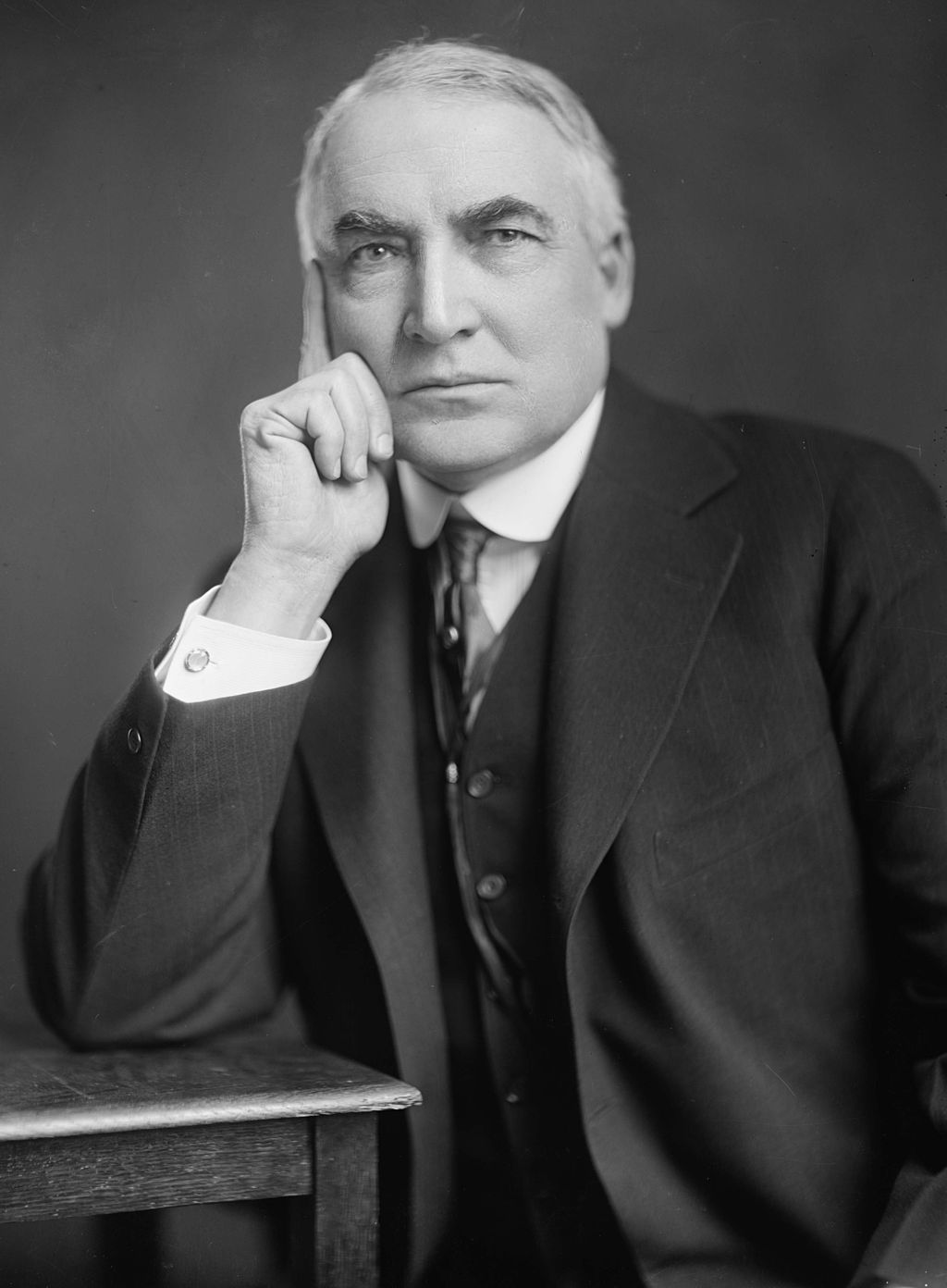
    In his book Blink, author Malcolm Gladwell tells this story of an influential political figure from Ohio meeting a young politician named Warren Harding and being so impressed by the look and temperament of the young Harding that he instantly thought that the state senator had potential to one day be president. 

    The year was 1899. 

    As Gladwell describes him, Harding was tall and handsome. He had broad shoulders and a naturally bronze complexion and as he aged, he became more distinguished looking. He had a rich and resonant speaking voice. 

    He looked presidential. 

    On March 4, 1921, that same man, Warren G. Harding would become America’s 29th president. 

    It did not go particularly well. 

    If you look up rankings of best and worst presidents in American history, Harding is almost always in the bottom handful. He wasn’t particularly intelligent. When he was a U.S. Senator, he was absent for debates on two of the most important political issues of his time: prohibition and women’s voting. 

    He had a scandal-ridden administration for the two years that he was president before dying of a stroke in 1923. 

    He had the look of a president. But he didn’t have the intelligence, moral conviction, or leadership skills to actually be a good president. 

    In 1 Samuel 10, Saul will become Israel’s first king. In chapter 9[], we were introduced to Saul. He was a man from relative obscurity, from the tribe of Benjamin who had gone in search of his father’s lost donkeys but through his search, he found the Prophet Samuel. 

    Now Samuel had a prophetic revelation the day before that he was going to meet and anoint the future king of Israel. 

    And then he meets Saul. The future king. Meanwhile Saul doesn’t even know who Samuel is when he meets him. 

    The king who hides

    Saul is chosen to be king. 1 Samuel 10:21: 

    But when they sought him, he could not be found.

    22 So they inquired again of the Lord, “Is there a man still to come?” and the Lord said, “Behold, he has hidden himself among the baggage.”

    It foreshadows things which were to come and the poor skills as a leader which Saul would display. Saul was fearful and tried to run from his calling. 

    Anointed, another heart, chosen, signs to confirm that he was chosen and prepared and yet he hides. 

    The Warren Harding Effect

    Verses 23-24:

    23 Then they ran and took him from there. And when he stood among the people, he was taller than any of the people from his shoulders upward. 24 And Samuel said to all the people, “Do you see him whom the Lord has chosen? There is none like him among all the people.” And all the people shouted, “Long live the king!” 

    So the people see this king who had just been hiding from them. The king that they wanted. And they see that Saul is taller than any of them. When we were first introduced to Saul in chapter 9,  the text mentions that Saul was very handsome. 

    This is how we meet Saul in the Bible. 

    1 Samuel 9:1-2:

    There was a man of Benjamin whose name was Kish, the son of Abiel, son of Zeror, son of Becorath, son of Aphiah, a Benjaminite, a man of wealth. 2 And he had a son whose name was Saul, a handsome young man. There was not a man among the people of Israel more handsome than he. From his shoulders upward he was taller than any of the people. 

    They don’t see a coward who had tried to hide but they see a tall handsome man and they respond by saying “long live the king.” 

    The first king of Israel was not a George Washington. The first king of Israel was a Warren G Harding. They had wanted a king so they could be like all the other nations, and they got a man who LOOKED like a king. 

    They got a man who was tall but he wasn’t a leader. They got a man who was handsome but he wasn’t holy. 

    He was the king the people wanted, but what the people wanted would prove to be unwise.