Josh Benner

Category: Commentary

  • Evangelism Training Podcast Interview: Dr. Sam Chan

    Evangelism Training Podcast Interview: Dr. Sam Chan

    In this episode, we talk to Dr. Sam Chan about his book “Talking about Jesus (without being that guy).” In the past generation, Biblical literacy has declined and the framework for discussing faith has changed. Dr. Chan will talk about approaches Christians can take to bridge the gap.

    Sam Chan has both a PhD and a medical doctorate. He resides in Australia where he speaks on subjects related to evangelism. Dr. Chan has written several books and also blogs at espressotheology.com. Dr. Chan is also a speaker with the City Bible Forum which helps equip Christians to talk about their faith. His book “Evangelism in a Skeptical Worker” was one of the 2019 Christianity Today award winners for books in the area of apologetics and evangelism.

  • Sermon: The Fall of Saul – 1 Samuel 13:1-14

    From his early success as king, chapter 13 is the beginning of the downfall of King Saul. the Bible is full of redemption stories. And for any person who has placed faith in Jesus, they’re a living testimony to Christ’s redemption. Sadly, Saul’s story is not one of redemption. His story is a downward spiral into sin, paranoia, and murder.

    Sermon manuscript

  • A bad king and the idea of a good king. Studying 1 Samuel 10

    A bad king and the idea of a good king. Studying 1 Samuel 10

    Saul failed to honor God, but Jesus never fails. In the Bible, we see the stories of the various failures of humanity. Man was given the law but we see that we were unable to follow the law. Because of sin. 

    God gives Israel the king that they wanted and we’ll see that he will lead them imperfectly. Because no human king can adequately serve in the role that God serves in. 

    We cannot earn God, we cannot be our own saviors, and Saul couldn’t be the true king because that wasn’t something that a sinful man could accomplish. 

    Yes, we saw that he was chosen and anointed but it didn’t matter who God had picked. A human king was going to bring problems. 

    The Spirit is willing but the flesh is weak. 

    The good news is that there would be a future king who would usher in God’s kingdom on earth as it is in heaven. There would be a future king who would talk of a kingdom that was not of this world. There would be a future king who would lay down his life for his subjects. There would be a king who would rule and reign and who would show his authority, not only over life and death but over sicknesses and diseases, over nature and storms. 

    In his commentary, Richard Phillips points out that Jesus rode into Jerusalem for the final time on Palm Sunday

    Five days later, he would be crucified in that same city. 

    But on Palm Sunday, Jesus rode into Jerusalem as crowds threw their cloaks on the ground. They waved palm branches and shouted “Hoanna,” the Aramaic word for “save us.” They welcomed Jesus into Jerusalem as a conquering king. They gave Jesus the royal treatment that he deserved. He rode into Jerusalem on a donkey. Saul’s story begins with a man who couldn’t find his donkeys! 

    And that is a powerful metaphor for how Jesus was everything that Saul was not. 

    Israel wanted a king to replace God and so God gave them Saul. But as fallen men inevitably fall, God also gave them Jesus. 

    The idea of a good king

    It’s interesting that we live in a nation that fought a war to escape the tyranny of a king. King George III of England. 

    And yet we have the idea of a good king. 

    We have the idea of a king who is just and loves his nation, and rules for the good of the people. A king who is wise and virtuous. He brings safety and security to the empire. 

    Even though many of the actual human kings throughout time have been incompetent, despotic, and led poorly. 

    Many kings today are actually just figureheads who have little to no real power. 

    But the Lord is the absolute monarch over creation who does rule with perfect wisdom, justice, and goodness. 

    Jesus talked about the kingdom of heaven during his ministry. 

    And for the people of God, Philippians 3:20 says that our citizenship is in heaven. 

    Jesus invites us to live as part of that kingdom. 

    There are so many other kingdoms we want to try to live in. There’s the kingdom of self, the kingdom of politics, the kingdom of money, the kingdom of work. 

    But in Christ, we’re meant to have a heavenly citizenship and to live the rest of our lives on earth as it is in heaven. 

    We want to be the kings and queens over our own lives and say my kingdom come my will be done. But here’s the problem. We’re not good at that. 

    But we have a king who leads well. We have a king who points us to righteousness and holiness. We have a king who laid down his life so that we could be part of his kingdom. 

    And so we live as his kingdom people by knowing God, by communing with him, by serving him, by loving him, and by loving others. 

    Even though the world is fallen, we have the opportunity to live as citizens of God’s kingdom.  

    In the Great Divorce, C.S. Lewis said: “the Blessed will say “We have never lived anywhere except in Heaven, : and the Lost, “We were always in Hell.” And both will speak truly.”

    Who is your king? And where is your kingdom? 

    Thanks for reading! If you liked this post, please share and subscribe! 

  • The broken person and the Mission of God. Studying John 4:27-29

    The broken person and the Mission of God. Studying John 4:27-29

    An unlikely missionary 

    At the beginning of John 4,  Jesus meets a Samaritan woman at a well. The Samaritans were a minority ethnic group who were half-Jewish. In the first century, there was a lot of animosity between the Samaritans and the Jewish people. Samaritans had some theological differences and given their ethnic differences, these fueled the division between the two groups. 

    The Samaritan woman meets Jesus at a well and they start to talk. 

    The woman has had five husbands and was living with a man who was not her husband. So she’s already part of a group who’s looked down upon, and she’s also had her sins exposed. Jesus tells her of the living water that he provides. He tells her of true worship of God. 

    As the preceding section winds down, John records Jesus speaking to the woman. 

    24 God is spirit, and those who worship him must worship in spirit and truth.” 25 The woman said to him, “I know that Messiah is coming (he who is called Christ). When he comes, he will tell us all things.” 26 Jesus said to her, “I who speak to you am he.” 

    An incredible conversation. 

    Verse 27 suddenly changes the direction. 

    Just then.

    Just then his disciples came back.

    Earlier in the story, we learned that the disciples had left Jesus to go and find food. It’s the reason why Jesus had been alone when he met the Samaritan woman. 

    They marveled that he was talking with a woman, but no one said, “What do you seek?” or, “Why are you talking with her?”

    The disciples want to question Jesus for talking to this woman. Out of respect for Jesus, they keep their mouths shut but they’re wondering “why are you talking with her?” 

    The disciples are not perfect. We see this time and again in the gospels. 

    We see examples of their pride, at times we see them lack faith, and we see here that they are not above prejudice. And they see Jesus talking with this woman. They don’t question it, but they’re thinking about it. 

    Probably giving her strange looks. 

    It was the culture at the time. There was a lot of prejudice against women. 

    There are rabbinic sayings which go back to the first century and talk of interactions between men and women. Some of these sayings are extremely misogynistic towards women. 

    There’s a rabinnic teaching against a man even talking to a woman in public, even his own wife. 

    There were rabinnic teachings which discouraged teaching women to read. 

    I’m not saying that those views were universal to every Jewish person in the first century. But they were within the social consciousness. Every generation has its own areas of sin, and misogyny was a common area of sin in the first century and sadly at many other times. 

    But the Samaritan woman, like everyone else, needs Jesus. She needs to know his love, needs to know his grace. 

    So the disciples didn’t publicly question Jesus, but not because they didn’t want to. 

    The text says that they marveled that Jesus was talking to a woman. Let alone a Samaritan woman. 

    John 4:28:

    So the woman left her water jar and went away into town and said to the people, 

    John notes that the woman leaves her jar. It’s interesting that this detail is mentioned. 

    Throughout our study of John’s gospel, we’ve seen this theme of newness, new creation, Jesus as replacing the Old Covenant with the New Covenant. 

    I believe that the detail of her leaving the water jar is mentioned because it’s symbolic of the fact that this woman is leaving behind the cares and concerns of her own nourishment to serve the purposes of Christ in the world. 

    She had come to the well for water, but she’s leaving it having learned about the living water which Jesus provides. 

    So we have this Samaritan woman, who’s had five husbands and who’s living with a man who’s not her husband, someone looked down upon in society, she goes into the town and starts telling people about Jesus. 

    Verse 29: 

    “Come, see a man who told me all that I ever did. Can this be the Christ?”

    Jesus has revealed himself to be a prophetic figure who has a knowledge of her life that’s supernatural. He’s claimed to be the Christ, and so she rhetorically asks the people “can this be the Christ?”

    It’s very powerful to consider that this woman from this marginalized Samaritan group is the first recorded person in this gospel to tell people about Jesus in northern Israel. 

    This story should be encouraging to all of us from the standpoint that God also uses broken and sinful people to serve him, to share his gospel and to tell the world about Jesus. 

    No one is ever too broken to know the love of Christ. 

    And no one is ever too sinful, as this woman was. No one is ever too lowly to share Jesus and be used by God to serve God. 

    Serving the mission of God is not just for the spiritual varsity team, but God has ways for all of his people to serve him. 

    And God desires for all of his people to serve him. To be light, to share the gospel, to serve others. To serve God’s mission of the world of being disciples who make disciples. 

    God uses broken people to do his work, and he can use you. No matter where you’re from, no matter what you’ve done. If you’ve wasted time, if you’ve spent years not serving God, it’s not too late. 

    God can use you. Not because of who we are, but because of who God is. And to his glory, he uses broken people to serve his purposes. 

    Thanks for reading! If you liked this post, please share and subscribe!

  • Cain and Abel. Studying Genesis 4

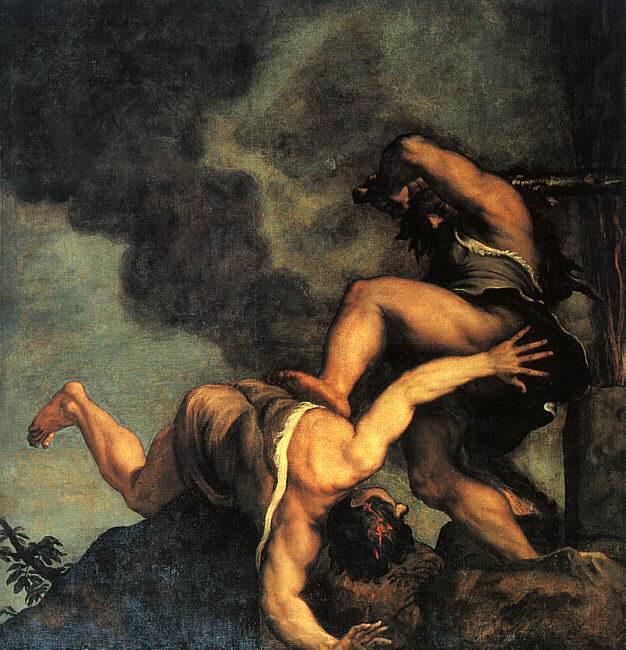
    Cain and Abel. Studying Genesis 4

    In Genesis 3, we dramatically see the fall of humanity into sin. 

    While death is the ultimate judgment for a sinful world, Adam and Eve do not die immediately. Genesis 4 begins with the continuation of the human race. As Eve has children, it is also a reminder of God’s promise that a child of the woman would crush the head of serpent (Genesis 3:15). 

    Genesis 4:1-2:

    Now Adam knew Eve his wife, and she conceived and bore Cain, saying, “I have gotten a man with the help of the Lord.” 2 And again, she bore his brother Abel. Now Abel was a keeper of sheep, and Cain a worker of the ground. 

    We see the first brothers: Cain and Abel. It will become the first of several sibling rivalries in the Book of Genesis. Cain and Abel, Isaac and Ishmael, Jacob and Esau, Joseph and his brothers. 

    From their introduction in Genesis, we see that the two are different, even down to their occupations. One is a sheep herd, the other is a farmer. It’s not a commentary on one of those jobs being superior to the other. But the brothers are different. 

    In verses 3-5, we see the sacrifice which would spark a bitter and tragic disagreement between the two brothers. 

    3 In the course of time Cain brought to the Lord an offering of the fruit of the ground, 4 and Abel also brought of the firstborn of his flock and of their fat portions. And the Lord had regard for Abel and his offering, 5 but for Cain and his offering he had no regard. So Cain was very angry, and his face fell.

    Sacrifice becomes a significant theme throughout the rest of the Bible. 

    Here we see two sacrifices made to God. One is acceptable. One is not. 

    The NIV Study Bible describes sacrifice and says: ​​”Generally speaking, Israelites presented sacrifices for one of three reasons: to praise and thank the Lord, to emphasize their requests to the Lord, and to atone for sin and impurity.”

    To our modern sensibilities, the idea of sacrifices might seem archaic and backwards. Sacrifices point us to the holiness of God and that there are appropriate ways to approach a holy God. Atoning sacrifices point us to the costliness of sin. Sacrifices were an opportunity to trust God’s provision as people would sacrifice things which were costly (God required a person’s best animals), and to make that sacrifice and to trust that God would still provide what was needed. 

    Sacrifices also point us to the ultimate and perfect sacrifice when Jesus gave himself for our sins. 

    The author of Hebrews talks of Jesus as the ultimate sacrifice. when Christ had offered for all time a single sacrifice for sins, he sat down at the right hand of God (Hebrews 10:12). 

    Cain and Abel make sacrifices. That raises a lot of questions. Were they told to make sacrifices? If so, that’s never recorded. Did they take it upon themselves to make sacrifices? Had Adam made sacrifices? Where did the idea come from? The Bible doesn’t answer any of these questions. Perhaps it’s part of human nature. We prize and value sacrifices for that which we think is worthy. 

    Cain and Abel both make sacrifices. 

    As has already been mentioned, the Lord accepts Abel’s but not Cain’s sacrifice. 

    But the issue with this passage is not the sacrifices themselves, it’s the heart of Cain. 

    Cain brought to the Lord an offering of the fruit of the ground, 4 and Abel also brought of the firstborn of his flock and of their fat portions.

    Cain and Abel each bring sacrifices which are related to their vocations. Cain the farmer brings some of the fruit of the ground while Abel the sheep herd brings the firstborn of his flock. 

    In later Old Testament laws, God would require the firstfruits of what was produced and the firstborn of teh animals to be sacrificed (cf Exodus 13:2; 23:16). 

    This language will also be applied to Jesus in the New Testament. In the Christ hymn of Colossians 1, Jesus is referred to as the firstborn of all creation (Colossians 1:15). 

    There was a greater heart behind the sacrifice of Abel as he brought God his best. In bringing the fat portions, those were the prized cuts of the animal. 

    As I’ve mentioned, the issue is the heart of Cain, not the sacrifice itself because when the Lord had no regard for Cain’s sacrifice, Cain became better.

    Verses 6:

    6 The Lord said to Cain, “Why are you angry, and why has your face fallen? 

    Just like with Adam and Eve in the garden, God begins with a question. 

    More and more, I appreciate the value of the right question.

    God tells Cain what he must do. 

    Genesis 4:7: 

    If you do well, will you not be accepted? And if you do not do well, sin is crouching at the door. Its desire is contrary to you, but you must rule over it.” 

    This is the first time in the Bible that sin is named. It is personified as something that is powerful. On a similar train of thought, Paul would describe the power of sin in Romans 7. 

    Romans 7:15-20:

    15 For I do not understand my own actions. For I do not do what I want, but I do the very thing I hate. 16 Now if I do what I do not want, I agree with the law, that it is good. 17 So now it is no longer I who do it, but sin that dwells within me. 18 For I know that nothing good dwells in me, that is, in my flesh. For I have the desire to do what is right, but not the ability to carry it out. 19 For I do not do the good I want, but the evil I do not want is what I keep on doing. 20 Now if I do what I do not want, it is no longer I who do it, but sin that dwells within me. 

    Instead of dealing with sin, we see Cain against his brother. 

    Cain murders Abel

    Genesis 4:8:

    8 Cain spoke to Abel his brother. And when they were in the field, Cain rose up against his brother Abel and killed him.

    Instead of listening to God, Cain has swung hard the other way. 

    In the first sin, humanity ate the forbidden fruit of the tree of the knowledge of good and evil, and now man is killing man. Cain kills his brother. Man has taken the life of another image bearer. 

    Genesis 4:9, The Lord asks Cain: 

    9 Then the Lord said to Cain, “Where is Abel your brother?” He said, “I do not know; am I my brother’s keeper?” 

    Once again, God comes to Cain with a question. Cain is invited to confess but instead attempts to deflect. He acts as though Abel’s whereabouts are not his responsibility. But he’s the one who has taken the life of his brother! 

    Adam fesses up to his sin, but Cain misdirects and misleads in his attempt to cover up his sin. 

    We see no remorse from Cain for his sin. 

    But God knows. 

    Kenneth Matthews notes that Abel’s blood convicts the sinner, but we will see that the blood of Christ redeems the sinner. 

    Genesis 4:10-12:

    And the Lord said, “What have you done? The voice of your brother’s blood is crying to me from the ground. 11 And now you are cursed from the ground, which has opened its mouth to receive your brother’s blood from your hand. 12 When you work the ground, it shall no longer yield to you its strength. You shall be a fugitive and a wanderer on the earth.”

    When Adam and Eve sinned, the ground was cursed. When Cain sins, we will see that he himself is cursed because of his sin against his brother. 

    In Genesis 4:13-15, we continue to see the heart of Cain:  13 Cain said to the Lord, “My punishment is greater than I can bear.14 Behold, you have driven me today away from the ground, and from your face I shall be hidden. I shall be a fugitive and a wanderer on the earth, and whoever finds me will kill me.” 15 Then the Lord said to him, “Not so! If anyone kills Cain, vengeance shall be taken on him sevenfold.” And the Lord put a mark on Cain, lest any who found him should attack him. 

    Cain’s sin brings alienation both from the land, from people, and from the Lord. We see his concern for vulnerability. Ironic considering he’s just murdered his brother! But just because Cain has killed Abel does not mean that anyone can arbitrarily kill Cain.  

    Genealogy

    Genesis 4 ends by introducing what will become another significant theme in the Book of Genesis. The genealogy from Adam, to Abraham, Isaac, Jacob, and beyond. 

    Cain’s genealogy is first introduced before the passage ends by returning to Adam and Eve and a new son they have. Seth. The line of Adam will continue, but through Seth. 

    25 And Adam knew his wife again, and she bore a son and called his name Seth, for she said, “God has appointed for me another offspring instead of Abel, for Cain killed him.” 26 To Seth also a son was born, and he called his name Enosh. At that time people began to call upon the name of the Lord (Genesis 4:25-26). 

    Thanks for reading! If you liked this post, please share and subscribe!