Josh Benner

Category: Commentary

  • Gratitude to God when facing difficulties

    Gratitude to God when facing difficulties

    After spending a year at Mt. Sinai, the Israelites head back into the desert in Numbers 11.

    In the first ten chapters of the Book of Numbers, things are going pretty smoothly for the Israelites. They celebrate the Passover, they dedicate the Tabernacle. We don’t really see any major sin issues. But nearly as soon as the Israelites hit the road, they’ll start complaining, a common theme during the Israelite wanderings.

    God had saved, redeemed, and sustained the Israelites. But the Israelites struggled with gratitude to God for all that he had done for them. We don’t have control over the circumstances that we face in life. But we do always have control over how we respond.

    We can respond by complaining and grumbling or we can respond in faith and confidence in God. Viktor Frankel was a psychiatrist who endured the horrors of the Holocaust at Auschwitz. After surviving the Holocaust, he wrote a very influential book called “Man’s Search for Meaning.” And part of the thesis of that book is that the most fundamental of human freedoms is the freedom to control how one responds.

    Even in difficult situations, even in broken relationships, even in financial hardships, even in the face of sickness, you still have a choice in how you respond.You can despair, you can feel like it’s all pointless and futile. You can get mad at God, question his goodness and love. You can get bitter. You can be cynical, you can become self-centered.

    Or you can continue to grow. You can be selfless. You can take the focus solely off of yourself. You can still walk with God in the struggle. In the desert. You can still trust in God when you’re tired and warn down. Our contentment and joy must be found in God.

    God is leading all of his people to greater places. And if we lose sight of that on the journey, we can make the mistakes that the Israelites made of losing sight of the goodness of God. Numbers 11:4-6 features the Israelites continuing to complain, while they look back at their time in Egypt (in slavery) longingly.

    NOW THE RABBLE THAT WAS AMONG THEM HAD A STRONG CRAVING. AND THE PEOPLE OF ISRAEL ALSO WEPT AGAIN AND SAID, “OH THAT WE HAD MEAT TO EAT! WE REMEMBER THE FISH WE ATE IN EGYPT THAT COST NOTHING, THE CUCUMBERS, THE MELONS, THE LEEKS, THE ONIONS, AND THE GARLIC.6 BUT NOW OUR STRENGTH IS DRIED UP, AND THERE IS NOTHING AT ALL BUT THIS MANNA TO LOOK AT.” 

    They might be complaining about food. But the underlying issues are so much bigger than the divine meal plan. “Oh when we were in Egypt, the food was so much better!”Verse 20 summarizes the scene well: you have rejected the Lord who is among you and have wept before him, saying, “Why did we come out of Egypt?” 

    ’It was wicked and sinful after all that God had done for the people: freeing them, sustaining them, forgiving them when they had fallen into idolatry and sin. And yet they have the audacity to say “Oh Egypt. Those were the good old days.”

    Sometimes in life, it can be easy when we’re in a season when things are generally good to go to church, maybe read your Bible sometimes.

    But the moment there’s some adversity and challenge, there’s this temptation to want to complain against God.

    Just like the Israelites, we have many great blessings from the Lord.Most importantly, the gift of eternal life that God has promised through Jesus Christ. We were slaves to sin. And God redeemed us. God gives his Spirit. God invites us into a relationship to know him. And God is bringing us to a new land too. To a New Heaven, and a New Earth, and a New Jerusalem. But sometimes we have to spend some time in the desert to get to the promised land. How will we respond when we’re there though?

    Will we criticize God and forget his goodness? Or will we trust him?

    Thanks for reading! Make sure to comment, like, and subscribe!
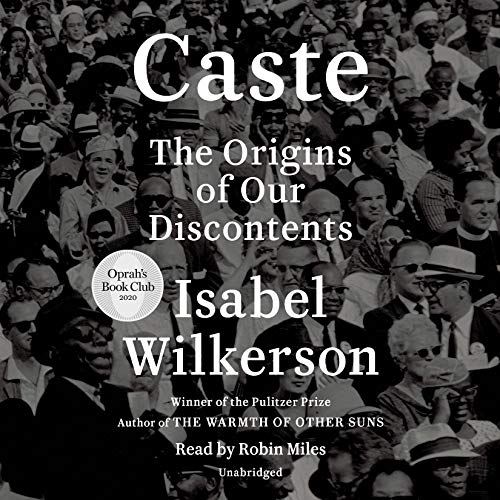
  • Best selling “Caste” another social justice screed that sells misery

    Isabel Wilkerson’s new book “Caste: the origins of Our Discontents” is currently number two on the New York Times Best Seller list. I have no doubt that this book will join other works like White Fragility in the Social Justice canon.

    The basic premise of the book is that America is (and always has been) a racially discriminatory caste system.

    There are varying opinions on this notion. I would argue that, more than anything, America is a meritocracy where anyone can use their talents and work ethic and achieve goals for bettering their lives and those for their family. But my point with writing isn’t primarily arguing against Wilkerson’s suggestion that America is a caste system.

    My biggest concern from the book is the toxic and hopeless ideology Wilkerson spreads. The book offers very little in the way of suggestions to make a better world. It’s 447 pages of beating the drum of how unfair the American system is. She’s profiting greatly off of selling victimhood.

    But what’s even worse is that she’s giving people limitations. There are two opposing views. One of them is that this is a country where people can use their talent and work ethic and accomplish goals build the life they desire for themselves and their families. People of all races and backgrounds overcome humble beginnings and circumstances everyday.

    Wilkerson’s idea is that a racist system irrevocably locks a person into a caste. The world is setup against you. If you’re from a “lower caste” and succeed, it’s in spite of the caste system (which will be angry that you’ve succeeded because you’ve failed to fall in line with where you’re supposed to be).

    There’s a fatalism and existential despair in going through life thinking that the world is setup against you. There’s nothing that is more disempowering that that.

    In the opening chapters of the book, Wilkerson compares America to a house with cracks in its foundation. While people living today didn’t build the house, we have to live with it and the faulty foundation. We need to address the structural flaws in the home. But then Wilkerson all but ignores steps which have been taken for more than a century and a half such as the Civil War, the Civil Rights Movement, constitutional amendments, and other federal laws.

    And while she begins the book by saying that we didn’t create the problems that we have today, she later focuses on how Americans from the “upper caste” intentionally enforce this caste system. Wilkerson says: “Like the cast on a broken arm, like the cast in a play, a caste system holds everyone in a fixed place. For this reason, many people – including those we might see as good and kind people – could be casteist, meaning invested in keeping the hierarchy as it is or content to do nothing to change it, but not racist in the classical sense, not active and openly hateful of this or that group.”

    In the prologue, the epilogue, and throughout the book, Wilkerson compares the American caste system to Nazi Germany. She mentions Hitler more frequently in the book than she mentions Abraham Lincoln, Martin Luther King, Jr, and Frederick Douglas combined.

    One of the most troubling quotes in the book was found on page 268 where she argues that white people – no matter how bad their lives are – can take solace that they’re not minorities: “Those accustomed to being the measure of all that is human come to depend on the reassurance that, while they may have troubles in their lives, at least they are not at the bottom. As long as the designated bottom dwellers remain in their designated place, their own identities and futures are secure.” Wilkerson quotes sociologist Andrew Hacker saying, “No matter how degraded their lives, white people are still allowed to believe that they posses the blood, the genes, the patrimony of superiority. No matter what happens, they can never become ‘black.”

    Seriously? Who thinks that way?

    She looks at everything in her life, throughout history, and in contemporary American culture through a racial lens. For instance, she has a chapter on Barack Obama and talks of how most white people did not vote for him, and then proceeds to give numerous examples of times when people opposed Obama and chalks them up to racism. There’s never any nuance. There’s no consideration that people might politically disagree with his progressive policies. Throughout the book, she acts like conservatives works to maintain the caste system against liberalism. I’d argue that liberalism is what keeps people in poverty by working against invaluable social structures while major cities are essentially one-party rule and they’re rife with crime and poverty and have criminally bad school systems. No, there’s not a caste, but it’s those policies which keep people poor.

    She gives examples from her own life (such as a bad dining experience at a restaurant) as obvious examples of racism. But that’s what much of the book is. Anecdotes and stories rather than hard data to back up her audacious claims.

    As I have said, it’s a book that has no message of hope and says very little about reconciliation. The closest the book came to hope was Wilkerson looking forward to 2042 when demographers predict that minorities in America will outnumber caucasians (although she then quickly suggest that the caste will be expanded to include some of these groups in order to maintain the caste system).

    Thanks for reading! Don’t forget to comment, like, and subscribe

  • Feels like yesterday: 9/11 through the years

    Feels like yesterday: 9/11 through the years

    There aren’t very many days in your life where you know at the time that life is never going to be the same. Everyone knew that on 9/11.

    I’ve thought a lot lately about this day and what the younger generation will understand about 9/11. I remember it like it was yesterday, and so it’s crazy for me to consider that kids in school weren’t even born when this event happened. This monumental day that was a paradigm shift in American history is just that to kids, history. They learn about that day from what people tell them and from the same documentaries I watch.

    If you weren’t alive that day, and watch documentaries about 9/11, I think it’s hard to appreciate the chaos of September 11th. There’s a sense of fatalism in the documentaries. They almost always begin by contrasting the beauty of that morning against the pandemonium that was soon to burst forth.In the weeks and months after the attacks, it impacted every aspect of our society: sports were a rallying ground for patriotism. Many popular songs were written about that day and playing on the radio. New laws were enacted. Entirely new federal agencies were created. There was an ever present thought of if and when another attack would happen. The whole country was on high alert, arguably for the next 2-3 years.

    As I watch documenaries, the quality of the videos seems a little more dated, the outfits people are wearing seem a little more 90s.When the North Tower was struck, no Americans knew that the South Tower was going to be hit 17 minutes later. No one had any idea that other planes were in the process of being highjacked and that other sites were also being targeted.

    As the towers had smoke pouring out, the average person had no idea that they were going to collapse. From the time the North Tower was struck, three other planes crashed and both towers fell in 102 minutes.

    A couple years ago, I had the opportunity to visit the National September 11 Memorial and Museum. It’s a special place. One of the rooms (and one of the few parts of the museum where they ask people not to take photos) features photographs of all of the victims of the attacks. Just a huge room with thousands of photos of people. It’s crazy to think that each of those photos is a person who meant something to a lot of people. They were people’s spouses, people’s parents, siblings, children, grandchildren, best friends.

    All of them taken away because of evil and hatred. For many of the victims, the memorial also serves as their final resting place. From the intense fire, and from the incredible weight of the towers collapsing, and given the high numbers of casualties, remains could be hard to positively identify in the aftermath. Roughly 40 percent of victims have never been identified. The museum has a morgue where the unidentified remains are housed.

    DSC_6884.jpg
    One of the exhibits at the museum is a 36 foot tall column. It was part of the inner-core of the South Tower and was the last piece of debris removed at the completion of the cleanup efforts, nine months later. Workers covered the column in pictures as a memorial to the victims.

    It’s still unfathomable to me. Thousands of people just living their lives, having no idea that they were about to become casualties on the front lines of a war in which they had no idea they were enlisted. The horror that people experienced above impact zones on the towers and on our airplanes. The first responders who risked their lives (and the many who gave their lives) on that day to help others.. For those people, I never forget.

    It’s still unbelievable to me. There’s nothing else like it.

    I think of the people in conference rooms and riding elevators who were dead without ever knowing there was even an attack. I think of the people who jumped from the towers. They were in such a horrible situation that jumping was the lesser of two evils. That still shocks me.

    Originally published September 11, 2018

    Thanks for reading! I’d love to hear what you think, and don’t forget to subscribe! 

  • The eve of infamy: 9/10

    Photo courtesy of Flickr Creative Commons.

    As I write these words, the stresses of everyday life come to mind. I think of how busy I am between work and my other commitments. I’m so often short-sighted and allow myself to get frustrated. It’s getting late and I jot some thoughts down before going to sleep. On this night, my thoughts are on the past and with people I’ve never met. Nineteen years ago tonight, thousands of Americans went to bed, unaware that it was the eve of their last day on earth.

    For me, that’s surreal. Monday was an ordinary start to the work week. In the evening, people played with their kids, and watched Monday Night Football, and kissed their spouses goodnight. They prepared to go on flights for work, or vacation, or just to make it home. They thought about what bill needed to be paid and the home repair which needed to be completed. They went to sleep like it was any other night and woke up to a beautiful Tuesday morning.

    As people sat in their offices in the North Tower of the World Trade Center, perhaps some of them looked outward with puzzlement to the low flying aircraft as it flew closer. And closer. And in an instant, the passengers on the plane and the employees on several floors of the World Trade Center were incinerated at the front lines of a war in which they had never enlisted.

    For me, and for where I am in my life, 19 years might as well be a thousand years ago. It seems like everything in my life is different today than it was on September 11, 2001. But the events of that day come back vividly and I remember as if it were yesterday.

    I was a 15 year old high school sophomore sitting in a third period geometry class, taking my first quiz of the school year when our principal announced that a plane had crashed into the World Trade Center. I assumed it was an accident but a guy in my class muttered “terrorism.” We continued taking our quizzes, and before the period had ended, the principal again took to the PA system to announce that a second plane had hit the other tower.

    Throughout the rest of that morning, I remember the confusion. In fourth period, I had chemistry. The principal announced that one of the towers had collapsed. My teacher turned on the news.

    Fifth period was my lunch. Other information had trickled in. Rumors and speculation ran strong. Sixth period was journalism. Along with several other classes, our teachers led us to the school library where we continued to watch the news coverage. By this point, both towers had collapsed and we saw the chaos in Manhattan as the debris cloud enveloped the Trade Center Plaza. If the world were ending, I assume it would look a bit like that scene from New York.

    We still had football practice that afternoon. I still remember that we were preparing to play Worthington Kilbourne. I remember seeing images on TV of radical Islamic groups cheering and celebrating the attack and how helpless I felt. It seemed like life would never be the same. In many ways, it has’t. I know I’m not alone. For so many of us, 9/11 made an indelible mark on our lives. We changed that day.

    In my tenth grade geometry class, as the principal announced that the World Trade Center had been struck, a young man in my math class first heard of the attack at the same time as me. I would later find out that September 11 was a seminal event in his decision to join the army. Shortly before Christmas in 2006, that fine young man lost his life for the cause of defending America and freedom. It would be impossible for me to think back to 9/11 without thinking of him. As I think of him in my recollections, it is difficult for me not to be fatalistic.

    For so many more Americans who have served, their stories are similar to his. I consider it to be part of the enduring American Spirit. With burning towers, Americans ran into them; in the aftermath of the attack, Americans volunteered to take up the cause and risk their own lives, and thousands still continue to take up that cause.

    A GREAT PEOPLE HAS BEEN MOVED TO DEFEND A GREAT NATION. TERRORIST ATTACKS CAN SHAKE THE FOUNDATIONS OF OUR BIGGEST BUILDINGS, BUT THEY CANNOT TOUCH THE FOUNDATION OF AMERICA. THESE ACTS SHATTERED STEEL, BUT THEY CANNOT DENT THE STEEL OF AMERICAN RESOLVE. AMERICA WAS TARGETED FOR ATTACK BECAUSE WE’RE THE BRIGHTEST BEACON FOR FREEDOM AND OPPORTUNITY IN THE WORLD. AND NO ONE WILL KEEP THAT LIGHT FROM SHINING.

    TODAY, OUR NATION SAW EVIL, THE VERY WORST OF HUMAN NATURE. AND WE RESPONDED WITH THE BEST OF AMERICA — WITH THE DARING OF OUR RESCUE WORKERS, WITH THE CARING FOR STRANGERS AND NEIGHBORS WHO CAME TO GIVE BLOOD AND HELP IN ANY WAY THEY COULD.
    -GEORGE W. BUSH. SEPTEMBER 11, 2001

    May God continue to bless the Republic.

    Originally published on September 10, 2012

    Thanks for reading! I’d love to hear what you think, and don’t forget to subscribe! 

  • Accountability isn’t judgmental, it’s Biblical: why the church needs standards

    Accountability isn’t judgmental, it’s Biblical: why the church needs standards

    Over the last few weeks, Jerry Falwell, Jr had a very public suspension from Liberty, during which time he revealed an affair his wife was having. Falwell resigned, then said he didn’t, then resigned again, bashed the university. This was the culmination in a long series of personal and moral failings from Falwell.

    But what’s interesting when a prominent Christian has significant moral failings exposed, is the excuses I see online. I see comments on news articles and blogs where people will ask “and you’re perfect?” “I guess you never sin?”

    Ironically, that is a self-defeating proposition. Judging people for having moral opinions is in fact a moral opinion where you’re being judgmental!

    But what’s more, the idea that it’s somehow especially loving, or pious, or enlightened to show indifference to sin is not a Biblical idea.

    Just for quick reference:  if anyone is caught in any transgression, you who are spiritual should restore him in a spirit of gentleness (Galatians 6:1). As for those who persist in sin, rebuke them in the presence of all, so that the rest may stand in fear (1 Timothy 5:20). My brothers, if anyone among you wanders from the truth and someone brings him back, let him know that whoever brings back a sinner from his wandering will save his soul from death and will cover a multitude of sins (James 5:19-20). Iron sharpens iron, and one man sharpens another (Proverbs 27:17).

    We should be gracious. We should want to see people repent and restored. We should want to see broken people’s lives changed.

    But we should not ignore sin. Because when we do, we allow predators to run roughshod in churches and Christian organizations under the guise that that’s “loving.” It isn’t. It’s not loving to the sinner who needs people who love them and care enough to point them to truth and righteousness. And for powerful people, it’s not loving to others in their ministry or organization who can suffer and be victimized by unscrupulous morals and sin.

    Yes, there needs to be grace and forgiveness, but there also needs to be accountability. And sometimes there need to be consequences for a person’s actions. Leading churches, ministries, Christian organizations is a sacred privilege, not a right.

    What about “not judging?”

    A person might say but what about where Jesus says: “Judge not, that you be not judged” (Matthew 7:1)? And doesn’t he also say “Why do you see the speck that is in your brother’s eye, but do not notice the log that is in your own eye?“(Matthew 7:3)

    But just a couple of verses later, Jesus also says “first take the log out of your own eye, and then you will see clearly to take the speck out of your brother’s eye” (Matthew 7:5).

    Given the numerous Biblical passages which talk about pointing out sin and restoring sin, and encouraging people to personal holiness, the point of that verse isn’t that you should never have a moral opinion (which isn’t possible). The point isn’t about having a constant disposition of judgment, self-righteousness, comparison to others, and looking for faults. It’s not a command against thinking that immoral behavior is bad and that people (especially professing Christians) should live to a higher standard.

    Thanks for reading! I’d love to hear what you think, and don’t forget to subscribe!