
Josh Benner

Category: Commentary

  • Blessed are the persecuted? The Christian life and opposition

    Blessed are the persecuted? The Christian life and opposition

    10 “Blessed are those who are persecuted for righteousness’ sake, for theirs is the kingdom of heaven.11 “Blessed are you when others revile you and persecute you and utter all kinds of evil against you falsely on my account.12 Rejoice and be glad, for your reward is great in heaven, for so they persecuted the prophets who were before you.
    -Matthew 5:10-12

    Almost 2,000 years ago when Jesus preached these words, they also would have been radical to his audience. Persecution is never looked at as a blessing.But in Matthew 5, Jesus says that it is.Part of what Jesus is saying in these verses is that there is blessedness for the person who’s life is so clearly devoted to God, who is so clearly living out their Christian faith, that they face opposition because of it.

    If a Christian goes through life and never faces opposition, you might be living too comfortably in the world.If you never face any heat because of your faith, you might not be associating with anyone who disagrees with what you believe.

    In 2 Timothy 3, the Apostle Paul talks about persecution.“Indeed, all who desire to live a godly life in Christ Jesus will be persecuted.”ALL who live for Christ will be persecuted.Persecution is part of the Christian life. The Bible does not shy away from this fact.Shortly before the time of his crucifixion, Jesus said to his disciples in John 5:18-19: “If the world hates you, know that it has hated me before it hated you. If you were of the world, the world would love you as its own; but because you are not of the world, but I chose you out of the world, therefore the world hates you.

    Something doesn’t have to be a matter of life and death to be persecution. In American society, we don’t generally hear stories of a person being killed just because they are a Christian. It’s not absolutely unheard of, but it’s rare.The persecution American Christians face is often times more social or legal. That can still put us in situations where it’s tempting to sin, where it’s tempting to respond a certain way that we shouldn’t. That still puts us in situations where it’s easier to just go along with what the world is doing than taking a stand for what you believe.

    I know a mechanic who’s a Christian. He was committed to being honest in his dealings with customers. He was so honest that his boss didn’t like him and eventually fired him.

    My wife told me a story about how when she was in high school, she was interviewing to be part of a local youth leadership program in her community. While she was at her interview, one of the people making the decision saw that she was a student at a Christian high school. He started berating her with questions about her faith, questioning how she could believe in Jesus. Asking nothing about this youth organization. Essentially just harassing her about her faith.

    Again, the gospel is a message that some find offensive. “To one a fragrance from death to death, to the other a fragrance from life to life (2 Corinthians 2:16).

    ”There have been examples of groups trying to silence coaches of public school teams from praying with players before games, even when it’s voluntary. I read a story today about the Freedom from Religion Foundation suing a public school in Ohio. A local pastor was leading a Bible study with students at lunch. It was optional. But FFRF still needed to swoop in and sue. There have been legal pressures on Christian universities to cover abortions for staff.Those are just a few examples.

    But in living for Jesus, in a fallen world, it is inevitable that there will be times when a person’s faith comes under fire.

    Responding 
    When a person is being persecuted and has a choice of if they’re going to respond in a Christlike way or if they’re going to respond in a hostile way. You can be light to a dark world or you can just spread the darkness.The Apostle James talked about the various trials that Christians face:“Count it all joy, my brothers, when you meet trials of various kinds, for you know that the testing of your faith produces steadfastness. And let steadfastness have its full effect, that you may be perfect and complete, lacking in nothing (James 1:2-4).

    ”As evil as the persecution that Christians face can be, it’s an opportunity to respond with love. Jesus told us to pray for our enemies (Matthew 5:44).God can use those situations as a way to strengthen us in our own faith. To focus us on what we truly value.Another part of the reason why persecution is seen as a blessing is that the harsher the persecution, the more that is taken away from a person, the more someone is able to live in total dependence on God and reliance in his ability to preserve them. That’s not to say that the persecution is good in itself. It’s obviously not. That’s not to say that sin is good. It’s not. But through the evils that people commit, God can still use that for good.

    Again, if you’re not ever facing any pressure because of your faith, you might not be living in a way that is distinct from the world. I’m not saying we should go out of our way to be combative. The verse does not say that all persecution is good. It’s when a person is following Jesus and is persecuted for righteousness’ sake that blessed a person. It’s a radical idea. But let us remember that we have a savior who faced the ultimate persecution for righteousness’ sake.

    Originally published February 27, 2017

    Thanks for reading! Make sure to like, comment, and subscribe.
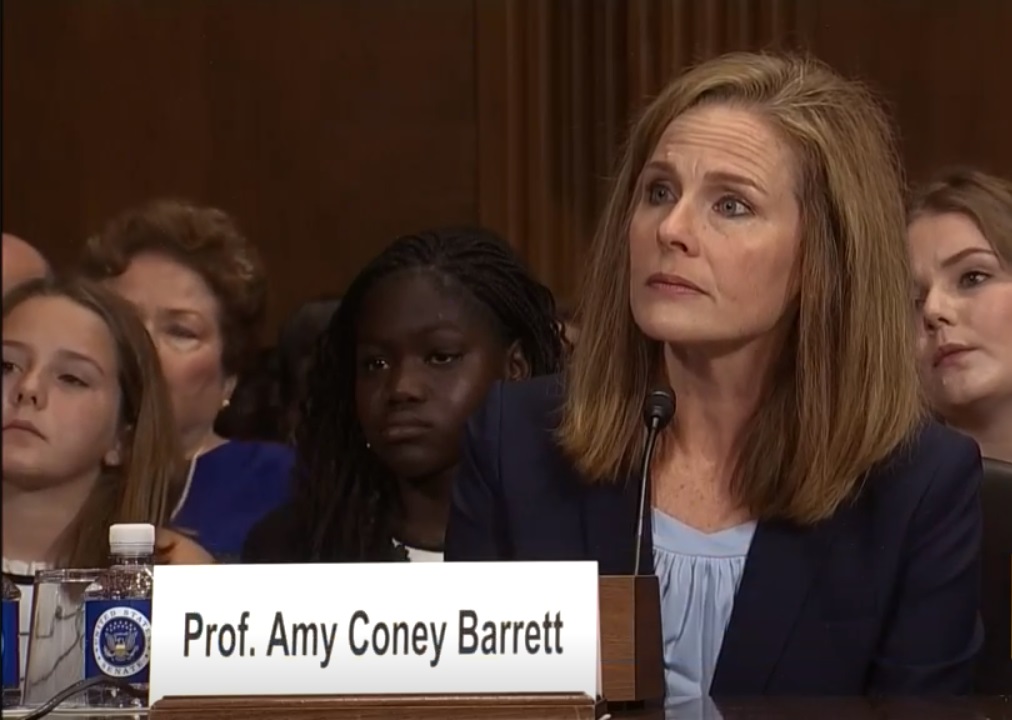
  • Amy Coney Barrett and the anti-religion of the left

    Amy Coney Barrett and the anti-religion of the left

    This weekend, President Trump nominated Amy Coney Barrett to replace the late Ruth Bader Ginsburg on the Supreme Court. Coney Barrett is a judge on the 7th circuit court of appeals in Chicago, a law professor at Notre Dame, and a former clerk for former justice Antonin Scalia. She’s also a mother of seven and a devout Catholic and her faith has come into question in regards to her potential SCOTUS rulings.

    This isn’t new for Coney Barrett. During her senate hearings to be on the 7th circuit court in 2017, several democrat senators questioned her faith. Dick Durbin (D-IL) asked Coney Barrett if she considered herself an “Orthodox Catholic.” Diana Feinstein (D-CA) stated “Whatever a religion is, it has its own dogma. The law is totally different. And I think in your case, professor, when you read your speeches, the conclusion one draws is that the dogma lives loudly within you, and that’s of concern.”

    Her Catholic faith is already coming into question again as her October confirmation hearings rapidly approach. Numerous articles have been written about Coney Barrett’s affiliation with an ecumenical, Charismatic Movement called People of Praise which drew comparisons to the Handmaid’s Tale. On MSNBC, they made it a point to reference the group in a graphic during her nomination. ABC incorrectly claimed that People of Praise inspired the Handmaid’s Tale novel (now TV series). The Guardian wrote about the “authoritarian structure” of People of Praise. And there have been other attacks. And there will be more.

    But it’s interesting.

    Joe Biden is a “practicing Catholic,” as we’re told. He’s spoken many times about his faith. So is House Speaker, Nancy Pelosi (D-CA). Once upon a time, Nancy Pelosi who once talked about her faith and said “My favorite word is the word, is the word. And that is everything. It says it all for us. And you know the biblical reference, you know the Gospel reference of the word. We have to give voice to what that means in terms of public policy that would be in keeping with the values of the word.”

    Major political players who talk about their faith. And the vast majority of democrats in American politics claim a religious affiliation. But it’s Amy Coney Barrett who’s faith must seriously come into question. And the reason for that is because, unlike many of the democrats in congress, she lives it out. Someone who actually has sincere religious convictions terrifies the liberal elites. Because Christian ethics and teachings go against so much of the platform of the DNC.

    My point is not to judge the faith of Biden or Pelosi or anyone else in politics. But I will question the actions of leaders who support things which are totally contrary to the teachings of their faith.

    Thanks for reading! Make sure to like, comment, and subscribe!

  • 7 problems with prosperity theology

    7 problems with prosperity theology

    The prosperity gospel is a movement that has its origins in America about a century ago and came to greater prominence after the Second World War. It has largely grown out of pentecostalism and the Word of Faith movement. 

    It is the idea that it is always the will of God for genuine believers to be materially blessed and physically healthy. It’s essentially preoccupied with material blessings. 

    In John 6, Jesus has just fed a large crowd of people. They’ve wanted to make him king. They’re drawn to his teaching and signs, yet Jesus rebukes the crowd when he says: “you are seeking me, not because you saw signs, but because you ate your fill of the loaves.” 

    I’m not saying that this first century audience had a 20th and 21st century notion of a health and wealth gospel. But they’re drawn to Jesus because of him fulfilling a physical need. There are elements of what they believe which are picked up in the prosperity gospel movement. 

    It’s not the only place where we find this attitude in the New Testament. Paul addresses a similar issue within the church at Philippi. Philippians 3:19-20: 18 For many, of whom I have often told you and now tell you even with tears, walk as enemies of the cross of Christ. 19 Their end is destruction, their god is their belly, and they glory in their shame, with minds set on earthly things.

    They’re not looking to take up their cross and follow him. They’re not looking to die to themselves and their sinful ways. They’re there because of a free meal. 

    The theology that looks merely at the material blessings of God has many problems. 

    First, it’s not the gospel. 

    The gospel is the message of Christ crucified and his redemption of sinful people for the glory of God. 

    He died to save souls. 

    The purpose of life is knowing and enjoying Jesus Christ forever. The purpose of life does not revolve around material blessings. 

    Secondly, prosperity theology teaches things that are not Biblical. 

    It undermines the doctrine of suffering. The Bible does not hide from suffering. 

    Prosperity theology believes that it is never the will of God for a person to be sick, to die from cancer, to struggle with depression.  

    The Bible teaches that the Christian life does involve suffering. 

    God uses it and works all things together for good for those who love him. Romans 8:28. 

    God uses suffering to work his purposes. Story of Joseph. We referenced it last week. Joseph is betrayed by his brothers, but through that betrayal, it brings Joseph into Egypt which allows him to be in a position years later to save his family during a time of famine.

    But we also see God’s providence and goodness through that evil. 

    Genesis 50:20: As for you, you meant evil against me, but God meant it for good, to bring it about that many people should be kept alive, as they are today. 

    God uses suffering to sanctify and perfect his people. 

    James 1:2-4: Count it all joy, my brothers, when you meet trials of various kinds, 3 for you know that the testing of your faith produces steadfastness. 4 And let steadfastness have its full effect, that you may be perfect and complete, lacking in nothing. 

    Notice that James says to count it all joy WHEN not IF you meet trials of various kinds. 

    To quote my professor D.A. Carson, if you’re not suffering, just keep living. 

    Romans 5:3-4: we rejoice in our sufferings, knowing that suffering produces endurance, 4 and endurance produces character, and character produces hope

    God uses suffering so that we can have a positive influence on others. 

    Wonderful passage. 2 Corinthians 1:3-5: Blessed be the God and Father of our Lord Jesus Christ, the Father of mercies and God of all comfort, 4 who comforts us in all our affliction, so that we may be able to comfort those who are in any affliction, with the comfort with which we ourselves are comforted by God. 5 For as we share abundantly in Christ’s sufferings, so through Christ we share abundantly in comfort too. 

    God uses suffering to remind us that our ultimate need is in him. 2 Corinthians 1:8-9: 

    8 For we do not want you to be unaware, brothers, of the affliction we experienced in Asia. For we were so utterly burdened beyond our strength that we despaired of life itself. 9 Indeed, we felt that we had received the sentence of death. But that was to make us rely not on ourselves but on God who raises the dead.

    And we could talk for hours on many more passages. 

    God allows suffering. In his sovereign will, God allows it. It is talked about constantly in the Bible and especially in the New Testament. 

    And you have televangelists and authors of popular Christian books who say the opposite of that. 

    They’re teaching an idea that is not Biblical. 


    Yes, God does ultimately promise healing, in heaven. But there is no promise given in the Bible that all true believers or faithful Christians will always experience healing in this life. 

    The third problem with prosperity theology. It turns God into your genie. 

    God does not primarily exist to fulfill to give you everything you want. 

    A lot of times the things we want are not good. 

    If you have a child and just gave them everything they ever wanted, would that be loving? Of course not. Because a lot of things kids want aren’t good for them. 

    Prosperity theology views giving not primarily as a way of giving back part of what God has given for the purposes of his kingdom, but as a way to receive material blessings back as a result of your generosity.

    Prosperity theology views prayer as a way to force God to give you what you desire. 

    Prosperity theology believes that faith is rewarded by leading to prosperity. 

    Fourth, it teaches untrue things about the world

    While turning God into a genie and believing in a theology where good things happen if you’re good enough or if you have enough faith, what that essentially teaches a person is that they’re in control of their own destiny.

    Not Biblical. The Bible teaches that God is sovereign. 

    Fifth, prosperity theology actually distracts us from true riches. 

    Ironically, God actually wants to give us so much more than what prosperity theology focuses on. But if we just focus on this world, on materialism, on what’s physical, we lose sight of that. 

    Christ has blessed us with every spiritual blessing. 

    Sixth: prosperity theology distorts the teachings of scripture and takes the Bible out of context 

    It cherry picks the Bible. We’re going through the Gospel of John. Prosperity gospel preaching churches don’t go verse by verse through books. Because they have a theological belief system that is not supported by the whole of scriptures and so they pick and choose what fits their system. 

    You don’t have great scholars or theologians of prosperity theology. Because honest reading of the Bible tears it down. 

    The seventh issue with prosperity theology is that it relies heavily on special revelations from God. 

    I know I’m hammering on this topic this morning. But it’s a highly influential, unbiblical movement that influences Christians here in America and across the world. 

    Many of the best-selling Christian books are written by prosperity teachers and preachers who do not teach or preach the Word but preach a worldly message. Many, I would say most, televangelists fall into this camp. 

    Our world eats up prosperity theology because it tells us that it’s all about us. It co-opts the gospel and replaces it with worldliness. 

    As Jesus said, “you are seeking me, not because you saw signs, but because you ate your fill of the loaves.“

    Why are you a follower of Jesus?

    Is it because he is the way, the truth and the life? Is it because he is glorious? Is it because he’s worthy? Is it because he’s the savior of the world? Is it because of the gospel. That you were dead in your sins and that the only way to redemption was through his life, and death and because of the shedding of his blood? 

    I’m hoping that I’m preaching to the choir on this. For those of us who love the Word of God, who have reverence for the scriptures, the prosperity gospel must be seen as a counterfeit gospel. 

    But here’s my challenge. 

    Because while we might not buy into a health and wealth gospel, we have so many blessings in our country that there can still be a temptation into falling into the trap of thinking that we’re good and that our lives should be good. We should have good families. We should have happy marriages. We deserve to not really suffer. 

    It’s a constant temptation. But the Bible makes no such promises. Why are you a follower of Jesus? 

    The Biblical message is not that we should follow Jesus so that everything will be easy. It’s that when you follow Jesus, you’re taken from death to life. It’s not a promise of ease but it’s a promise that the difficulties have a purpose. It’s not a promise of getting what you want, but it’s a promise of all things working together for your ultimate good. People wanted to follow Jesus because he took care of a physical need, but Jesus came in order to tend to our spiritual needs.

    Final verse of the passage. Jesus has given his rebuke to the crowds. He’s exposed their heart and the real reason they’re following him. 

    27 Do not work for the food that perishes, but for the food that endures to eternal life, which the Son of Man will give to you. For on him God the Father has set his seal.” (John 6:27)

    Jesus tells them to work for the food that endures to eternal life and that is the food which Jesus came to bring. 

    Not only did Jesus come to bring it, but it can come only through Jesus. As the end of the verse reminds us that it is Jesus upon whom God has set his seal. Jesus is the one who has come to bring eternal life to a sinful world. 

    And he offers that life to you today if you believe in him by faith. Know that you are a sinner and that Jesus has come to forgive you of your sins and reconcile you to God. 

    Thanks for reading! Make sure to subscribe, like, and comment!

  • Supreme Court Justice Ruth Bader Ginsburg dies at 87

    Supreme Court Justice Ruth Bader Ginsburg dies at 87

    Supreme Court Justice Ruth Bader Ginsburg passed away Friday night at the age of 87. A few thoughts have come to mind as I’ve reflected on her passing and the responses in media and social media.

    -There’s a major push to wait until next year to nominate a new justice, given the response of the GOP controlled senate in 2016 when Antonin Scalia passed away. At the time, part of the talking point was that the American people should have a say in the next justice (and that a lame duck president should not nominate a new justice in an election year). Even in 2016, I thought that was the wrong angle for the GOP to pursue. I thought the better argument was “it’s not the senate’s job to confirm whoever the president nominates; it’s the president’s job to nominate someone the senate is willing to confirm.

    -The hypocrisy cuts both ways though. It’s about the one billionth example of political parties talking out both sides of their mouths because democrats (including current nominee Joe Biden) wanted a nominee in 2016 to be confirmed. Now they want to wait. Both parties are hypocritical on this issue.

    -None of this changes the fact that regardless of what happened in 2016, Donald Trump is the president and it’s his prerogative to nominate someone for the court. (Obama nominated Merrick Garland).

    -With concerns over a constitutional crisis, there are reasonable arguments that the court needs another justice before the election so that we have an odd number of justices. Given that the current justices are not perfectly objective bastions of truth and justice, I have the sneaking suspicion that wild card justices like Roberts and Gorsuch would not allow a tie on something of such monumental importance (but that’s just my theory).

    -I think it’s unfortunate when anyone passes away, and I think that it’s unfortunate that RBG has died. I also think all of this could have been avoided had an aging Bader Ginsburg done the sensible thing and retired when Obama was president. Instead, the media wanted to give us propaganda about how intensely RBG was working out.

    -Yes, the Supreme Court is a lifetime appointment, but most justices do not serve the rest of their lives. Of 51 former justices since the beginning of the 20th century, 37 retired or resigned. Of the 14 former justices confirmed since 1960, 11 retired from the court.

    -As I’ve seen some frenzy of despair and hopelessness in the wake of RBG’s passing, I think it should be a reminder for us all that politics, presidents, and judges are not our hope. So many of us get so invested that we think society itself hinges on one person and that all is lost if a person dies. People are not our hope. We too often make idols of finite people.

    -I’ve joked that Trump should nominate Merrick Garland for the Supreme Court, just to watch the democrats vote against the person Obama nominated 4 years ago.

    Thanks for reading!

  • The danger of bad Biblical teaching

    The danger of bad Biblical teaching

    Not many of you should become teachers, my brothers, for you know that we who teach will be judged with greater strictness. 
    -James 3:1

    Words matter.

    We can use words to bless, words to harm, words to boast, words to give instruction, and words to deceive. Through words we can tell a person that we love them, or that we hate them. Through words we can compliment or tear a person down.

    When the Prophet Isaiah had a heavenly vision of the throne room of God, and beheld the holiness of God, he said in Isaiah 6:5: “Woe is me! For I am lost; for I am a man of unclean lips, and I dwell in the midst of a people of unclean lips; for my eyes have seen the King, the Lord of hosts!”

    Words were part of the original sin. In the garden, the serpent, twisting God’s words: “Did God actually say, ‘You shall not eat of any tree in the garden’?”

    God had never said that. He said they could eat of any tree except for the tree of the knowledge of good and evil.

    “We may eat of the fruit of the trees in the garden,but God said, ‘You shall not eat of the fruit of the tree that is in the midst of the garden, neither shall you touch it, lest you die” (Genesis 3:2-3).

    Eve also gets it wrong. God had never said they couldn’t touch the tree. Twisting God’s words. Further provoked into sin by the devil In Genesis 3:4-5, “You will not surely die. For God knows that when you eat of it your eyes will be opened, and you will be like God, knowing good and evil.”

    When Adam and Eve are confronted with their sin, they use words to blame in Genesis 3:12, “The woman whom you gave to be with me, she gave me fruit of the tree, and I ate.”

    Words matter.

    In the first part of James 3, James zeroes in on teachers. He gives a warning to teachers that they will be judged with greater strictness. The reason why carries into verse 2 that we all sin in many ways, but one of the ways common to us all is that we stumble and sin in what we say.

    There is danger in bad Biblical teaching. It can lead people astray. It can teach people falsities, because the God who is revealed in scripture is the eternal, immortal, wise God. He’s the King of the universe, the creator of all things, he spoke the universe into being.

    There’s not a canvas where we are painting and where we can make something look however we want it to look.

    God is God. He has revealed himself in his scripture, his nature, his holiness. And so sound teaching about God matters. Teaching truth about God matters. Understanding God -in terms of how he has revealed himself in the Bible – matters.

    And not all churches do that. And not all teachers do that.

    Not many should be teachers because teaching necessarily involves words. Teaching about God’s word, teaching about God’s gospel necessarily involves words and language, and in talking, it makes it easy to say things that are untrue.

    We can’t be fast and loose with God’s gospel. We can’t make God who we want God to be if that’s not true about how God reveals himself in scripture.

    Unbiblical teachings that resort more to our feelings than to truth.

    Doesn’t God just want me to be happy? Not at the expense of sin!

    Words matter. How we approach the word of God matters. Like the serpent in the garden, twisting the very words of God.

    So it is true that there is a warning given to those who teach. And anyone who does teach from the word of God should question his motives, should be humble before God, and prayerful about the text. It should be taken seriously.

    We should be careful in our approach to God’s word.

    But regardless of if someone is a teacher or not, all of us should still use discernment in listening to what our teachers say. In listening to that which is in accordance with scripture. Of being fed by sound Biblical preaching. And that’s true here, and thats’ true if you ever move to a new community. And that’s true of any teacher who you might watch on tv or who you might podcast. We should be discerning with the Bible teachers we listen to.

    Originally published August 2, 2018

    Thanks for reading! Make sure to subscribe!