Josh Benner

Category: Culture

  • Research says white Christians have become less motivated to address racial injustice

    Research says white Christians have become less motivated to address racial injustice

    I saw an interesting article from Barna Research a few weeks ago titled “White Christians have become even less motivated to address racial injustice.”

    From the article:
    “One might assume that the events of 2020 have increased awareness of racial injustice in the United States and motivation to address it. But the story isn’t so straightforward, new Barna research (conducted in partnership with Dynata) suggests. Yes, there are signs the past year has clarified how Americans think about racial injustice—but that doesn’t mean they see the issue, or their role within it, with greater urgency. In the Church especially, there is a sense that people are doubling down on divides.”

    The article looks at a couple of data points. They polled different racial groups with the question “do you think our country has a race problem?” Across all respondents, 46% affirmed the statement, slightly higher than 43% of self-professing Christians. When broken down by race, 33% of white professing Christians affirmed that statement (a 7% drop from the same survey a year before).

    In another survey question, Barna asked self-professing Christians “how motivated are you to address racial injustice in our society.” In the survey, the number of white Christians who felt “not at all motivated” to address current issues doubled in the past year from 11% to 22% (compared to 3% of African American responders).

    I distinctly remember earlier in the summer when there were people who refused to call out the rioting and looting. In fact, there were those who justified it. People talked about this as a response to injustice because of all of the hurt and pain. There were people who wanted to compare the protests to the Boston Tea Party. We needed to tear down statues of Abraham Lincoln and Christopher Columbus. We needed to

    But all of this was counterproductive. Violence does not engender public sympathy. It turns people away. That’s why people are less likely to talk about these issues. Because Americans have seen months of looting, fires and destruction in major cities. We’ve seen dramatic increases in crime and murder rates in major cities. We’ve seen story after story of black children being killed in the crossfire of inner city violence without groups like BLM ever protesting those deaths. We’ve seen roughly a billion dollars in property damages this summer.

    Whose lives have all of this violence and destruction helped? Who has this advanced? Who has this empowered?

    We’ve seen a rise in police officers being shot.

    Americans have been lectured all summer from the media, from sports, from Hollywood, from music, from our education systems about how racist we all are.

    So yes, its’ not a shock that some people are less likely to address these issues given the destruction that has come forth from the radical movements who are beating the drums the loudest. And this is a point which many thoughtful people have brought up which is that this summer is creating greater racial divides not helping to heal racial divides.

    I believe the these poll numbers will continue to trend in that direction.

    We’ve seen calls to defund police in democrat controlled cities. Meanwhile, all of these efforts disproportionately harm inner cities and disproportionately harm black communities. All of this works against public support. We see increases in violence and destruction. There have been young black children all over the country who have been killed in the cross-fire of inner city violence, without a word from BLM. And I think a lot of people feel like black communities are being used as political pawns to advance an agenda.

    As far as why many Christians are less likely to discuss these matters, I think there’s also the concern that the movement is ultimately supporting an ideology which is contrary to the world view of Christianity and find it unsavory and difficult to support. Critical race theory, which is the overarching ideology behind much of the current racial discussion in our culture, is popular on the political left. Modern liberalism and socialistic policies are influenced by Marxist thought, while religious people tend to be more conservative (not exclusively, but religious people are more likely to be conservative than liberal). So what we are left with is a discussion that is controlled by the left and where religious peel on the right have several areas of disagreement. All that to say: it’s not at all surprising that white Christians are less likely to talk about racial injustice.

    Is it because we’re all racist or prejudiced? The cultural Marists would say yes. Which feeds into this vicious cycle of diminishing interest in discussing these matters. Interest will continue to wane in the face of radicalism.

    Thanks for reading! Make sure to like, comment, and subscribe!

  • Blessed are the persecuted? The Christian life and opposition

    Blessed are the persecuted? The Christian life and opposition

    10 “Blessed are those who are persecuted for righteousness’ sake, for theirs is the kingdom of heaven.11 “Blessed are you when others revile you and persecute you and utter all kinds of evil against you falsely on my account.12 Rejoice and be glad, for your reward is great in heaven, for so they persecuted the prophets who were before you.
    -Matthew 5:10-12

    Almost 2,000 years ago when Jesus preached these words, they also would have been radical to his audience. Persecution is never looked at as a blessing.But in Matthew 5, Jesus says that it is.Part of what Jesus is saying in these verses is that there is blessedness for the person who’s life is so clearly devoted to God, who is so clearly living out their Christian faith, that they face opposition because of it.

    If a Christian goes through life and never faces opposition, you might be living too comfortably in the world.If you never face any heat because of your faith, you might not be associating with anyone who disagrees with what you believe.

    In 2 Timothy 3, the Apostle Paul talks about persecution.“Indeed, all who desire to live a godly life in Christ Jesus will be persecuted.”ALL who live for Christ will be persecuted.Persecution is part of the Christian life. The Bible does not shy away from this fact.Shortly before the time of his crucifixion, Jesus said to his disciples in John 5:18-19: “If the world hates you, know that it has hated me before it hated you. If you were of the world, the world would love you as its own; but because you are not of the world, but I chose you out of the world, therefore the world hates you.

    Something doesn’t have to be a matter of life and death to be persecution. In American society, we don’t generally hear stories of a person being killed just because they are a Christian. It’s not absolutely unheard of, but it’s rare.The persecution American Christians face is often times more social or legal. That can still put us in situations where it’s tempting to sin, where it’s tempting to respond a certain way that we shouldn’t. That still puts us in situations where it’s easier to just go along with what the world is doing than taking a stand for what you believe.

    I know a mechanic who’s a Christian. He was committed to being honest in his dealings with customers. He was so honest that his boss didn’t like him and eventually fired him.

    My wife told me a story about how when she was in high school, she was interviewing to be part of a local youth leadership program in her community. While she was at her interview, one of the people making the decision saw that she was a student at a Christian high school. He started berating her with questions about her faith, questioning how she could believe in Jesus. Asking nothing about this youth organization. Essentially just harassing her about her faith.

    Again, the gospel is a message that some find offensive. “To one a fragrance from death to death, to the other a fragrance from life to life (2 Corinthians 2:16).

    ”There have been examples of groups trying to silence coaches of public school teams from praying with players before games, even when it’s voluntary. I read a story today about the Freedom from Religion Foundation suing a public school in Ohio. A local pastor was leading a Bible study with students at lunch. It was optional. But FFRF still needed to swoop in and sue. There have been legal pressures on Christian universities to cover abortions for staff.Those are just a few examples.

    But in living for Jesus, in a fallen world, it is inevitable that there will be times when a person’s faith comes under fire.

    Responding 
    When a person is being persecuted and has a choice of if they’re going to respond in a Christlike way or if they’re going to respond in a hostile way. You can be light to a dark world or you can just spread the darkness.The Apostle James talked about the various trials that Christians face:“Count it all joy, my brothers, when you meet trials of various kinds, for you know that the testing of your faith produces steadfastness. And let steadfastness have its full effect, that you may be perfect and complete, lacking in nothing (James 1:2-4).

    ”As evil as the persecution that Christians face can be, it’s an opportunity to respond with love. Jesus told us to pray for our enemies (Matthew 5:44).God can use those situations as a way to strengthen us in our own faith. To focus us on what we truly value.Another part of the reason why persecution is seen as a blessing is that the harsher the persecution, the more that is taken away from a person, the more someone is able to live in total dependence on God and reliance in his ability to preserve them. That’s not to say that the persecution is good in itself. It’s obviously not. That’s not to say that sin is good. It’s not. But through the evils that people commit, God can still use that for good.

    Again, if you’re not ever facing any pressure because of your faith, you might not be living in a way that is distinct from the world. I’m not saying we should go out of our way to be combative. The verse does not say that all persecution is good. It’s when a person is following Jesus and is persecuted for righteousness’ sake that blessed a person. It’s a radical idea. But let us remember that we have a savior who faced the ultimate persecution for righteousness’ sake.

    Originally published February 27, 2017

    Thanks for reading! Make sure to like, comment, and subscribe.

  • The danger of bad Biblical teaching

    The danger of bad Biblical teaching

    Not many of you should become teachers, my brothers, for you know that we who teach will be judged with greater strictness. 
    -James 3:1

    Words matter.

    We can use words to bless, words to harm, words to boast, words to give instruction, and words to deceive. Through words we can tell a person that we love them, or that we hate them. Through words we can compliment or tear a person down.

    When the Prophet Isaiah had a heavenly vision of the throne room of God, and beheld the holiness of God, he said in Isaiah 6:5: “Woe is me! For I am lost; for I am a man of unclean lips, and I dwell in the midst of a people of unclean lips; for my eyes have seen the King, the Lord of hosts!”

    Words were part of the original sin. In the garden, the serpent, twisting God’s words: “Did God actually say, ‘You shall not eat of any tree in the garden’?”

    God had never said that. He said they could eat of any tree except for the tree of the knowledge of good and evil.

    “We may eat of the fruit of the trees in the garden,but God said, ‘You shall not eat of the fruit of the tree that is in the midst of the garden, neither shall you touch it, lest you die” (Genesis 3:2-3).

    Eve also gets it wrong. God had never said they couldn’t touch the tree. Twisting God’s words. Further provoked into sin by the devil In Genesis 3:4-5, “You will not surely die. For God knows that when you eat of it your eyes will be opened, and you will be like God, knowing good and evil.”

    When Adam and Eve are confronted with their sin, they use words to blame in Genesis 3:12, “The woman whom you gave to be with me, she gave me fruit of the tree, and I ate.”

    Words matter.

    In the first part of James 3, James zeroes in on teachers. He gives a warning to teachers that they will be judged with greater strictness. The reason why carries into verse 2 that we all sin in many ways, but one of the ways common to us all is that we stumble and sin in what we say.

    There is danger in bad Biblical teaching. It can lead people astray. It can teach people falsities, because the God who is revealed in scripture is the eternal, immortal, wise God. He’s the King of the universe, the creator of all things, he spoke the universe into being.

    There’s not a canvas where we are painting and where we can make something look however we want it to look.

    God is God. He has revealed himself in his scripture, his nature, his holiness. And so sound teaching about God matters. Teaching truth about God matters. Understanding God -in terms of how he has revealed himself in the Bible – matters.

    And not all churches do that. And not all teachers do that.

    Not many should be teachers because teaching necessarily involves words. Teaching about God’s word, teaching about God’s gospel necessarily involves words and language, and in talking, it makes it easy to say things that are untrue.

    We can’t be fast and loose with God’s gospel. We can’t make God who we want God to be if that’s not true about how God reveals himself in scripture.

    Unbiblical teachings that resort more to our feelings than to truth.

    Doesn’t God just want me to be happy? Not at the expense of sin!

    Words matter. How we approach the word of God matters. Like the serpent in the garden, twisting the very words of God.

    So it is true that there is a warning given to those who teach. And anyone who does teach from the word of God should question his motives, should be humble before God, and prayerful about the text. It should be taken seriously.

    We should be careful in our approach to God’s word.

    But regardless of if someone is a teacher or not, all of us should still use discernment in listening to what our teachers say. In listening to that which is in accordance with scripture. Of being fed by sound Biblical preaching. And that’s true here, and thats’ true if you ever move to a new community. And that’s true of any teacher who you might watch on tv or who you might podcast. We should be discerning with the Bible teachers we listen to.

    Originally published August 2, 2018

    Thanks for reading! Make sure to subscribe!

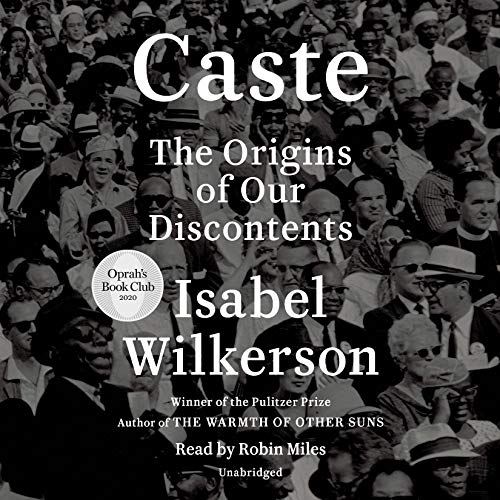
  • Best selling “Caste” another social justice screed that sells misery

    Isabel Wilkerson’s new book “Caste: the origins of Our Discontents” is currently number two on the New York Times Best Seller list. I have no doubt that this book will join other works like White Fragility in the Social Justice canon.

    The basic premise of the book is that America is (and always has been) a racially discriminatory caste system.

    There are varying opinions on this notion. I would argue that, more than anything, America is a meritocracy where anyone can use their talents and work ethic and achieve goals for bettering their lives and those for their family. But my point with writing isn’t primarily arguing against Wilkerson’s suggestion that America is a caste system.

    My biggest concern from the book is the toxic and hopeless ideology Wilkerson spreads. The book offers very little in the way of suggestions to make a better world. It’s 447 pages of beating the drum of how unfair the American system is. She’s profiting greatly off of selling victimhood.

    But what’s even worse is that she’s giving people limitations. There are two opposing views. One of them is that this is a country where people can use their talent and work ethic and accomplish goals build the life they desire for themselves and their families. People of all races and backgrounds overcome humble beginnings and circumstances everyday.

    Wilkerson’s idea is that a racist system irrevocably locks a person into a caste. The world is setup against you. If you’re from a “lower caste” and succeed, it’s in spite of the caste system (which will be angry that you’ve succeeded because you’ve failed to fall in line with where you’re supposed to be).

    There’s a fatalism and existential despair in going through life thinking that the world is setup against you. There’s nothing that is more disempowering that that.

    In the opening chapters of the book, Wilkerson compares America to a house with cracks in its foundation. While people living today didn’t build the house, we have to live with it and the faulty foundation. We need to address the structural flaws in the home. But then Wilkerson all but ignores steps which have been taken for more than a century and a half such as the Civil War, the Civil Rights Movement, constitutional amendments, and other federal laws.

    And while she begins the book by saying that we didn’t create the problems that we have today, she later focuses on how Americans from the “upper caste” intentionally enforce this caste system. Wilkerson says: “Like the cast on a broken arm, like the cast in a play, a caste system holds everyone in a fixed place. For this reason, many people – including those we might see as good and kind people – could be casteist, meaning invested in keeping the hierarchy as it is or content to do nothing to change it, but not racist in the classical sense, not active and openly hateful of this or that group.”

    In the prologue, the epilogue, and throughout the book, Wilkerson compares the American caste system to Nazi Germany. She mentions Hitler more frequently in the book than she mentions Abraham Lincoln, Martin Luther King, Jr, and Frederick Douglas combined.

    One of the most troubling quotes in the book was found on page 268 where she argues that white people – no matter how bad their lives are – can take solace that they’re not minorities: “Those accustomed to being the measure of all that is human come to depend on the reassurance that, while they may have troubles in their lives, at least they are not at the bottom. As long as the designated bottom dwellers remain in their designated place, their own identities and futures are secure.” Wilkerson quotes sociologist Andrew Hacker saying, “No matter how degraded their lives, white people are still allowed to believe that they posses the blood, the genes, the patrimony of superiority. No matter what happens, they can never become ‘black.”

    Seriously? Who thinks that way?

    She looks at everything in her life, throughout history, and in contemporary American culture through a racial lens. For instance, she has a chapter on Barack Obama and talks of how most white people did not vote for him, and then proceeds to give numerous examples of times when people opposed Obama and chalks them up to racism. There’s never any nuance. There’s no consideration that people might politically disagree with his progressive policies. Throughout the book, she acts like conservatives works to maintain the caste system against liberalism. I’d argue that liberalism is what keeps people in poverty by working against invaluable social structures while major cities are essentially one-party rule and they’re rife with crime and poverty and have criminally bad school systems. No, there’s not a caste, but it’s those policies which keep people poor.

    She gives examples from her own life (such as a bad dining experience at a restaurant) as obvious examples of racism. But that’s what much of the book is. Anecdotes and stories rather than hard data to back up her audacious claims.

    As I have said, it’s a book that has no message of hope and says very little about reconciliation. The closest the book came to hope was Wilkerson looking forward to 2042 when demographers predict that minorities in America will outnumber caucasians (although she then quickly suggest that the caste will be expanded to include some of these groups in order to maintain the caste system).

    Thanks for reading! Don’t forget to comment, like, and subscribe

  • Accountability isn’t judgmental, it’s Biblical: why the church needs standards

    Accountability isn’t judgmental, it’s Biblical: why the church needs standards

    Over the last few weeks, Jerry Falwell, Jr had a very public suspension from Liberty, during which time he revealed an affair his wife was having. Falwell resigned, then said he didn’t, then resigned again, bashed the university. This was the culmination in a long series of personal and moral failings from Falwell.

    But what’s interesting when a prominent Christian has significant moral failings exposed, is the excuses I see online. I see comments on news articles and blogs where people will ask “and you’re perfect?” “I guess you never sin?”

    Ironically, that is a self-defeating proposition. Judging people for having moral opinions is in fact a moral opinion where you’re being judgmental!

    But what’s more, the idea that it’s somehow especially loving, or pious, or enlightened to show indifference to sin is not a Biblical idea.

    Just for quick reference:  if anyone is caught in any transgression, you who are spiritual should restore him in a spirit of gentleness (Galatians 6:1). As for those who persist in sin, rebuke them in the presence of all, so that the rest may stand in fear (1 Timothy 5:20). My brothers, if anyone among you wanders from the truth and someone brings him back, let him know that whoever brings back a sinner from his wandering will save his soul from death and will cover a multitude of sins (James 5:19-20). Iron sharpens iron, and one man sharpens another (Proverbs 27:17).

    We should be gracious. We should want to see people repent and restored. We should want to see broken people’s lives changed.

    But we should not ignore sin. Because when we do, we allow predators to run roughshod in churches and Christian organizations under the guise that that’s “loving.” It isn’t. It’s not loving to the sinner who needs people who love them and care enough to point them to truth and righteousness. And for powerful people, it’s not loving to others in their ministry or organization who can suffer and be victimized by unscrupulous morals and sin.

    Yes, there needs to be grace and forgiveness, but there also needs to be accountability. And sometimes there need to be consequences for a person’s actions. Leading churches, ministries, Christian organizations is a sacred privilege, not a right.

    What about “not judging?”

    A person might say but what about where Jesus says: “Judge not, that you be not judged” (Matthew 7:1)? And doesn’t he also say “Why do you see the speck that is in your brother’s eye, but do not notice the log that is in your own eye?“(Matthew 7:3)

    But just a couple of verses later, Jesus also says “first take the log out of your own eye, and then you will see clearly to take the speck out of your brother’s eye” (Matthew 7:5).

    Given the numerous Biblical passages which talk about pointing out sin and restoring sin, and encouraging people to personal holiness, the point of that verse isn’t that you should never have a moral opinion (which isn’t possible). The point isn’t about having a constant disposition of judgment, self-righteousness, comparison to others, and looking for faults. It’s not a command against thinking that immoral behavior is bad and that people (especially professing Christians) should live to a higher standard.

    Thanks for reading! I’d love to hear what you think, and don’t forget to subscribe!