Josh Benner

Category: History

  • The virtue signal of all virtue signals: liberals compare themselves to heroes of all past generations

    Last week, legal scholar and philosopher Robert George had a thought-provoking series of Tweets on how people today would have responded to historical events had they lived through them.  

    George says: 

    “I sometimes ask students what their position on slavery would have been had they been white and living in the South before abolition. Guess what? They all would have been abolitionists! They all would have bravely spoken out against slavery, and worked tirelessly against it. Of course, this is nonsense. Only the tiniest fraction of them, or of any of us, would have spoken up against slavery or lifted a finger to free the slaves. Most of them—and us—would have gone along. Many would have supported the slave system and happily benefited from it.”

    It’s easy to look back at history and assume we would have been righteous. There’s a meme I’ve seen on online that says “If you’ve ever wondered what you’d do during slavery, the Holocaust, or civil rights movement, you’re doing it right now.” 

    Here’s a key difference for the social justice warriors of today. The popular culture supports you. There’s no pressure, or risk, or persecution to protest or be a social media activist. The media supports you, Hollywood supports you, athletes support you, academia supports you, and big corporations support you.  

    People want to compare this to the Civil Rights movement. Many of the protests and sit-ins were unpopular in public opinion from that era. The movement came at a cost. Where’s the cost in sharing a meme?

    To quote again from George, he gives a good ethical test for how we would have truly responded in previous eras: 

    I respond by saying that I will credit their claims if they can show evidence of the following: that in leading their lives today they have stood up for the rights of unpopular victims of injustice whose very humanity is denied, and where they have done so knowing: 

    (1) that it would make them unpopular with their peers, (2) that they would be loathed and ridiculed by powerful, influential individuals and institutions in our society; (3) that they would be abandoned by many of their friends, (4) that they would be called nasty names, and (5) that they would risk being denied valuable professional opportunities as a result of their moral witness. In short, my challenge is to show where they have at risk to themselves and their futures stood up for a cause that is unpopular in elite sectors of our culture today.

    This is an important distinction. When we act like we would have been leading the charge in previous eras, when we want to say that we would have been virtuous in previous eras, we need to consider the context of that time and the cost of our beliefs. Because there’s little real cost in the current climate. For instance, when people want to talk about this as being similar to how they would have responded to the Holocaust consider that during the Holocaust and the Third Reich, almost 80,000 Germans were executed for being part of the resistance. People paid the ultimate price to stand up against Hitler. Where’s the cost in a hashtag?  

    People want to compare this to how they would have responded in the Civil War. 360,000 soldiers died for the Union. That was roughly one percent of the entire U.S. population at the time. Men paid the ultimate price to preserve our nation and end slavery. Where’s the cost in telling people a bunch of books they should read or in watching a documentary?  

    People want to compare this to the Civil Rights movement. Many of the protests and sit-ins were unpopular in public opinion from that era. The movement came at a cost. Where’s the cost in sharing a meme?  

    In the civil rights movement, they protested against actual systemic racism. Today social justice warriors fight against inequality which they say is the result of current systematic racism, and there are people who want to compare the two eras as being moral equivalents. 

    When people want to compare their efforts today to past social movements, it’s showing an ignorance of history and it’s also showing delusions of grandeur. Progressives like to believe that everyone is immoral except for them and that they would have been righteous at all times.  

    We judge people form the past because they don’t adhere to our current standards. And when I say current, I mean that literally. Current as in today because the standards of progressivism are an ever-moving target. There weren’t serious efforts to defund, or dismantle, or destroy the police a year ago. There weren’t major popular efforts to tear down monuments five years ago. There was not a major war on our history ten years ago. But progressives continue to shift their values and they fight a culture war where there is no grace or redemption given to past people who did not perfectly adhere to these standards of today while progressives allow themselves to continue changing what matters and what’s right.

    Thanks for reading! For more posts, don’t forget to like, share, and subscribe!
  • If Lincoln isn’t safe, history isn’t safe: Boston statue to be removed

    I’ve seen a meme on Facebook that says “If you ever wondered what you would have done during slavery, or the holocaust, or the Civil Rights Movement, you’re doing that right now.” 


    I’m going to make my own meme that says “if you’ve ever wanted what you did during the Russian Revolution, you’re doing that now.” There’s a small but vocal radical group who is undermining and working against our history, institutions, ideals, and culture. 

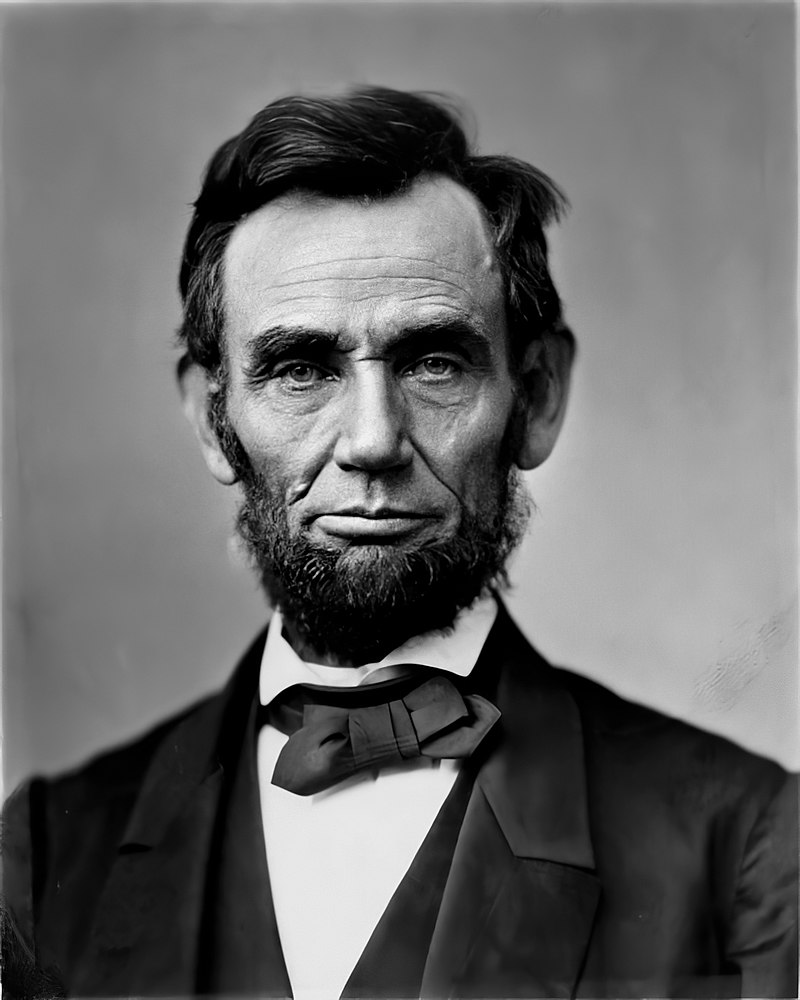
    The Boston Arts commission unanimously voted to remove a statue of Abraham Lincoln.  Boston’s Emancipation Memorial is a repeal of another Lincoln statue in Washington D.C. which was erected in 1876 and funded by freed slaves. The statue depicts Abraham Lincoln and a freed slave who is kneeling in front of Lincoln, his shackles have been broken. 

    Student groups at the University of Wisconsin have also set their sites on a Lincoln statue on their campus. The Lincoln Memorial was vandalized. 

    There’s been renewed public debate in recent weeks about statues of confederate generals. I can appreciate that debate. I could even go along with tearing down every statue or monument that we have a confederate soldier. 

    But Lincoln? If he’s not safe, no historical figure in American history is safe. 

    A statue of Ulysses S. Grant, who was the general of the Union Army, was defaced in Philadelphia. Statues of outspoken abolitionists have been defaced in Philadelphia and Wisconsin. 

    This has quickly devolved to a point where it’s not about removing confederate statues. It’s an attack on history. It’s an attack on great people who made a positive impact on our history. They too must be erased. Because the fanatical progressive cult is zealous for their beliefs and their core doctrine is that America is – and always been – a racist place. There are no redeeming qualities. The only hope for goodness is for America to be remade in accordance with their idea of utopia. 

    And so great people like Lincoln don’t fit their narrative and they too must be torn down. 

    Arguments I’ve seen for taking down the monument are that it offends some people. I thought great art was sometimes offensive? I’ve seen arguments that it portrays Lincoln as a “white savior.” And its original design in Washington was funded by freed slaves. Who are we to say that their idea of a memorial is unacceptable and needs to be erased? 
    You have people who are not radicals but who go along with the purge because it’s easier to go with the current,

    When is censorship good? When is tearing down history beneficial to a society? 
    Who’s life is this making better? 

  • D-Day 76 years later: the battle that was the beginning of the end of WWII

    d7gmptk3-1401982346

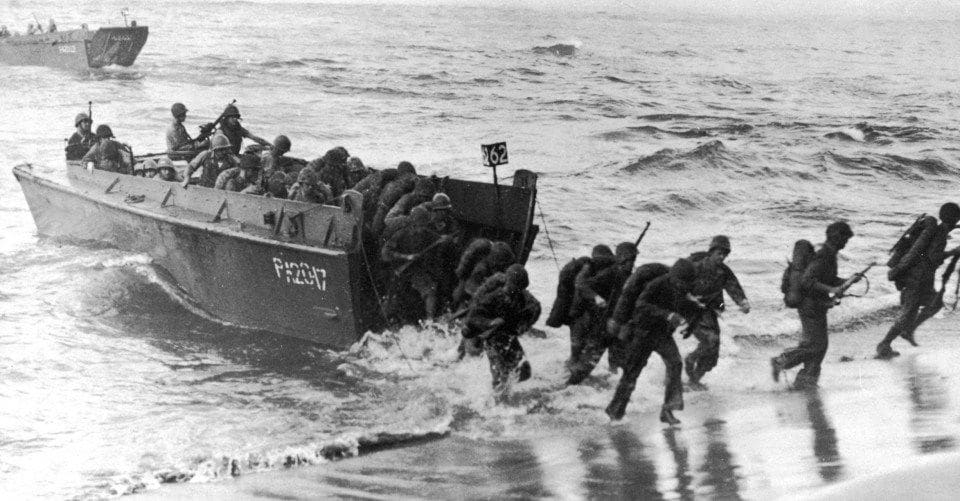
    Today is the 76th anniversary of the Normandy invasion. Over 150,000 Allied forces took part in the invasion. Over a million men were part of the overall battle of Normandy. Thousands of ships and planes. Even trying to fathom the size of the operation is impossible to comprehend.  

    It remains the largest seaborne invasion in history. The strategic significance of the Normandy invasion was that it gave the Allied forces an entry point into continental Europe.

    2WEUKA6QOYZZLCYAMKJ643RCWM

    A lot of our mental images of what D-Day would have been like come from the opening sequence of the movie Saving Private Ryan. D-Day hero and Medal of Honor recipient Walter Ehlers used to tell people to multiply that scene by 60 to appreciate what it was actually like.

    (more…)
  • no, looting is not just like the boston tea party

    Photo courtesy of Wikimedia Commons.

    I’ve seen umpteen people compare the looting and riots occurring to the Son’s of Liberty in the Boston Tea Party. They’re not the same. Writing for the Federalist, Joshua Lawson points out that the Boston Tea Party was not about plundering for person gain. They didn’t loot the ships for the tea, they dumped into the harbor. They didn’t burn down the ships, they didn’t cause physical harm to people. The only injury in the Boston Tea Party was one of the Son’s of Liberty who was hit by a tea crate. The only personal item damaged was a lock which was replaced by the Son’s of Liberty. The looting largely went after personal property. The Boston Tea Party was specifically a protest against the government.

    But all of this raises an important philosophical question. If you look at the Boston Tea Party as a justification for rioting and looting today as a response to an unfair system, to oppression, as long as the system is the way that it is, by the logic of your justification, shouldn’t rioting and looting be justified at anytime until the system is changed? Honest question. If someone looting tonight or last weekend was justified, why shouldn’t that also be justified six weeks from now? Or six months from now? If someone is looting in opposition to injustice, how do you put a timeline on when it is and isn’t acceptable? Where’s the consistency?

    I maintain that it’s wrong to steal and it’s wrong to harm private businesses. It undermines the vast majority of demonstrators who are peaceful and law abiding citizens. Not only is the looting morally wrong, it’s also counterproductive. It’s wrong to steal and it’s wrong to hurt private businesses.

    The Boston Tea party also brought consequences upon the colonies where Britain passed the “Intolerable Acts” in retaliation. They did have to pay for that rebellion. Being a revolutionary has consequences. I find it interesting that people talk of the horrors of troops being used in major cities to help regain civil obedience. But for rioters who are talking and acting like revolutionaries, what should they expect? Above all else, the job of government is to maintain law and order. It’s shameful that mayors were allowing people to ride roughshod in their cities over the weekend. That is a disservice to their communities.

    Again, I’m not talking about the peaceful protesters. And I know the vast majority of protesters are peaceful and have a right to be angry and to protest. But society should have no acceptance of those who seek to cause looting and destruction.

    Thanks for reading! I welcome your comments and don’t forget to subscribe.

  • Feels like yesterday: 9/11 through the years

    IMG-0615

    There aren’t very many days in your life where you know at the time that life is never going to be the same. Everyone knew that on 9/11.
    18 years.
    Today is the only day ever where everyone who was born on or before September 11, 2001 is legally an adult and everyone who was born after that day is still a kid. I’ve thought a lot lately about this day and what the younger generation will understand about 9/11.
    I remember it like it was yesterday, and so it’s crazy for me to consider that kids in school weren’t even born when this event happened. This monumental day that was a paradigm shift in American history is just that to kids, history. They learn about that day from what people tell them and from the same documentaries I watch.
    If you weren’t alive that day, and watch documentaries about 9/11, I think it’s hard to appreciate the chaos of September 11th. There’s a sense of fatalism in the documentaries. They almost always begin by contrasting the beauty of that morning against the pandemonium that was soon to burst forth.
    In the weeks and months after the attacks, it impacted every aspect of our society: sports were a rallying ground for patriotism. Many popular songs were written about that day and playing on the radio. New laws were enacted. Entirely new federal agencies were created. There was an ever present thought of if and when another attack would happen. The whole country was on high alert, arguably for the next 2-3 years.
    As I watch documenaries, the quality of the videos seems a little more dated, the outfits people are wearing seem a little more 90s.
    When the North Tower was struck, no Americans knew that the South Tower was going to be hit 17 minutes later. No one had any idea that other planes were in the process of being highjacked and that other sites were also being targeted. As the towers had smoke pouring out, the average person had no idea that they were going to collapse. From the time the North Tower was struck, three other planes crashed and both towers fell in 102 minutes.
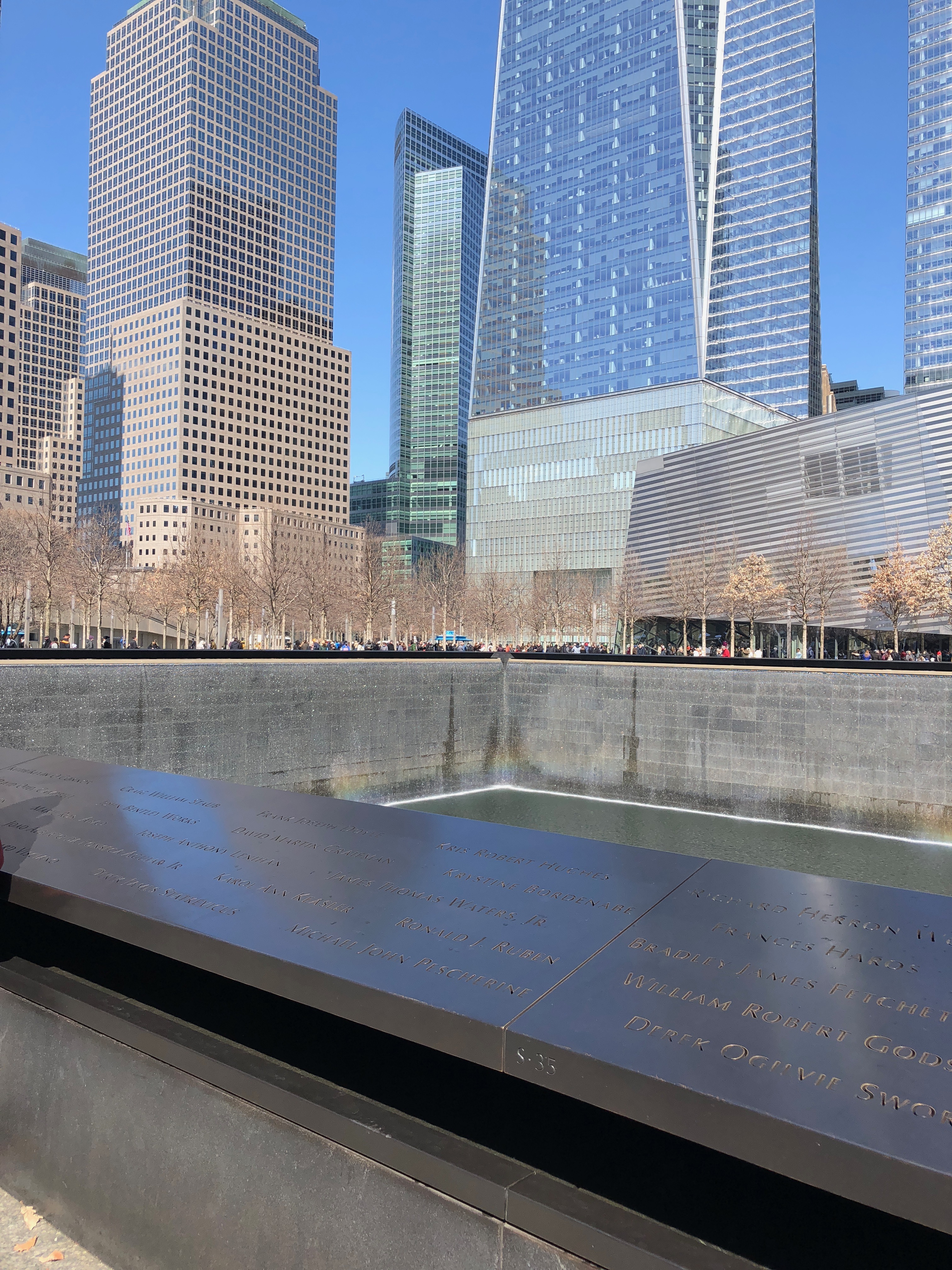
    Last spring, I had the opportunity to visit the National September 11 Memorial and Museum. It’s a special place. One of the rooms (and one of the few parts of the museum where they ask people not to take photos) features photographs of all of the victims of the attacks. Just a huge room with thousands of photos of people. It’s crazy to think that each of those photos is a person who meant something to a lot of people. They were people’s spouses, people’s parents, siblings, children, grandchildren, best friends. All of them taken away because of evil and hatred.
    For many of the victims, the memorial also serves as their final resting place. From the intense fire, and from the incredible weight of the towers collapsing, and given the high numbers of casualties, remains could be hard to positively identify in the aftermath. Roughly 40 percent of victims have never been identified. The museum has a morgue where the unidentified remains are housed.

    DSC_6884.jpg
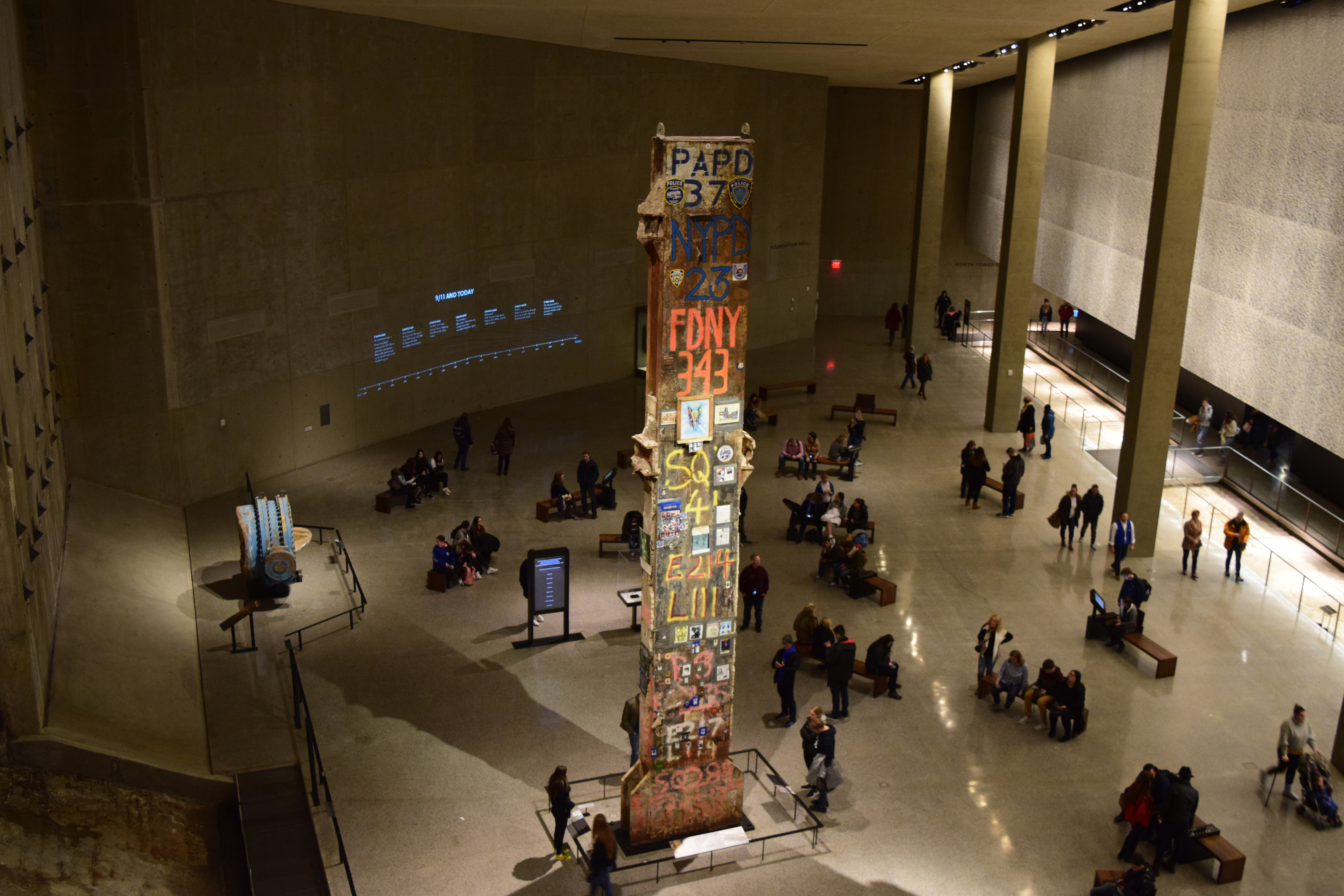
    One of the exhibits at the museum is a 36 foot tall column. It was part of the inner-core of the South Tower and was the last piece of debris removed at the completion of the cleanup efforts, nine months later. Workers covered the column in pictures as a memorial to the victims.

    It’s still unfathomable to me. Thousands of people just living their lives, having no idea that they were about to become casualties on the front lines of a war in which they had no idea they were enlisted. The horror that people experienced above impact zones on the towers and on our airplanes. The first responders who risked their lives (and the many who gave their lives) on that day to help others.. For those people, I never forget.

    It’s still unbelievable to me. There’s nothing else like it.

    I think of the people in conference rooms and riding elevators who were dead without ever knowing there was even an attack. I think of the people who jumped from the towers. They were in such a horrible situation that jumping was the lesser of two evils. That still shocks me.

    Originally published September 11, 2018

    Thanks for reading! I’d love to hear what you think, and don’t forget to subscribe! 

    Josh Benner is the pastor of Christian Bible Church in Cissna Park, Illinois. He has a Master of Divinity from Trinity Evangelical Divinity School. He enjoys writing about faith and culture. He has an awesome wife named Kari.