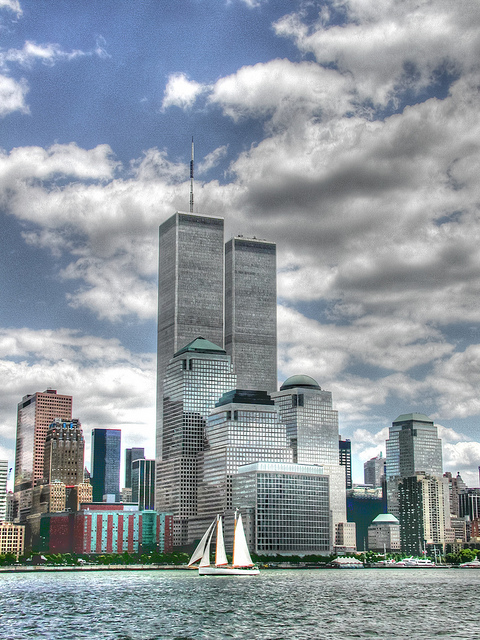
As I write these words, the stresses of everyday life come to mind. I think of how busy I am between work and my other commitments. I’m so often short-sighted and allow myself to get frustrated. It’s getting late and I jot some thoughts down before going to sleep. On this night, my thoughts are on the past and with people I’ve never met. Eighteen years ago tonight, thousands of Americans went to bed, unaware that it was the eve of their last day on earth.
For me, that’s surreal. Monday was an ordinary start to the work week. In the evening, people played with their kids, and watched Monday Night Football, and kissed their spouses goodnight. They prepared to go on flights for work, or vacation, or just to make it home. They thought about what bill needed to be paid and the home repair which needed to be completed. They went to sleep like it was any other night and woke up to a beautiful Tuesday morning. (more…)
Last spring, my wife and I had the opportunity to visit Philadelphia. Neither of us had ever been there before. I loved it. Thought it was an amazing city. As someone who loves history, there are some incredible sights to see in Philadelphia. It’s surreal that you’ll be in the middle of a major city and you’ll also be walking between buildings that housed some of the most important events in our nation’s history, and that were here over 200 years ago.
My favorite sight to see was Independence Hall, where the Declaration of Independence and the Constitution were debated and adopted. It was surreal to be in a room, and to think, “George Washington, Thomas Jefferson, Benjamin Franklin, and Alexander Hamilton have all been in this room.” It felt as though I was standing on hallowed ground.
Much gets said about our founding fathers and our history. They were imperfect men. But imperfect as they were, they also did something great.
Revisionist historians like to argue that the only reason the Founding Fathers declared independence from Britain was out of a desire to not pay taxes. This overlooks the fact that the founders committed an act of treason against the Crown when they declared independence. Had the United States lost the war, they would have all been hanged. And it wasn’t a guarantee that the United States would win. The Continental Army had the daunting task of synthesizing an army together from colonies (who had largely been independent of one another) into a cohesive army.
Assembly Room at Independence Hall
The last line of the Declaration of Independence says:
For the support of this Declaration, with a firm reliance on the protection of divine Providence, we mutually pledge to each other our Lives, our Fortunes and our sacred Honor.
Many of our Founding Fathers paid dearly in the cause of liberty and freedom.
Robert Morris of Pennsylvania had amassed great wealth and gave it all away to support the army and navy. He also had loaned money to the Continental Congress in 1776. Morris was never paid back and died in poverty.
Thomas Nelson of Virginia had his home overtaken and used as a headquarters by General Cornwallis. Nelson ordered his own home to be burned down. He spent $2 million of his own money (an incredible sum in the 18th century), to help fund the war. Nelson was also never paid back and died impoverished.
Phillip Livingston of New York was one of the richest men in America but also lost all of his fortune and didn’t survive to see the end of the war, dying less than two years after he signed the Declaration of Independence.
Richard Stockton of New Jersey was arrested by the British in 1776 and spent three years as a prisoner. When he was released, his health was failing, and he died two years later in financial ruin.
When Charleston, South Carolina was overtaken by the British in 1780, three of the four signers of the Declaration of Independence were taken as prisoners of war. When they were released, their property had been pillaged.
And there are many other examples. They cost of starting a nation. A nation that is imperfect, but which has also spread more freedom to the world than any other nation in history.
I think our founding fathers, and the subsequent millions of soldiers, sailors, airmen, and Marines who have fought to defend that freedom. Most especially, I’m thankful for the freedom of religion that we have in this nation. That we are free to worship as we desire. So many tyrants throughout the world have attacked the freedom of religion at the alter of imposing religions or eliminating religions. But the beauty of America is that we can worship as we choose.
Originally published July 4, 2018
Thanks for reading! I’d love to hear what you think, and don’t forget to subscribe!
Josh Benner has a Master of Divinity from Trinity Evangelical Divinity School. He has served churches in Minnesota and Illinois. He enjoys writing about faith and culture. He lives with his wife Kari in St. Louis.
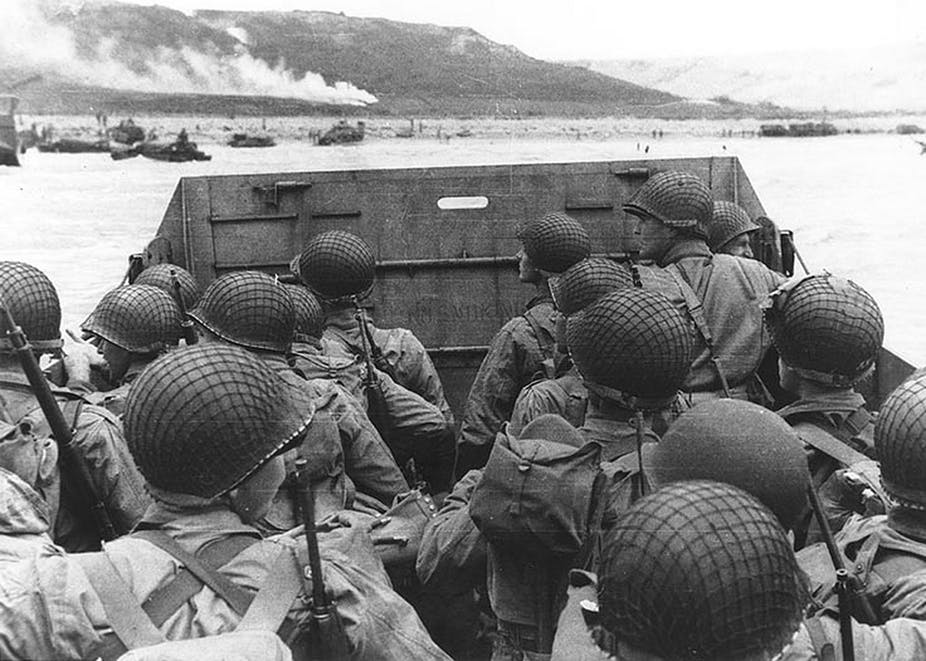
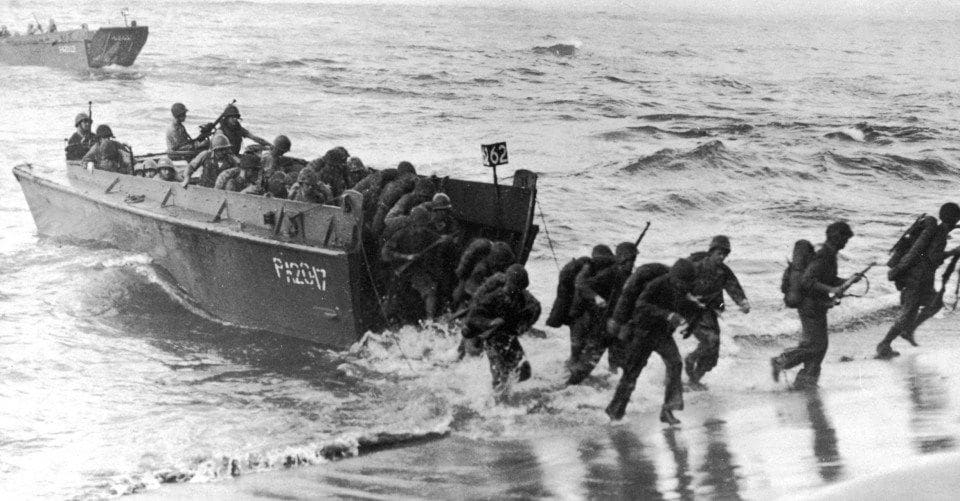
Today is the 75th anniversary of the Normandy invasion. Over 150,000 Allied forces took part in the invasion. Over a million men were part of the overall battle of Normandy. Thousands of ships and planes. Even trying to fathom the size of the operation is impossible to comprehend.
A lot of our mental images of what D-Day would have been like come from the opening sequence of the movie Saving Private Ryan. D-Day hero and Medal of Honor recipient Walter Ehlers used to tell people to multiply that scene by 60 to appreciate what it was actually like.
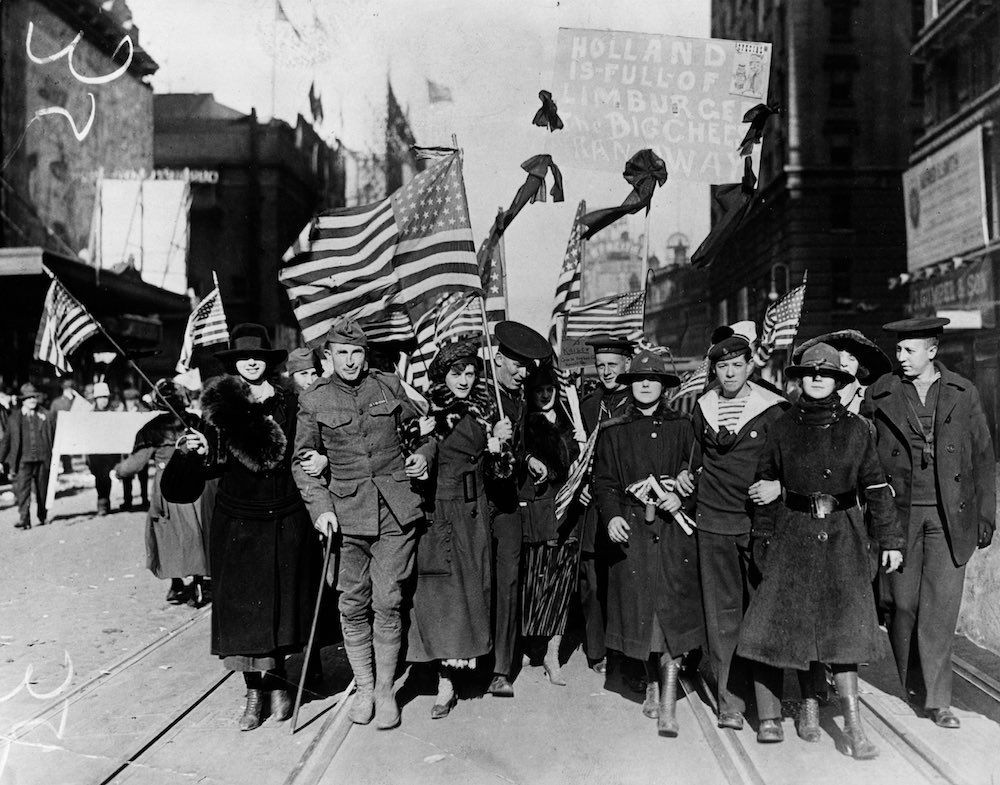
Crowds in New York celebrate the signing of the armistice which ended World War I
At this hour, a century ago, the First World War ended. They called it “The War to End All Wars.” But sadly, a generation later, the world would be embroiled in an even bigger, even more deadly, even more catastrophic war.
But at the time of World War I, it was something the likes of which the world had never seen.
The loss of life was catastrophic, with an estimated 37 million military and civilians dying in World War I. One of the striking features of World War I to me has always been the enormous losses of life in such short periods of time. In the First Battle of the Somme, there were over a half million casualties in a battle which lasted just 16 days. The First Battle of the Marne was an early battle in 1914. In less than a week, there were a half million casualties and over 150,000 troops killed.
World War I is fascinating to me.
I think for most Americans who are history buffs, our interests tend to go to one of three periods: the American Revolution, the Civil War, and World War II.
With World War I, America was certainly a major contributor in helping the Allies win the war but we also got involved relatively late (April 6, 1917), after the war had been raging for over 2 and a half years.
But our year and a half long contribution to the conclusion of World War I was hard fought, with over 116,000 soldiers dying (more than we lost in Vietnam and Korea combined).
Much of the past century has been shaped by the First World War. Three dynasties came to an end in World War I: The Romanovs in Russia were overthrown by the Bolsheviks in 1917. The Habsburgs were overthrown in Austria-Hungary. And WWI would lead to the downfall of the Ottoman Empire, which had held influence since the 13th century.
It led to an even bigger and deadlier war a generation later. One of the especially interesting things to me about World War I are the origins of the war. How the assassination of an unpopular prince in Serbia escalated to an international crisis. The alliance system pulled in several nations on both sides. The alliance system was a major factor that led to World War I, that perhaps the war was always inevitable and just waiting for a spark. World War II seems much more inevitable and unavoidable because of World War I.
The national boundaries in much of the Middle East came in the aftermath of World War I, and were established by the victorious Allied nations.
World War I was a modern war fought with modern weapons, but the scale of the war and the advancement of technology were beyond what the military philosophy of the day had developed. Most people thought it would be a quick war, but as countries who had large populations and who were relatively evenly equipped, it led to massive stalemates between armies. For much of human history, the populations would not have supported this style of warfare. Tragically, in World War I, armies could keep sending men into the trenches.
The world changed. At the beginning of the war, the French were still wearing blue coats, similar to what they wore in the Napoleonic Wars. This made them stand out. Officers were still wearing white gloves and caps with horsehair plumes. Entering a modern war with relics of the past. One of the earliest battles in World War I was the battle of the Frontiers. In just over a month of fighting, France alone suffered more than 300,000 casualties. But while the war began with elements of bygone eras, by the end of World War I, armies were using planes (still a pretty new invention at the time) in warfare and shooting guns from them.
Thanks for reading! I’d love to hear what you think, and don’t forget to subscribe!
Josh Benner is the associate pastor at Cornerstone Evangelical Free Church in Fergus Falls, Minnesota and has a Master of Divinity from Trinity Evangelical Divinity School. He enjoys writing about faith and culture. His hobbies include working out, watching sports, and photography. Josh and his wife Kari live in Minnesota.
Throughout Germany and Austria, riots broke out on this night 80 years ago in a night which is infamously referred to as Kristallnacht, the Night of Broken Glass, after the destruction done to Jewish businesses and properties.
At least 91 Jewish people were killed; 30,000 men were arrested; hundreds of businesses were damaged or destroyed. Nearly every synagogue in Germany or Austria was damaged or destroyed. (more…)