Josh Benner

Category: society

  • Parents allowing children to decide their gender: why?

    child-childrens-baby-children-s.jpg
    A recent article from NBC talks about a Massachusetts family who are raising their twin boys without a gender. The idea behind this parenting philosophy is to allow the twins to decide for themselves when they’re older.

    In the story, the mother made the fair point about how we do have ways how we stereotype little boys and little girls that aren’t always helpful. Many raise girls to be prissy and “girlie,” while boys are raised to be tough and to not cry. These aren’t necessary aspects of masculinity and femininity, on that point, I agree. However to combat those stereotypes, we don’t need to raise children without gender. There are other, healthier approaches.

    It’s absolutely unnecessary for a person to take an otherwise normal, healthy baby and to then introduce confusion into their child’s life. Is letting a person “decide” their gender so important?

    I hear people talk about how complicated gender is.

    For the vast majority of people, it’s pretty simple. And so I return to my question, why introduce confusion? Why introduce additional complexity?

    I know to some this seems progressive and enlightened.

    It’s unwise.

    I saw a video a few years ago of a British woman who was doing this with her son. It’s heartbreaking.

    If your approach to parenting is doing something that society has historically not done and which contradicts the wisdom of human experience: it’s wrong. Raising a child is not the time to try new experiments.

    The idea that you can raise a kid without gender and then let them decide their gender is self-defeating.

    The idea that you can take a baby boy or girl and raise this child neutral of gender, and later let them decide their gender, it’ll be in the context of them having been raised as unaware to their gender. When they decide which gender they want to be, it’ll be from a context of not having been raised according to a particular gender. It’s not like you’ll decide you want to be a boy and instantly know how to do it. You weren’t shown! You weren’t taught! You were intentionally kept in the dark.

    Part of the justification that I’ve seen is that this helps a child to embrace their identity. I would argue that it actually raises a child ignorant of an important aspect of their identity. This style of parenting takes away the foundation of manhood and womanhood.

    And for what purpose?

    According to a 2016 study by the Williams Institute, transgendered people make up just over one half of one percent of the American population. And the transgender life is not an easy one. Tragically, the rate of attempted suicides within that community is 40% according to The Report of the 2015 U.S. Transgender Survey.

    With the Massachusetts family, the mother is an engineer and talks of the gender stereotypes in her field, how it is often male-dominated. That’s probably true. But how does it help that to raise boys as if they’re not?

    Gender comes from God. It’s fundamental to his creation of humanity. God made men and women and we are both created in his image. We should celebrate masculinity and femininity. Men and women compliment each other.

    Josh Benner is the associate pastor at Cornerstone Evangelical Free Church in Fergus Falls, Minnesota and has a Master of Divinity from Trinity Evangelical Divinity School. He enjoys writing about faith and culture. He lives with his wife Kari in Minnesota.

    Connect with me!
    Facebook
    Twitter
    Instagram



  • The meaning of life and the suicide rate in America

    800px-Anthony_Bourdain_2014_(cropped).jpg
    Photo courtesy of Wikimedia Commons

    This week, two celebrities committed suicide. Designer Kate Speed took her life on Tuesday. This morning, we learned that celebrity chef Anthony Bourdain took his life in France.

    It’s a tragic thing when a person is in despair to the point where that is seen as the only resort. If you happen to be reading this and you’re currently dealing with suicidal thoughts, call the National Suicide Prevention Lifeline at 1800-273-8255 or visit their website at suicidepreventionlifeline.org.

    Suicide has many complicated factors. Mental illness and depression often times play a role. There has been a lot of discussion about mental illness in this country in recent years. As well there should be.

    Suicide is a sensitive issue. There were over 44,000 suicides in America in 2016. Tens of thousands more each year, impacting hundreds of thousands of families, spouses, children, and friends.

    Whenever there’s a high profile suicide, I read articles. And I see the comments that people make. People will talk about mental illness and depression (again, both very real and significant issues). But I feel that some people can be overly fatalistic about suicide. Like there was no other way that things could have turned out. Like there was nothing that could have been done. Like a person was so imprisoned to mental illness that they were beyond helping.

    I reject that idea.

    There is always hope. There are always people who care. There is always a reason to live.

    It’s a mental illness and it can impact judgment.  But the complex factors of suicide are deeper than only mental illness and depression. It’s also cultural. Suicide rates are not equal from one society to another. Rates fluctuate over time.

    There’s often a copycat element to these tragedies. Where one person commits suicide and another also makes that choice. Suicide doesn’t equally impact every group within society (another reason why I reject that it’s only about mental illness and a person has no mental faculties in getting help). In America, caucasians commit suicide at more than twice the rate of African Americans (despite having lower rates of depression).

    It’s a complicated issue.

    When people look at it purely as a result of mental illness, I think that undermines the morality of the issue. It is a moral issue because it impacts families and society. It’s immoral. And I feel like many in our society are afraid to acknowledge that.

    Rates have unfortunately increased in the United States. Rates are also going up in many other industrialized countries. It is a concern that as societies get more secular, they lose objective meaning in life. Some existentialists look at meaning as something someone can decide for themselves. But other philosophers took this to the opposite end of the spectrum and looked at life as futile.

    The only true source of meaning in life is found in God. He has created the world and made humanity and he’s made us with the purpose of knowing him and worshipping him.

    No matter what you’re going through, what you’re struggling with, God has a purpose for you and wants you to trust in him and to know him. Your life has meaning and Jesus showed that at the cross when he died to save sinful people. He died so that we could live.

    Viktor Frankl, who survived the Holocaust wrote: “Those who have a ‘why’ to live, can bear with almost any ‘how’.”

    Josh Benner is the associate pastor at Cornerstone Evangelical Free Church in Fergus Falls, Minnesota and has a Master of Divinity from Trinity Evangelical Divinity School. He enjoys writing about faith and culture. He lives with his wife Kari in Minnesota.
  • Feel sorry for the victims, not Bill Cosby

    800px-BillCosby.jpg

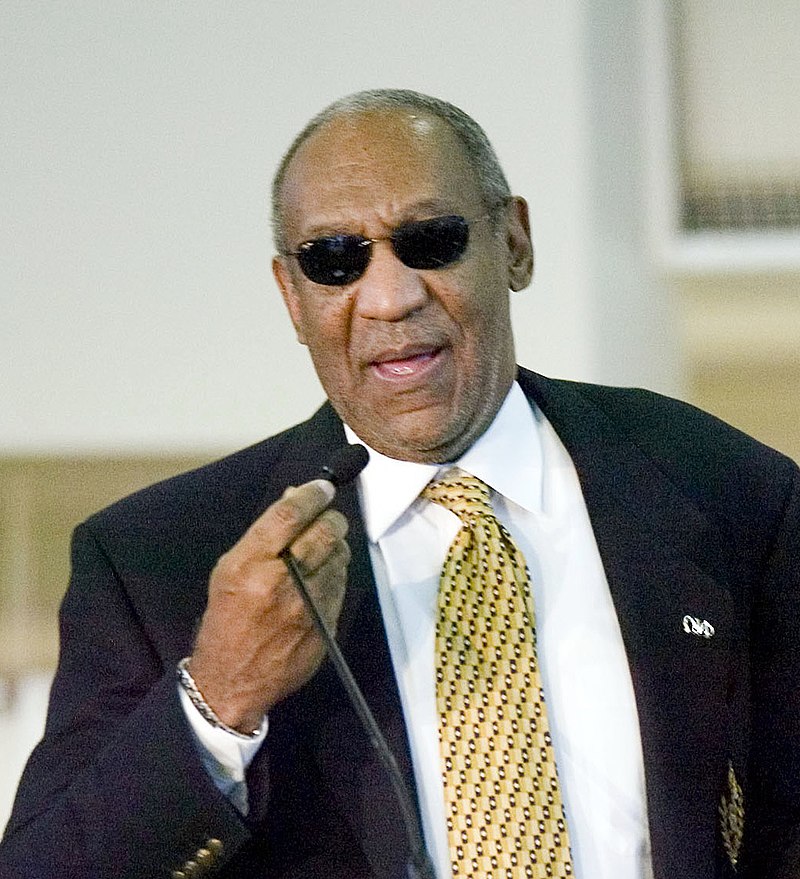
    Legendary actor and comedian Bill Cosby was convicted of sexual assault this week.

    More than 60 women have claimed Cosby raped or sexually assaulted them. 45 of them say that he drugged them. Many taking a drink or other pill offered by Cosby and waking up hours later.

    These accusations go back to assaults as long ago as 1965. There are several more women who have acknowledged assaults by Cosby but who are not allowing their names to be revealed to the public.

    It’s hard to go after someone who’s rich, and famous, and beloved by millions. It’s hard to be one voice against someone powerful. There actually had been women who had told the police about Cosby’s actions, but evidence can be difficult to find in these cases. There had been women who had mentioned it to reporters but the stories weren’t published. Research indicates that the vast majority of rapes and sexual assaults go unreported. Many victims fear that their story won’t be believed (especially when it’s an accusation against Cliff Huxtable, someone who has a public persona of being wholesome). Many blame the victim.

    Considering that a number of Cosby’s accusers were unconscious when assaults happened and weren’t necessarily sure of what had specifically taken place.

    And over and over and over again, the story is the same. He would give a woman something to drink, or give her some type of pill for pain or anxiety, and they would black out. Horrifying and monstrous.

    In October of 2014, comedian Hannibal Buress referenced the allegations against Cosby in a stand up routine. Within the next five weeks, some 45 women came forward with accusations against Cosby. This was not the first time Cosby had been accused of sexual assault. One victim talked about it in a 1996 interview that was never published. In 2000, Lachele Covington came forward saying that Cosby assaulted her when she was an extra on his show Cosby.

    In 2005, seven women came forward. This was the first time Cosby’s allegations were made known publicly. He settled in a civil suit for an undisclosed amount. In legal documents from that suit, Cosby admitted to using drugs as sedatives for the purposes of sexual encounters with women. But he argues that they agreed to it.

    This week, he was convicted in the 2004 rape of Andrea Constand. Cosby’s conviction in this one case is a victory for all of his victims, where many of the crimes occurred long enough ago that criminal charges cannot apply due to the statute of limitations.


    Even after Cosby has been convicted, many still struggle to accept that Cosby is guilty.

    Why?

    Because it’s Cliff Huxtable! And Cliff Huxtable is a wise and wholesome family man. He’s made us laugh, his characters are lovable.

    Don’t feel sorry for him. Feel sorry for his victims. No matter how kindly his public persona is, he’s a serial rapist and a predator.

    Josh Benner is the associate pastor at Cornerstone Evangelical Free Church in Fergus Falls, Minnesota and has a Master of Divinity from Trinity Evangelical Divinity School. He enjoys writing about faith and culture. He lives with his wife Kari in Minnesota.

  • The science of timing and how to maximize your day

    41Z0sxEkUBL._SX329_BO1,204,203,200_

    I’m finishing up the new book “When: the scientific secrets of perfect timing” by Daniel H. Pink. Pink writes on management and behavioral science.
    Everyone knows that timing is everything. But we don’t know much about timing itself. Our lives are a never-ending stream of “when” decisions: when to start a business, schedule a class, get serious about a person. Yet we make those decisions based on intuition and guesswork.
    Timing, it’s often assumed, is an art. In When: The Scientific Secrets of Perfect Timing, Pink shows that timing is really a science.
    This book was helpful for me. Since getting married last year, I’ve spent a lot of time evaluating my schedule and how I utilize time.
    How do we maximize our time?
    We all have times of the day that are more optimal for us to get work done. From “When” and numerous other books I’ve read on the subject, it is essential for people who work in fields that take a lot of mental energy to allow their minds time to recharge.
    To some, that might seem lazy.
    But it’s really just human nature. We have a finite amount of physical and mental energy.
    Pink talks in the book about how it used to be a badge of honor for people who worked long hours and sacrificed sleep to work. But how, often times, the quality of the work struggles when people do that.
    We aren’t robots who can just devote endless hours to accomplishing tasks.
    What is more likely to happen is that our minds start to wander and drift and we have time that is spent pretending to work, or looking like we’re working but actually accomplishing very little. In reality, people spend a lot of time socializing, texting, playing on their phones, looking online.
    In one study (not mentioned in this book), 1,989 British office workers were found to spend just less than three hours a day actually working.
    This is a reality of what happens.
    So my interest is in maximizing efficiency in that.
    And that’s where I found “When” helpful, because part of what this book did was analyze the rhythms of the day. It’s important to structure the day where we are working on what’s important at our optimal times of productivity.
    Many (not all) adults are able to hit the ground running in the morning. As the morning goes on, closer to lunch time, that mental productivity can wane. In the middle of the afternoon, around 2:30, our productivity hits another low.
    For many people, we hit a rut approximately seven hours after waking up.
     And the peaks and valleys of the day have real consequences. Citing numerous studies, in the late morning and mid-afternoon lulls, there is a statistical increase in medical errors during surgery; people who are up for parole have a higher chance of being denied; test scores go down for students.
    So with this knowledge and applying it to life, it might be a waste of prime mental real estate to start the day off by doing a relatively mindless task like checking emails.
    The book also talks of the importance of rest. But not just any rest but productive rest. Pink argues that checking text messages on a break can actually be counterproductive. We do many things that aren’t productive but which also aren’t conducive to rest and recharging. And perhaps the lack of rest also perpetuates the problem of a lack of productivity.
    Work hard, play hard.
    I thought the book was well-written, well researched, practical. I’d recommend it.
    Josh Benner is the associate pastor at Cornerstone Evangelical Free Church in Fergus Falls, Minnesota and has a Master of Divinity from Trinity Evangelical Divinity School. He enjoys writing about faith and culture. He lives with his wife Kari in Minnesota.


  • The biggest mistake liberal Christians make

    photo-1506924477166-bee04952553a.jpeg

    A few weeks ago, the Episcopal diocese in America voted to remove gender pronouns for God in updated versions of their Book of Common Prayer.

    I think many in our world believe in a gospel of “you’re ok.”

    I’ve been thinking a lot lately about liberal Christianity.

    They place a strong emphasis on love. And love is obviously important. The greatest commandment that Jesus gives is to love God and to love our neighbor. Not just to love our neighbor, but to love our neighbors as we love ourselves.

    But here’s where liberal Christians get it wrong.

    They emphasize love to the exclusion of other aspects of God.

    God is love. But he is not only love. God is also holy. God is also wise. God is also just and a judge.

    And when we hold up love as the only aspect of God that matters, it will ultimately lead to affirming that which is blasphemous.

    The gospel is not there to tell us that we’re all ok. Actually, it’s the opposite of that message. We are not called to love sin. Nowhere in the Bible is sin seen as a good thing. The Bible teaches that all of humanity is sinful. In fact, we are so sinful that the only way that we could be reconciled to God was for God to bear the cost of our sin. Jesus did that on the cross.

    God shows his love for us in that while we were still sinners, Christ died for us (Romans 5:8).

    Greater love has no one than this, that someone lay down his life for his friends (John 15:13).

    Absolutely, we see the love of God in the gospel. But we also see his justice. Sin has an eternal penalty apart from Christ. And while he went to the cross to show his love, it also shows the cost of sin. Let us not take sin lightly.

    When we try to decide what is good apart from God’s moral law, it ends up becoming merely the opinions of men. As the common refrain in the Bible’s book of judges goes: “In those days there was no king in Israel. Everyone did what was right in his own eyes (Judges 21:25).”

    God is love but he is also wise. And just as we can’t pick and choose who to love (we are called to love everyone, to want what’s best for everyone, to have concern for people) we also cannot pick and choose which aspects of God’s wisdom and morality we want to like. It’s all true.

    In the Beatitudes, Jesus teaches: blessed are those who hunger and thirst for righteousness, for they shall be satisfied.

    Blessedness is not in pursing worldly goals, it’s not in “following your truth,” it’s not in doing what makes you happy. It’s having a desire for the righteousness of the righteous and holy God who created the universe.

    And because God loves us, he doesn’t desire for us to be kept the same when we come to him. It’s not a difference of opinion between us and God in regards to sin. It’s truth and falsity.

    jrb