
Josh Benner

Tag: Commentary

  • What are you seeking? Studying John 1:35-38

    What are you seeking? Studying John 1:35-38

    The gospels of Matthew, Mark, and Luke all give stories of Jesus calling the first apostles. And we see Jesus interacting with some of these same men in this passage. Yet the account in John is different than the accounts in the other gospels. 

    The other gospels all talk of Jesus calling upon fisherman to follow him, and how they immediately leave their nets when called upon by Jesus. 

    That’s not in John. 

    The order in which apostles meet Jesus is different in John. The circumstances are different. 

    Why is there this discrepancy? 

    My belief is that the events in John are recalling when Jesus first met the apostles and that the event in the other gospels recounts Jesus actually calling those disciples to be followers of Jesus. 

    When Jesus meets people like Peter and Andrew in our passage today, he doesn’t call them to be his followers.

    If Jesus meets them in John, and then calls them in the other gospels, it makes more sense of why they immediately leave everything to follow him. Because they already know Jesus. 

    That’s the first of several theological affirmations about Jesus that we will find in this passage is that Jesus is the Lamb of God.

    Jesus is the Lamb of God 

    John the Baptist calls Jesus the Lamb of God. 

    The sacrificial system was instituted in the Old Testament to show the price which needed to be paid for sin and that sin needed to be atoned for. Sin required a blood sacrifice. It was a complicated and rigorous system. Sacrifices provided temporary atonement. Certain sins required certain sacrifices. 

    Sacrifices also required worthy animals. A person couldn’t just pick out an old goat that was about to die. It had to be a healthy animal without blemish. All of that was meant to point to the greater sacrifice. Jesus is the perfect and spotless lamb who is the true and worthy sacrifice. 

    And so John calls Jesus the Lamb of God. He is the one who was sacrificed to atone for the sins of all who believe in him. 

    Continuing in our text. John the Baptist hast just made this statement about Jesus and then:

    The two disciples heard him say this, and they followed Jesus (John 1:37).

    Pointing to a great teacher

    John points to Jesus. With a respected religious leader like John, that would have been unthinkable. No one wants to lose people. A teacher doesn’t want to lose students. A dentist doesn’t want to lose patients. A hair stylist doesn’t want to lose clients. 

    But John is happy to point his people to Jesus. He’s happy to lose his followers to Jesus, because that’s his entire purpose. Pointing people to Jesus. The text says that they followed Jesus. Verse 38: Jesus turned and saw them following and said to them, “What are you seeking?” 

    Quite the question Jesus asks. 

    There’s a double meaning. It flows into the story when two men start following Jesus to ask “what are you seeking?” or “what do you want?” 

    But it is also a probing question for anyone who seeks to follow Jesus. 

    What are you seeking? 

    “What are you seeking?”

    What do you want from Jesus. There are many reasons why people try to find religion or turn to Jesus. But not all of them are good reasons. If you’re a follower of Jesus, why are you following him? 

    Being a follower of Jesus is an end in itself. You follow Jesus because you get…Jesus. 

    You get God. That is the greatest promise that the Lord gives to us. Unworthy sinners are invited to know the God of the universe. Sadly that’s not always the real heart behind a person’s desire to know Jesus. 

    What are you seeking? 

    Some people follow Jesus because they have all sorts of issues and think life will get easier. And for awhile, that might be true. But you’re still you. You’re still a sinful person. You still have various habits and areas of sin that aren’t productive. And life is still hard. 

    You get Jesus. What about when the going gets tough? Because the going will get tough. 

    And then where does that leave you? For some, they’re left disillusioned with faith because it didn’t give them what they wanted. 

    But the mistake was that they were looking for the wrong thing. Some are led to Jesus because they’re sold a false gospel and believe that material blessing and physical health are both always the will of God for a believer. 

    It’s often called the prosperity gospel. It’s not Biblical Christianity. It turns our desires to stuff and not to God. There are often blessings which result from the Christian life and living according to Biblical wisdom. But that is not meant to be the basis of being a follower of Christ. 

    Because the struggles still come. If our hope is rooted in what we think Jesus will give to us, it leads to a faith that is superficial. Plenty of Christians can see the flaws in prosperity theology. Yet we’re often still drawn to it. Especially in America. 

    Why? 

    Because, in our heart of hearts, there’s a temptation to think that we deserve things to be good because we like to think we’re good. We pray, we serve, we give, we try to follow God. 

    We do these things and so it can be tempting to be angry with God when things don’t go the way we want them to. 

    The Bible does not promise the Christian life will be easy. It promises the opposite. 

    You can find verses on suffering in almost every book in the New Testament. Most notably, it was Jesus who was unjustly tortured and executed. He told his disciples in John 15: If the world hates you, know that it has hated me before it hated you.

    The Apostle Paul was impoisoned multiple times in his life and later executed for his faith. He said in Romans 5:3 we rejoice in our sufferings.

    Paul wrote his letter to the Philippians from jail, and was later executed. John the Baptist who’s in our passage this morning. Executed. The apostles named in our passage this morning: all of them were martyrs. 

    The world hates the gospel. 

    The Christian life is hard. And life is hard. 

    What are you seeking? 

    Certainly I’m not saying there’s anything wrong with blessings. Christians often times do enjoy blessings in life, because God is good and gracious. 

    Living Godly lives and living according to Biblical wisdom is the best way to live and so that often bears fruit in life. 

    But what about when it doesn’t? 

    Many faithful people follow the Lord throughout their entire lives and continue to suffer and struggle. What are you seeking? I’m not saying we should desire a life of hardship of drudgery. 

    That’s not the life God wants for his people. Joy is a fruit of the Spirit. But if Jesus is your everything, you can find joy even in hardship, even in suffering, even in sorrow, even in pain.

    Thanks for reading! If you liked this post, please share and subscribe.

  • The Gospel According to Spider Man

    The Gospel According to Spider Man

    Over the Christmas holiday, I saw the new Spider Man movie “No Way Home.” The movie stars Tom Holland. I’m not the biggest fan of the super hero genre but I absolutely loved this new movie. I thought it was the best superhero movie I’ve seen since the Dark Knight.

    Part of what I loved so much about the movie were its rich gospel themes.

    Spoilers, spoilers, spoilers

    If you haven’t seen the movie, I will talk at length about the plot. I never want to spoil a film for anyone, so if you care about seeing the new movie, I’d stop reading here until you’ve viewed the movie.

    Reviled by the world

    At the end of the most recent Spider Man movie “Far from home,” Spider Man’s true identity of Peter Parker has been revealed and he’s been framed for murder. At the beginning of No Way Home, there is intense media scrutiny and a public outcry. The only people who are loyal to Spider Man are his girlfriend, best friend, his aunt, and Harold “Happy” Hogan. These people are the loyal disciples of Spider Man.

    Peter Parker is less concerned about himself but feels terrible that the lives of those closest to him have been turned upside down. He asks Dr. Strange to cast a spell which will erase his identity from everyone’s memories. At first this sounds great to Peter Parker/Spider Man, but it will also erase the knowledge from his loved ones. Parker keeps asking Dr. Strange to alter the spell. In the process, alternate universes are opened up and the villains of previous Spider Man movies are released into the present day.

    A fallen world

    Spider Man quickly contains all of the villains and Dr. Strange creates a way to send all of them back to their original universes. This will result in all of the villains dying.

    Spider Man rejects this idea. He wants the bad guys to get a second chance. He believes that if they could take away their powers, they could reprogram them and they wouldn’t be evil. What’s interesting is that none of the bad guys have the desire to change.

    It makes no sense.

    These people are evil. Watching the movie, you’re thinking “just send them back. These guys are the bad guys.”

    But that’s the gospel. It’s not just that we make a couple of mistakes here and there. We are sinful and live in rebellion against a holy God.

    Given new life

    The bad guys don’t want to change. It actually comes from Spider Man’s work in taking away their power and reprogramming them. That too is a theological point where sinful men do not decide they want to become holy. Even that must come as a gracious act of God.

    The first person whom Spider Man works on is Doc Ock. At first, you wonder “has he really changed?” But before you can see if he has or not, the Green Goblin (who has pretend to be interested in changing for the good) betrays Spider Man. Spider Man’s friends have been holding onto Dr. Strange’s ring and are able to open up portals into alternate universes. They summon two different Spider Man’s from other universes (and former Spider Man stars Toby Maguire and Andrew Garfield).

    The Super Trinity

    While the Holy Trinity is mysterious and nothing in our world can adequately compare, it is interesting that you suddenly have three Spider Man’s who are all distinct from each other and who are all Spider Man. In the movie, they jokingly address themselves as Spider Man “1, 2, and 3.” Spider Man’s 1, 2, and 3 are all Spider Man but 1 is not 2, 2 is not 3, and 3 is not 1.

    With any superhero character, you have this Christian theme of two natures. Spider Man is fully man and fully superhero.

    The Triune Spider Men join forces to work redemption for the villains.

    Born again

    In the Spider Man movie, once he has worked in the villain, there is a supernatural transformation that takes place. They are totally changed. Those who are evil and hateful become humbled and good. Spider Man has a way to cure them of their evil and it’s a cure that can only come from Spider Man.

    Discipleship

    Doc Ock was the first person whom Spider Man had cured. Later in the movie, you see him work to help save Spider Man when he’s in a perilous situation. The transformation that’s happened in him is genuine.

    Sacrifice

    The three Spider Men are ultimately successful in transforming all of the villains. But before the Green Goblin had been restored, he had opened up the multiverse which would bring in any more villains. There is only one option. Spider Man must “die.” He doesn’t actually die in the movie, but his memory must be erased from everyone, even from those who know and love him. And in that sense, he must sacrifice himself and die to the world in order to save the world.

    The gospel

    I know it’s just a movie. But it has powerful gospel themes. Because the world is fallen and sinful. And Jesus bring salvation and a new heart and a new life to all who believe in him and who are redeemed by Christ. And the only way for Jesus to redeem the world was for him to die. Not a symbolic or metaphorical death but to literally die. He lived the life we could not live and died the dead that we deserved so that all who believe in him can have eternal life.

    Thanks for reading! If you liked, please comment, share, and subscribe.

  • Why Jesus? Couldn’t there be another way?

    pexels-photo-302187“Atonement” is a theological word that gets mentioned. In short, atonement refers to the work that Christ has done for those who have faith in Him to earn their salvation.

    I think people sometimes approach the gospel with skepticism. Jesus died for the sins of all who believe in him.

    I know I used to ask was “why do we need this? Why do we have to believe in Jesus? Is sin such a big deal? Why is he the only way?” (more…)

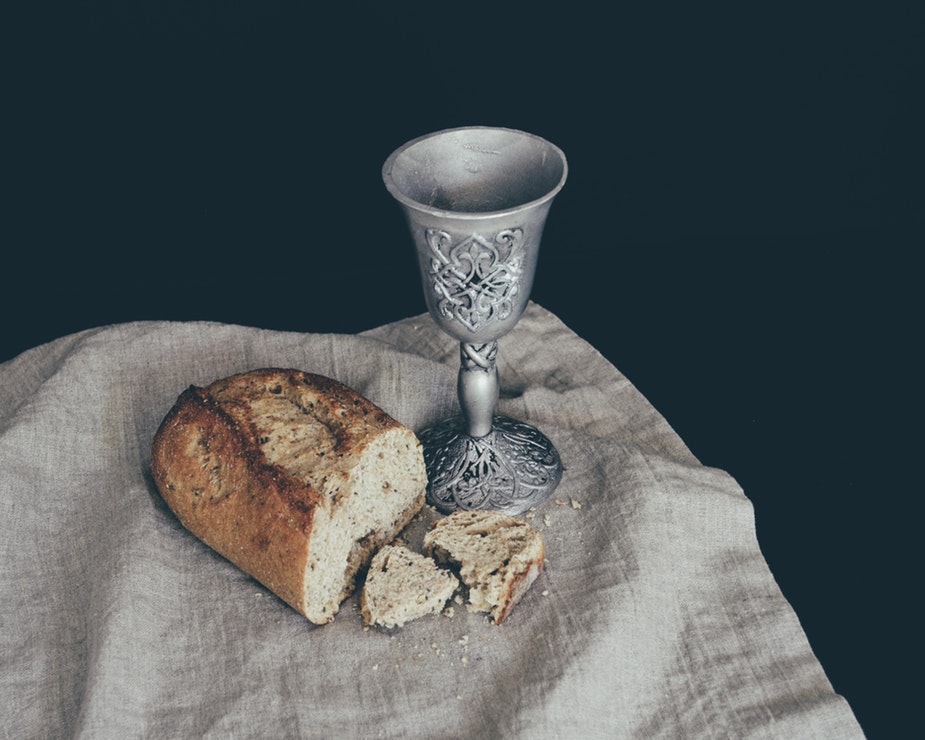
  • Jesus and the Last Supper. More than just a meal.

    photo-1520629716099-d147346eb224.jpeg

    Originally published April 13, 2017

    As part of Holy Week, Maundy Thursday is recognized this evening. It was the night in which Jesus ate the Last Supper with his disciples. The time in which Jesus died corresponded with the Jewish holiday of Passover. And the Last Supper was the first night of Passover. An annual dinner for Passover is held, called a Seder, which is the Hebrew word for “order.” In 3,500 years, rabbinical tradition and teaching helped to form the ceremony of the Seder.

    Some of these pieces were traced back to the original Passover. Others came in Jewish history from rabbinical traditions.

    Also, once the Israelites were in the land, and after the temple was built, this impacted Passover traditions. When you had the temple, the lambs were sacrificed at the temple. But what didn’t change was that people could only sacrifice lambs that were perfect.

    I think it’s worth spending so much time in talking about Passover because I think it can help give us a greater context and understanding for the events surrounding the death of Jesus.

    In the gospels, the time of the death of Christ revolves around the Passover. That’s not a coincidence! Jesus would be sacrificed at the time that was associated with sacrifice. Jesus had gone to Jerusalem for Passover. In Jerusalem, the city within the Roman Empire that was the epicenter of Jewish culture, thousands of lambs would have been slaughtered annually. Jewish people would have been coming in from all over the empire.

    We see many traditions of the Seder at the last Supper.

    Some of them are small things. In the gospel accounts, it talks about Jesus reclining at the table (Luke 22:14).

    Jesus wasn’t sitting in a la-z-boy. He was on a couch that he was lying on, that was a Seder tradition. They had been enslaved in Egypt but being able to lie down showed the freedom and security.

    Or when Jesus is alluding to his betrayer, he says in John 13:26, “It is he to whom I will give this morsel of bread when I have dipped it.” So when he had dipped the morsel, he gave it to Judas, the son of Simon Iscariot.

    Again, I know the mental image that most of you probably have when you read this. It’s hard to know precisely where in the Seder this is, but it seems that it’s probably referring to when you take Haroset which is made from apple, nuts, cinnamon. They weren’t eating the Last Supper at an Italian restaurant. They didn’t have a bowl of olive oil in the middle of the table. But all of the elements we see at the Last Supper are part of what you’d see in a traditional Seder.

    As part of the Seder, you’d take the unleavened bread…looks like a cracker. And you’d break the bread.

    Luke 22:19, “And he took bread, and when he had given thanks, he broke it and gave it to them, saying, “This is my body, which is given for you. Do this in remembrance of me.”

    For over a thousand years of Seder dinners, bread had been broken. Unleavened bread, just like the Israelite forefathers had eaten before fleeing from Egypt.

    The body of Jesus, given for you, given for your sins. Given for your forgiveness. And he says “do this in remembrance of me.”

    What more fitting words could you say at a Seder? A meal revolving around remembrance, about retelling the story of God saving his people by the blood of the lamb.

    Remembering what God has done. Remembering what Jesus has done. Remembering the sins that he’s redeemed you from. Remembering his body that he gave for you. Remembering his death that he died for you. Remembering the grace that he offers to you. Remembering his gospel.

    Luke 22:20 says, “And likewise the cup after they had eaten, saying, “This cup that is poured out for you is the new covenant in my blood.”

    The Seder dinner involves four glasses of wine. This seems to have been the second or third glass of wine in the meal, although there’s scholarly debate.

    But how profound it is. Wine drank in remembrance of the Passover. Jesus takes the wine, he blesses it, he says it is the new covenant in his blood, at the Seder dinner.

    It clearly points backwards to the blood of the Passover lamb, the blood that was put on the door posts. And it also points forward to the blood of Christ, shed for the forgiveness of sins. The blood of the true lamb.

    At the beginning of the gospel of John, when John the Baptist sees Jesus he says “Behold, the lamb of God who takes away the sin of the world.” Jesus is the true lamb of God. The lamb who took the penalty for sins. The one who was scarified for the salvation of God’s people.

    And by trusting in him and having faith in him, that puts the blood on the doorpost of your heart. On the first Passover, there would not have been a pardon for a person who didn’t put blood on the doorpost. It wasn’t that the blood saved them, God saved them. But to not put the blood on the door was to show that a person didn’t have faith in the Lord, didn’t trust in the Lord.

    When we take the Lord’s Supper, it’s not arbitrary. It’s not just using the random items that were around. It’s all symbolic. It takes symbols important to the first Passover, the first time God had delivered Israel, and it reminds of the new Passover, from the perfect sacrifice for sins.

    The Passover passage in Exodus 12:5 says that the lamb that was used had to be without blemish. Jesus is the ultimate lamb without blemish, a life lived in perfection.

    1 Corinthians 5:7 says “Cleanse out the old leaven that you may be a new lump, as you really are unleavened. For Christ, our Passover Lamb.”

    Thanks for reading! I’d love to hear what you think, and don’t forget to subscribe! 

    Josh Benner  has a Master of Divinity from Trinity Evangelical Divinity School. He has served churches in Minnesota and Illinois. He enjoys writing about faith and culture. He lives with his wife Kari in St. Louis.

  • Best of 2018. #2 Bring your fussy child to church day

    41399491_10156449724805900_4799046815594840064_n
    As 2018 comes to a close, I am sharing some of my top posts from this year. 

    Christian comedian John Crist shared this photo on Instagram this weekend that’s gone viral. The photo is a card from a church, apparently meant to be distributed to parents of fussy children, instructing them that a “connection team member” would assist them in leaving the sanctuary during worship.

    It’s a sad commentary on the American church that we shame parents for bringing their kids and their kids…acting like kids in a church service. (more…)