In the book of First Samuel, the Israelites had been in the Promised Land but had never had an earthly king. They hadn’t needed one. God had been their king who had led and provided for his people. In this passage, the people demand that they have a king to be like all the other nations. They’re warned that it will not ultimately be good for them but the people still insist.
Category: Commentary
-

Popular pastor says evangelicals are too concerned with winning
Atlanta based megachurch pastor Andy Stanley has a new book coming out titled “Not in it to win it: why choosing sides sidelines the church.”
From the description of the book:
“Is it possible to disagree politically and love unconditionally? The reaction of evangelicals to political and cultural shifts in recent years revealed what they value most. Lurking beneath our Bible-laced rhetoric, faith claims, books, and sermons is a relentless drive to WIN!
But the church is not here to win. By every human measure, our Savior lost. On purpose. With a purpose. And we are his body. We are not in it to win anything. We are in it for something else entirely. That something else is what this book is about.”
Umm…
We’re in the middle of a major cultural shift where numerous things have become mainstream which are antithetical to the gospel, and Andy Stanley wants to concern himself with evangelical Christians trying too hard to win?
A baker in Colorado had to go all the way to the Supreme Court to assert his right not to have to bake cakes for gay weddings. And he’s been harassed by LGBT groups ever since. This week, a handful of baseball players for the Tampa Bay Rays refused to wear pride themed jerseys and they’ve been vilified. Chick-fil-a is a constant source of ire because the company has evangelical Christian values and used to donate money to some causes who had the audacity to affirm traditional marriage. Charlotte, North Carolina lost the 2019 NBA All Star game because the state would not allow transgender people to use their preferred bathroom. And countless other examples.
There’s incredible venom and vitriol against any who stand up to these social pressures. The culture bullies anyone who stands up against these social issues and labels them as hateful and bigoted.
And Andy Stanley wants to say evangelicals are too focused on winning?
Evangelicals are just trying to stand up against being forced to comply with this paganism of our society.
Think of all of the major cultural institutions who have thrown in with the progressive left in the culture wars. The media, Hollywood, social media companies, higher education, healthcare, (increasingly) big corporations, professional sports, and on and on and on.
And so with all of these major institutions already being to the left, Stanley’s comments are easy to make about those on the right. It’s easy to say that too many evangelical Christians and leaders make too much of an idol of politics. But what’s hard to say is that there are too many liberal churches who have embraced abortion and the LGBT movement and that these beliefs are unbiblical.
I don’t find Stanley’s thesis to be particularly interesting or original. Russell Moore says similar things, Beth Moore, the Gospel Coalition, Tim Keller in his own cryptic way. I feel like I see a similar commentary every week. In the mainstream Christian media (Gospel Coalition, Christianity Today, Religion News Service), the call for political moderation only seems to go one way. It’s the argument that evangelicals are too conservaitve (and everyone else is just fine).
“Evangelicals are too political.” I think of churches where I’ve served and attended. And yes, more people were probably voting republican than democrat. But politics was not the focal point of what we were doing or what was being taught. And someone who believed differently about politics was still welcome (and many such people served these churches in meaningful ways).
Are there evangelical churches that are more politicized than the churches that I’ve attended and served? I’m sure there are.
But for every evangelical church that wants to conflate republicanism with the gospel, there are rainbow flag waving churches who clearly have cast their own political lot with the left. For those churches, not only are they too political, but they’re also out of step with the Bible. Where’s the call for these churches to repent?
Stanley argues “By every human measure, our Savior lost.” It is true that Jesus willingly gave up his life for his people. Jesus was unjustly arrested, tortured, and crucified. And he also never turned a blind eye to sin.
A common argument I hear is that evangelicals should be more loving to our neighbor. Stanley writes, “The moment our love for or concern for country takes precedence over our love for people in our country we are off mission.” I would argue that part of loving the country and the people within the country is wanting what’s best for both the country and its people and that the progressive cultural issues which dehumanize the unborn, which say that gender is a social construct are both bad for the country and for its people.
It isn’t loving to stand idly by. Yes, we can’t force people to live a certain way, but we should stand up to a society that is trying to force a contrary set of values upon us and everyone else. And one of the tools to combat these issues is politics, how we vote, who we vote for, and what we support.
I too would say that we should not make idols of politics or make saviors out of politicians. Politics and “winning” are not all important. But they are also not unimportant.
Thanks for reading! If you liked this post, please share and subscribe. -

The woman at the well. Studying John 4:1-9
In John 4, Jesus is on the move. He’s left Judea and is journeying into Galilee. He’s venturing out of Jewish territory.
John 4:1-2 says:
Now when Jesus learned that the Pharisees had heard that Jesus was making and baptizing more disciples than John 2(although Jesus himself did not baptize, but only his disciples), 3 he left Judea and departed again for Galilee. 4 And he had to pass through Samaria.
First thing I want to focus on is where the text says that Jesus had to pass through Samaria. That’s relevant because it will be the location of our story today. There actually more than one route Jesus could have taken. But where the text says Jesus had to pass through Samaria, it’s an indication of the divine will. Jesus had to go this way because it put him in a place to have a divinely appointed meeting.
John 4:5:
5 So he came to a town of Samaria called Sychar, near the field that Jacob had given to his son Joseph.
John makes a reference to Jacob and Joseph. In the Old Testament, Jacob is the father of the twelve tribes of Israel. And the region to which Jesus has traveled is an area of land that had been owned by Jacob and given to Joseph. We see that in Genesis 48. It’s this land to which Jesus has come.
The humanity of Jesus
John 4:6:
6 Jacob’s well was there; so Jesus, wearied as he was from his journey, was sitting beside the well. It was about the sixth hour.
When the text talks of Jesus being worn from his journey, it is a reminder to us that Jesus is human. During his earthly ministry, he experienced fatigue. We see him sleep. We see times where he eats and drinks. Times where he goes off by himself to be alone. He was fully man.
This verse tells us it was the sixth hour. That’s relevant to the story. In first century Jewish time keeping, the first hour was sunrise, so in it being the sixth hour, it’s around noon.
All of this is setting the scene for what follows.
John 4:7:
A woman from Samaria came to draw water.Background on Samaritans
We need some background.
When we were looking at passages in Isaiah over Christmas, one thing we talked a lot about was how Israel split into two kingdoms. You had a northern and a southern kingdom.
In 722 B.C, the northern kingdom was conquered by the Assyrians.
Thousands of the Jewish people from the northern tribes were deported from their land. The Assyrians procreated with the Israelites, and so you had an ethnic group who was half-Jewish and half-Assyrian.
That is the ethnic group which became known as the Samaritans. There are still Samaritans today. It’s a very small community of about 800 people and they mostly live in Israel. There are some very significant distinctions between Jewish people and Samaritans.
Samaritans do not believe the entire Old Testament is scripture. They only believe in the first five books: Genesis, Exodus, Leviticus, Numbers, and Deuteronomy.
Since they do not believe in the entire Old Testament, Jerusalem is not the sacred place to them that it is to other Jewish people. Because if all you have are the first five books, the Jewish people had not yet reached Jerusalem.
Instead, the sacred site of worship for the Samaritans then and now is Mount Gerizim. And actually, about half of present day Samaritans actually live there.
In the first century, there had been a lot of animosity between the two groups. About 160 years before Jesus had this interaction with the Samaritan woman at the well, a group of Israelite soldiers had destroyed the Samaritan temple at Mount Gerizim.
And there was later retaliatory attacks.
In John 8, when he’s being questioned, Jesus will be asked if he’s a Samaritan or has a demon (John 8:48), which essentially puts those two situations on the same plain.
The Samaritans were looked down upon. These two groups hated each other.
Within a generation of the life of Jesus, official Jewish teaching from their scholars ruled that Samaritans were inherently unclean and defiled.
In the Gospel of Luke, Jesus gives the Parable of the Good Samaritan. A lawyer is questioning Jesus about the command to love your neighbor as yourself. Jesus tells a parable about a man who had been severely beaten, left for dead. A priest and a levite both come by the man and stay on their journey, but it’s a Samaritan who sees the man, tends to him, sees that he gets taken care of. The Good Samaritan is the hero of the story.
It’s a spectacular picture of selflessness and love for your fellow man.
But when you understand that parable in the context of the hatred that existed between the Jews and the Samaritans, it makes the story all that much more striking.
I go into those details because the tensions will also color our passage this morning in John 4.
Give me a drink
So we return to the passage. The woman is coming to the well in the middle of the day. Unusual for her to be coming to the well alone and also at the hottest point of the day.
It was generally women who would come for water in the morning. The fact that she’s going at an off time alone suggests that she possibly doesn’t want to interact with others.
Jesus speaks to the woman at the end of verse 7 and says “give me a drink.”
Verse 8 adds the note that Jesus was by himself as his disciples had gone away into the city to buy food.
So Jesus asks for a drink. A Jew speaking to a Samaritan. Verse 9, the woman is taken aback. The Samaritan woman said to him, “How is it that you, a Jew, ask for a drink from me, a woman of Samaria?”
The verse ends with the parenthetical comment that Jews have no dealings with the Samaritans.
These are two groups who do not get along. As he often does in the gospels, Jesus is unconcerned with social customs or taboos.
We see Jesus touch lepers. We see him associating with sinners, with those on the margins.
Even within his band of disciples, he picks someone like Matthew who was a tax collector, a profession hated by Jews in the Roman world.
And here we see Jesus openly conversing with a woman in an ethnic group who was looked down upon.
So the woman asks how it is that he could ask her for a drink. But Jesus will flip the conversation.
Because the matter of ultimate significance in the story is not about her giving a drink to Jesus, it’s about the water he can provide.
Thanks for reading! If you liked this post, please share and subscribe!
-

D-Day 78 years later: the battle that was the beginning of the end of WWII
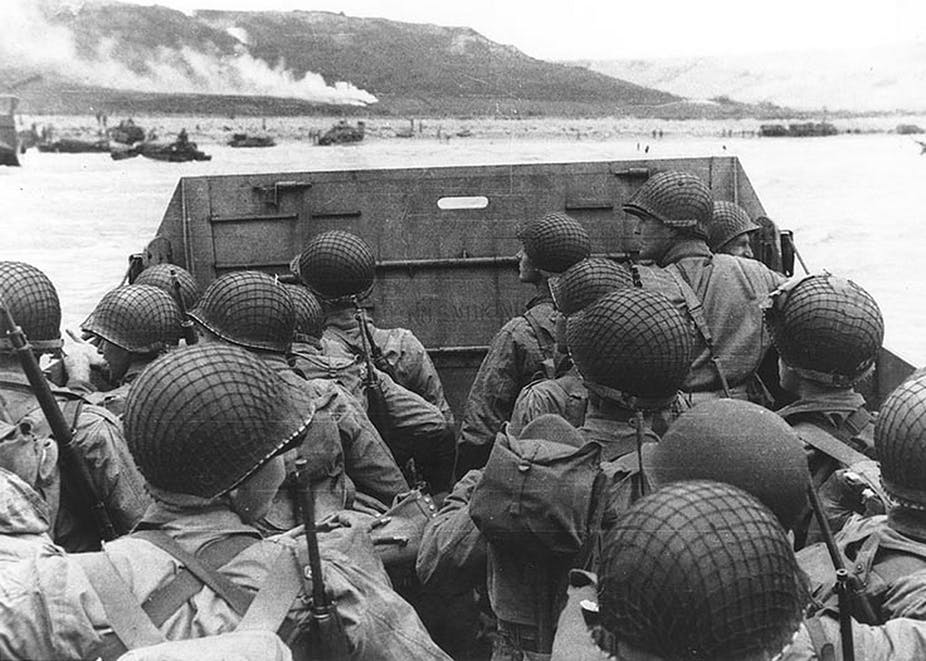
Today is the 78th anniversary of the Normandy invasion. Over 150,000 Allied forces took part in the invasion. Over a million men were part of the overall battle of Normandy. Thousands of ships and planes. Even trying to fathom the size of the operation is impossible to comprehend.
It remains the largest seaborne invasion in history. The strategic significance of the Normandy invasion was that it gave the Allied forces an entry point into continental Europe.
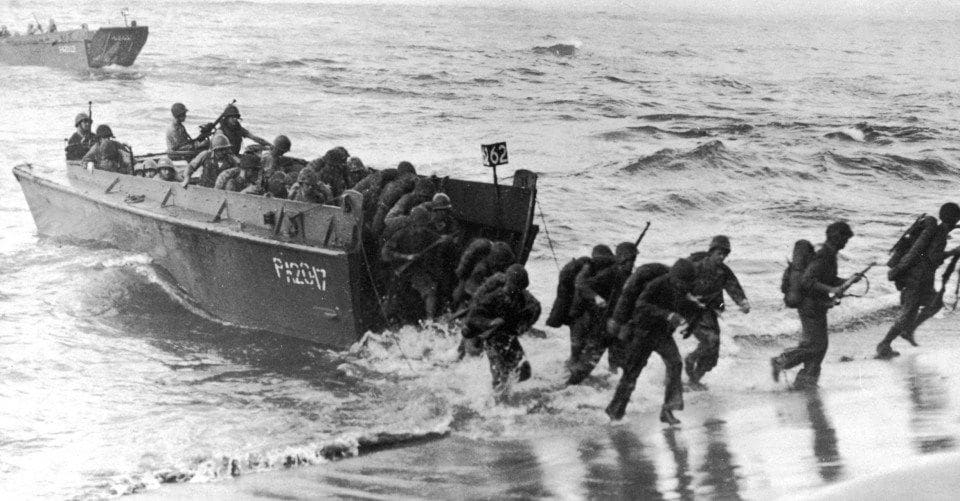
A lot of our mental images of what D-Day would have been like come from the opening sequence of the movie Saving Private Ryan. D-Day hero and Medal of Honor recipient Walter Ehlers used to tell people to multiply that scene by 60 to appreciate what it was actually like.
It’s truly unimaginable to think of what the first waves of American troops at Omaha beach faced. Overwhelming fire from the front, the left, and the right. As troops rode in on Higgins Boats, some of them were shot as soon as the doors dropped, killed or wounded before they ever made it to land.
Sadly, this year, there will be few in Normandy to commemorate the sacrifices and heroism due to concerns over coronavirus.
The older I get, I think the more I begin to appreciate what these men (and everyone who has fought to defend our freedom) went through. Not that I understand their experience, but to have an appreciation for how young these men were. To have a greater appreciation that everyone who dies in war is someone’s son, husband, brother, best friend. Most of the men who gave their lives on D-Day were younger than I am now. I’ve had the opportunity to live a longer life than they did when they were the ones who made the ultimate sacrifice for freedom.
I think of where I was in my late teens and early twenties. I think of where the generation of college kids is today. I see safe spaces in schools. I see people complain about “micro aggressions,” I see how easily offended our society is. These men had to go to war against Nazi Germany.
It’s two different worlds.
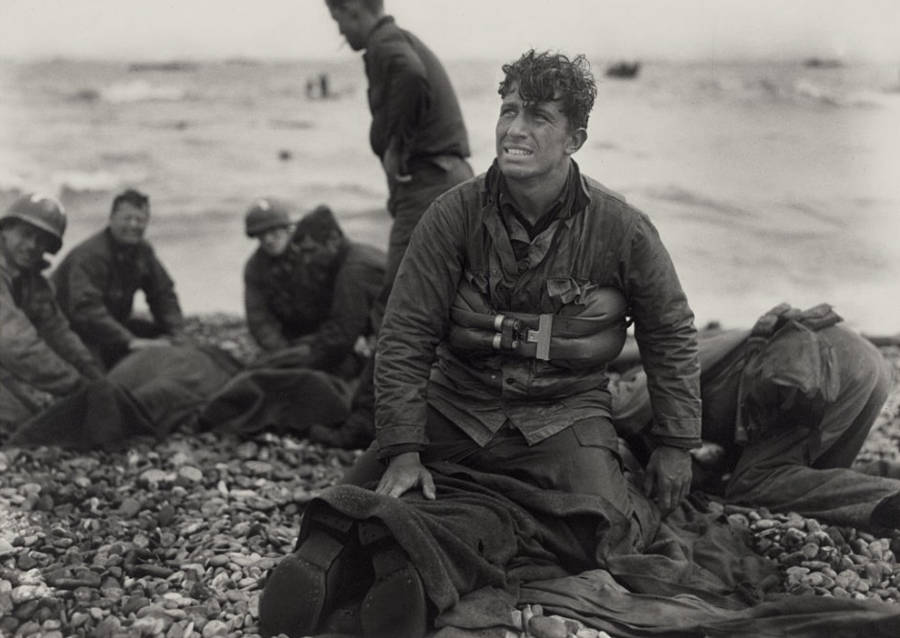
It strikes me that these events happened so long ago. Within the lifetime of my grandparents. In one sense, not so long ago, but in another sense, a totally different era. For those who participated in the invasion who are still alive, the youngest of them are in their 90s. I think of all the many decades of life that these men have had since that day.
The vast majority of their lives have come in the aftermath of D-Day and World War II. Last year, I went out of my way to listen to the stories of those who survived that day. Incredible stories. With the War on Terrorism, PTSD is a common subject that gets talked about. It wasn’t a focus then the way it is now. It’s interesting listening to these old men describing their experiences from a lifetime ago. The horrors that they saw. Some of them get emotional talking about it. But I think of how they’ve had to hold onto those horrible memories for a lifetime. I think about those things and it makes me appreciate the sacrifices even more. Because those who fight for our freedom don’t just fight a battle or a few battles, but they then have a lifetime of having to carry the burdens of their experiences.
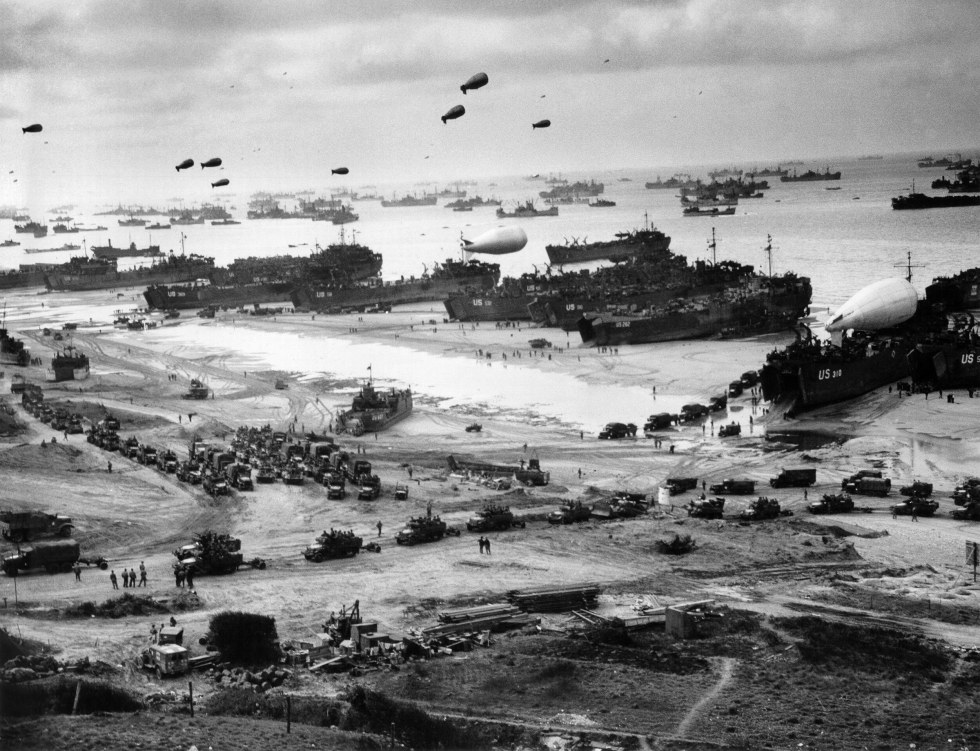
I think of the generation who fought in World War II. We call them The Greatest Generation. And they are. They had to survive the Great Depression and fight the most horrendous war the world has ever seen. And the greatness of the World War II generation isn’t just in those who fought overseas. It was a nationwide effort.
The war effort affected virtually every facet of American life. Companies shifted their manufacturing efforts to supporting the war and supplying the military. Maytag went from making washing machines to making parts for airplanes. Firestone Tires made artillery shells and aluminum containers for food transport. Products like sugar, butter, bacon, and cheese were rationed. As were penicillin and other medicines, along with rubber and certain types of metals. Materials for clothing such as silk and nylon were needed for uniforms. Everything went to supporting a cause that was so much bigger than any one person. And everyone’s contributions mattered.
It wasn’t the life this generation chose for themselves. It’s the circumstances that history forced them into. And they served and did their duty. I think of the things that we see as hardships in 2019. Life in America is great. And our lives are better because of this germination and what they fought for.

In America, President Roosevelt led the nation in prayer after the D-Day attack. I think of how hard people fight for separation of church and state. The president welcomed the entire nation to join him in prayer and then led that prayer.
My fellow Americans: Last night, when I spoke with you about the fall of Rome, I knew at that moment that troops of the United States and our allies were crossing the Channel in another and greater operation. It has come to pass with success thus far.
And so, in this poignant hour, I ask you to join with me in prayer:
Almighty God: Our sons, pride of our Nation, this day have set upon a mighty endeavor, a struggle to preserve our Republic, our religion, and our civilization, and to set free a suffering humanity.
Lead them straight and true; give strength to their arms, stoutness to their hearts, steadfastness in their faith.
They will need Thy blessings. Their road will be long and hard. For the enemy is strong. He may hurl back our forces. Success may not come with rushing speed, but we shall return again and again; and we know that by Thy grace, and by the righteousness of our cause, our sons will triumph.
They will be sore tried, by night and by day, without rest-until the victory is won. The darkness will be rent by noise and flame. Men’s souls will be shaken with the violences of war.
For these men are lately drawn from the ways of peace. They fight not for the lust of conquest. They fight to end conquest. They fight to liberate. They fight to let justice arise, and tolerance and good will among all Thy people. They yearn but for the end of battle, for their return to the haven of home.
Some will never return. Embrace these, Father, and receive them, Thy heroic servants, into Thy kingdom.
And for us at home — fathers, mothers, children, wives, sisters, and brothers of brave men overseas — whose thoughts and prayers are ever with them–help us, Almighty God, to rededicate ourselves in renewed faith in Thee in this hour of great sacrifice.
Many people have urged that I call the Nation into a single day of special prayer. But because the road is long and the desire is great, I ask that our people devote themselves in a continuance of prayer. As we rise to each new day, and again when each day is spent, let words of prayer be on our lips, invoking Thy help to our efforts.
Give us strength, too — strength in our daily tasks, to redouble the contributions we make in the physical and the material support of our armed forces.
And let our hearts be stout, to wait out the long travail, to bear sorrows that may come, to impart our courage unto our sons wheresoever they may be.
And, O Lord, give us Faith. Give us Faith in Thee; Faith in our sons; Faith in each other; Faith in our united crusade. Let not the keenness of our spirit ever be dulled. Let not the impacts of temporary events, of temporal matters of but fleeting moment let not these deter us in our unconquerable purpose.
With Thy blessing, we shall prevail over the unholy forces of our enemy. Help us to conquer the apostles of greed and racial arrogancies. Lead us to the saving of our country, and with our sister Nations into a world unity that will spell a sure peace a peace invulnerable to the schemings of unworthy men. And a peace that will let all of men live in freedom, reaping the just rewards of their honest toil.
Thy will be done, Almighty God. Amen.
Freedom isn’t free. Thank those who fought on that horrible day for our freedom.
Originally published June 6, 2019
Thanks for reading! I’d love to hear what you think, and don’t forget to subscribe!
-
Sermon: Follow me – John 21:15-25
For the final passage in the Gospel of John, how would you expect it to be written? A final prayer? A final miraculous sign from Jesus? A dramatic depiction of Christ ascending to heaven? We get none of that. It’s a simple passage where we see Jesus restoring Peter to his apostolic call and John testifying that he was a witness to Jesus.

