Josh Benner

Category: News

  • 10 of the biggest stories in American Christianity in 2018

    As 2018 comes to a close, I wanted to take a look back at some of the top stories impacting Christianity in 2018.

    1. The death of Billy Graham
    800px-Billy_Graham_bw_photo,_April_11,_1966

    Arguably the leading figure in American Christianity of the 20th century, evangelist Billy Graham died on February 21 at the age of 99.

    In an era when so many churches are rocked by sin and scandal, Billy Graham was respected by both Christians and non-christians for his integrity.

    In an era where sexual harassment is rampant in seemingly every sphere of life, Billy Graham vowed to never spend time alone with a woman who was not his wife, mother, or daughter.

    In an era where many of our most famous pastors live in mansions, Billy Graham vowed to not live lavishly.

    In an era where there is so much hype, Billy Graham didn’t exaggerate attendance figures at his crusades.

    In a Gallup poll of the most respected men in the world, Billy Graham made the top 10 a remarkable 50 times (read more).

    2. LGBT issues and the church

    The third anniversary of the SCOTUS decision on same-sex marriage in America came in June. One story that helps illustrate the conflict of the church an the culture is the story of Jack Phillips, the Colorado baker who famously refused to bake a cake for a gay wedding. In June, the Supreme Court ruled in favor of Phillips.

    In August, Phillips was again defending himself after a lawyer sought legal action against Phillips for refusing to bake a cake in honor of the lawyer (who’s transgendered) transition anniversary.

    3. Sex abuse scandal in the American Catholic Church 

    It’s been a rough few months for the Catholic Church in America, largely because of self-inflicted wounds. In July, the New York Times ran a cover story alleging sexual abuse of a Catholic seminarian perpetrated by Theodore McCarrick, a Catholic Cardinal, who had retired as the archbishop of Washington D.C. in 2006. Shortly after the Times story was released, McCarrick resigned as a cardinal. He’s the highest ranking American Catholic to  have been accused of abuse. But there were also Catholic leaders who say that they had heard of these allegations and reported them up the chain, prior to the July story.

    In August, Carlo Vigano, who had served as the archbishop nuncio to the United States (basically the Vatican ambassador to America) wrote that he had previously reported on McCarrick, as had Vigano’s predecessor. The abuses were swept under the rug.

    There were several stories about Vigano this summer. Vigano is a pretty credible person to be making those claims. Vatican gave smoke and mirrors. Pope Francis asked people to pray for the Catholic Church in these “attacks from the devil.”

    Chicago archbishop Blasé Cupich brushed off Vigano saying: “The pope knows we have a bigger agenda. We have to speak about the environment, about the poor, we have to reach out to people who are marginalized in society. We cannot be distracted at this moment,”

    The hits kept coming.

    In August, a Grand Jury Report came out in Pennsylvania, investigating eight of Pennsylvania’ diocese. They found evidence spanning decades of hundreds of priests allegedly sexually assaulting over a thousand children.

    When that report was released, Pennsylvania Attorney General Josh Shapiro talked about a “sophisticated cover up,” and claimed they even had evidence that the Vatican was aware of the cover up.

    Pennsylvania had been the former stomping grounds of Cardinal Donal Wuerl, who had succeeded McCarrick as the archbishop of Washington D.C. Wuerl had previously been archbishop of Pittsburgh and was one of the names named by Vigano. Wuerl resigned in October.

    In November, authorities in Houston raided the offices of Cardinal Daniel DiNardo, who’s the archbishop of the Houston-Galveston Catholic Dioceses. Being the archbishop of the fourth largest city in America is pretty significant, but DiNardo is also the President of the United State Conference of Catholic Bishops.

    The raid was related to the Houston diocese handling of sexual assault allegations against a local priest named Manuel La Rosa-Lopez.

    Next February, the Vatican is hosting a summit on these clerical abuses. This week, Blase Cupich (Mr. Environment) was tapped as one of the organizers for the summit. I was immediately skeptical of this selection.  In addition to talking about how the Pope had to focus on the environment (something he doesn’t’ control) rather than being troubled with an imploding sexual abuse scandal within the Catholic Church (something he does control), said they weren’t “going to go down a rabbit hole” on Vigano’s credible allegations.

    It all seems reactionary and slow to come. And my concern is that it still won’t fix the problems. People can try to dismiss these issues as being things that happened a long time ago, but when many of the higher ups within the church are being shown to have had knowledge (or in McCarrick’s case, to be the perpetrator), it remains a major crisis (read more).

    4. American pastor freed by Turkish government 

    14670831_1864891503742369_3139074937690175508_n
    Facebook

    October 12

    The Turkish government released American pastor Andrew Brunson after more than two years in custody.

    Brunson was arrested in the aftermath of a failed coup on the Turkish government and Turkish president Recep Tayyip Erdoğan.

    Brunson had nothing to do with the coup. At the time, he had been in the country for over 20 years serving as a pastor and was taken as a political prisoner.

    There had been several times over the past year where Brunson’s release seemed possible, but the Turkish government and courts were resistant. In July, Brunson was allowed to go on house arrest (read more).

    5. American missionary murdered on remote island
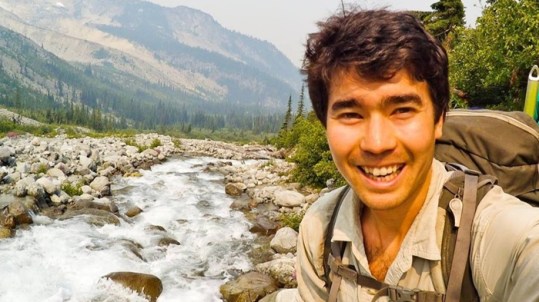
    85361.png

    November 17 
    An American missionary, John Allen Chau lost his life on a remote island off the coast of India last week.
    His goal was to share the gospel with the Sentinelese tribe. Their island is a protected area, which is isolated from the outside world. The tribe has also been violent towards visitors in the past.

    Chau attempted going to the island and the Sentinelese shot arrows at him, forcing Chau to flee. But he returned again, tragically losing his life (read more).

    6. Willow Creek sexual misconduct and fallout 

    A long investigative story from the Chicago Tribune reports on several allegations of moral filings from Bill Hybels, the founding pastor of Willow Creek, a suburban Chicago church which is one of the largest churches in America (read more).

    The article says:

    The alleged behavior included suggestive comments, extended hugs, an unwanted kiss, and invitations to hotel rooms. It also included an allegation of a prolonged consensual affair with a married woman who later said her claim about the affair was not true, the Tribune found.

    Hybles stepped down in April.

    More fallout continued into the summer. A New York Times story in August included further allegations. Willow Creek teaching pastor Steve Carter resigned.

    The leadership of Willow had been informed about these allegations four years ago and did very little to take them seriously. They did an internal investigation, but internal investigations can be hard when their is an internally vested interest in clearing someone of wrongdoing.

    Two days later, on August 9, Willow Creek’s other lead pastor and elder board resigned.

    Willow Creek was not the only church to have sexual assault issues come to light. In the continuing fallout of the #metoo movement, a separate move started within the church called #churchtoo.

    7. Megachurch pastor takes his own life 

    Andrew Stoecklein was pastor of Inland Hills Church in Chino, California. Stoecklein had struggled with depression and had taken leave from the church this summer (read more).

    8. Survey reveals pervasive heretical beliefs in the American Church 

    Working with Lifeway Research, Ligonier Ministries recently released the third installment of their “State of Theology” survey.

    Part of the goal is to find out what American Chrstians “believe about God, salvation, ethics, and the Bible.” Lifeway polled 3,000 Americans in the survey.

    The results were troubling.

    Many people in the poll have unbiblical views on moral issues. For instance, 46% of people ages 18-34 believe that gender is a matter of personal choice. 38% disagreed that abortion is a sin.

    But what is even more concerning than views on moral issues is views which are heretical. For the question, “Jesus is the first and greatest being created by God.” 78% agreed with that statement.

    Other key doctrines where people disagreed with Biblical teachings included undermining that humans have a sinful nature. 53% of respondents agreed with the statement “Everyone sins a little, but most people are good by nature.”

    51% of respondents believed that a person can be saved who follows a religion besides Christianity. 58% believed that “worshipping alone or with one’s family is a valid replacement for regularly attending church” (read more).

    9. Beth Moore calls out misogyny within Evangelical Christianity 

    Over the last generation, Beth Moore has been one of the most prominent female leaders and speakers in American Evangelical circles. Her Bible studies are hugely popular among women. She’s the founder of Living Proof Ministries, a ministry for women based out of Houston.

    She’s not a pastor. She’s an author and speaker.

    Although she’s popular in Evangelical circles, she’s not universally supported. Some of the criticisms of her theology include that it’s a prosperity gospel or that it’s intellectually light theology.

    In writing, Moore talks about some of the misogynistic treatment she’s received over the years. Considering the divergent opinions within Christian circles on women in leadership, Moore’s letter talks about how she had chalked up some of her treatment as being a byproduct of deeply rooted Biblical convictions among sincere Christians with whom she simply disagreed.

    From the letter:

    I accepted the peculiarities accompanying female leadership in a conservative Christian world because I chose to believe that, whether or not some of the actions and attitudes seemed godly to me, they were rooted in deep convictions based on passages from 1 Timothy 2 and 1 Corinthians 14.

    As Moore continues to elaborate, she talks of coming to a realization that it wasn’t simply about differences in opinion.

    I came face to face with one of the most demoralizing realizations of my adult life: Scripture was not the reason for the colossal disregard and disrespect of women among many of these men. It was only the excuse. Sin was the reason. Ungodliness.

    Our culture largely disrespects women. The #metoo movement showed the rampant sexual harassment and assault in Hollywood. As the movement spread, more and more areas of life came to light that were stained by the mistreatment of women. The #churchtoo movement showed further examples of assault and harassment from within the church. Obviously we knew that there were issues but these movements have created a national dialogue.

    While Moore’s post dealt more with misogyny than sexual assault, both are a reflection of a culture which far too often devalues women.

    10. Death of Eugene Peterson

    October 22

    Eugene Peterson, pastor, professor, and writer passed away today at the age of 85 after battling dementia and heart failure.

    Peterson authored 35 books in his lifetime. The most popular among them was The Message, which has sold over 20 million copies. The Message is a paraphrase translation which attempts to capture the idea of a Biblical verse and not necessarily the exact wording (read more).

    Thanks for reading! I’d love to hear what you think, and don’t forget to subscribe! 
    Josh Benner is the associate pastor at Cornerstone Evangelical Free Church in Fergus Falls, Minnesota and has a Master of Divinity from Trinity Evangelical Divinity School. He enjoys writing about faith and culture. He lives with his wife Kari in Minnesota.

    Let’s connect!
    Facebook
    Twitter
    Instagram

  • Remembering our 41st president: George H.W. Bush

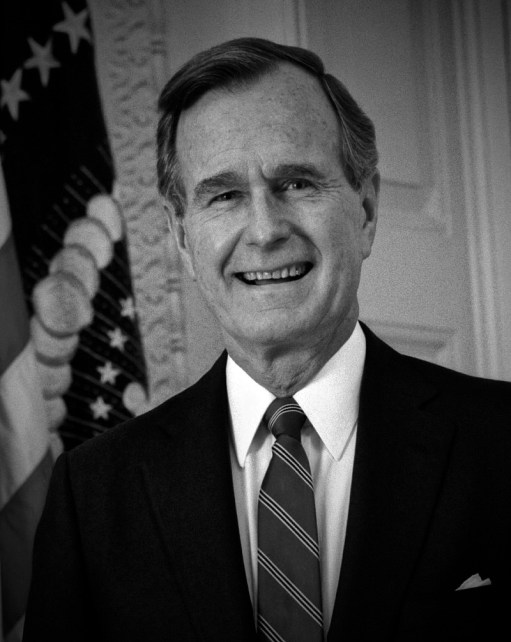
    800px-George_H._W._Bush_crop 2.jpg
    I do not mistrust the future. I do not fear what is ahead. For our problems are large, but our heart is larger. Our challenges are great, but our will is greater.
    -George H.W. Bush

    It’s a National Day of Mourning as America’s 41st president is laid to rest.

    Anyone who knows me knows that the presidency has always fascinated me. Regardless of what we might think about a particular president, we spend years seeing them in the news. They sign legislation that impacts future generations. They make court appointments that influence legal decisions for years to come. They make decisions on foreign policy that impact America’s relations with other nations. I do think the presidency should be respected. It’s often been said that one of the greatest strengths of the American political system is the peaceful transition of power when one presidency ends and another begins.

    He was elected president in 1988, after spending two terms as vice president under Ronald Reagan. That was the first time a sitting vice president had been elected president in over 150 years when Martin Van Buren was elected president in 1836. Like George H.W. Bush, Van Buren was also a one-term president.

    It’s perhaps a blessing and a curse to be in that situation: people who didn’t like your predecessor won’t like you. There’s a shadow over your administration from your predecessor. People who liked that person might judge you when compared to them, and since it was their popularity that may have helped you, it’s hard to go up.

    At the same time, you want to be your own president. None of this is to undermine the accomplishments of our 41st president. Even before becoming president, Bush had already had an illustrious career.

    He enlisted in the navy on his 18th birthday and served as a fighter pilot in World War II. After the war, he moved to Texas and became an oil tycoon. He entered politics in the 60s, being elected to the House of Representatives from Texas in 1967. In 1971, he became the United States ambassador to the United Nations. In 1973, he became the chairman of the Republican National Committee. He was a liaison to China. Bush ran for president in 1980. When the republican nomination was unwinnnable, eventual winner Ronald Reagan brought Bush onto the the ticket where Bush served as vice president from 1981-1989.

    As president, George Bush saw the Berlin Wall come down in 1989 and Germany was reunified in 1990. He was president when he Soviet Union dissolved in 1991.

    He signed the Americans with Disabilities Act which made discrimination illegal in employment, public accommodations, and transportation. He signed the Clean Air Act in 1990. He was Commander-in-Chief during the Persian Gulf War. He appointed Clarence Thomas to the Supreme Court. He helped negotiate the North American Free Trade Agreement, which Bill Clinton later signed into law. He passed a civil rights bill, a farm bill, and a crime bill.

    President Bush had promised “read my lips, no new taxes” when running for president. But deficits made tax increases inevitable during his tenure. That and third party candidate Ross Perot were contributing factors to his defeat by Bill Clinton in 1992.

    An American hero, a public servant, a leader of the free world.

    Thanks for reading! I’d love to hear what you think, and don’t forget to subscribe! 
    Josh Benner is the associate pastor at Cornerstone Evangelical Free Church in Fergus Falls, Minnesota and has a Master of Divinity from Trinity Evangelical Divinity School. He enjoys writing about faith and culture. He lives with his wife Kari in Minnesota.

    Let’s connect!
    Facebook
    Twitter
    Instagram


  • President of US Conference of Catholic Bishops has office raided by investigators

    1024px-CoCathedralsoutheastHoustonTexas
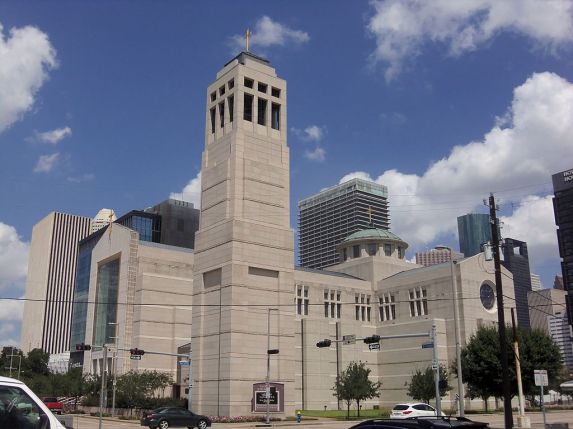
    Sacred Heart Co-Cathedral in Houston. Photo courtesy of Wikimedia Commons

    The sexual abuse scandal is the never ending story.

    This week, authorities in Houston raided the offices of Cardinal Daniel DiNardo, who’s the archbishop of the Houston-Galveston Catholic Dioceses. Being the archbishop of the fourth largest city in America is pretty significant, but DiNardo is also the President of the United State Conference of Catholic Bishops.

    The raid was related to the Houston diocese handling of sexual assault allegations against a local priest named Manuel La Rosa-Lopez.

    It’s been a rough few months for the Catholic Church in America, largely because of self-inflicted wounds. In July, the New York Times ran a cover story alleging sexual abuse of a Catholic seminarian perpetrated by Theodore McCarrick, a Catholic Cardinal, who had retired as the archbishop of Washington D.C. in 2006. Shortly after the Times story was released, McCarrick resigned as a cardinal. He’s the highest ranking American Catholic to  have been accused of abuse. But there were also Catholic leaders who say that they had heard of these allegations and reported them up the chain, prior to the July story.

    In August, Carlo Vigano, who had served as the archbishop nuncio to the United States (basically the Vatican ambassador to America) wrote that he had previously reported on McCarrick, as had Vigano’s predecessor. The abuses were swept under the rug.

    There were several stories about Vigano this summer. Vigano is a pretty credible person to be making those claims. Vatican gave smoke and mirrors. Pope Francis asked people to pray for the Catholic Church in these “attacks from the devil.”

    Chicago archbishop Blasé Cupich brushed off Vigano saying: “The pope knows we have a bigger agenda. We have to speak about the environment, about the poor, we have to reach out to people who are marginalized in society. We cannot be distracted at this moment,”

    The hits kept coming.

    In August, a Grand Jury Report came out in Pennsylvania, investigating eight of Pennsylvania’ diocese. They found evidence spanning decades of hundreds of priests allegedly sexually assaulting over a thousand children.

    When that report was released, Pennsylvania Attorney General Josh Shapiro talked about a “sophisticated cover up,” and claimed they even had evidence that the Vatican was aware of the cover up.

    Pennsylvania had been the former stomping grounds of Cardinal Donal Wuerl, who had succeeded McCarrick as the archbishop of Washington D.C. Wuerl had previously been archbishop of Pittsburgh and was one of the names named by Vigano. Wuerl resigned in October.

    And now we come to Houston. It’s possible that DiNardo knew nothing of the current allegations within his diocese. But it doesn’t look good that it’s a question that even has to be asked of the president of the US Conference of Catholic Bishops when there’s already a major scandal.

    What has been seen is that higher ups have known about abuses and covered up abuses. Which gets at a major crux of the problem: then who is going to actually work to fix the problems?

    Because the Catholic Church continues to fail at fixing the problem. And some (not all) Catholics are apologists and want to talk about all of the steps that are being taken. Grand conspiracies to cover up child sexual abuse is an abomination. In America, it’s taking grand juries and local law enforcement to get to the truth, because the Catholic Church is failing.

    Next February, the Vatican is hosting a summit on these clerical abuses. This week, Blase Cupich (Mr. Environment) was tapped as one of the organizers for the summit. I was immediately skeptical of this selection.  In addition to talking about how the Pope had to focus on the environment (something he doesn’t’ control) rather than being troubled with an imploding sexual abuse scandal within the Catholic Church (something he does control), said they weren’t “going to go down a rabbit hole” on Vigano’s credible allegations.

    It all seems reactionary and slow to come. And my concern is that it still won’t fix the problems. People can try to dismiss these issues as being things that happened a long time ago, but when many of the higher ups within the church are being shown to have had knowledge (or in McCarrick’s case, to be the perpetrator), it remains a major crisis.

    Thanks for reading! I’d love to hear what you think, and don’t forget to subscribe! 
    Josh Benner is the associate pastor at Cornerstone Evangelical Free Church in Fergus Falls, Minnesota and has a Master of Divinity from Trinity Evangelical Divinity School. He enjoys writing about faith and culture. He lives with his wife Kari in Minnesota.

    Let’s connect!
    Facebook
    Twitter
    Instagram

  • American missionary killed: the cost of the gospel, the necessity for wisdom

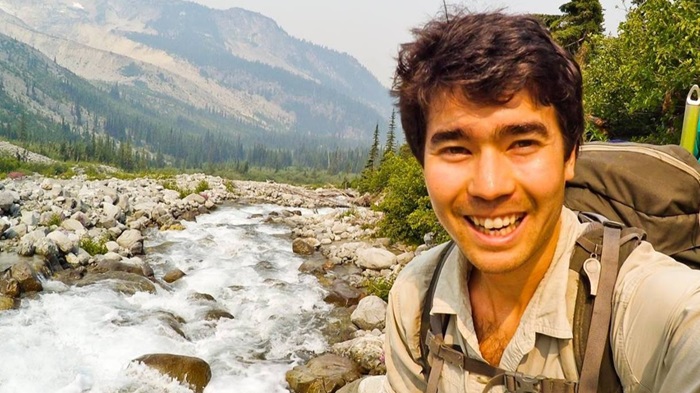
    85361.png.jpeg
    An American missionary, John Allen Chau lost his life on a remote island off the coast of India last week.
    His goal was to share the gospel with the Sentinelese tribe. Their island is a protected area, which is isolated from the outside world. The tribe has also been violent towards visitors in the past.

    Chau attempted going to the island and the Sentinelese shot arrows at him, forcing Chau to flee. But he returned again, tragically losing his life.

    I’m conflicted about this story. It is certainly very unfortunate that this man lost his life. I appreciate that he had a desire to go somewhere and share the love of Jesus with people who didn’t know it. (more…)

  • GoFraudMe – Viral story of homeless man using his last $20 to buy gas was an elaborate scam

    171123233706-kate-mcclure--johnny-bobbitt-exlarge-169.jpg
    This story is a fantastic illustration of the power of greed.

    If they had just split the money, no one would have ever known!

    I remember hearing about this when it happened. A nice story of a woman running out of gas in a dangerous part of Philadelphia. A kind hearted, homeless veteran saw her plight and went to get gas for her, spending the last $20 he had to buy gas for the lady.

    And so the lady setup a GoFundMe account to raise money in order to help get this selfless veteran back on his feet.

    And so people donated to the GoFundMe. A lot of people donated! 14,000 people donated. More than $400,000 was raised to help this man get back on his feet.

    But things took a turn earlier this year.

    The homeless man (Johnny Bobbitt) sued the woman and her boyfriend (Kate McClure and Mark D’Amico) for not giving him the proceeds of the GoFundMe campaign.

    At the time, people had mixed opinions. “You can’t just give a drug addict hundreds of thousands of dollars,” to “it’s his money.” There were allegations of the couple using some of the funds for themselves. GoFundMe promised to make it right.

    And then today, the couple AND Bobbitt are being charged with theft by deception. After an investigation, the authorities claim that the whole thing was made up! If convicted, they face up to 5-10 years in prison, according to CNN.

    GoFundMe has said they’ll refund the money that people donated. While the average person spent just $28 in this scam, I feel that what these people did is just as bad as robbing someone. They took people’s money by creating a ruse that preyed upon the good nature of people.

    GoFundMe is not above reproach. It’s not a perfect site. And there are certainly frivolous things which raise money on that site. But it’s also been a life changing blessing to many people in need. And this scam hurts the credibility of GoFundMe.

    It’s poetic justice that people who scammed others also tried to scam each other. Like I said in the beginning, had they just split the money amongst themselves, no one would have known!

    Thanks for reading! I’d love to hear what you think, and don’t forget to subscribe! 

    Josh Benner is the associate pastor at Cornerstone Evangelical Free Church in Fergus Falls, Minnesota and has a Master of Divinity from Trinity Evangelical Divinity School. He enjoys writing about faith and culture. His hobbies include working out, watching sports, and photography. Josh and his wife Kari live in Minnesota.

    Let’s connect!
    Facebook
    Twitter
    Instagram