I was struck by recent comments from Brian Stelter on CNN. In a conversation with Pamela Brown, they criticized the new Twitter-alternative, Parler.
Stelter said: “People are going more and more into their own echo chambers. More and more into their own bubbles, especially Trump voters. There’s this new social media app called Parler getting a lot of attention. Because Conservatives are leaving – saying their leaving Twitter and Facebook, and going off to Parler because they believe Parler is a safer space for them. What we’re seeing is even more of a bunker mentality from right wing media, and ultimately that is not good for the country.
Brown goes on to call that a “threat to democracy.”
I think that’s all very rich. You have a progressive news network criticizing Conservatives for going into echo chambers. They need to look in a mirror. I love that they want to say this is “not good for the country,” when people are making an exodus for apps like Parler because of progressive liberalism, its influence on tech, and its crackdowns on free speech. So then what is good for the country? A nation where the only discourse which is acceptable is what progressives deem worthy? That’s great for a free society and for democracy.
I’ve heard progressives justify the censorship of big tech as that simply being the free market at work. Well so are apps like Parler and Rumble. That’s the market correcting itself.
Our society has become an echo chamber for progressive thought. They control the mainstream media. They overwhelmingly control higher education and public schools. Liberals control Hollywood (how many outspoken Conservative actors can you name). The sports industry has gone woke. And so has tech. Social media platforms who were created as platforms which once promoted free speech now have political agendas.
Don’t get me wrong. Echo chambers are a bad thing. That’s why I regularly get my news from a diverse array of news sources such as the New York Times, Washington Post, the Wall Street Journal, NPR, BBC, the Federalist, and Daily Wire. And while they’re not a good thing, all people, regardless of political belief can be susceptible of falling into echo chambers. That’s why I value having friends who have a diverse array of opinions.
People love to attack the “right wing conspiracies,” but why does no one question the conspiracy theories of the left? We went four years hearing how Trump colluded with the Russians and how Trump stole the 2016 election. People mock the right for questioning this election, but the left was questioning the integrity of the process before the election happened. My point? Both sides can be capable of echo chambers and conspiracies.
But creating an account on Parler does not mean you’re doomed to fall down that rabbit hole.
Stelter and Brown can call apps who do promote free speech to be threats to democracy but what they really are is threats to the power of progressivism in controlling what people see and think.
No, people are not going to Parler just to spread conspiracies. But not all stories which are censored on Twitter and Facebook are objectively false, and people don’t want platforms to dictate what they can post. Secondly, as these sites increased their crackdown of opposing views this election cycle, I think many people have signed up for alternative platforms as a hedge against being kicked off of Facebook and Twitter (I’m not saying I think it will come to that).
You can follow me on Parler @Joshbenner or on Twitter @JoshBennerBlog
Again Jesus spoke to them, saying, “I am the light of the world. Whoever follows me will not walk in darkness, but will have the light of life.”
Prayer
Our heavenly Father,
We thank you for this day.
Lord with all of the cases of Covid going around town right now, we continue to praise you for the health of this church. And Lord, we continue to pray for that.
We pray for people in our community who have been afflicted by this virus. We pray for their recovery.
Lord, we continue to pray for the development of a vaccine.
But in that, may we be pointed to the gospel. That there is one true plague on our world: human sin and there is only one remedy for that. The blood of the Lord Jesus.
Lord, we pray for Mila.
Lord, we pray for our time in your Word this morning. May you lead our hearts and minds to the praise of your glorious grace. In Jesus’ name, amen.
Introduction
In the Bible, there is this contrast between light and darkness.
Light is good. You can see in the light.
Darkness is sinister. Darkness is where bad things happen.
I read an article that said 11% of adults have a fear of the dark. Another article mentioned that fear of the dark is common in children.
I thought the article should have begun “fear of the dark is common in children…and in adults who tell the truth.”
Because fear of the dark is not so much about a fear of the dark. It’s a fear of the unknown.
No one walks down in an alley at night and is thinking “This is great. I love this.”
Nighttime is when most crimes happen.
It’s when virtually all murders in horror movies occur.
No one goes camping and hears some animal and doesn’t automatically assume it’s a bear that’s about to eat you.
The unknown, the unfamiliar, the things unseen. All of it makes a fear of the dark rational.
And so where I want to begin this morning is with a brief survey of light and darkness in the Bible.
And I do this because we’ve all heard the verse “I am the light of the world.”
But when we look at it against the backdrop of the Old Testament, I’m trying to bring some of the force that it would have had to its original audience.
First place to start. We see light in creation.
Opening verses of Genesis:
In the beginning, God created the heavens and the earth. 2 The earth was without form and void, and darkness was over the face of the deep. And the Spirit of God was hovering over the face of the waters.
3 And God said, “Let there be light,” and there was light. 4 And God saw that the light was good. And God separated the light from the darkness. 5 God called the light Day, and the darkness he called Night. And there was evening and there was morning, the first day. (Genesis 1:1-5)
Throughout history, many of the world’s religions have worshipped the sources of light. Pgan religions have had sun gods, moon gods. But the Bible begins with Lord God showing his dominion over light itself.
The first words of the Lord in the Bible are “let there be light.”
It’s what God begins his creation with.
During the Israelite wanderings, God uses a pillar of light to guide the Israelites in the desert.
Exodus 13:20-21: the Lord went before them by day in a pillar of cloud to lead them along the way, and by night in a pillar of fire to give them light, that they might travel by day and by night. 22 The pillar of cloud by day and the pillar of fire by night did not depart from before the people.
So there we see the fire and light associated with God’s presence with his people.
And that’s especially significant when Jesus says that he is the light of the world.
Because in our passage in chapter 8, Jesus is still speaking at the Feast of Tabernacles. And as we’ve said numerous times, part of the purpose of this feast was to commemorate the Israelite wanderings as they journeyed to the Promised Land.
The pillar of light and fire was a powerful symbol.
Light at the feast of tabernacles
And at the feast of Tabernacles itself, light was a symbolized in a meaningful way.
Towards the end of the first day of the Feast of Tabernacles, massive torches were lit.
They did it on the Temple Mount, which was the highest point in Jerusalem.
They had four lamp stands and each had four bowls that they would fill with oil.
I think of it like the Olympic torch.
It was said that this light lit up all of Jersuaelm. That may be an overstatement. But nevertheless, there was tremendous brightness created from this fire.
It’s not known if those lamps were still burning or if the fire had gone out when Jesus spoke these words, but the imagery was still fresh in people’s minds when Jesus stood up and said
I am the light of the world.
It’s a well known verse to Chrisitans. But as we continue, I want to focus on a few images of light in the Old Testament that I think help give meaning to Jesus’ words.
Light has a great symbolic richness in the Old Testament.
And I think it will be very helpful to take a few moments and go over this.
For starters, in the Old Testament, light is associated with God himself.
Psalm 27:1:1 The Lord is my light and my salvation; whom shall I fear? The Lord is the stronghold of my life; of whom shall I be afraid?
Light is given as a symbol of the Word of God, the scriptures.
119:105:
105 Your word is a lamp to my feet
and a light to my path.
Then again in Psalm 119:130:
130 The unfolding of your words gives light;
it imparts understanding to the simple.
Light is a symbol of goodness and righteousness. This goes back to creation. God saw that the light was good.
Light is also seen as a sign of goodness in contrast to darkness. In the Bible, light is good, darkness is bad.
Proverbs 4:19:
19 The way of the wicked is like deep darkness;
they do not know over what they stumble.
Darkness is seen as apocalyptic judgment and God withdrawing his presence.
Isaiah 13:9-10:
9 Behold, the day of the Lord comes,
cruel, with wrath and fierce anger,
to make the land a desolation
and to destroy its sinners from it.
10 For the stars of the heavens and their constellations
will not give their light;
the sun will be dark at its rising,
and the moon will not shed its light.
In the Old Testament, there is a significant link between light and the temple.
As we’ve said umpteen times in our study of John, the temple represents the presence of God with his people.
And the temple was a place of light.
That even goes to the design of the temple.
It was built facing the east. Towards the sunrise.
Lamps were prominent in the temple.
Exodus 25:37:
You shall make seven lamps for it. And the lamps shall be set up so as to give light on the space in front of it.
At our church, when no one is here, we shut the lights off.
But in the temple, the lights were meant to continually burn.
Leviticus 24:1-2: The Lord spoke to Moses, saying, 2 “Command the people of Israel to bring you pure oil from beaten olives for the lamp, that a light may be kept burning regularly.
Most translations say “a light may be kept burning continually.”
They kept the light burning in the temple. A symbol of God’s light.
Light can be a symbol of glory.
Isaiah 60:19 talks of the light which the Lord brings. It’s a picture of final triumph.
19 The sun shall be no more
your light by day,
nor for brightness shall the moon
give you light;
but the Lord will be your everlasting light,
and your God will be your glory.
This same idea is picked up in Revelation 22, the Bible’s final chapter which again talks of no need for sun or moon in the New Heavens and the New earth. God’s glory itself is the light of heaven.
Revelation 22:5: And night will be no more. They will need no light of lamp or sun, for the Lord God will be their light
Let’s tie this all together.
You have light associated with God, with his word, with his righteousness, with the temple, and with the divine glory. And we see all of these in the opening chapter of John’s gospel.
Jesus is all of those things. Light is associated with God. Jesus himself is God.
John 1:1-2: In the beginning was the Word, and the Word was with God, and the Word was God.
And Jesus is also himself the Word of God.
Same text.
Jesus is the word who was in the beginning, who was God and is God.
John 1:14 says that the Word became flesh.
Jesus is the true word o fGod.
I talked about light and righteousness.
We see the connection of Jesus and his righteousness in John 1:4-5: In him was life, and the life was the light of men. 5 The light shines in the darkness, and the darkness has not overcome it.
Jesus is the light that shines in the darkness of a sinful world.
And Jesus is also the temple.
Same verse in the opening of John. John 1:14:
And the Word became flesh and dwelt among us
And as we’ve discussed before, but just as a reminder, the word for “dwelt” in 1:14 in Greek literally means “tabernacled” or “pitched a tent” among us.
And so it has a much deeper meaning than that Jesus simply came into the world. But that Jesus is God who took on flesh in order to be the literal tabernacle, the literal temple among us, the literal presence of God among us.
Lastly, Jesus himself is the divine glory. Same verse. John 1:14:
And the Word became flesh and dwelt among us, and we have seen his glory, glory as of the only Son from the Father, full of grace and truth.
Man is not glorious, but Jesus is. Jesus displays his glory during his ministry and makes known the glory of God. Jesus enables us to come before God and to be reconciled to God.
Jesus is God, he is the word of God, who displays the righteousness of God. And he is the temple of God who displays the glory of God.
We also see light in the Old Testament associated with the Messiah and his presence in the world.
Isaiah 9:2:
2 The people who walked in darkness
have seen a great light;
those who dwelt in a land of deep darkness,
on them has light shone.
Jesus will apply that verse to himself at the beginning of his ministry in the Gospel of Matthew.
He is the great light that has come into a dark world.
And it is because Jesus is all of this and more that he could stand up at the temple in Jerusalem and proclaim: I am the light of the world. Whoever follows me will not walk in darkness, but will have the light of life.
Jesus’ I am statement doesn’t introduce the idea of Jesus as the light, and it’s not the final passage in John’s Gospel – or in John’s other Biblical writings – where he’ll touch on the idea of the light that is in God and in Christ.
But this passage is the high point of that theme.
Jesus is the light of the world.
So let’s take a look at that statement word for word.
I am
That in itself is a claim of divinity.
In John’s Gospel, Jesus makes seven statements which are known as the “I am statements.”
We covered the first of these back in July when Jesus said “I am the bread of life.” This week’s statement is the second.
In these statements, Jesus is making revelations about himself, his ministry, and his mission in the world.
When Jesus says “I am,” he’s referring back to Exodus 3, when God reveals himself to Moses at the burning bush.
13 Then Moses said to God, “If I come to the people of Israel and say to them, ‘The God of your fathers has sent me to you,’ and they ask me, ‘What is his name?’ what shall I say to them?” 14 God said to Moses, “I am who I am.” And he said, “Say this to the people of Israel: ‘I am has sent me to you.’ ”
Jesus says: I am the light of the world.
He’s not A light of the world.
He’s THE light of the world.
There is no other light. There is no other goodness. There is nothing else which exposes the darkness of sin, of fallen humanity, and of our own hearts.
It’s yet another reason why you cannot compartmentalize Jesus the savior from Jesus the man from Jesus the teacher from Jesus the Lord.
It’s only because he is God that he can be the light.
A great teacher cannot be the light of the world.
Plato said a lot of great things. He didn’t claim to be the light of the world.
Buddha had an interesting philosophy. It wasn’t that he was the light of the world.
Gandhi was one of the most influential leaders in modern history. He never said he was the light.
Jesus did. It’s because of who he is he can say it.
For anyone else to say they’re the light of the world, they’d be mad.
They’d be self-aggrandizing.
But it’s because Jesus is God, the word of God, the righteousness of God, the temple of God, and the glory of God that he can say to a dark world that he is the light.
Also notice that he says that he is the light of the world. He is not just the light of the Israelites, he’s not the light of Jerusalem. He is the light of the world. The gospel is for the whole world. The salvation that he brings is for the whole world. The mission he came for was for the whole world.
Jesus brings a message of life to a dead world because he is the light in a dark world.
He is the light.
There is no other source.
Back in our verse. Jesus says: Whoever follows me will not walk in darkness, but will have the light of life.”
In 1954, a navy pilot named Jim Lovell – who would later become famous as the commander of the failed Apollo 13 mission – was on a training flight near Japan. In the air, some of his instruments failed during the flight.
He was in darkness.
The lights shorted on his instrument panel.
More darkness and he didn’t know the direction he needed to fly in order to get back to his aircraft carrier.
Lovell was led back to shore by the glow of phosphorescent algae which glowed. In the wake of the ship, the algae were stirred up. In the darkness, it was that light which led him back to safety.
When you’re in the darkness, you need light.
And the Bible teaches us that the whole world is sinful and in darkness.
But the issue is that even though there is darkness in the world, the world doesn’t want light.
Jesus makes this pronouncement in chapter 3. This is the judgment: the light has come into the world, and people loved the darkness rather than the light because their works were evil.
While it’s true that the way to find our way in the darkness is to look to the light, what this verse tells us is that the world often doesn’t want the light.
As we’ve talked about the dangers of darkness and the benefits of the light, the world hates the light because light exposes.
Darkness allows us to hide.
Darkness allows us to do what we would not want to do in the light.
That’s what Jesus says in 3:20: everyone who does wicked things hates the light and does not come to the light, lest his works should be exposed.
But Jesus calls us to follow him.
He says: Whoever follows me will not walk in darkness, but will have the light of life.”
What Jesus is saying at the end of this verse is that our lives indicate whether or not we are truly following him.
Because a follower of Jesus does not walk in darkness, because a follower of Jesus has the light of life.
Something very similar is said in 1 John 1:6: If we say we have fellowship with him while we walk in darkness, we lie and do not practice the truth.
Is that saying you’ll never sin again? Clearly not. Is it saying you’ll never struggle? No.
Last week, I talked about the balance between grace and law.
Grace is a wonderful thing. It is by grace that we are saved.
But what grace should not become is a crutch that we use to justify sin.
God is gracious. He is merciful.
We are called to be gracious and merciful to others as God is towards us.
But what today’s verse should do is keep us from ignoring God’s call upon our lives to live in holiness, to live for Christ, and to follow his light.
The issue isn’t whether or not God is forgiving.
He is.
But if you’re living a life that is contrary to the will of God, it can be convicting that we’re not walking in his light to begin with.
There are two ways. Light and darkness.
One is to sin, one is to righteousness.
One is to God, one is to the world.
Let us be people who walk to the light, and as we live and pursue God, and as the darkness in our own lives and hearts is more and more exposed, let us walk further and further into the light of Christ.
Parler was the most popularly downloaded app this weekend. With increased censorship on social media platforms, many Conservatives have flocked to Parler, a microblogging site, similar to Twitter. (By the way, you can find me on Parler @Joshbenner).
There’s nothing wrong with new social networking sites, but it’s interesting to consider the explosive growth of Parler in the fallout of the presidential election and in a time with increased censorship online.
I think about that and I think about other industries (especially in the world of information). Social media sites that used to be free avenues of communication are cracking down on people who don’t agree with their views or face checkers. Trust in mainstream media is at an all time low. We’re seeing other companies that are catering to a Conservative base. There’s Patriot Mobile, who advertises themselves as “America’s only Conservative cell phone company.”
All of these make me wonder if there could be increased political proliferation in the open market. Lots of companies support and pander to a progressive base. Just look at all of the rainbow logos during pride month. Look at the companies
With social media, big tech has all but pushed people to find alternatives in a way that other industries haven’t. If left unchecked, we could be at the beginning of that trend. But as people look to alternative media sources, to alternative social networks, will consumers seek this out in other industries as well?
I don’t have a crystal ball. But I see the incredible political division in our country right now, and think two things: it could. happen. And I sadly think it would only continue to further the political divide in our nation.
So many Americans have put their hope in the results of this election, and amazingly, no one is happy. Yet another reason not to make everything in life about politics. It does appear that former Vice President Joe Biden has the inside track to victory. But there will be legal challenges and litigation.
For conservatives, obviously the frustration is that Trump looks like he’s on the verge of losing. For liberals, while they’re happy that Trump looks like he’s about to lose, there still doesn’t seem to be much satisfaction because this election was not the blue wave the pollsters projected and for which Democrats hoped.
The world is not going to end
People on both sides argued why this election was the end all, be all. For Democrats, a Trump victory would have basically been a second vote for Hitler and everyone would die from Covid. For Republicans, blue wave was to be the beginning of the Reign of Terror. Court packing, new blue states added, the abolition of the electoral college, of churches, of freedom of speech, and the second amendment.
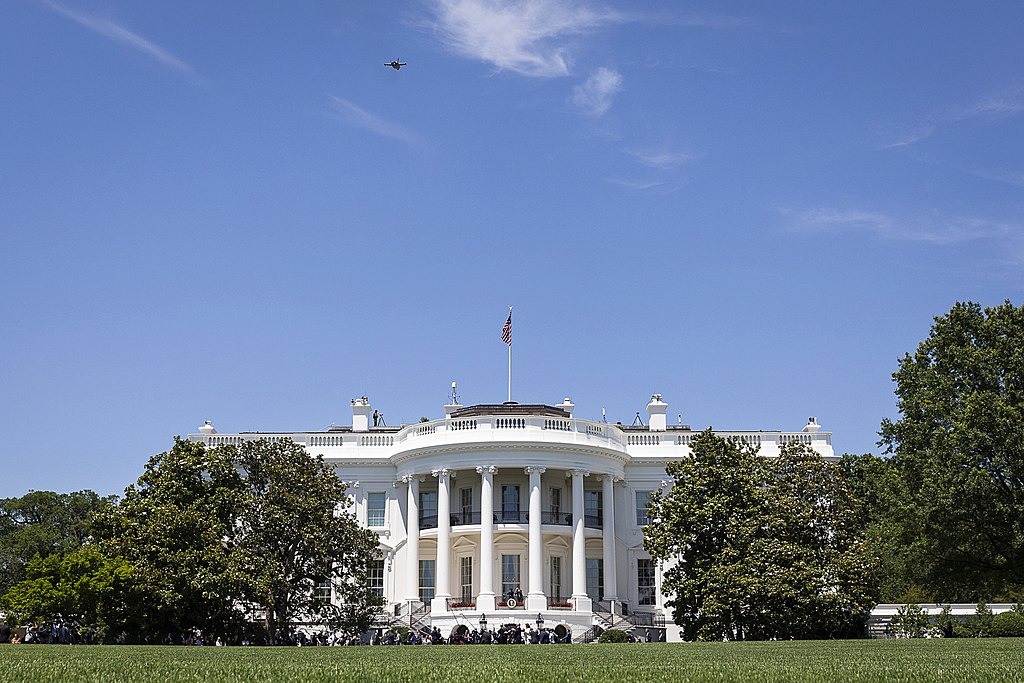
Now it looks like Biden will be moving to the White House and it’s likely that the republicans will retain control of the Senate. Which means the next two years will be pretty quiet. Which means that contrary to what we’ve heard all year, this was not “the most important election in American history.”
Stolen election?
There have been lots of concerns of voter fraud. I’m not an expert on election laws. I do trust things will be done in accordance with state laws. But I don’t see any evidence for massive illegality and fraud. I’ve heardlots of suggestions.
Half the country won’t accept the results
We’ve gone the last four years of people saying that Trump stole the 2016 election. Unfounded. People said the same thing about George W. Bush in 2000. If Biden wins, people on the right will say this election was stolen with fraud. If Trump were to shock the world and somehow win Pennsylvania, Arizona, and Georgia, the Democrats would say the vote was suppressed and Biden was the rightful winner.
The political division is incredible. The name calling. The condescension. The assumptions we make about the people who support the other candidate. It’s unfortunate.
We have so many news sources, websites, social media platforms, and “fact” checking websites, all to backup one’s adopted views. For many, more and more time is invested, which raises the level of interest (because you have to psychologically justify the amount of time spent following politics). It becomes a vicious cycle and fosters an environment of perpetual debate. It’s the most popular reality show in the world.
Because we are more constantly needing to defend our views, in arguments, we dig our heels in and we make these things out to be much bigger issues than they oftentimes are. We tie our happiness and joy to whether or not our person wins. We tie our hope for the future prosperity and potential of our society into whether or not our person wins.
And because people get so invested, it means million are going to become obnoxious and have a false sense of hope in the Messianic figure they’ve made their candidate to be. And millions more will think we’re doomed as a society, that our last hope is gone, that we’ve elected a dictator-to-be.
I think far too many people, on both sides of the political aisle, look at our politicians as saviors. We place too much hope in imperfect people. If your life is going great, it’s not because of the president. And if your life is terrible, it’s not because of the president.
I also see this within Christianity. Too many people of faith fall into the same traps that many in our society do. Of putting too much stock into politics. Of focusing too much on things that are far away and distant than things that are right within our own communities and neighborhoods. Christians need to understand that, regardless of which candidate you support – and I know many who support both major candidates – that if your candidate loses, there’s no reason to lose hope, because there’s no reason to place hope in any person.
That’s not to say we should be apathetic or oblivious to what’s going on in our world. But to remember that God is God, he is good, he is sovereign. Regardless of what happens in Washington, that everyday is an opportunity to know God and serve him. That regardless of if a politician we don’t like is in power, that this doesn’t hinder our knowledge of God. I’m not saying we should lie down and give up our rights, but to keep perspective.
I see stories of the oppression of people throughout the history of the world, and the oppression that many still face. Even in those times, God’s Church has grown. We put our comfort on a pedestal. The Bible continually talks of tests and trials. They’re part of life. It’s not that these things are good in themselves but that they don’t hinder our opportunity to know God and have faith in him. Again, that’s not to say anyone should have the desire to be oppressed, but I also feel like the things that Christians face in America pale in comparison to the things that God’s people face in other places and at other times.
There are many things that influence our lives. And Christians have a daily opportunity to live lives of faith, to model the love of Christ, and to tell people a message that transforms a soul for eternity (rather than a country for 4 years). There might be issues where we think a president will have great influence (and sometimes they undoubtedly do), but even when our candidate isn’t in power, it’s not a reason to give up. It’s a reason to get involved.
An updated version of “the next president is not a savior” from November 7, 2016.